wayground logo

Free Printable Worksheets

NEW

Font size

S
M
L
XL
Worksheets

Scientific Investigations Review

Total questions: 62

Worksheet time: 46mins

Name
Class
Date
1.
This variable in an experiment is the one being deliberately changed by the scientist. 
a)
dependent variable
b)
independent variable
c)
data
d)
control group
2.

An "If..., then..." statement that predicts what the scientist things will happen during an experiment.

a)

Constants

b)

Controls

c)

Hypothesis

d)

Independent variable

3.

The factors that do not change during an experiment.

a)

Dependent variable

b)

Constants

c)

Control

d)

Trials

4.
The independent variable is the ONE thing you _____.
a)
change
b)
keep the same
c)
experiment with
d)
investigate
5.
What are the two types of observations?  
a)
Qualitative and Quanitative 
b)
Personal and Educational
c)
A prediction about something. 
d)
Examples of something. 
6.
The number of apples in this basket is ______________________ data?
a)
quantitative
b)
qualitative
c)
independent
d)
dependent
7.
Qualitative or Quantitative:
The cat has orange fur on his ears. 
a)
Qualitative
b)
Quantitative
8.
Which of the following would be an example of quantitative data?
a)
a yellow liquid was produced
b)
it got colder
c)
the car had the speed of 65 miles per hour
d)
the dog barked all night
9.
What is an observation?
a)
A scientific statement based on ideas
b)
Using your senses to notice what is going on around you
c)
To be unaware of your surroundings
10.
What is happening to the temperature in New York City?
a)
It is remaining about the same.
b)
It is mostly decreasing.
c)
It is mostly increasing.
d)
There is a pattern of increasing and decreasing.
11.
Which variable may change and probably will change in the experiment, but "I" don't change it?
a)
Independent variable
b)
Dependent variable
c)
Constant
12.
That this animal has fur is an...
a)
inference
b)
conclusion
c)
observation
d)
opinion
13.
The dependent variable in this experiment is - 
a)
Number of Bacteria
b)
Time of Incubation
c)
Culture Number
d)
Type of Bacteria
14.
What can you infer about the temperature for E.coli bacterial growth?
a)
E. coli does not grow well at low and high temperatures.
b)
E coli will continue to grow at very high temperatures.
c)
E.coli grows best at very low temperatures
d)
E.coli grows best at very high temperatures.
15.
A student wants to test the effects of type of exercise on heart rate.  What is the dependent variable?
a)
heart rate
b)
type of exercise
c)
amount of exercise
d)
time of day exercise occurs
16.

observations that are made using numbers or measurements.

a)

quantitative data

b)

variable

c)

qualitative data

d)

constant

17.

the factor that is measured in the science experiment.

a)

constant

b)

independent variable

c)

hypothesis

d)

dependent variable

18.

variables that stay the same through out an experiment.

a)

constant

b)

hypothesis

c)

variable

d)

independent variable

19.

a prediction that can be tested.

a)

constant

b)

variable

c)

hypothesis

d)

dependent variable

20.

A well designed experiment should be able to be repeated.

a)

true

b)

false

21.

Describing the barnacles on a boat would be what type of data?

a)

qualitative

b)

quantitative

22.

What variable comes after the word IF

a)

independent variable

b)

dependent variable

23.

What variable comes after the word then?

a)

independent variable

b)

dependent variable

24.

The dependent variable is the part

a)

the letter in the equation

b)

the part being changed

c)

the part being measured

25.

A hypothesis is never wrong.

a)

True

b)

False

26.

Hypotheses can be tested through

a)

Experiments and public opinion

b)

Popularity of the hypothesis

c)

Experiments and Observations

d)

Asking as many people as possible

27.

Hypotheses must be CORRECT

a)

True

b)

False

28.

In scientific investigations, data is defined as

a)

Careful measurements or factual observations

b)

The amount of energy used in your equipment

c)

The use of your five senses

d)

The variable that stays the same

29.

Of the two groups in an experiment, this on undergoes all the steps of the experiment including the independent variable

a)

Control group

b)

Experimental group

c)

Popular group

d)

Common group

30.

Of the two groups in an experiment, this one undergoes all the steps of the experiment except the one being tested to allow for a comparison

a)

Control group

b)

Experimental group

c)

Popular group

d)

Common group

31.

The variable that may change as a result of changes made to the Independent variable

a)

Independent variable

b)

Dependent variable

c)

Constant variable

32.

The variable that the investigator deliberately changes to observe what happens.

a)

Independent variable

b)

Dependent variable

c)

Constant variable

33.

In order to scientifically investigate a problem/question, it must be _____.

a)

Interesting to everyone

b)

Testable

c)

Based on your opinion

d)

A question of what is right or wrong

34.

A series of steps that are used to investigate a natural occurrence

a)

Observations

b)

Inferences

c)

Experiments

d)

Scientific Method

35.

Aaron wants to know how different types of colored light affect plant growth? What is the DV?

a)

Types of plant growth

b)

types of colored lights

c)

colored lights on plant growth

d)

plant growth

36.

Colynn wants to know how different types of colored light affect plant growth? What is the IV?

a)

types of plant growth

b)

types of colored lights

c)

plant growth on colored lights

d)

plant growth

37.

What part of the experiment does this describe:

The same type of bean plant, the same amount of water, and the same soil were used.

a)

Constant variables

b)

Control group

c)

Levels of IV

d)

Hypothesis

38.
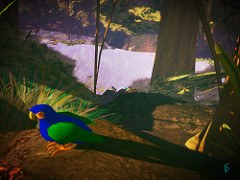
Which of the following is a quantitative observation?
a)
The bird is very colorful.
b)
The bird has 4 different colors on him.
c)
The bird has many, many feathers.
d)
It is a bird. 
39.

How many (independent) variables can be tested in a controlled experiment?

a)

One

b)

No more than two

c)

Three

d)

As many as you want

40.

Is the following question testable?

Are roses prettier flowers than tulips?

a)

yes

b)

no

41.

What conclusion can be drawn by using the information in the graph?

a)

The more water you have in a pot, the less time it takes to boil.

b)

The longer you boil water, the more water you get.

c)

The more water you have in a pot, the longer it takes to boil.

42.

On a graph, where is the manipulated variable placed?

a)

X-Axis

b)

Y-Axis

43.

What is the relationship between y and x?

a)

Y is Directly proportional to x

b)

Y is Inversely proportional to x

c)

Y is Increases linearly to x

d)

Y increase with x

44.
A student wants to test the effects of type of exercise on heart rate.  What is the dependent variable?
a)
heart rate
b)
type of exercise
c)
amount of exercise
d)
time of day exercise occurs
45.
An experiment is performed on plants to see how different liquids affect plant growth. Each plant in the experiment is given a different liquid; water, apple juice, or milk. Each plant has the same amount of soil, sunlight, and listens to the same music. In this investigation, the independent variable is ...
a)
The type of plant
b)
The amount of sunlight
c)
The type of music
d)
The type of liquid
46.
What is the dependent variable?
a)
Temperature
b)
Sugar and Salt
c)
Amount of solute
d)
Amount of water
47.
What is independent variable?
a)
The distance from North and South Lake
b)
The Temperature
c)
The summer
d)
South Lake
48.
What is the dependent variable?
a)
Amount of each trash
b)
Type of trash
c)
Where the trash is located
d)
When the trash was picked up
49.
What is an example of quantitative data? 
a)
The book had 498 pages
b)
The book is fiction
c)
The book had a happy ending
d)
The book had 3 main characters 
50.
What is an example of qualitative data?
a)
The grey elephant has 2 ears
b)
The elephant has rough feeling skin
c)
The elephant can make a noise up to 2 decibles
d)
The elephant is 10 years old
51.
The part of the experiment being measured or observed; the data collected during an experiment
a)
independent variable
b)
dependent variable
c)
constant
d)
control
52.
You observe that, upon waking up each morning, your trashcan is overturned and trash is spread around the yard. You propose that raccoons are responsible. Is this fact, a law, a theory, or a hypothesis?
a)
Fact
b)
Law
c)
Theory
d)
Hypothesis
53.
A broad and comprehensive statement of what is thought to be true; it is supported by much evidence.
a)
hypothesis
b)
theory
c)
guess
d)
fact
54.
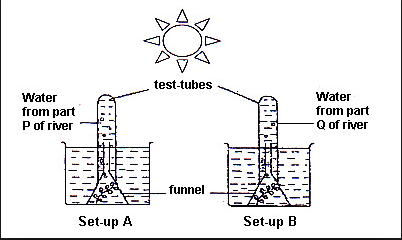
What is the effect of salt water on the average of the height of 3 tallest blades of grass?
What is the dependent variable in the above question?
a)
the salt water
b)
effect
c)
average of the 3 tallest blades of grass
d)
number of blades of grass
55.
"If the forest is clear-cut (cutting down all the trees in an area of forest), then it will result in drier soils because there will not be any trees to protect the soil from sunlight" is an example of:
a)
a theory
b)
a hypothesis
c)
an experimental question
d)
a conclusion
56.
Students put two plants in the sun.  Plant A is in the sun for 10 minutes.  Plant B is in the sun for 1 hr.  Students decide that plant B is better at photosynthesis.  This is wrong because...
a)
They didn't control all variables
b)
The independent variable was sunlight
c)
The dependent variable was amount of gas produced
d)
they used different amounts of water
57.
Students are growing plants in the dark or in the light to see which grows better.  They put 3 seeds in the dark and 5 seeds in the light because they know seeds are more likely to dry out in the light. 
How could this experiment be improved?
a)
Put all plants in the light.
b)
Put all plants in the dark (where they sprout better)
c)
Put the same number of seeds in each container.
d)
put all the plants in the light so they grow better
58.
Which would go on the y-axis?
a)
Time
b)
# of Bacteria 
c)
minutes
d)
Growth
59.
What is the Independent Variable?
a)
Distance
b)
Time
60.
What is the relationship between the independent variable and the dependent variable?
a)
As time increase, distance decreases
b)
As time increases, distance increases
c)
As time decreases, distance decreases
d)
As time decreases, distance increases
61.
For her experiment, Shelley made sure the cage was the same size, the mice were the same species, and the  room temperature was the same. These are examples of:
a)
Independent variables
b)
Dependent variables
c)
Constants
d)
Control groups
62.
Eiko is doing an experiment to determine the best fertilization plan for bean plants. She will test 4 plants using this schedule. Plant Fertilization Schedule A never B monthly C weekly D daily
       

Which plant is the control? 
a)
Plant A
b)
Plant B
c)
Plant C
d)
Plant D