wayground logo

Free Printable Worksheets

NEW

Font size

S
M
L
XL
Worksheets

cell biology final review

Total questions: 73

Worksheet time: 56mins

Name
Class
Date
1.
What are the products of photosynthesis?
a)
water and carbon dioxide
b)
oxygen and glucose
c)
oxygen and carbon dioxide
d)
oxygen and water
2.
Autotroph or heterotroph?
a)
Autotroph
b)
Heterotroph
3.
In which organelle does photosynthesis occur?
a)
Mitochondria
b)
Chloroplast
c)
Endoplasmic Reticulum
d)
Lysosome
4.
which process releases energy?
a)
making a bond (adding a phosphate)
b)
breaking a bond (removing a phosphate)
5.
What organelle makes most of the ATP and is called the power plant of the cell? 
a)
ribosomes
b)
lysosomes
c)
organelles
d)
mitochondrion 
6.
What is combined in photosynthesis to make glucose?
a)
H2O and CO2
b)
Oand H2O
c)
H2O and O2
d)
O2 and CO2
7.
What is released in cellular respiration?
a)
H2O and O2 and ATP
b)
H2O and CO2
c)
H2O and CO2 and ATP
d)
H2O and O2
8.
Photosynthesis ______ glucose while cellular respiration ______ glucose.
a)
builds; breaks apart
b)
breaks apart; builds
9.
Cellular respiration occurs in the
a)
chloroplast
b)
mitochondria
c)
golgi body
d)
nucleus
10.
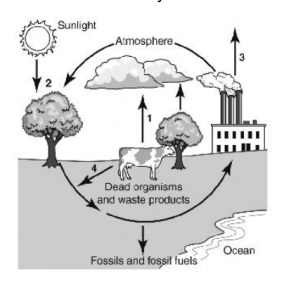
What is happening at 1?
a)
respiration: releasing CO2
b)
decomposing COin the soil
c)
photosynthesis: absorbing CO2
d)
turning CO2 from the atmosphere into organic molecules
11.
What is happening at 2?
a)
respiration: releasing CO2
b)
decomposing CO2 in the soil
c)
photosynthesis: absorbing CO2
d)
turning O2 from the atmosphere into organic molecules
12.
What type of respiration requires oxygen?
a)
Aerobic
b)
Anaerobic
13.
The purpose of cellular respiration is to make
a)
food from energy
b)
ATP from glucose
c)
heat for the organism
d)
oxygen
14.
What molecule is broken down to provide energy for life processes?
a)
oxygen
b)
carbon dioxide
c)
glucose
d)
water
15.
What does it mean for something to be anaerobic?
a)
It requires CO2
b)
It does not require CO2
c)
It requires oxygen
d)
It does not require oxygen
16.
What does the endocrine system do?
a)
movement
b)
transport nutrients
c)
produce hormones for communication
d)
communicate through nerves
17.
The main purpose of the ____________ system is to break food particles into pieces that can be used.
a)
circulatory
b)
respiratory
c)
digestive
d)
skeletal
18.
What is responsible for delivering oxygen and removing carbon dioxide from the body?
a)
cell nucleus
b)
excretory system
c)
nervous tissue
d)
respiratory system
19.
The __________ system directs the body to inner and outer changes.
a)
digestive
b)
circulatory
c)
nervous
d)
skeletal
20.
___________ are the building blocks of life.
a)
cells
b)
legos
c)
blocks
d)
blood
21.
In multicellular organisms, tissues are comprised of _______.
a)
organs
b)
systems
c)
cells
d)
blood
22.
When tissues come together, they form ___________.
a)
cells
b)
atoms
c)
organs
d)
systems
23.
A(n) _________ is made of small parts connected together to make a whole.
a)
system
b)
problem
c)
evidence
d)
illustration
24.
Which of the following body systems work together for support, protection, and movement?
a)
respiratory and cardiovascular
b)
skeletal and muscular
c)
skeletal and integumentary
d)
digestive and respiratory
25.
Which of the following shows the levels of organization of an organism from LEAST to MOST complex.
a)
cells-tissues-systems-organs
b)
organs-cells-systems-tissues
c)
systems-organs-tissues-cells
d)
cells-tissues-organs-systems
26.
How does the cardiovascular system and the respiratory system work together?
a)
The cardiovascular system transports oxygen around the body while the repiratory system gives the body oxygen
b)
The cardiovascular system makes cells while the respiratory system moves them where they are suppose to go.
c)
The cardiovascular system allows the body to have energy while the repiratory system makes cells
d)
The cardiovascular system transports nutrients around the body while the respiratory system brings oxygen into the body
27.
How does the digestive system work with all other systems?
a)
The digestvie system transports blood to all the other systems
b)
The digestive system puts oxygen into the body
c)
The digestive system gives the body energy and nutrients
d)
The digestive system allows the body to move
28.
Which body system transports oxygen and nutrients through out the body?
a)
Muscular System
b)
Nervous System
c)
Digestive System
d)
Circulatory System
29.
When many organ systems work together it can form...
a)
organ
b)
cells
c)
organ system
d)
organism 
30.
If the environment gets cold, we will often shiver in order to:
a)
keep body temperature the same as the external temperature
b)
decrease body temperature
c)
increase body temperature
d)
regulate blood pressure
31.
Homeostasis in the human body is often maintained by a: 
a)
neutral feedback loop 
b)
solar feedback loop
c)
positive feedback loop
d)
negative feedback loop
32.
The maintenance of an organism’s internal environment is called:
a)
compensating
b)
homeostasis
c)
balancing
d)
routine
33.
Which of the following is an example of positive feedback to indirectly maintain homeostasis?
a)
the chemical reactions involved in blood clotting
b)
your blood vessels dilate and you begin to sweat in response to elevated body temperature
c)
your blood vessels constrict and you begin to shiver in response to low body temperature
d)
your coach compliments you on your performance in practice
34.
Positive feedback is when the change caused by the stimulus is
a)
decreased
b)
non existent
c)
amplified
d)
changes constantly
35.
When you give birth and your brain needs to release more oxytocin in order for you cervix to contract, this is an example of which feedback loop?
a)
Positive Feedback Response
b)
Negative Feedback Loop 
36.
When you are cold, you shiver and your blood vessels contract, which warms you up. When you are hot, you sweat and your blood vessels expand, which cools you down.  
a)
Positive Feedback Response
b)
Negative Feedback Loop 
37.
Which of the following is the correct equation for PHOTOSYNTHESIS?
a)
CO+ light + H2O --> O+ Sugar
b)
CO+ sugar + H2O --> O+ light
c)
O2 + light + H2O --> CO+ Sugar
d)
CO+ O2 + H2O --> Light+ Sugar
38.
What process is the diagram representing?
a)
Photosynthesis
b)
Soil development
c)
Plant reproduction
d)
Nitrogen Cycle
Nitrogen cycle
39.
What is the correct equation for cellular respiration?
a)
6O2 + C6H12O6 -> 6CO2 + 6H2O + Energy
b)
6O2 + C6H12O6 + Energy -> 6CO2 + 6H2O
c)
6CO2 + 6H2O -> 6O2 + C6H12O6 + Energy
d)
6CO2 + 6H2O + Energy -> 6O2 + C6H12O6
40.
Which organism make their own food through the process of photosynthesis? 
a)
decomposer
b)
consumer
c)
herbivore
d)
producer 
41.
Field mice eat corn. Which would most likely happen if the field mouse population grew?
a)
There would be more corn to feed the field mice.
b)
There would be less corn due to the mice eating it.
c)
The habitat would get overpopulated because the mice woudl eat too much.
42.
If the population of prey increases, the population of predators will ________because of the availability of food.
a)
decrease
b)
stay the same
c)
increase
43.
All food chains_____________________
a)
have more consumers than producers
b)
produce and use same amount of energy
c)
begin with a producer
d)
are unhealthy 
44.
How do consumers get their energy? 
a)
laying in the sun
b)
eating other organisms 
c)
providing food for other organisms
d)
surviving in an ecosystem 
45.
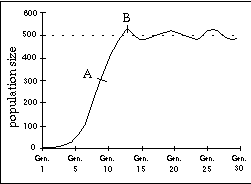
What is the carrying capacity of the following graph?
a)
1000
b)
8000
c)
800
d)
600
46.
What is the carrying capacity of the graph?
a)
around 500
b)
more than 500
c)
less than 500
d)
around 600
47.
Will competition increase/decrease the carrying capacity of an ecosystem for the animal in competition?
a)
Decrease
b)
Increase
48.
If the amount of food or resources available increases, the carrying capacity for an animal:
a)
Stays the same
b)
Increases
c)
Decreases
d)
Fluctuates
49.
This is an example of a:
a)
Nitrogen Cycle
b)
Water Cycle
c)
Biosphere
d)
Predator Prey Relationship
50.
What statement is TRUE about the graph?
a)
The prey is the green line because there needs to be more prey than predators.
b)
The prey is the red line because there needs to be more predators than prey.
c)
The green line is the producers
d)
The red line is the producers
51.
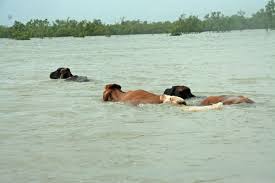
What kind of limiting factor is a flood?
a)
density-independent
b)
density-dependent
52.
Which is NOT an example of a limiting factor.
a)
Climate
b)
Available Food & Water
c)
Available Space & Shelter
d)
Species color
53.

Many fish die due to a drastic change in water temperature.

a)

Density-Dependent

b)

Density-Independent

54.

An extensive drought in the plains threatens wildebeest, giraffe, zebra, and springbok populations.

a)

Density-Dependent

b)

Density-Independent

55.

Which of the following is a density-dependent limiting factor?

a)

human activities

b)

unusual weather

c)

competition

d)

natural disaster

56.
Which of the following is a density-independent limiting factor?
a)
natural disaster
b)
predation
c)
disease
d)
parasitism
57.

Which of the following would NOT be an example of a density dependent limiting factor?

a)

fire

b)

disease

c)

lack of food

d)

space

58.

What is used or released when ATP becomes ADP?

a)

phosphate released / energy used

b)

phosphate used / energy released

c)

phosphate released / energy released

d)

phosphate used / energy released

59.

What is used / released when ADP becomes ATP?

a)

phosphate released / energy used

b)

phosphate used / energy used

c)

phosphate released / energy released

d)

phosphate used / energy released

60.
What do monomers do?
a)
Bond to make a polymer
b)
Create essential proteins
c)
Stores energy
d)
Splits to make more cells
61.

Which organic molecule would a long-distance runner most likely choose to eat two hours before a race?

a)

A protein, because it builds muscle mass.

b)

A lipid because it provides long term energy storage.

c)

A carbohydrate because it releases energy quickly.

d)

A protein, because it transports oxygen into the blood stream.

62.

Monosaccharides are the building blocks of which group of biomolecules?

a)

protein

b)

lipid

c)

carbohydrate

d)

nucleic acid

63.

Which biomolecules contains your genetic information?

a)

Proteins

b)

Lipids

c)

Carbohydrates

d)

Nucleic Acids

64.

Amino Acids are the monomers of __________.

a)

Nucleic Acids

b)

Proteins

c)

Carbohydrates

d)

Lipids

65.

Which biomolecules act as energy storage for the cell and also cushions and insulates organs?

a)

Carbohyrdates

b)

Lipids

c)

Proteins

d)

Nucleic Acids

66.

They are the tiny organs in each cells.

a)

macro molecule

b)

atom

c)

organelles

d)

molecules

67.

It is the basic membrane-bound unit that contains the fundamental molecules of life and of which all living things are composed

a)

plasma

b)

cell

c)

atom

d)

organelles

68.

It is made up of bunch of cells that work together as one.

a)

tissue

b)

organ

c)

cells

d)

organelles

69.

When there is a bunch of tissues working together and function as one it is called.

a)

tissue

b)

organ

c)

organelle

d)

cell

70.

When many cells come together it makes this.

a)

Molecule

b)

Community

c)

Organism

d)

Tissue

71.

When many pieces of tissue come together, it makes a(n) _______________. Examples of this are lungs, heart, skin.

a)

Atom

b)

Organ

c)

Molecule

d)

Ecosystem

72.

Many organs come together to make this:

a)

Ecosystem

b)

Biosphere

c)

Atom

d)

Organ System

73.

Multiple organ systems come together to make this:

a)

Population

b)

Community

c)

Organism

d)

Element