
Font size
 Worksheets
SC 30245 Biology Midterm Evolution
Total questions: 58
Worksheet time: 58mins
A change in a DNA sequence that affects genetic information
mutation
fitness
transformation
An inherited characteristic that increases an organism's chance of survival
adaptation
evolution
fitness
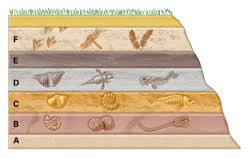
Which rock layer contains the newest fossils?
have the ability to interbreed.

Images of the embryo and adult stages of three different organisms are shown.
Which of the following is the best conclusion that can be drawn from this evidence?
Having similar embryos indicates that these organisms eat the same types of food.
Having similar embryos indicates that these organisms live in a similar environment.
Having similar embryos indicates that these organisms share a recent common ancestor.
Having similar embryos indicates that a certain protein controls how many legs the adult organisms will have.

Please select all correct answers that apply, based on the cladogram shown
Sharks and Primates do not have a common ancestor.
Crocodiles and Amphibians are more closely related than Birds and Sharks.
Rodents and Rabbits do have Eggs with Shells.
Sharks have more of the traits shown than of all of the other organisms.
Birds have all of the shown traits that Sharks have, but Sharks do not have all of the shown traits that Birds have.
If a new trait DOES help an organism survive, what may happen to it?
It dies and its DNA is not passed on
It survives and its DNA is passed on
It changes its traits to adapt and survive
What is reproductive success?
A: The ability to produce healthy offspring that survive.
B: The ability to reproduce.
C: The ability to find a mate.
D: The ability to not reproduce.

Select ALL the parts of Natural Selection.
overproduction
evolution
variation
selection
competition


acquired characteristics are inherited

survival of the fittest
use or disuse
variations within populations
organisms overproduce
Who would have stated "acquired traits" such as a giraffe needing a long neck so they stretch it over time
Darwin
Lamarck
Which Hardy-Weinberg factor represents the frequency of heterozygous individuals in a population?
p2
2pq
q2
p2 + 2pq
The allele frequency of p=.20 What is the percentage of recessive genotype?
.80
.04
.32
.64
If a population experiences no migration, is very large, has no mutations, has random mating, and there is no selection, which of the following would you predict?
The population will evolve, but much more slowly than normal
The makeup of the population's gene pool will remain virtually the same as long as these conditions hold.
The composition of the population's gene pool will change slowly in a predictable manner.
Dominant alleles in the population's gene pool will slowly increase in frequency while recessive alleles will decrease.
The population probably has an equal frequency of A and a alleles.

If 49 out of 100 individuals in a population express the recessive phenotype, 49/100 or 0.49 would represent
p
p2
q
q2
In a population of humans, the frequency of no dimples is 0.36. If having no dimples is the recessive phenotype, which variable do you now have?
p
p2
q
q2
Which of the following is an example of natural selection?
Bald Eagles are hunted until near extinction, population recovers.
Small group of iguanas floats to an island, starts a new population.
Red fox pups are more likely to survive in a snowy environment if they are born white.
Farmer chooses seeds from largest apples to plant next year. This results in larger apples from year to year.
Group of organisms all of the same species, living in the same place at the same time.
gene pool
population
species
evolution
Fireflies have a unique lighting pattern. The frequency of lighting is species specific. Fireflies in the same area will not mate with those having a different lighting frequency.
Temporal isolation
Geographic isolation
Behavioral isolation
Physiological isolation
A group of bears was separated when the landmass they were living on split up. One group eventually became black and brown bears, the other, polar bears.
Temporal isolation
Geographic isolation
Behavioral isolation
Reproductive isolation
Horse and donkeys produce mules, but they are sterile.
Hybrid inviability
Hybrid sterility
Hybrid breakdown
Gametic isolation
Two species of butterflies are found in northern Michigan, but one species is found only near rivers and streams, the other near lakes.
Temporal isolation
Habitat isolation
Physiological isolation
Gametic isolation
In Drosophila, when sperm from one species enters the other species, the sperm is immobilized and unable to fertilize the egg.
Habitat isolation
Behavioral isolation
Mechanical isolation
Reproductive isolation
Five species of frogs that live in separate habitats within 5 non-overlapping ranges along the Mississippi River share a common ancestor. Which process is most likely responsible for the formation of these five distinct species?
Physiological isolation
Geographic isolation
Behavioral isolation
Reproductive isolation
A new river forms and splits two populations, causing ______________ speciation
Sympatric
Allopatric
Extreme
Convergent
Orcas occur in the same habitat but some are avoiding each other and do not interbreed. They have different diets, vocal behavior, and social structures. What type of speciation is this?
Allopatric
Sympatric
Complex
Covergent

The presence of islands represents what type of reproductive isolation
allopatric speciation
sympatric speciation
In order to be considered a true species, an organism must be…
Naturally-occurring
Naturally-reproducing
Able to produce fertile offspring

A population of fruit bats is active at night. Part of the population is most active from 8pm to midnight, and the rest of the bats eat from 1am to 5am. Eventually, the bats don't interact with each other at all. What type of isolation is this?
Behavioral isolation
Temporal isolation
Geographic isolation

