wayground logo

Free Printable Worksheets

Font size

S
M
L
XL
Worksheets

adaptation of plants

Total questions: 117

Worksheet time: 2hrs 21mins

Name
Class
Date
1.

Why do leaves and stems have a waxy coating on them?

a)

So animals don't eat them.

b)

Helps to reduce water loss.

c)

To make them look beautiful.

2.
What is an adaptation?
a)
A feature that helps a plant grow.
b)
A feature that helps a living thing survive.
c)
A feature that helps a living thing walk.
d)
A feature that that helps only animals survive. 
3.

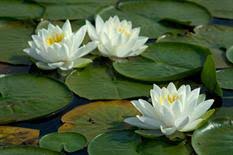
Water lilly is an example of which type of aquatic plants?

a)

Free floating plant

b)

Fixed plant

c)

Submerged plant

4.

Identify the picture

a)

sundew

b)

Venus flytrap

c)

pitcher plant

5.

Plants that grow in water

a)

Terrestrial plants

b)

Aquatic plants

c)

Aerial plants

6.

Plants that grow on land are called______

a)

Aquatic

b)

Terrestrial

c)

Habitat

d)

Mangrove

7.

Trees that shed their leaves once in a year are called-----

a)

deciduous trees

b)

conifers

c)

mangroves

d)

coconut

8.

Plants growing in desert have their________ modified into spines.

a)

stem

b)

leaves

c)

root

d)

flower

9.

Plants like __________ that trap insects are known as insectivorous plants.

a)

lotus

b)

cactus

c)

pitcher plant

d)

none of this

10.

Places where soil is very sticky and clayey are called______________________.

a)

marshes

b)

deserts

c)

plains

d)

mountains

11.

Which of the following plant has roots above the ground?

a)

Mango

b)

Neem

c)

Lotus

d)

Mangrove

12.

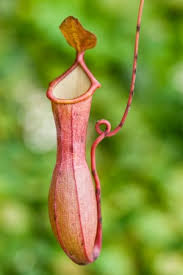
Identify the plant

a)

Pitcher plant

b)

Venus flytrap

c)

Coral root

d)

Indian pipe

13.

The trees that do not shed their leaves are called

a)

Deciduous trees

b)

Evergreen trees

c)

Xerophytes

14.

Mangrove trees have this feature

a)

Stilt roots

b)

Breathing roots

c)

Both 1 and 2

d)

None

15.

In which part do desert plants make their food?

a)

Thorns

b)

Stems

c)

Leaves

d)

Roots

16.

Why do trees growing in hills have conical shape?

a)

to look beautiful

b)

to slide down water and snow

c)

to make the birds comfortable

17.
What was the name of the scientist who had the theory of evolution?
a)
Lamarck
b)
Einstein
c)
Washington
d)
Darwin
18.
Does the shape of a bird's beak matter? 
a)
Yes
b)
No
19.
Beak shape depends on...
a)
where birds live 
b)
who they hang out with 
c)
diet (fish or seeds) 
d)
exercise 
20.
How are hardwood trees adapted to live in cold winters?
a)
They have long stems buried in mud.
b)
They live on tree islands.
c)
They lose their leaves in winter.
d)
They grow low to the ground.
21.
A nice smell is an adaptation that __________________.
a)
helps the plant keep water inside the leaves.
b)
pokes animals that try to eat the plant.
c)
attracts pollinators to the plant.
22.
What does it mean to survive?
a)
To stay alive
b)
To grow
c)
To have energy
d)
To be born
23.
What does it mean to reproduce?
a)
to eat things
b)
to make things pretty
c)
to produce energy
d)
to produce new living things
24.
What is a trait?
a)
plant
b)
an adaptation
c)
a characteristic or feature
25.
What was the name of the scientist who had the theory of evolution?
a)
Lamarck
b)
Einstein
c)
Washington
d)
Darwin
26.
Which of the following is a physical adaptation for the underlined animal?
a)
A snake unhinges its jaw to eat a rabbit it just caught.
b)
A hognose snake rolls over, slows its breathing, and hangs its tongue out to pretend to be dead.
c)
A herd of buffalo encircle their young to protect them from a pack of wolves.
d)
A dung beetle rolls a piece of dung across the desert.
27.

Which of the following is NOT a behavior?

a)

Migration

b)

Hibernation

c)

Extinction

28.
True or false: When an animal hibernates, its body temperature drops and its heartbeat and breathing slows down.
a)
True
b)
False
29.
Polar bears have compact ears, a small tail, and thick fur to keep themselves warm. Are these examples of physical (structural) or behavioural adaptations?
a)
Physical
b)
Behavioural
30.
The goal of every species on earth is...
a)
to survive and reproduce 
b)
divide and conquer 
c)
survive and conquer 
d)
reproduce and die 
31.
A trait or behavior that helps organisms survive and reproduce 
a)
multiplication 
b)
revolt
c)
adaptation 
d)
populate 
32.
What is the scientific term for an animal that is eaten by another animal?
a)
predator
b)
dinner
c)
prey
d)
stupid
33.
Lions often hide in the tall grass while stalking their prey.  This is an example of...
a)
camouflage
b)
warning coloration
c)
mimicry
d)
hibernation
34.
Why is a spider spinning a web an innate behavior?
a)
It learns how to spin the web from its mother.
b)
It learns how to spin a web through insight learning.  
c)
It is born knowing how to spin a web.
d)
It learns how to spin a web through observational learning.
35.
Which of the following terms is another term for innate?
a)
instinct
b)
learned
c)
trial and error
d)
copying
36.
A rabbit is running away from a fox. What is the stimulus for this behavior?
a)
avoiding a predator
b)
food
c)
migration
d)
estivation
37.
Which type of behavior is most likely to occur due to a seasonal change stimulus?
a)
migration
b)
estivation
c)
reproduction
d)
social grooming
38.
An octopus can change its color to match its surroundings. This is an example of which type of behavior?
a)
camouflage
b)
mimicry
c)
cooperative behavior
d)
estivation
39.
A pine snake moves it tail quickly in pine needles so it sounds like a rattle snake. This is an example of which type of behavior?
a)
camouflage
b)
mimicry
c)
estivation
d)
migration
40.
Michael went to the circus and saw a seal balance a beach ball on its nose.  This is an example of a...
a)
instinct
b)
mimicry
c)
camouflage
d)
learned behavior
41.
Which of these choices is an example of something that is needed for survival?
a)
Adaptation
b)
Food 
c)
Water
d)
All of the above
42.

Jessica’s dog Spike likes to dig holes and chase other dogs. He barks when a stranger approaches. Spike comes to Jessica whenever she calls him. Which is a learned behavior of Spike’s?

a)

barking at strangers

b)

digging holes

c)

chasing other dogs

d)

coming when called

43.
What is the movement of animals from one place to another as a response to seasonal changes?
a)
migration
b)
hibernation
c)
courtship
d)
defense
44.
Which of these is an instinct?
a)
a chimpanzee learning to use sticks to find bugs in the dirt
b)
Teaching a dog to roll over by using treats
c)
a salmon swimming upstream to lay its eggs
d)
a child learning that fire will cause pain
45.
What is the scientific term for the ability to blend in with the surroundings?
a)
invisibility
b)
conservation
c)
ninja skills
d)
camouflage
46.
How do adaptations help animals?
a)
To escape animals
b)
to hunt for food
c)
to survive in their habitats
d)
All of these are correct
47.
The ears of this fox are an example of...
a)
A behavioral adaptation
b)
Poor breeding
c)
A physical adaptation
d)
Plastic surgery gone horribly wrong
48.
What is an adaptation?
a)
A feature or behavior that helps an animal survive.
b)
The food that an animal eats.
c)
How energy moves in a food web.
d)
How animals evolve throughout time.
49.
An animal's color or pattern that helps it blend into its surroundings
a)
Environment 
b)
Mimicry
c)
Camouflage
d)
Habitat
50.
When an animal looks like another animal it is called ______________.
a)
camouflage
b)
mimicry
c)
warning coloration
d)
protective resemblance
51.
A giraffe's long neck - used to reach leaves high in trees - is an example of a 
a)
instinct
b)
learned behavior
c)
behavioral adaptation
d)
physical adaptation
52.
Lions, bears, and owls all hunt other animals for their food. They are examples of 
a)
predators
b)
prey
53.
What would a bird's foot look like if it spent its time in the water?
a)
Sharp talons and claws
b)
Short stubby toes
c)
Webbing between the toes
d)
Long graceful fingers
54.
What kind of bird has a pouch for its bill? 
a)
Cardinal
b)
Pigeon
c)
Flamingo
d)
Pelican
55.
What is camouflage? 
a)
Colors or markings to make it look like something else
b)
A chemical that is used to defend itself
c)
A hard shell or covvering
d)
Body patterns or coloring that make it hard to see
56.
Which adaptation would NOT help a hawk catch a mouse?
a)
Hollow Bones 
b)
Good eye sight
c)
Talons
d)
Camouflage
57.
A resting state through the winter. 
Adaptation: Bear sleeping in a cave during the winter months
a)
Locomotion
b)
Hibernation
c)
Migration
d)
Defense
58.
_____ is a physical feature or behavior that helps an animal get food, protect itself, move, or reproduce
a)
adaptation
b)
instincts
59.
This is a state of inactivity that occurs in some animals when outside temperatures are cold: ______
a)
hibernation
b)
migration
60.
The raccoon has hands and feet.  Why would the raccoon need this adaptation?
a)
to fight
b)
to help them find and pick up food
c)
to hang from trees
d)
to dig a tunnel
61.
A polar bear has thick fur to keep it warm so it can survive the cold.  This is called ___________________.
a)
adaptation
b)
camoflage
c)
mimicry
62.
What usually happens to an animal's heart rate when it is hibernating?
a)
It goes down or decreases
b)
It gets faster
63.

Which adaptation would you expect in animals that live in caves?

a)

Very good hearing

b)

poor hearing

c)

very good eyesight

d)

brightly colored fur

64.
An example of a physical adaptation is...
a)
a turtle hiding inside its shell
b)
The spikes on a porcupine fish
c)
a rabbit burrowing underground
d)
a viper biting when threatened
65.
Cactus has spines instead of leaves. The spines reduces water loss through the stomata.
a)
Structural
b)
Behavioural
66.
Which feature of a rose helps it grow without being eaten by large animals?
a)
flowers with bright colors
b)
sharp thorns
c)
small seeds
d)
deep roots
67.
Which feature helps an animal hide from other animals?
a)
looking like a dangerous animal
b)
being the same color as the place it lives (camoflauge)
c)
having sharp claws or a strong shel
d)
having only a few young and caring for them
68.
The Prickly Pear Cactus can grow in a dry environment because.....
a)
it is able to story water
b)
it has spiny leaves
c)
is carnivorous
d)
collects salt
69.
The Bald Eagle has __________.
a)
keen eyesight
b)
sharp talons
c)
sharp beak
d)
all of the above
70.
Plants with spines and waxy leaves are well suited for life in which environment?
a)
Desert
b)
Temperate forest
c)
Grassland
d)
Tropical Rainfroest
71.
Dandelions have light furry seeds that allow them to spread easily. 
a)
True
b)
False
72.
Why do animals use camouflage?
a)
To look pretty
b)
To stay safe
c)
To play Hide and Go Seek
d)
To eat food
73.

Characteristics of organisms. Examples: eye color, height, ear size

a)

characters

b)

inherited traits

c)

appearance

d)

adaptation

74.

Which of the following is NOT a behavioral adaptation?

a)

Making a nest in the crevices of buildings

b)

Hunting at night

c)

Collecting food from trash cans

d)

Having large eyes that can see well in the dark

75.
Which type of behavior is most likely to occur due to a seasonal change stimulus?
a)
migration
b)
estivation
c)
reproduction
d)
social grooming
76.
An octopus can change its color to match its surroundings. This is an example of which type of behavior?
a)
camouflage
b)
mimicry
c)
cooperative behavior
d)
estivation
77.
Snakes have strong ______ that help them move along their bellies. 
a)
feet
b)
skin
c)
muscles
d)
fangs
78.

A wolf howls is what kind of adaptation?

a)

behavioral

b)

physical

79.

Some plants have small leaves that help them do which of these?

a)

grow tall

b)

save water

c)

Make seeds

d)

fall off in winter

80.

Michael went to the aquarium and saw a peguin eating some fish. This is an example of .....

a)

instinct

b)

mimicry

c)

camouflage

d)

learned behavior

81.

Canada geese travel north when the weather gets warm in the spring. Then they travel south when it gets cold in the late fall. Suppose that the spring temperature stayed cold two weeks longer than usual. How would that change the behavior of the geese?

a)

They would not travel north at all.

b)

They would travel north at the usual time.

c)

They would travel north about two weeks later.

d)

They would travel north about two weeks earlier.

82.

Select all of the inherited behaviors

a)

A baby crying when it is hungry

b)

A sea turtle moving to the ocean when hatched

c)

Bats hanging upside down to sleep

d)

A sealion balancing a ball on its nose

e)

A dog playing fetch

83.
Animals are not all born knowing all the ways to survive. They depend on their parents or group members to help education them on survival skills.
a)
learned behavior
b)
warning coloration
c)
predator
d)
migration
84.
A meat eater.
a)
omnivore
b)
carnivore
c)
herbivore
d)
hungry
85.
Animals who enjoy a balanced diet of fruits, meats and vegetables.
a)
omnivore
b)
social interaction
c)
warning coloration
d)
herbivore
86.
When hungry, animals will stalk their _______ until the right moment to attack.
a)
adaptation
b)
hibernation
c)
camouflage
d)
prey
87.

What is the difference between camouflage and mimicry?

a)

Camouflage helps the organism hide while mimicry makes the organism seem like another organism

b)

Camouflage makes the organism seem like another organism and mimicry helps the organism hide

88.
What is evolution?
a)
The process in which organisms change over time
b)
The process in which genes are inherited
c)
The study of how organisms are classified
d)
The process through which organisms reproduce
89.
If organisms cannot adapt to changes, sometimes the entire group dies out. This is called _______? 
a)
hibernation
b)
extinction 
c)
adaptation 
d)
migration 
90.
This word means to stay alive.
a)
trait
b)
reproduce
c)
adaptation
d)
survive
91.
Land plants have thick waxy leaves to
a)
Make more food for plants
b)
Provide feeding place for small animals
c)
absorb more oxygen for the plants
d)
reduce water loss
92.
Camels have long eyelashes
a)
Camels have long eyelashes to prevent the entry of sand dust and particles
b)
To lose tears
c)
To keep body temperature constant
d)
To lose excess heat
93.
Natural selection can also be referred to as:
a)
Survival of the weakest
b)
Survival
c)
Survival of the fittest
d)
Artificial selection
94.
The American Beaver has ______ to help it survive in its environment.
a)
webbed feet
b)
waterproof feathers
c)
talons
d)
a foot to help it stay under water
95.
The colors & patterns on a turtles shell help it blend in with the forest floor.  This is:
a)
hibernation.
b)
behavior.
c)
migration.
d)
camouflage.
96.
A body covering or body part that helps an animal defend itself is an example of a...
a)
a learned behavior.
b)
an instinct.
c)
a stimuli.
d)
physical adaptation.
97.
The items in the following picture would allow you to simulate bird beaks. What about this picture is true?
a)
The tools used aren't the same size as actual bird beaks. 
b)
The tools used allow you to see how bird beaks work. 
c)
The tools used aren't as detailed as an actual bird beak.
d)
All of the above 
98.
Acting a certain way to avoid predators is a behavioral adaptation. 
a)
True
b)
False
99.
Gills are to fish, like ______ are to humans
a)
heart
b)
kidneys
c)
lungs
d)
feet
100.
I am an animal that lives in the arctic. I have adaptations that allow me to survive in my environment. Which of the following is an adaptation that will allow me to survive the arctic?
a)
thick white fur 
b)
speed
c)
digging in the ground 
d)
short, fluffy tail 
101.
Which foot is best suited for a wet environment?
a)
Clawed foot with talon 
b)
Human-like foot
c)
Webbed foot
d)
Small clawed foot without a talon 
102.
I live in the tundra. What adaptation will not help me survive in this environment?
a)
hibernation
b)
ability to store food
c)
growing thick fur
d)
swinging from trees
103.
The way an animal has evolved to survive in its ever changing habitat. 
a)
adaptation
b)
social interaction
c)
learned behavior
d)
hibernation
104.
The way an animal looks on the outside (long neck, hinged jaw) that helps them to survive is in the wild is  _________
a)
mimicry
b)
camouflage
c)
physical adaptation
d)
migration
105.
a)
the dog wagging its tail
b)
the dog sitting to get a treat
c)
the boy using a leash to walk the dog
d)
the boy washing his hands after playing with the dog
106.
An animal that hunts other animals (it usually has eyes in the front of its head)
a)
prey
b)
predator
c)
herbivore
d)
adaptation
107.
An animal that hunts other animals (it usually has eyes in the front of its head)
a)
prey
b)
predator
c)
herbivore
d)
adaptation
108.
An animal that only eats plants
a)
omnivore
b)
carnivore
c)
herbivore
d)
mimicry
109.
Which of the following is an adaptation that helps a seal survive in a cold habitat?
a)
blubber
b)
body shape
c)
skin color
d)
sharp teeth
110.

What are the two types of adaptations?

a)

Physical and Defense

b)

Physical and Color

c)

Physical and Light

d)

Physical and Behavioral

111.
The praying mantis looks very much like a blade of grass. What is it called when animals look like other animals or plants?
a)
camouflage
b)
mimicry
c)
locomotion
d)
hibernation
112.
An arctic fox's coat changes color to blend into its surroundings. This is called________
a)
hibernation
b)
camouflage
c)
locomotion
d)
mimicry
113.
Animals that have something they DO  to live. This includes things like hibernation, migration etc.
a)
warning coloration
b)
camouflage
c)
behavioral adaptation
d)
mimicry
114.
A Porcupine has SHARP QUILLS.  Why?
a)
to protect itself
b)
to keep warm
c)
to kill its prey
d)
to cover its skin
115.

Which feature of a rose helps it get pollenenated

a)

flowers with bright colors

b)

sharp thorns

c)

small seeds

d)

deep roots

116.

What is a physical adaptation of the fox?

a)

Yiping

b)

Finding food

c)

Taking care of its young

d)

A long tail to help with balance

117.

What pysical adaptations helps this eagle fly (Select all that are correct)

a)

Wings

b)

Hollow Bones

c)

sharp beak

d)

Tallons

e)

Keen eyesight