wayground logo

Free Printable Worksheets

NEW

Font size

S
M
L
XL
Worksheets

Segui AP Biology Units 1-4 Review

Total questions: 75

Worksheet time: 2hrs 30mins

Name
Class
Date
1.

Suppose that in sheep, a dominant allele (B) produce black hair and a recessive allele (b) produce white hair. If you saw a black sheep, you would be able to identify

a)

its phenotype for hair color

b)

its genotype for hair color

c)

the genotype of only one of its parents

d)

the phenotype of both of its parents

2.
One of the main reasons genes assort independent of one another  is that 
a)
they produce unrelated traits
b)
they produce related traits
c)
they are on the same chromosome
d)
they are on different chromosomes.
3.
In humans, hemophilia is an X-linked recessive trait. If a man and a woman have a son who is affected with hemophilia, which of the following is definitely true?
a)
The mother carries an allele for hemophilia
b)
The father carries an allele for hemophilia
c)
The father is afflicted with hemophilia
d)
both parents carry an allele for hemophilia
4.

Butterflies of the genus Colias live in the Rocky Mountains, where they experience a wide range of temperatures. Different variants of a particular glycolytic enzyme in the flight muscles are optimally active at different temperatures. Within the same population, some individual butterflies fly most effectively at 29°C , while others fly most effectively at 40°C. Still others can be equally active at both temperatures.


Which of the following claims is most consistent with the observed butterfly behavior?

a)

Butterflies that express two variants of the enzyme are active over a greater range of temperature

b)

Butterflies that are active over a wide range of temperatures produce greater amounts of the enzyme.

c)

Temperature has little effect on the activity of butterflies.

d)

Butterflies that are active at warmer temperatures produce more offspring

5.

If 2n = 48 for a particular cell, then the chromosome number in each cell after meiosis would be

a)

96

b)

48

c)

24

d)

12

6.

The process depicted in the image above is best summarized by which of the following descriptions?

a)

During the synthesis phase of the cell cycle, DNA molecules replicate to generate identical daughter cells

b)

Centromeres align specific gene sequences of homologous chromosomes during mitotic divisions.

c)

The spindle apparatus attaches at chiasma during metaphase of mitosis.

d)

During meiosis, crossing over leads to recombination of alleles between homologous chromosomes

7.
Structure (b) is a ____.
a)
chromosome
b)
chromatid
c)
centromere
8.
DNA is replicated during ______ of the cell cycle.
a)
G1
b)
S
c)
G2
d)
G0
9.

The amount of DNA in a cell is measured right after mitosis and found to be 8 picograms. How many picograms of DNA would be found in a nucleus in the G2 phase?

a)

4

b)

8

c)

16

d)

24

10.
In mitosis, the two resulting cells are
a)
different from the starting cell and identical to each other.
b)
different from the starting cell and different from each other.
c)
identical to the starting cell and different from each other.
d)
identical to the starting cell and identical to each other.
11.
What phase does a cell stay in the longest?
a)
interphase
b)
cell division
c)
cytokinesis
d)
mitosis
12.
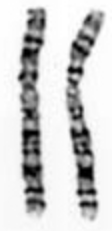
A pair of identical chromosomes shown in a karyotype, one inherited from mom, and one inherited from dad are called
a)
sister chromotids
b)
centromeres
c)
homologous chromosomes
d)
autosomes
13.
What is the sex of this individual?
a)
female
b)
male
14.

In eukaryotes, DNA is tightly coiled around ____ in chromatin

a)

Histones

b)

Whey

c)

Casein

d)

Hemoglobin

15.
What makes a molecule polar?
a)
Equal sharing of valence electrons
b)
Unequal sharing of valence electrons
c)
Stealing of electrons
d)
Temporary charges that come and go
16.
The compounds on the right side of a chemical equation are called the _____.
a)
Ingredients
b)
Reactants
c)
Total
d)
Products
17.
You dump a Kool-Aid packet into water. What substance is the solute?
a)
water
b)
Kool-Aid
18.
Which of the following is an organic compound?
a)
H2O
b)
C6H12O6
c)
NH2
d)
OH
19.
Large bodies of water do not quickly fluctuate, or change, in temperature. Why?
a)
Water is a solvent.
b)
Water has a high heat capacity.
c)
Water acts as a buffer.
d)
Water is non-polar.
20.

Pure water has a pH of

a)

6

b)

15

c)

3

d)

7

21.

Which of the following elements is Not one of the six most common in living organisms?

a)

carbon

b)

oxygen

c)

iron

d)

nitrogen

e)

hydrogen

22.
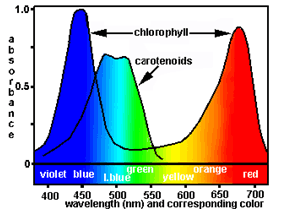
What is one function of the other pigments  besides chlorophyll, in the chloroplast?
a)
to block damaging wavelengths of light
b)
to absorb different wavelengths than the chloroplasts
c)
to provide different colors to the leaves
d)
to transfer energy to a separate photosystem beside the one using chlorophyll a and b.
23.
What is the function of NADP+?
a)
It absorbs light
b)
It is an electron carrier
c)
It is a light-reflecting pigment
d)
It acts as long-term energy storage
24.
Where does the carbon come from that is used to form glucose?
a)
The soil
b)
CO2 in the air
c)
From other carbohydrates
d)
Calvin Cycle
25.
Green plants reflect ________ light.
a)
Red
b)
Green
c)
All
d)
Red and Violet
26.
Which of the following molecules is NOT a byproduct of cellular respiration? 
a)
CO2
b)
Heat
c)
H2O
d)
ATP
27.
If ADP is phosphorylated then what is this indicating in the reaction? 
a)
ADP is forming into ATP
b)
ADP is becoming AMP
c)
ADP is being used to power other reactions
d)
ADP is being created by the reaction
28.
Which process does not occur in aerobic conditions? 
a)
Fermentation
b)
Pyruvate Oxidation
c)
Citric Acid Cycle or Krebs cycle 
d)
Oxidative Phosphorylation 
29.
What is the main job of the electron carriers in cellular respiration? 
a)
Transport electrons and hydrogen atoms to the electron transport chain 
b)
Capture energy throughout the process of cellular respiration
c)
Provide the reactants for the process of cellular respiration
d)
Pump positive hydrogen ions and shuttle electrons across the electron transport chain and contribute to chemiosmosis
30.
Where does glycolysis occur?
a)
Inner mitochondrial membrane
b)
Mitochondrial Matrix
c)
Cytosol
d)
At a ribosome
31.
What enzyme in the ETC is responsible for generating the ATP molecules?
a)
ATPase
b)
ATP synthase
c)
Hexokinase
d)
none of the above
32.
Two different species of bacteria are examined. Scientists find that species X always produces CO2 and H2O during cellular respiration. Species Y always produces ethyl alcohol and CO2. Which conclusion can be made from these observations?
a)
Only species Y is aerobic.
b)
Only species Y is anaerobic
c)
Both species X and Y are aerobic.
d)
Both species X and Y are anaerobic.
33.
What is the main purpose of the Krebs cycle?
a)
to produce ATP
b)
to produce electron donators
c)
to produce water
d)
to produce carbon dioxide
34.
The final electron acceptor of aerobic respiration is
a)
oxygen
b)
water
c)
carbon dioxide
d)
NAD+
35.
When does crossing over occur?
a)
Interphase
b)
Prophase 1
c)
Prophase 2
d)
Metaphase 1
36.

Meiosis results in ______.

a)

4 genetically unique haploid gametes

b)

4 genetically unique diploid cells

c)

2 genetically identical cells

d)

4 genetically identical cells

37.
When homologous chromosomes match up, they form a structure call a ___________.
a)
tetrad
b)
triad
c)
diploid
d)
gamete
38.
What phase is  shown in the picture?
a)
anaphase 1
b)
anaphase 2
c)
metaphase 1
d)
telophase 1
39.

A haploid cell has

a)

three sets of chromosomes

b)

one set of chromosomes

c)

two sets of chromosomes

d)

four sets of chromosomes

40.
A male shark has 40 chromosomes in each of its sex cells. How many would be present in its body cells?
a)
20
b)
40
c)
80
d)
160
41.

What is one of the advantages of reproducing sexually versus asexually?

a)

underproduction of offspring

b)

overproduction of offspring

c)

genetic variation

d)

artificial selection

42.
What phase is represented?
a)
metaphase 1
b)
metaphase 2
c)
anaphase 1
d)
anaphase 2
43.
Identify the phase.
a)
Telophase I
b)
Telophase II
c)
Metaphase I
d)
Metaphase II
44.

The organelle located within centrosome region of animal cells; aids in spindle fiber formation

a)

Chromatid

b)

Centriole

c)

Centromere

d)

Centrosome

45.

All of the following cell components are found in prokaryotic cells EXCEPT

a)

DNA

b)

ribosomes

c)

cell membrane

d)

nuclear envelope

46.

Which structure is thought to have evolved from a photoautotrophic prokaryote?

a)

A

b)

B

c)

C

d)

D

47.

The following questions refer to an experiment in which a dialysis-tubing bag is filled with a mixture of 3% starch and 3% glucose and placed in a beaker of distilled water, as shown below. After 3 hours, glucose can be detected in the water outside the dialysis-tubing bag, but starch cannot.


From the initial conditions and results described, which of the following is a logical conclusion?

a)

The initial concentration of glucose in the bag is higher than the initial concentration of starch in the bag.

b)

The pores of the bag are larger than the glucose molecules but smaller than the starch molecules.

c)

The bag is not selectively permeable.

d)

A net movement of water into the beaker has occurred.

48.

If ATP breakdown (hydrolysis) is inhibited, which of the following types of movement across cell membranes is also inhibited?

a)

Movement of oxygen into a cell

b)

Movement of water through aquaporins

c)

Passage of a solute against its concentration gradient

d)

Facilitated diffusion of a permeable substance

49.

Simple diffusion and facilitated diffusion are related in that both

a)

require protein carriers

b)

depend on a concentration gradient

c)

occur via contractions of cytoskeletal elements attached to membrane proteins

d)

are endergonic processes and thus require the hydrolysis of ATP

50.

For each phrase or sentence, select the labeled part to which it is most closely related. Each option may be used once, more than once, or not at all for each group.


"Site of modification and packaging of proteins and lipids prior to export from the cell"

a)

A

b)

B

c)

C

d)

D

51.
Some bacteria are metabolically active in hot springs because ____________
a)
their enzymes are insensitive to temperature
b)
they use molecules other than proteins as their main catalysts
c)
their enzymes have high optimal temperatures
d)
they are able to maintain an internal temperature much cooler than that of the surrounding water
52.
At high temperatures enzyme activity declines because of:
a)
Denaturation
b)
Decreased Kinetic Motion
c)
Increased H-Bonding
d)
Dissociation of Ionic Compounds
53.
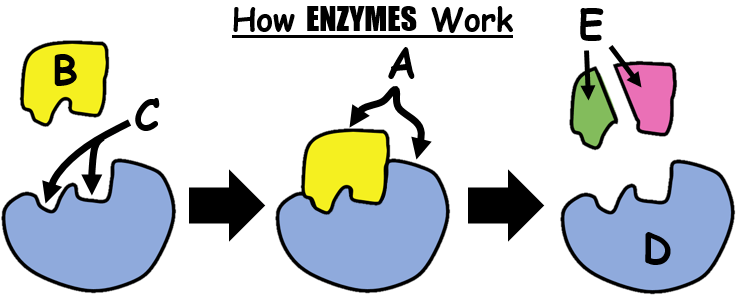
Letter D...
a)
active site
b)
enzyme
c)
substrate
d)
products
54.
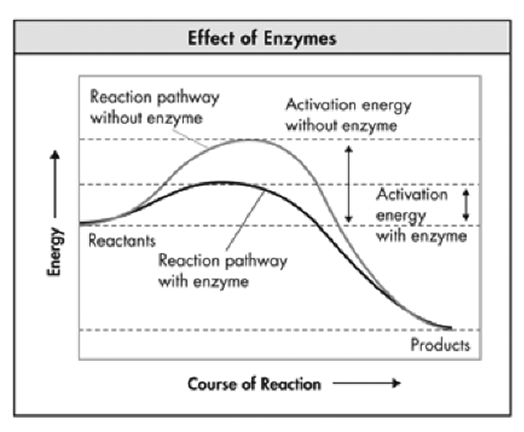
The graph shows how enzymes affect reactions in cells. Which statement best summarizes the information shown in the graph?
a)
Enzymes increase the energy of the reactants.
b)
Enzymes decrease the energy level of the products.
c)
Enzyme decrease the activation energy of the reaction.
d)
Enzymes reverse the direction of the reaction.
55.
Which of these is most likely an enzyme?  
a)
Sucrose
b)
Galactose
c)
Fructose
d)
Amylase
56.
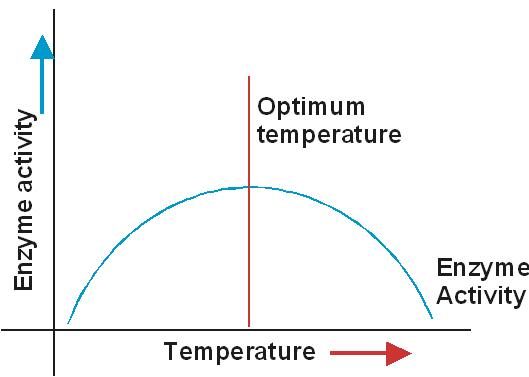
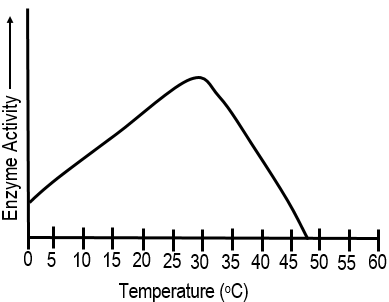
Based on the graph, what is the optimal temperature for this enzyme? 
a)
15oC
b)
40oC
c)
30oC
d)
35oC
57.
The energy needed to start a reaction
a)
activation energy
b)
adhesion energy
c)
chemical energy
d)
cohesion energy
58.
What type of macromolecule are enzymes?
a)
Protein
b)
Carbohydrate
c)
Lipid
d)
Nucleic Acid
59.
Enzymes are made up of these repeating monomers.
a)
monosaccharides
b)
amino acids
c)
nucleotides
d)
phospholipids
60.

This egg has shrunk, what type of solution was it placed in?

a)

hypotonic solution

b)

hypertonic solution

c)

isotonic solution

61.
What type of solution is this cell in?
a)
Isotonic
b)
Hypertonic
c)
Hypotonic
d)
diffused
62.
What type of solution is this cell in?
a)
Isotonic
b)
Hypertonic
c)
Hypotonic
d)
diffused
63.

In an isotonic solution which way will the water flow

a)

it will not flow at all

b)

it will flow into the cell

c)

it will flow both ways at equal rates

d)

out of the cell

64.

Which Type of solution is the middle cell placed in?

a)

Hypertonic

b)

Hypotonic

c)

Isotonic

d)

Robotonic

65.
What is a protein: 
a)
A polymer composed of many sugars.
b)
A polymer composed of many amino acids. 
c)
A polymer composed of fatty acids. 
d)
A polymer composed of nucleotides. 
66.
Which biomolecule is a main source of quick energy?
a)
Nucleic Acid
b)
Protein
c)
Lipid
d)
Carbohydrate
67.
What is the function of a nucleic acid?
a)
Stores genetic information
b)
Stores energy
c)
Quick source of energy
d)
Builds structures
68.
Carbon, Hydrogen, Oxygen and Nitrogen are elements in what biomolecule?
a)
Carbohydrate
b)
Lipid
c)
Protein
d)
Nucleic acid
69.
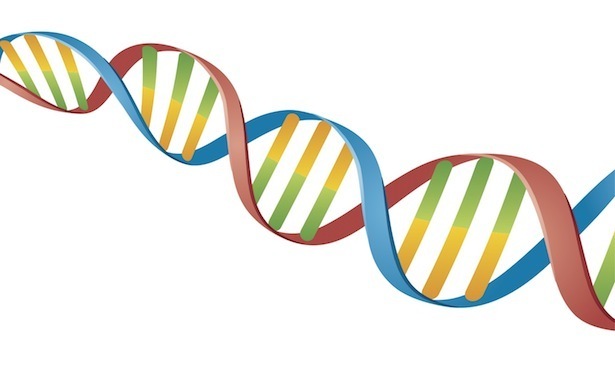
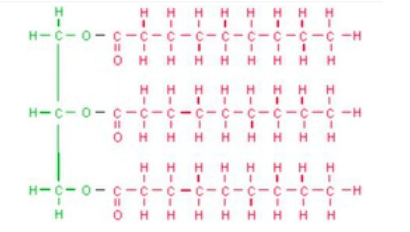
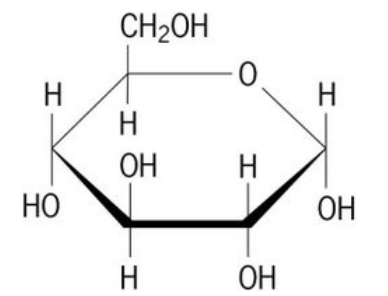
Which biomolecule is this a picture of?
a)
Protein
b)
Nucleic Acid
c)
Lipid
d)
Carbohydrate
70.
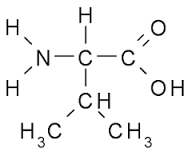
Which biomolecule is this a picture of?
a)
Protein
b)
Nucleic Acid
c)
Lipid
d)
Carbohydrate
71.
What elements are common to all 4 biomolecules?
a)
Carbon, hydrogen, nitrogen
b)
Carbon, Nitrogen, Phosphorus
c)
Carbon, Hydrogen, Oxygen
d)
Carbon, Hydrogen, Phosphorus
72.
The two types of folding in the secondary structure are.....
a)
alpha-helix & beta-pleated sheets
b)
polypeptide & nucleotide
c)
globular & fibrous
73.
The main bonding in the secondary structure of a protein is due to.....
a)
covalent bonding
b)
ionic bonding
c)
hydrogen bonding
d)
polar bonding
74.

The entire polypeptide forms a three-dimensional structure

a)

Primary

b)

Secondary

c)

Tertiary

d)

Quaternary

75.
Water-repelling
a)
hydrophobic
b)
myoglobin
c)
coagulation
d)
gluten