
 Worksheets
Life Science practice questions for Semester 1 final
Total questions: 48
Worksheet time: 44mins


The following list represents characteristics of a living thing :
made of cells, has lungs, can reproduce
grows and develops, responds to surroundings, can move
has similar chemicals, makes noises, made of cells
made of cells, grows and develops, uses energy

Which of the following characteristics of living things best explains why birds fly south for the winter?
Living things respond to their environment.
Living things maintain internal balance.
Living things are made up of units called cells.
Living things are based on a universal genetic code.

An organism made up of more than one cell would be called:
multicellular
unicellular
heterotroph
autotroph

Reproduction that only involves one parent and all offspring are identical; for example, binary fission of bacteria or amoebas.
Asexual
Sexual
Division
Addition
Reproduction that involves cells from two parents uniting to produce the first cell of a new organism.
Asexual
Sexual
Budding
Division
Maintaining a stable internal environment is called
homeostasis
equilibrium
balance
evenness
Identify the characteristic: Green plants produce their own food through the process of photosynthesis.
All living things use energy
All living things contain cells
All living things maintain homeostasis
All living things grow
Identify the characteristic: A camel has eyelashes that work to keep the dust and sand out of its eyes.
All living things adapt/respond to their environment
All living things grow
All living things have cells
All living things use energy

In this photo, what is an abiotic factor?
Deer
Grass
rain

The monkey would be a
decomposer
producer
primary consumer
secondary consumer

Mice might grow in population and destroy the community by eating all of the berry bushes if
wolves and snakes were removed from the food web
another predator migrated in to the community
the snake population grew
none of these

These organisms are often not shown in a food chain, but are important for recycling nutrients
producers
decomposers
primary consumers
carnivores
What is an ecosystem??
A group of organism of one species
All the living and non-living things that interact in an area
The study of the interaction between living organism and their environment
Soil, water, air and sunliight

what is the picture??
Food chain
Food web
Food maps
Mind mapping
What are the organisms that break down dead stuff?
Producer
consumer
Organism
Decomposer

The dragonfly provides energy for the .......??
Butterfly
Wolf
Lavanders
Thrush

What is it??
Herbivores
Carnivores
omnivore
All correct

What is an organism?
Several animals, plants, or single-celled life forms.
An individual animal, plant, or single-celled obejct.
An individual animal, plant, or single-celled life form.
Several animals and plants.


The largest number of individuals that an environment can support long term is...
carrying capacity
emigration
immigration
population density

Something that regulates the size of a population is called...
a limiting measure
a limiting factor
carrying capacity
biodiversity
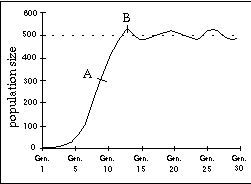
What is the carrying capacity of the graph?
around 500
more than 800
less than 300
around 700

What is the carrying capacity of the graph?
1000
8000
800
600


The graph to the right shows the interaction of the wolf and moose populations on Isle Pekie. If the moose population continues to increase, the wolves' food supply will increase. What will most likely happen to the wolf population as a result?
It will decrease.
It will increase.
It will remain the same.
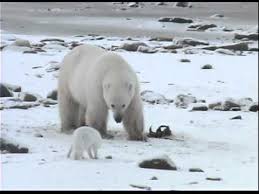
Two arctic fox are fighting with a polar bear for a sea lion carcass. One fox distracts the bear while the other eats. What type of limiting factor is the polar bear?
Predator-Prey Relationships
Competition
Herbivory Effect
Weather

What point on the graph represents the carrying capacity?
A
B
C
D

Water, sunlight, shelter, and space are resources that are often........
abiotic limiting factors
biotic limiting factors
non-limiting factors
exponetial factors
What is a predator?
An animal that is killed and eaten by other animals
An animal that kills and eats other animals
A consumer that hunts is called
Producers
Omnivore
Predator
Herbivore

What is the role of the bird?
Predator
Producer
Prey

