wayground logo

Free Printable Worksheets

Font size

S
M
L
XL
Worksheets

Midterm Review 2022

Total questions: 157

Worksheet time: 3hrs 32mins

Name
Class
Date
1.

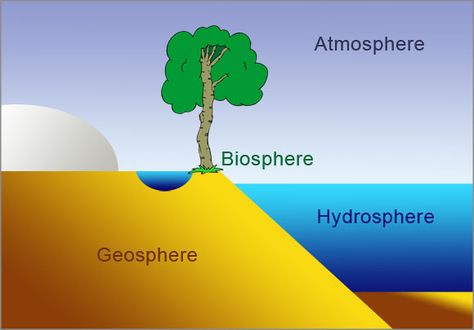
All living things on earth are part of the....

a)

Biosphere

b)

Geosphere

c)

Hydrosphere

d)

Cryosphere

2.

The Geosphere is...

a)

All liquid water on Earth

b)

A 100km thick layer of gases

c)

frozen water on earth

d)

Earths entire solid body

3.

Earth is divided into four different spheres. Which statement is true about the interaction between two of these spheres?

a)

Weather is an interaction between the hydrosphere and the geosphere.

b)

A plant receiving water from precipitation is an interaction between the biosphere and the hydrosphere.

c)

An ice cap providing shelter for an arctic animal is an interaction between the biosphere and the hydrosphere.

d)

The formation of the Grand Canyon is an example of an interaction between the geosphere and the atmosphere.

4.

How do the biosphere and the atmosphere interact?

a)

Air contains water.

b)

Volcanic ash can enter the atmosphere.

c)

Living things need air to survive.

5.

How do the biosphere and the hydrosphere interact?

a)

Air contains water.

b)

Volcanic ash can enter the atmosphere.

c)

Living things need water to survive.

d)

These two spheres do not interact.

6.

The Geosphere is...​

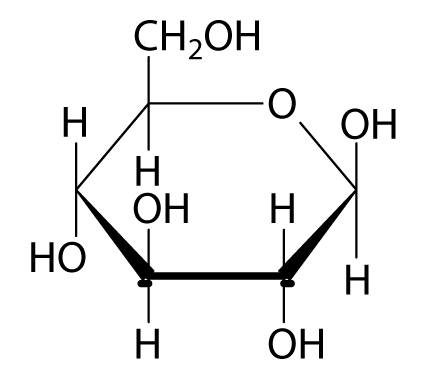
a)

All liquid water on Earth

b)

A 100km thick layer of gases

c)

frozen water on earth

d)

Earth's entire solid body

7.

the hydrosphere is made up of

a)

all of earths air

b)

all non living things on earth

c)

all of the Earth’s water

d)

all the nitrogen on earth

8.

the atmosphere is...

a)

all of earths water

b)

the gaseous layer that envelopes the earth.

c)

all the rock on earth

d)

all living things

9.

rain falls from clouds in the sky and that provide drinking water for wildlife and humans as well as water for plant growth.

This is an interaction between which spheres?

a)

hydrosphere: geosphere

b)

atmosphere: biosphere

c)

geosphere: hydrosphere

d)

hydrosphere: biosphere

10.

earth is what type of systems

a)

open

b)

closed

c)

isolated

11.
An open container allowing matter and energy to move freely is an example of which system?
a)
Open
b)
Closed
c)
Incomplete
d)
Extreme
12.
Earth is a system because...
a)
 It has water
b)
It has an atmosphere
c)
It has animals
d)
Each part makes up a whole
13.
________ is NOT an example of abiotic
a)
Rock
b)
Sand
c)
Highway
d)
Tree Frog
14.

The variety organisms in a given area

a)

Species

b)

Biodiversity

c)

Ecosystem

d)

Population

15.

A group of organisms that are closely related and can produce fertile offspring

a)

Virus

b)

Species

c)

Hybrid

d)

Bacteria

16.

The sum of all chemical reactions that occurs in living things

a)

Homeostasis

b)

Adaptation

c)

Photosynthesis

d)

Metabolism

17.

A community of organisms and and their physical environment

a)

Population

b)

Biosphere

c)

Ecosystem

d)

Biome

18.

Maintaining stable internal conditions despite changes in the external environment

a)

Homeostasis

b)

Metabolism

c)

Protein Synthesis

d)

Adaptation

19.

The change in living things over time

a)

Adaptation

b)

Evolution

c)

Metabolism

d)

Homeostasis

20.

An individual living thing

a)

Species

b)

Ecosystem

c)

Population

d)

Organism

21.

The basic unit of life

a)

Bacteria

b)

Cell

c)

Virus

d)

Molecule

22.

What is the point of a feedback loop?

a)

To provide the body with more energy

b)

To provide the body with more food

c)

To make sure the conditions in the body are always changing

d)

To make sure the conditions in the body remain stable

23.

A feedback loop best fits which characteristic of life?

a)

Cells

b)

Organization

c)

Homeostasis

d)

Adaptation

24.

According to the feedback loop, what does high blood sugar promote?

a)

Insulin Release

b)

Glucagon Release

c)

Insulin Uptake

d)

Glycogen Uptake

25.
The two types of feedback systems that help organisms maintain homeostasis are:
a)
positive and negative 
b)
receptor and effector
c)
static and dynamic
d)
minor and major
26.
Maintaining body temperature is an example of a:
a)
negative feedback loop
b)
positive feedback loop
27.
If the calcium in your blood decreases below homeostasis levels, a gland in the brain will sense the decrease and send a chemical message to your bones. Your bones will release calcium into the blood, bringing blood calcium levels back up.
a)
Positive Feedback Response
b)
Negative Feedback Loop 
28.
Which is true of prokaryotic and eukaryotic cells?
a)
Prokaryotic cells are larger than eukaryotic cells.
b)
Eukaryotic cells do not have nuclei, and prokaryotic cells do have nuclei.
c)
Prokaryotic cells lack membrane-bound organelles, and eukaryotic cells contain membrane-bound organelles.
d)
Eukaryotic cells are simpler than prokaryotic cells.
29.

Which do BOTH prokaryotes and eukaryotes contain?

a)

nucleus

b)

mitochondria

c)

ribosomes

d)

cell wall

30.

Which does only eukaryotic cells contain?

a)

nucleus

b)

DNA

c)

cell membrane

d)

ribosomes

31.

Bacteria is an example of a(n)

a)

prokaryotic cell.

b)

eukaryotic cell.

32.

What is NOT a part of cell theory:

a)

all cells come from existing cells

b)

all cells have a nucleus

c)

all living things are made of cells

d)

cells are basic unit of structure and function in living things

33.

Eukaryotes include fungi, plants, animals, and....

a)

bacteria

b)

protists

c)

archaebacteria

d)

eubacteria

34.

The fluid portion of the cell (all cells have this):

a)

nucleus

b)

cytoplasm

c)

pili

d)

cell membrane

35.

Structures that have different jobs within the cell:

a)

antibodies

b)

lipids

c)

organelles

d)

blood cells

36.
Which structures are found in plant cells, but not in animal cells?
a)
Cell membranes and mitochondria
b)
Vacuoles and cholorplasts
c)
Cell walls and cytoplasm
d)
Chloroplasts and cell walls
37.
Identify the correct order of the levels of organization from smallest to largest.
a)
molecule, atom, organelle, cell
b)
atom, molecule, cell, organelle
c)
atom, molecule, organelle, tissue
d)
atom, molecule, organelle, cell
38.
Which cellular structure in plants is responsible for photosynthesis?
a)
Nucleus
b)
Cell membrane
c)
Mitochondrion
d)
Chloroplast
39.
What is the function of the cell membrane, in ALL living organisms?
a)
Provides support and structure in the cell.
b)
Synthesizes protein for ATP for the cell.
c)
Storage of raw materials (food) and ATP for the cell. 
d)
Regulates the transport of materials into and out of the cell. 
40.
What type of transport is occurring in Part C of the diagram shown?
a)
Active Transport
b)
Osmosis
c)
Facilitated Diffusion
d)
Diffusion
41.

What is the function of the vacuole?

a)

To produce energy for the cell

b)

To store water and other nutrients

c)

To store genetic material (DNA)

d)

To give the cell shape and support

42.
Produces energy in the form of ATP for the cell.
a)
chloroplast
b)
mitochondria
c)
ribosome 
d)
nucleus
43.
Selectively permeable barrier that controls what enters and leaves the cell.
a)
cell membrane
b)
cell wall
c)
cytoskeleton
d)
rough ER
44.
Site of protein synthesis.
a)
nucleus
b)
mitochondria
c)
vacuole
d)
ribomsome
45.
Transports materials throughout the cell.  Acts as an assembly line for proteins.
a)
endoplasmic reticulum
b)
vacuole
c)
nucleus
d)
ribosome
46.
Contains digestive enzymes to break down worn out parts of the cell.
a)
vacuole
b)
lysosome
c)
ribosome
d)
nucleolus
47.
Rigid, nonliving support structure made of cellulose.
a)
cell membrane
b)
nuclear membrane
c)
lysosome
d)
cell wall
48.

Which organelle receives proteins and materials from the endoplasmic reticulum, packages them, and distributes them?

a)

lysosomes

b)

golgi apparatus

c)

ribosomes

d)

endoplasmic reticulum

49.
Genetic information is stored in the nucleus of all single or multicellular cells called
a)
Eukaryotes
b)
Prokaryotes
c)
Organelles
d)
Cytoplasm
50.

Is the human body an open, closed, or isolated system?

a)

Open

b)

Closed

c)

Isolated

51.

Which of these is a smaller or larger copy of an object; a physical model built to scale to show proportional relationships?

a)

Physical Model

b)

Conceptual Model

c)

Mathematical Model

d)

Simulation

52.

Which of these is a diagram or flowchart that shows how parts of a system are related or how a process works?

a)

Physical Model

b)

Conceptual Model

c)

Mathematical Model

d)

Simulation

53.

Which of these is an equation or set of equations that generates data related to how a system or process works?

a)

Physical Model

b)

Conceptual Model

c)

Mathematical Model

d)

Simulation

54.

Which of these is often in the form of a computer model; can be used to test variables and observe outcomes?

a)

Physical Model

b)

Conceptual Model

c)

Mathematical Model

d)

Simulation

55.

A ___ is a set of interacting components considered to be a distinct entity for the purpose of study or understanding.

a)

system

b)

boundary

c)

component

d)

feedback

56.

_____ defines the space of a system

a)

input

b)

boundary

c)

component

d)

feedback

57.

In a(n) _____, 'the sum is greater than its parts'.

a)

open system

b)

closed system

c)

isolated system

d)

emergent property

58.

Which of the following is true about water?

a)

The oxygen has a partial positive charge and the hydrogen as a partial negative charge.

b)

The oxygen has a partial negative charge and the hydrogen has a partial positive charge.

c)

Both the oxygen and hydrogen have a partial positive charge.

d)

Both the oxygen and hydrogen have a partial negative charge.

59.

Which of the following is true about hydrogen bonding?

a)

Oxygen atoms are attracted to each other

b)

Hydrogen atoms are attracted to each other

c)

Oxygen atoms are attracted to hydrogen atoms in the same water molecule

d)

Oxygen atoms are attracted to hydrogen atoms in a different water molecule

60.

This image shows

a)

Diffusion

b)

Active Transport

c)

Passive Transport

61.

Water molecules are

a)

Polar and dissolve other polar molecules

b)

Polar and dissolve nonpolar molecules

c)

Nonpolar and dissolve other nonpolar molecules

d)

Nonpolar and dissolve polar molecules

62.

Which of the following are true about waxes? (choose 2)

a)

They make up the cell membrane

b)

They are good at waterproofing

c)

They are made up of carbon rings

d)

They are very hydrophobic

63.

Which of the following are true about phospholipids? (choose 2)

a)

They make up the cell membrane

b)

They are a quick source of energy

c)

They have both a polar and a nonpolar side

d)

They make a waterproof coating

64.

Which of these is true about simple carbohydrates? (choose 2)

a)

They are make up of long hydrocarbon chains

b)

They provide energy for cells

c)

They can be broken down quickly

d)

They are very hydrophobic

65.

This is a

a)

Protein

b)

Lipid

c)

Nucleic Acid

d)

Carbohydrate

66.

Which of the following are inputs of cellular respiration? (choose 2)

a)

Water

b)

Oxygen

c)

Carbon Dioxide

d)

Glucose

e)

ATP

67.

Which of the following are outputs of cellular respiration? (choose 3)

a)

Carbon dioxide

b)

ATP

c)

Oxygen

d)

Glucose

e)

Water

68.

Which of the following statements is true?

a)

The energy in the bonds of the reactants and products is the same

b)

The products have more energy than the reactants

c)

The products have less energy than the reactants

d)

The reactants have more mass than the products

69.

Which of the following is true? (choose 2)

a)

The conversion of ATP to ADP is an exothermic reaction

b)

ADP has more energy than ATP

c)

The conversion of ADP to ATP is an exothermic reaction.

d)

ATP has three phosphate groups

70.

What properties of water account for capillary action?

a)

osmosis and adhesion

b)

high specific heat and adhesion

c)

low boiling point and adhesion

d)

cohesion and adhesion

71.

Which statement best explains the role of energy in cellular respiration?

a)

The cell transfers stored chemical energy to different chemical bonds

b)

The cell creates energy by forming large molecules

c)

The cell destroys energy by breaking down large molecules

d)

The cell creates stored chemical energy by capturing solar energy

72.

Which of the following statements is true?

a)

ATP and ADP do not contain energy

b)

ADP contains more energy than ATP

c)

ATP and ADP contain the same amount of energy

d)

ATP contains more energy than ADP

73.
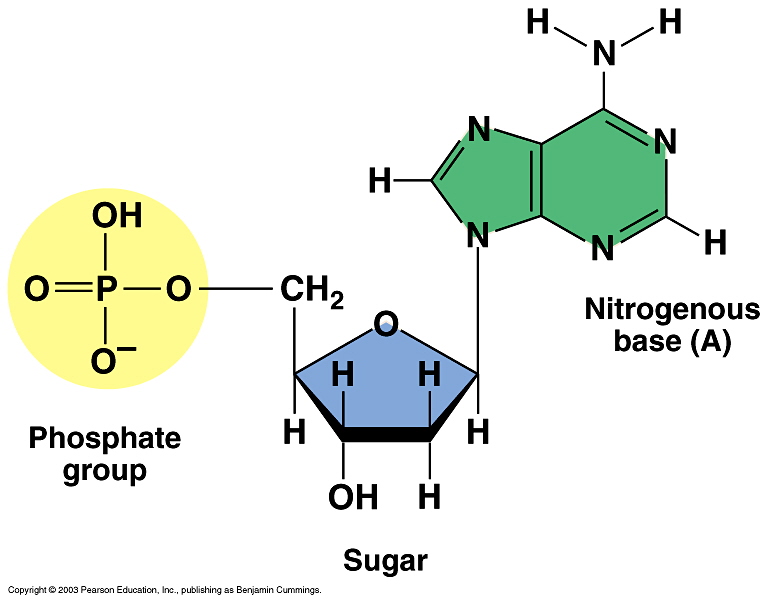
The monomer, building block, of DNA and RNA; made up of a sugar, phosphate, and nitrogenous base
a)
Amino Acid
b)
Fatty Acid
c)
Nucleotide
d)
Monosaccharide
74.

The structure was formed by the reaction called

a)

Hydrolysis

b)

Dehydration Synthesis

c)

Catalyst

d)

Homeostasis

75.
A student is preparing to run in a school track competition. For the quickest source of energy, the student should eat a food that contains a high percentage of...
a)
carbohydrates
b)
fat
c)
proteins
d)
sodium
76.
Which is true about the structure of starch molecules and protein
molecules?
a)
Starches and proteins are both polymers.
b)
Starches and proteins are both amino acids.
c)
Starches and proteins are both built from simple sugars.
d)
Starches and proteins are both built from nucleic acids.
77.
A worm turns away from light is an example of a worm
a)
reproducing
b)
doing cellular respiration
c)
having cells
d)
responding to its environment
78.
Before a soccer game Charlie always eats a big dinner. Which characteristic of life does this face best describe? 
a)
living things use energy
b)
living things reproduce
c)
living things grow and develop
d)
living things are based on a universal genetic code
79.

Atoms connected by covalent bonds share _____.

a)

hydrogen ions

b)

ionic compounds

c)

pairs of electrons

d)

carbon and oxygen

80.

From the information that two atoms have two different proton counts, you can conclude that the atoms ______

a)

belong to two entirely different elements

b)

represent different isotopes of one element

c)

are likely to react violently with each other

d)

might be different ions of the same element

81.

The diagram shows the particles that make up an atom. What is the name of the negatively charged particles shown in this model of an atom?

a)

prions

b)

neutrons

c)

protons

d)

electrons

82.

Which of these describes the charges in a water molecule?

a)

oxygen – strong positive hydrogen – slight positive

b)

oxygen - slight negative hydrogen – strong negative

c)

oxygen – slight negative hydrogen – slight positive

d)

oxygen – slight positive hydrogen – slight negative

83.

The diagram shows the reaction between magnesium (Mg) and oxygen (O) to form magnesium oxide (MgO).

Which pair of atoms are ions?

a)

A

b)

B

c)

Both

d)

No one

84.

The diagram shows the reaction between magnesium (Mg) and oxygen (O) to form magnesium oxide (MgO).

The bond is ......................

a)

ionic bond

b)

covalent bond

c)

hydrogen bond

85.
Which biomolecule is made of nucleotides and contain you DNA?
a)
Carbohydrate
b)
Lipids
c)
Protein
d)
Nucleic Acid
86.
Which biomolecule has sugars and starches?
a)
Lipids
b)
Proteins
c)
Carbohydrates
d)
Nucleic Acid
87.
Which biomolecule functions include enzymes­ which speeds the rate of chemical reactions, structural components in cells, mechanical functions in muscles and cytoskeleton, cell signaling, and immune response; provides structure and helps with chemical reactions 
a)
Protein
b)
Lipids
c)
Carbohydrate
d)
Nucleic Acid
88.
Lipids are made up of which of the following?
a)
glycerol and fatty acids tails
b)
glycerol and monolipids
c)
fatty acids and phosolipids
d)
amino acids and nucleotides
89.
What is the monomer of nucleic acids?
a)
Glycerol
b)
Monosaccharides
c)
Amino Acids
d)
Nucleotides
90.
Which biomolecule has sugars and starches?
a)
Lipids
b)
Proteins
c)
Carbohydrates
d)
Nucleic Acid
91.
Which biomolecule includes fats, such as triglycerides, oils, waxes, and steroids (cholesterol); insoluble in water; provides energy storage, insulation, part of cell membrane, and hormones 
a)
Nucleic Acid
b)
Lipids
c)
Carbohydrate
d)
Protein
92.
Identify the biomolecule
a)
Carbohydrate
b)
Lipid
c)
Protein
d)
Nucleic Acid
93.
Identify the biomolecule
a)
Lipid
b)
Protein
c)
Carbohydrate
d)
Nucleic Acid
94.
What is the monomer for a protein?
a)
Monosaccharide
b)
Triglyceride
c)
Amino Acid
d)
Nucleotide
95.
This biomolecule would be used for
a)
Building enzymes
b)
Storing energy
c)
Key source of energy
d)
Storing genetic information
96.
Which biomolecule is this a picture of?
a)
Protein
b)
Nucleic Acid
c)
Lipid
d)
Carbohydrate
97.
Which biomolecule functions include enzymes­ which speeds the rate of chemical reactions, structural components in cells, mechanical functions in muscles and cytoskeleton, cell signaling, and immune response; provides structure and helps with chemical reactions 
a)
Protein
b)
Lipids
c)
Carbohydrate
d)
Nucleic Acid
98.
Which biomolecule is important source of energy for humans; glucose for human cells, tissues, and organs; provides fiber, sugar, and starches; provides structural support, cell wall, and cell membrane maker?
a)
Nucleic Acid
b)
Lipid
c)
Carbohydrate
d)
Protein
99.
The arrangement of which three components is used to distinguish one molecule from another?
a)
carbon, hydrogen, and oxygen
b)
glucose, fructose, and ribose
c)
peptide, fatty acid, and purine
d)
water, carbon dioxide, and notrogen
100.
The waxy, organic substances used by aquatic birds to coat their feathers, when analyzed consists mostly of 
a)
lipids
b)
proteins
c)
carbohydrates
d)
nucleic acids
101.
Which biomolecule is made of nucleotides and contain you DNA?
a)
Carbohydrate
b)
Lipids
c)
Protein
d)
Nucleic Acid
102.
Which biomolecule includes fats, such as triglycerides, oils, waxes, and steroids (cholesterol); insoluble in water; provides energy storage, insulation, part of cell membrane, and hormones 
a)
Nucleic Acid
b)
Lipids
c)
Carbohydrate
d)
Protein
103.
Identify the biomolecule
a)
Carbohydrate
b)
Lipid
c)
Protein
d)
Nucleic Acid
104.
Identify the biomolecule
a)
Lipid
b)
Protein
c)
Carbohydrate
d)
Nucleic Acid
105.
What is the monomer for a protein?
a)
Monosaccharide
b)
Triglyceride
c)
Amino Acid
d)
Nucleotide
106.
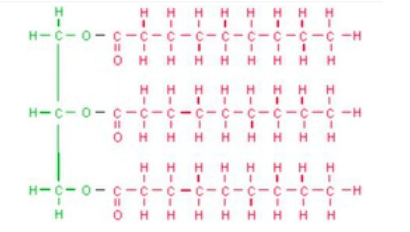
Lipids are made up of which of the following?
a)
glycerol and fatty acids tails
b)
glycerol and monolipids
c)
fatty acids and phosolipids
d)
amino acids and nucleotides
107.
Which biomolecule is this a picture of?
a)
Protein
b)
Nucleic Acid
c)
Lipid
d)
Carbohydrate
108.
The waxy, organic substances used by aquatic birds to coat their feathers, when analyzed consists mostly of 
a)
lipids
b)
proteins
c)
carbohydrates
d)
nucleic acids
109.
Which biomolecule is this a picture of?
a)
Protein
b)
Nucleic Acid
c)
Lipid
d)
Carbohydrate
110.
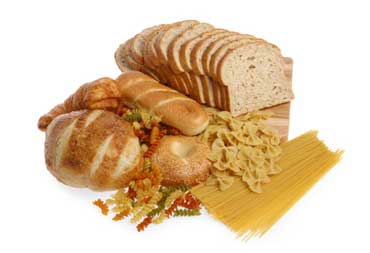
Which biomolecule is found in pastas and breads? (Hint: it is a polymer)
a)
Lipid
b)
Protein
c)
Simple Carbohydrate
d)
Complex Carbohydrate
111.
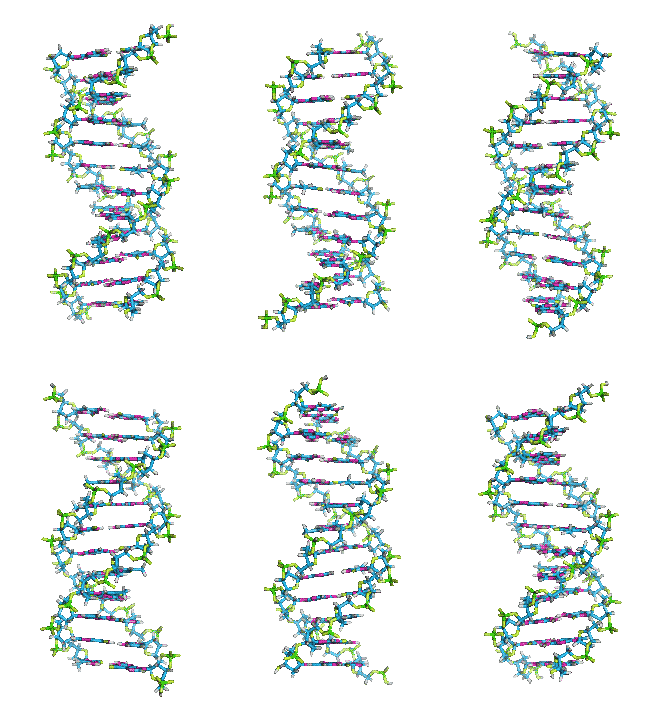
Which biomolecule is made of nucleotides and include your DNA? (Hint: they carry genetic information)
a)
Carbohydrate
b)
Lipids
c)
Protein
d)
Nucleic Acid
112.
Which biomolecule is responsible for insulation and LONG term energy storage?
a)
Proteins
b)
Nucleic Acids
c)
Lipids
d)
Carbohydrates
113.
The monomer (building block) of a nucleic acid is
a)
Monosaccharide
b)
Amino Acid
c)
Nucleotide
d)
Polysaccharide
114.

Where in a plant cell does photosynthesis take place

a)

Palisade cells

b)

Chlorophyll

c)

Chloroplasts

d)

Vacuole

115.

What is the purpose of photosynthesis?

a)

To release energy

b)

To create glucose

c)

To grow

d)

To get oxygen for respiration

116.
The process that converts food (glucose) into energy is called
a)
Cellular Respiration
b)
Photosynthesis
c)
Chloroplast
d)
Carbon dioxide
117.
The process of converting sunlight energy into chemical energy stored in a molecule is called
a)
Cellular respiration
b)
Photosynthesis
c)
Mitochondria
d)
Carbon dioxide
118.
Cellular respiration happens in a cell's
a)
Mitochondria
b)
Chloroplast
c)
Nucleus
d)
Cell wall
119.
Photosythesis happens in a cell's 
a)
Mitochondria
b)
Chloroplast
c)
Nucleus
d)
Cell Wall
120.
Oxygen is...
a)
A product of photosynthesis and cellular respiration
b)
A reactant of photosynthesis and cellular respiration
c)
A product of photosynthesis and a reactant of cellular respiration
d)
A reactant of photosynthesis and a product of cellular respiration
121.
Energy is released from ATP when
a)
a phosphate group is added
b)
adenine bonds to ribose
c)
ATP is exposed to sunlight
d)
a phosphate group is removed
122.
Plants need carbon dioxide from their environment to produce glucose during which stage of photosynthesis? 
a)
The light-dependent stage
b)
The light-independent stage 
c)
The electron transport chain
d)
ATP formation
123.
What molecule absorbs sunlight for photosynthesis?
a)
chloroplast
b)
thylakoid
c)
grana
d)
chlorophyll
124.

What is an enzyme that catalyzes the reaction in which a free Phosphate is added to an ADP molecule

a)

ADP synthase

b)

ATP polymerase

c)

ATP synthase

d)

ATT synthase

125.
Which bond of the ATP molecule is broken in order to release energy?
a)
A
b)
B
c)
C
d)
D
126.

Plants gather energy with light-absorbing molecules called

a)

thylakoids.

b)

pigments.

c)

chloroplasts.

d)

glucose.

127.

Which chemical is an electron carrier molecule?

a)

NADP+

b)

H2O

c)

carbon dioxide

d)

oxygen

128.

What two energy molecules are made by the light reaction? Select both answers.

a)

NADPH

b)

glucose

c)

ATP

d)

oxygen gas

129.

Which molecule supplies chlorophyll with electrons

a)

sun

b)

water

c)

oxygen gas

d)

NADPH

130.

Which wavelengths of light do chlorophyll absorb the best

a)

Green and red

b)

Green and blue

c)

Red and blue

d)

Red green and blue

131.
Why do leaves look green?
a)
it reflects all colors but green
b)
it reflects yellow and blue
c)
it reflects green light
d)
it absorbs green light
132.

Which of the following equations represents the overall chemical reaction for photosynthesis?

a)

6O2+ 6H2O → C6H12O6+ 6O2

b)

C6H12O6 + 6H2O→ 6O2+ 6O2

c)

6CO2+ 6H2O→ C6H12O6+ 6O2

d)

6O2 + 6H2O→ C6H12O6 + 6CO2

133.
Which of the following is anaerobic?
a)
ETC
b)
Kreb's Cycle
c)
Fermentation
d)
Calvin Cycle
134.
This is the second step of cellular respiration.
a)
Calvin Cycle
b)
Kreb's Cycle
c)
ETC
d)
Glycolysis
135.
This is the part of cellular respiration that makes the most ATP.
a)
glycolysis
b)
kreb's cycle
c)
ETC
d)
fermentation
136.

what is the item labelled J?

a)

ADP

b)

ATP

c)

NADPH

d)

H+

e)

ATP Synthase

137.
What is the correct equation for cellular respiration?
a)
6O2 + C6H12O6 -> 6CO2 + 6H2O + Energy
b)
6O2 + C6H12O6 + Energy -> 6CO2 + 6H2O
c)
6CO2 + 6H2O -> 6O2 + C6H12O6 + Energy
d)
6CO2 + 6H2O + Energy -> 6O2 + C6H12O6
138.
If oxygen is not present what process will occur in yeast cells?
a)
Alcoholic fermentation
b)
Respiration
c)
Photosynthesis
d)
Lactic acid fermentation
139.
Which process produces the most ATP per molecule of glucose?
a)
lactic acid fermentation
b)
aerobic respiration
c)
alcoholic fermentation
d)
all are about the same
140.
When glycolysis occurs,
a)
a molecule of glucose is split
b)
two pyruvate are made
c)
some ATP is produced
d)
all of these
141.

Where does the Krebs cycle take place?

a)

Cytoplasm

b)

Inner Mitochondrial Membrane

c)

Outer Mitochondrial Membrane

d)

Mitochondrial Matrix

142.

The waste product produced during the Krebs cycle is...

a)

Oxygen

b)

Water

c)

Carbon Dioxide

d)

ATP

143.

The term aerobic means

a)

wine-making

b)

with carbon dioxide

c)

without carbon dioxide

d)

with oxygen

e)

without oxygen

144.

In the electron transport chain, electrons are passed from one electron transport molecule to another and are finally accepted by

a)

an oxygen molecule

b)

a molecule of carbon dioxide

c)

a molecule of water

d)

ADP

145.

Muscle soreness associated with strenuous exercise is at least partly due to

a)

an excess of ATP that builds up during exercise

b)

the presence of lactic acid from fermentation by muscle cells

c)

the large amount of carbon dioxide that builds up in muscle

d)

the accumulation of alcohol from anaerobic respiration

146.
After cellular respiration is complete, on 38% of the energy in glucose is used. What happens to the rest of the energy?
a)
released as heat
b)
stored for later use
c)
eliminated by the digestive system
d)
turned into protein
147.
Where does glycolysis take place?
a)
Cytoplasm
b)
Stroma
c)
Thylakoid
d)
Mitochondria
148.
What is the name of the 1st step of cellular respiration?
a)
Glycolysis
b)
Kreb's Cycle
c)
ETC
d)
Anaerobic respiration
149.
What are the two reactants of cellular respiration?
a)
C6H12O6 & 6CO2
b)
6 CO2 & 6H2O
c)
C6H12O& 6O2
d)
6CO2 & 6O2
150.
Which is a product of the ETC?
a)
Carbon dioxide
b)
Glucose
c)
Oxygen
d)
Water
151.
Aerobic cellular respiration occurs in this order....
Glycolysis-->????-->ETC
a)
Krebs cycle
b)
Calvin cycle
c)
Light reactions
d)
Digestion
152.
Which of these is produced in the matrix of the mitochondria?
a)
Pyruvate
b)
Water
c)
Oxygen
d)
ATP
153.
Which of the following comes out of glycolysis?
a)
FADH2
b)
NADH
c)
H2O
d)
CO2
154.
If oxygen is present, pyruvic acid molecules molecules enter the
a)
mitochondria
b)
cytoplasm
c)
cell membrane
d)
golgi apparatus
155.
Which stage of cellular respiration produces the most NADH and FADH2?
a)
Glycolysis
b)
Pre-krebs
c)
Krebs cycle
d)
Electron Transport Chain
156.
Which stage of cellular respiration produces the most ATP molecules for cells?
a)
Glycolysis 
b)
Pre-Krebs
c)
Krebs cycle
d)
Electron transport chain
157.
The goal of fermentation after glycolysis is to regenerate which of the following?
a)
FAD
b)
NAD
c)
Oxygen
d)
Carbon dioxide