
 Worksheets
Weather Unit Review
Total questions: 67
Worksheet time: 2hrs 14mins
78% of the Earth's atmosphere is ___________ and 21% of the Earth's atmosphere is _____________.
Oxygen, Nitrogen
Nitrogen, Oxygen
Nitrogen, Carbon Dioxide
Oxygen, Carbon Dioxide
In what layer of the atmosphere do all weather events occur?
Stratosphere
Exosphere
Mesosphere
Troposphere
In the troposphere, the temperature _____ as altitude increases.
Increases
Decreases
Stays the same
Goes up and down
As altitude increases, air pressure....
Increases
Decreases
Stays the same
Goes up and down
The ozone layer is a sublayer of the ________ layer.
Troposphere
Stratosphere
Exosphere
Mesosphere
Why is the ozone layer vital to life on Earth?
Planes fly in the ozone layer
It is made up of oxygen (O2)
It shields the Earth from ultraviolet (UV) rays from the sun
It causes clouds to be created
In which layer of the atmosphere do meteors burn up?
Troposphere
Mesosphere
Thermosphere
Exosphere
This layer is the hottest layer of the atmosphere?
Troposphere
Stratosphere
Mesosphere
Thermosphere
This layer is the outermost layer of the atmosphere. Satellites orbit the atmosphere in this layer.
Exosphere
Mesosphere
Thermosphere
Ozone Layer
What is the order of the layers of the atmosphere, starting with the layer closest to Earth's surface?
Stratosphere, Troposphere, Exosphere, Mesosphere, Thermosphere
Troposphere, Stratosphere, Mesosphere, Thermosphere, Exosphere
Troposphere, Stratosphere, Mesosphere, Exosphere, Thermosphere
Troposphere, Stratosphere, Thermosphere, Exosphere, Mesosphere
Which explanation correctly describes the greenhouse effect?
The process of the atmosphere keeping the Earth's surface dense
The process of the atmosphere trapping the sun's radiation, and making the Earth warm and livable for humans
The process of the atmosphere keep us from floating into space
The process of the atmosphere reflecting all of the Sun's heat back into space

When water is heated up and changes from a liquid to a gas...


What process is shown by letter B in the diagram?
condensation
transpiration
evaporation
precipitation

What process is show by letter A in the diagram?
condensation
evaporation
accumulation
precipitation
What is the process called when water vapor turns to liquid water?
evaporation
condensation
precipitation
transpiration

What is it called when plants release water vapor through their leaves?
sublimation
respiration
transpiration
precipitation

What is shown by letter D in the diagram?
runoff
groundwater
melting
vapor
Water that seeps through the soil into the ground is ___.
condensation
evaporation
infiltration
precipitation
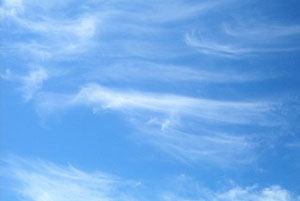
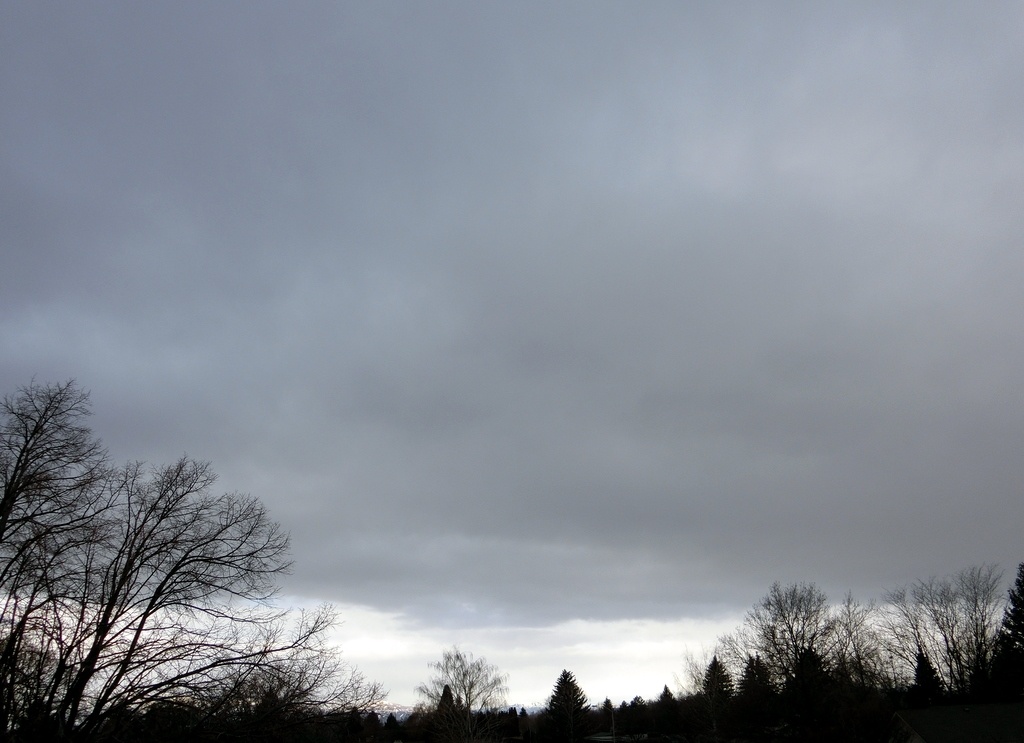
rainy/stormy weather
fair weather
stormy weather
Which type of cloud is highest in the sky?
Cirrus
Cumulus
Stratus
Which type of cloud is lowest in the sky?
Cirrus
Cumulus
Stratus
What climate is extremely cold all year round?
Polar
Mild
Tropical
Desert
Which climate is hot all year round and is very wet and rainy?
Desert
Tropical
Temperate
Mild
In which climate do we have all 4 seasons?
Desert
Tropical
Temperate
Polar

A narrow band of fast moving winds high in the atmosphere that move from west to east
Jet Stream
doldrums
equator
polar easterlies

Name that symbol.
Cold Front
Warm Front
Stationary Front
Occluded Front
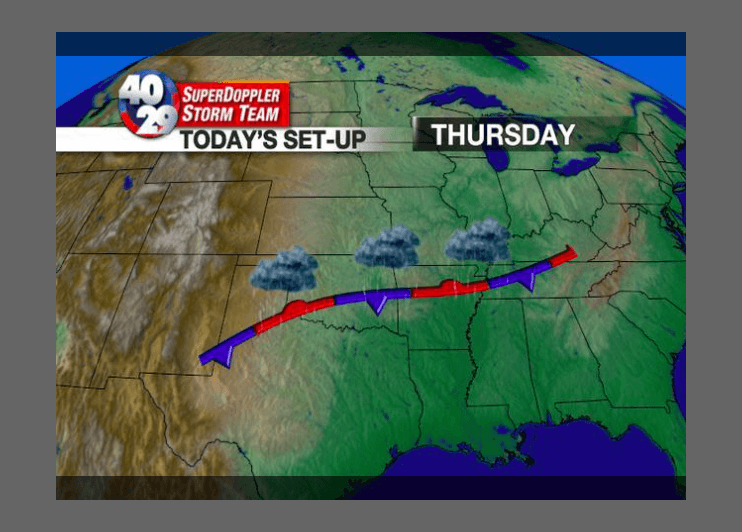
Name that symbol.
Cold Front
Warm Front
Stationary Front
Occluded Front
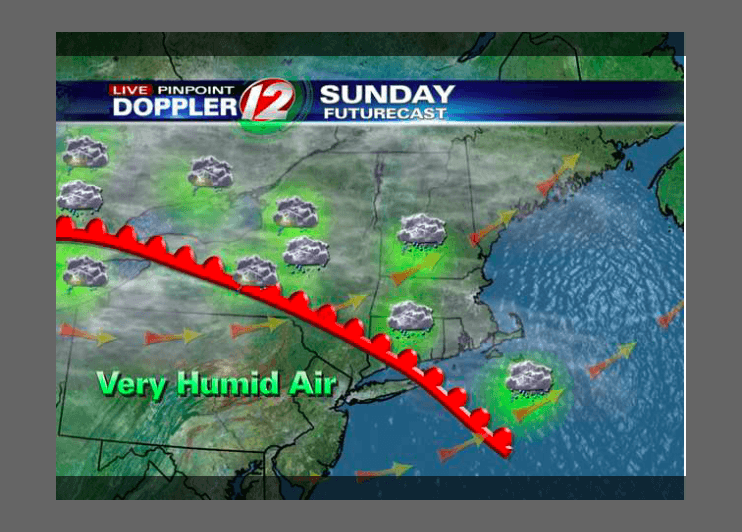
Name that symbol.
Cold Front
Warm Front
Stationary Front
Occluded Front
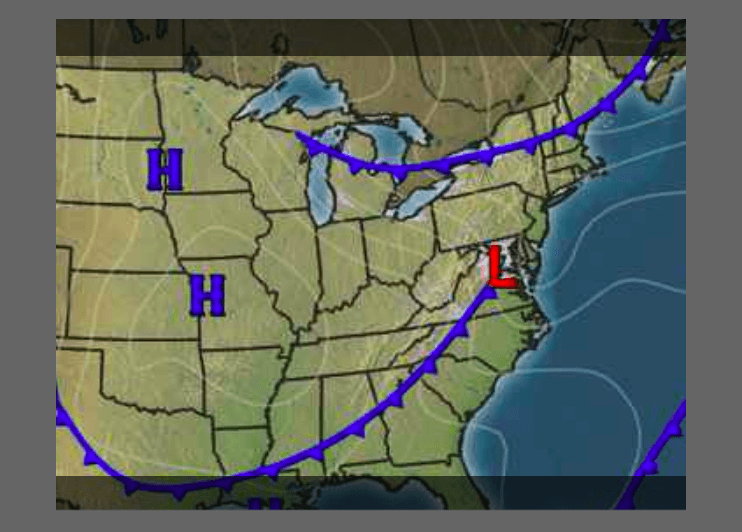
Name that symbol.
Cold Front
Warm Front
Stationary Front
Occluded Front

Brings warmer temperatures and rain.
Cold Front
Warm Front
Stationary Front
Occluded Front

Strong winds, heavy precipitation.
Cold Front
Warm Front
Stationary Front
Occluded Front

Neither air mass is strong enough to take over, brings a lot of precipitation for a few days
Cold Front
Warm Front
Stationary Front
Occluded Front
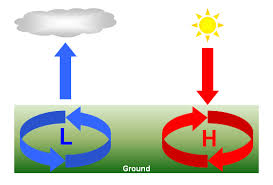
Which type of weather system brings warm, moist air?
Low Pressure System
High Pressure System
What is weather?
The amount of moisture in the air
The number of clouds in the sky
The speed of the wind
The state of the atmosphere at any particular time.
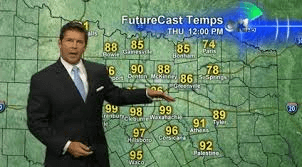
A ________________ is an intense storm with strong winds, heavy rain, lightning, and thunder.
tornado
hurricane
thunderstorm

Electricity may flow within the cloud also flow between the cloud and the ground. These electrical currents are _________________.
thunder
particles
lightning
When lightning moves through the air, the air gets very hot. The hot air expands rapidly. As it expands, it makes the air vibrate. These vibrations release energy in the form of sound waves called ______________.
thunder
particles
lightning
A _________ can from when a rapidly spinning column of low pressure air, called a funnel cloud touches the ground.
thunderstorm
hurricane
tornado
A tornado begins as a ___________ cloud that pokes through the bottom of a cumulonimbus cloud.
cirrus
cumulus
funnel
stratus
A _____________ is a large, rotating low-pressure system that forms over the warm waters of oceans near the equator.
tornado
hurricane
thunderstorm
flooding
Most hurricanes
cannot be seen from space
cross exposed land
become dangerous category 5 storms
lose their power when they move into cooler waters or moves over land
Winds are generated when air flows from a high pressure area into a ____.
region of intense moisture
cold front
low pressure area
storm that is already in progress
The calm area in the center of a hurricane is called the _____.
draft
funnel
eye
squall

Brings colder temperatures with a lot of precipitation or thunderstorms
Cold Front
Warm Front
Stationary Front
Occluded Front
The Coriolis effect causes ___________.
the Earth to rotate on its axis
earthquakes
global winds to move in a curved path instead of a straight line
the Earth to revolve around the sun
The tropical winds running that blow from east to west near the Equator are called the
subtropical westerlies
polar westerlies
trade winds
polar winds

