
 Worksheets
Topic 6 - Chemical Reactions Test Review
Total questions: 78
Worksheet time: 42mins


Freezing juice is a
Chemical Change
Physical Change

Exploding fireworks is a
Physical Change
Chemical Change
Katy Perry Song

Melting a chocolate bar is a
Physical Change
Chemical Change
Willy Wonka's Job

Rotting bananas show a
Chemical Change
Physical Change

Cutting your hair is a
Physical Change
Chemical Change
Is spoiling food (food that is going bad) a physical or chemical change?
Physical Change
Chemical Change
Is squeezing oranges to make orange juice a physical or chemical change?
Physical Change
Chemical Change
What happens when a piece of wood burns?
A physical change takes place.
A chemical change takes place.
The wood loses its gravity.
The wood becomes a tree again.
Which answer below makes a correct statement?
Physical change only changes the color.
Physical change only changes the size.
Physical change changes the matter into something totally different.
Physical change begins and ends with the same matter.
A change that does not result in a new substance.
Chemical Change
Physical Change
A teacher is demonstrating physical and chemical changes to their class. Which action should they use to demonstrate a chemical change?
Cutting a piece of paper with scissors.
Folding a piece of paper into an airplane.
Ripping a piece of paper with their hands.
Burning a piece of paper with a match.

Water freezing into ice is an example of a
Chemical Change
Physical Change

When rust forms it is an example of a
Chemical Change
Physical Change
What does the number 3 represent in 4NH3?
Subscript
Superscript
Coefficient
What does the number 4 represent in 4NH3?
Subscript
Superscript
Coefficient

How many total molecules is 4NH3?
4
1
3
12

How many Hydrogen (H) atoms are in 4NH3?
4
1
3
12

How many Nitrogen (N) atoms are in 4NH3?
4
1
3
12
How many total atoms make up 4NH3?
4
16
3
12

Which of the following is a chemical reaction?
Sodium and chlorine atoms bond to form salt molecules.
Ice melts to form water.
Carbon dioxide freezes to form dry ice.
Salt and water mix to form salt water.
Which of the following represent chemical equations? Check all that apply.
2Na + H2O → 2NaOH + H2
2KClO3 → 2KCl + 3O2
2Fe + 3O2 → 2Fe2O3
2H2O
3O3 , H2O
C2H6 + 5O2 → 2CO2 + 3H2O2
Given this chemical equation, what are the REACTANTS?
C2H6 and 5O2
2CO2 and 3H2O2
C2H6 + 5O2 → 2CO2 + 3H2O2
Given this chemical equation, what are the PRODUCTS?
C2H6 and 5O2
2CO2 and 3H2O2
The formula shown here represents the breakdown of a metal into rust. What elements are involved in this reaction? Check all that apply. 4Fe + 3O2 → 2Fe2O3
Iron
Oxygen
Carbon
Nitrogen

Review the image and then pick the scenario below which best illustrates the Law of Conservation of Mass.
A scientist adds 5g of Substance A to 5g of Substance B. A reaction occurs that produces 10g of Substance C.
A scientist adds 5g of Substance A to 5g of Substance B. A reaction occurs that produces 15g of Substance C.

Review the image here. Which type of equation- balanced or unbalanced, accurately follows the Law of Conservation of Mass?
Balanced Equations
Unbalanced Equations

Observe the reaction shown here. The formula for this equation is N2 + H2 → NH3 . Does this represent a balanced equation that obeys the Law of Conservation of Mass?
No. The reactants and products are not equal in numbers of atoms of each element.
Yes. The reactants and products are equal in numbers of atoms of each element.
Observe the reaction shown here. The formula for this equation is N2 + H2 → NH3 . What do you observe about the atoms of nitrogen in this reaction?
There are 2 atoms of nitrogen in the reactants and only 1 in the products. This violates the Law of Conservation of Mass.
There are 2 atoms of nitrogen in the reactants and 3 in the products. This violates the Law of Conservation of Mass.
There are 2 atoms of nitrogen in the reactants and 2 in the products. This is in line with the Law of Conservation of Mass.
Observe the reaction shown here. The formula for this equation is N2 + H2 → NH3 . What do you observe about the atoms of hydrogen in this reaction?
There are 2 atoms of hydrogen in the reactants and only 1 in the products. This violates the Law of Conservation of Mass.
There are 2 atoms of hydrogen in the reactants and 3 in the products. This violates the Law of Conservation of Mass.
There are 2 atoms of hydrogen in the reactants and 2 in the products. This is in line with the Law of Conservation of Mass.

In the equation shown, what are the reactant(s)?
N2 + H2
NH3
In the equation shown, what are the product(s)?
N2 + H2
NH3

Is this equation balanced?
Yes
No

Is this equation balanced?
Yes
No

Is this equation balanced?
Yes
No

To balance an equation you should:
ONLY change subscripts.
ONLY change coefficients.
Change BOTH subscripts and coefficients.

Which reactant is missing from the equation shown?
(What should go in the place of the "X"?)
One hydrogen atom.
Three hydrogen atoms.
Four oxygen atoms.
What is the left part of a chemical equation called?
2H2 + O2 ---> 2H2O
Reactants
Yields
Products
Chemical equation
What is the right part of a chemical equation called?
2H2 + O2 ---> 2H2O
Reactants
Yields
Products
Chemical Equation
What is the little number after an element in a chemical equation called?
Example: H2
Coefficient
Atom
Subscript
Equation
Is the following equation balanced?
Al + O2 ---> 2Al2O3
YES
NO
What is the number before a chemical formula called?
Example: 2H2 + O2 ---> 2H2O
Coefficient
Atom
Subscript
Equation
Is the following equation balanced?
4Fe + 3O2 ---> 2Fe2O3
YES
NO
In the equation, 2Mg + O2 ---> 2MgO, which are the reactants?
Mg and O
Mg and MgO
MgO
O and MgO
Balance this equation:
H2 + Cl2 ---> HCl
It is balanced.
H2 + Cl2 ---> 2HCl
3H2 + Cl2 ---> 6HCl
H2 + 3Cl2 ---> 6HCl
Balance this equation:
HgO ---> 2Hg + O2
It is balanced.
2HgO ---> 2Hg + O2
2HgO ---> Hg + O2
HgO ---> Hg + 2O2
Which side of a chemical equation is the reactant side?
Left (before the yields sign)
Right (after the yields sign)
Which side of a chemical equation is the product side?
Left (before the yields sign)
Right (after the yields sign)

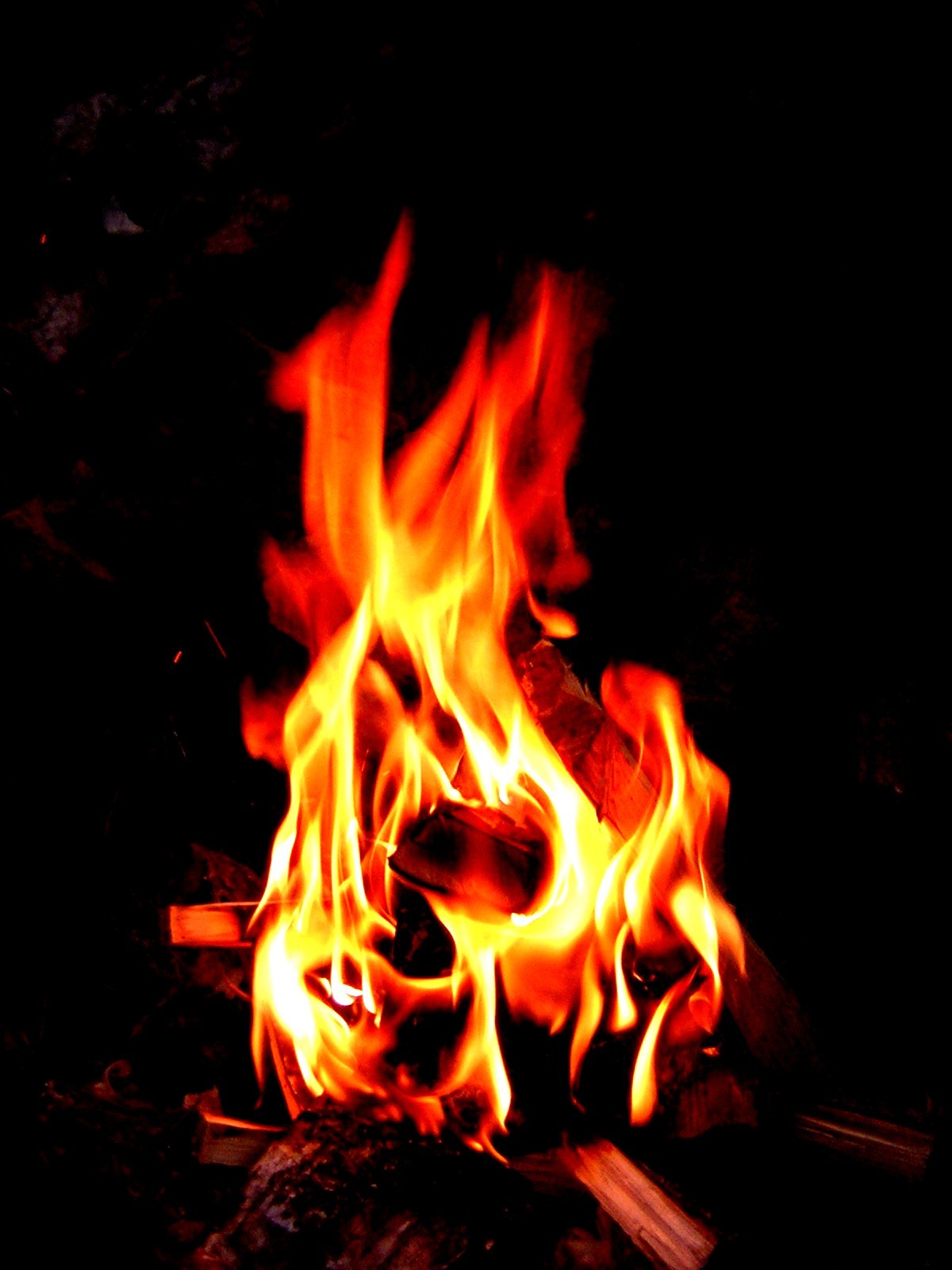
_____ reactions usually feel hot!
endothermic
exothermic
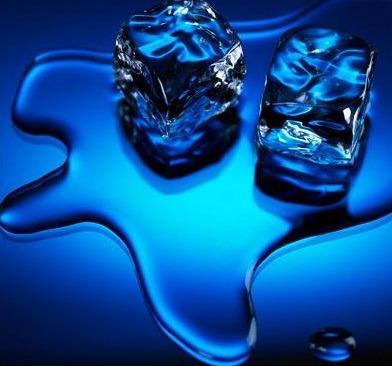
____ reactions usually feel cold.
endothermic
exothermic

The graph above is from which type of reaction?
Endothermic reaction
Exothermic Reaction

The graph above is from which type of reaction?
Endothermic reaction
Exothermic reaction
In an endothermic reaction, heat is ...
taken in
given out
What term is given to a reaction which transfers heat energy to the surroundings?
Endothermic
Reversible
Exothermic
Exotermic
When barium hydroxide and ammonium chloride react, the temperature of the mixture decreases. What kind of reaction is this?
Endothermic
Decomposition
Exothermic
Indothermic
When calcium reacts with water, the temperature changes from 18°C to 39°C. Which statement is correct?
The solution at the end is acidic
The reaction is reversible
The reaction is exothermic
The reaction is endothermic
if more heat energy is released in making bonds in the products than is taken in when breaking bonds in the reactants
Exothermic
Endothermic
Exotermic
Endotermic
if less heat energy is released in making bonds in the products than is taken in when breaking bonds in the reactants
Endothermic
Exotermic
Exothermic
Entrothermic

Is this diagram endothermic or exothermic
Endothermic
Exotermic
Exothermic
Endote

Is this an endothermic or exothermic reaction?
Endothermic
Exothermic

Is this an endothermic or an exothermic reaction?
Endothermic
Exothermic

What is the Heat of Reaction ΔH for this reaction?
-200 KJ
200 KJ
400 KJ
-300 KJ
How much activation energy is needed for this reaction?
300 KJ
500 KJ
400 KJ
100 KJ
Are the products or reactants of this reaction storing more energy in their chemical bonds?
Both storing the same
No way to tell
Products
Reactants
What type of reaction is this?
Exothermic
Endothermic
Energy Producing
No way to tell

This diagram is exothermic. Why?
products are always at a lower energy compared to the reactants
Products are always at a higher energy compared to the reactants
Reactants are always the same as the products
What type of chemical reaction absorbs energy and requires energy for the reaction to occur?
Endothermic
Exotermic
Exothermic
Endotermic

