
 Worksheets
LEAP PRACTICE QUIZ Short Version
Total questions: 74
Worksheet time: 1hrs 11mins
The Sun warms your skin on a cold day.
Conduction
Convection
Radiation

In heat transfer, heat always flows from the _______________ substance to the _______________ substance.
Hotter to colder
Colder to hotter
Hotter to hotter
Colder to colder

Near the ceiling of a room the air is warmer. The warm air rises because of
conduction
convection
radiation
Two objects have different temperatures. Object A has a temperature of 42 degrees and Object B is 37 degrees. Which direction should the energy transfer between Objects A and B?
From Object A to Object B
From Object B to Object A
Energy will not transfer
Energy will transfer both directions
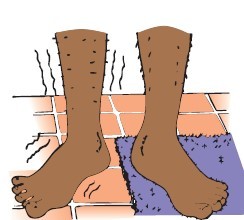


What causes hot and cold water to become the same temperature once they are combined?
The heat moves from cooler temperature to warmer temperature.
The energy of the hot water runs out.
Heat (thermal) energy from the hot water is transferred to the cold water.
Heat (thermal) energy causes the water to boil.

What type of thermal energy transfer is number 3 pointing to?
Convection
Conduction
Radiation
Insulation

What happens when the coffee and the cup are in thermal equilibrium?
The temperature of the cup is increasing
The temperature of the coffee is decreasing
There is no net heat flow from the coffee to the cup
There is a net flow from the coffee to the cup
Hot things have ____________ thermal energy than cold things
more
less
same
potato
Cold things often have a _________ kinetic energy because_______
lower; particles are moving around less
lower; particles are moving around more
higher; particles are moving around the same
higher; particles do not move
As temperature increases, molecules _____________
move slower
move the same
move faster
stop moving
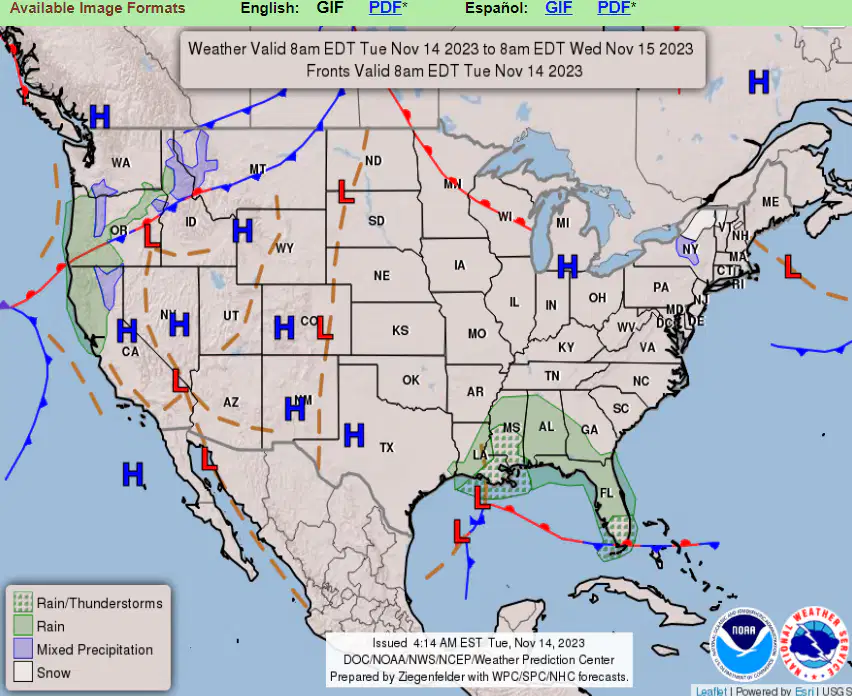
What is the weather like in western Texas like today and why?
Cloudy and rainy due to a low pressure system.
Cloudy and rainy due to a high pressure system.
Clear and Sunny due to a low pressure system.
Clear and Sunny due to a high pressure system.
Label the parts of the water cycle.
Infiltration
Surface Runoff
Precipitation
Evaporation
Condensation
Transpiration

What would we expect the climate in the City at Point A to be like?
Hot and humid due to ocean temperatures.
Cold due to ocean temperatures.
Rainy and stormy.
Volcanic due to underground storms.
What is the weather like in Southeast Louisiana like today and why?
Cloudy and rainy due to a low pressure system.
Cloudy and rainy due to a high pressure system.
Clear and Sunny due to a low pressure system.
Clear and Sunny due to a high pressure system.
When a HIGH Pressure System is over an area, what is the weather like there?
Sunny and clear skies.
Cold and frigid.
Hurricane's form.
Cloudy and rainy.

What is responsible for all the different temperatures on this map of the Earth?
Volcanic activity.
The Coriolis Effect.
Themohaline Currents.
Uneven heating by the Sun.

What kind of front is pictured here?
Cold Front
Warm Front
Occluded Front
Stationary Front

What will the weather be like in Kraemertown?
Sunny, with a 50% chance of blue pointy things.
It will most likey be raining.
Tropical winds and light snow.
100 degrees F
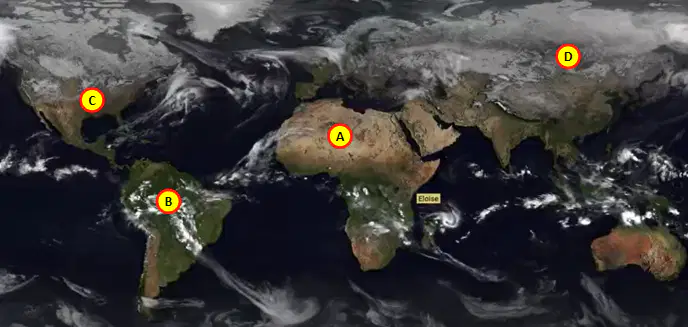
Which point gets the most amount of precipitation?
Point A.
Point B.
Point C.
Point D.

What is primarily responsible for the swirly cloud patterns we saw while looking at our year's worth of weather model?
The Coriolis Effect.
Polar transpiration.
High altitude winds.
Low altitude winds.

What is most likely causing the area of intense rains over southwestern Texas?
A warm front moving through.
A high pressure system.
A cold front moving through.
North American Camel- Herding Ocelots (NACHO's).

What kind of front is pictured here?
Cold Front
Warm Front
Occluded Front
Stationary Front

How is it possible that the Atacama Desert can be found next to the the Amazon Rainforest, one of the wettest places on Earth, when rain is constantly heading that direction?
The Andes Mountain Range acts as a rain shadow.
Dry winds.
The Coriolis Effect.
Climate Change.
How can you tell a chemical change has occured (choose the three that apply)?
The reactants change state but remain the same
Gas (bubbles) are produced
You can glue it back together
Thermal energy is produced (exothermic reaction)
Light or sound may be produced

What is the process that turns a gas into a liquid?
melting
freezing
evaporation
condensation
Which model below best represents CO2?

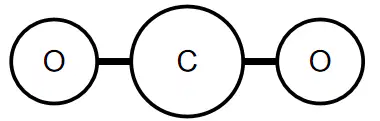

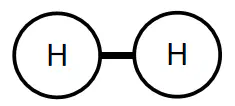
Put the molecules in order as follows: Water, Carbon Dioxide, Molecular Oxygen, Molecular Hydrogen.


In a physical change -
The reactants combine to change to something new
The law of the conservation of mass is broken
Gases are produced through an exothermic reaction
A change happens but the item remains the same
Which molecular model represents 3HCl?


The law of conservation of mass states that matter can not be created nor destroyed, it can only ________________.
Destroyed a little bit
Turn invisible
transformed/changed
none of the above

Is fruit ripening a physical or chemical change?
Physical Change
Chemical Change
In a chemical reaction (choose both that apply) -
The substance stays the same but changes state
The substances involved change into something else with different properties
Explosions always occur
The reaction is almost impossible to undo

Is digesting food a physical or chemical change?
Physical Change
Chemical Change
Which molecular model best represents Na2CO3?


Is photosynthesis a physical or chemical change?
Physical Change
Chemical Change

What is the process that turns a liquid into a gas?
melting
freezing
evaporation
condensation
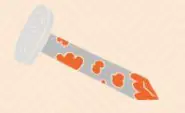
Is rust on a nail a physical or chemical change?
Physical Change
Chemical Change

In which state of matter are the particles the moving the fastest?
solid
liquid
gas
What is the digestive system?
A system to take out the bad stuff that's in your body
A system where a certain group of organs work together to convert food into energy to feed the body
A system where certain organs in the body digest the food you eat
A system that the organs in the stomach make food for the body to digest.
Where does the digestive system start?
The liver
The throat
The stomach
The mouth
These are proteins that aid and speed up chemical reactions (allowing reactions to proceed at a faster rate than would occur without them). These are found in your saliva and throughout the digestive system and break down food from larger molecules to smaller molecules.
enzymes
macromolecules
small intestines
microscopic earthquake jaguars that steal your food
C6H12O6 is a very important molecule known as _________.
mucus
sucrose
glucose
complex carbohydrates

Why does your body have a heart?
It acts as a pump so that blood can get to every part of the body
It controls the actions of the rest of your body
It creates blood
To fall in love, of course!

Why is blood so important for energy?
Has the brain, spinal cord and nerves in it
It has oxygen and food molecules in it, which is delivered to every cell in the body
It looks really cool
It allows us to sleep

A long chain of glucose molecules is called a _________ __________. Enzymes break these into glucose molecules.
complex carbohydrate
simplex carbohydrate
chained carbohydrate
free the carbohydrates
During the chemical reaction Cellular Respiration, oxygen and glucose react to create a molecule of pure energy called ____.
DNA
ATP
Fat
Starch
Carries oxygen and nutrients to all parts of the body.
Integumentary
Nervous
Circulatory
Respiratory
Receives stimuli and transports impulses, coordinates actions and reactions in the body
Integumentary
Nervous
Circulatory
Respiratory
Supplies blood with oxygen and rids the body of carbon dioxide
Integumentary
Nervous
Circulatory
Respiratory
Select all that are products of Photosynthesis.
Water
Carbon Dioxide
Oxygen
Sunlight (Light Energy)
Glucose (Sugar/food)
Which below is the CORRECT equation for CELLULAR RESPIRATION?
oxygen + glucose(sugar) --> carbon dioxide + water + ATP's
carbon dioxide + water + sunlight --> oxygen + sugar
carbon dioxide + oxygen + sunlight --> glucose (sugar) + water
oxygen + water --> sunlight + carbon dioxide + glucose (sugar)
Which below is the CORRECT equation for CELLULAR RESPIRATION?
O2 + C6H12O6 --> CO2 + H2O + ATP's
CO2 + H2O + sunlight --> O2 + C6H12O6
CO2 + O2 + sunlight --> C6H12O6 + H2O
O2 + H2O --> sunlight + CO2 + C6H12O6
Which below is the CORRECT equation for Photosynthesis?
C6H12O6 + O2 --> H2O + CO2 + ATP's
H2O + CO2 + sunlight --> C6H12O6 + O2
CO2 + O2 + sunlight --> C6H12O6 + H2O
O2 + H2O --> sunlight + CO2 + C6H12O6
Which below is the CORRECT equation for Photosynthesis?
O2 + C6H12O6 --> CO2 + H2O + ATP's
CO2 + H2O + sunlight --> O2 + C6H12O6
CO2 + O2 + sunlight --> C6H12O6 + H2O
O2 + H2O --> sunlight + CO2 + C6H12O6
Energy flows into the photosythesis/cellular respiration matter cycling from the ______.
sun
plants
soil
water
Energy exits the Photosynthesis/Cellular Respiration by ___________.
Being used as CHEMICAL energy by cells, after being stored in glucose.
Being used to make sunlight.
Being used as LIGHT energy by the cells, after being stored in solar cells.
It is stolen by microscopic cell ameoba.
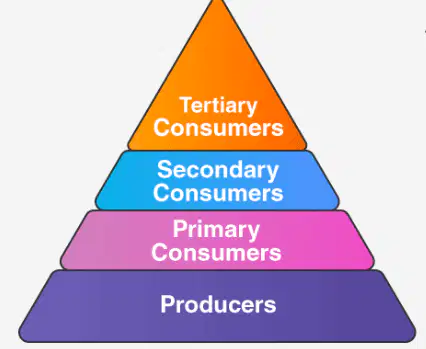
Which group of living things on the energy pyramid contain the MOST energy?
Tertiary
Consumers
Secondary
Consumers
Primary
Consumers
Producers
Where does the energy entering the energy pyramid come from?
food
the sun
bacteria
comets
What three things do plants need to perform photosynthesis?
Water, carbon dioxide, and sunlight.
Water, soil, and sunlight.
Water, soil, and air.
The power of friendship!

Which organelle is responsible making food (Glucose) using sunlight?
Cell Membrane
Nucleus
Chloroplast
Mitochondria
Which 2 are outputs for photosynthesis?
(Pick 2)
Carbon Dioxide
Oxygen
Water
Sugar
Sunlight

What is the original source of energy for this ecosystem?
Plants
Animals
Air
Sun

If the population of rattlesnakes were to decrease, why would that help to increase the population of hawks?
Rattlesnakes eat hawks
Hawks eat rattlesnakes
Rattlesnakes and hawks both eat kangaroo rats.
It would not help the hawk population.

If the populations of grasshoppers would decrease, what affect would that have on the population of lizards?
Increase
Stay the same
Decrease
Unable to determine

If the trend from 1990 to 2010 were to continue, how many sightings would we expect in 2020?
20 or more
between 10-15
between 5-10
less than 5

A system made up of all the living and nonliving things in an area
Biodiversity
Ecosystem
Dynamics
Service

An event that causes changes to the living or nonliving parts of an ecosystem
Ecosystem
Disturbances
Biodiversity
Succession

