
Font size
 Worksheets
🚀9.15
Total questions: 79
Worksheet time: 42mins

Which of the following is the best strategy to use when you are unsure of an answer on a multiple-choice test?
Skip the question and never return to it
Eliminate obviously wrong answers and make an educated guess
Always choose option C
Leave the answer blank

If you have 60 minutes to complete a 30-question test, what is the best way to manage your time?
Spend equal time on each question
Spend more time on the first 10 questions
Answer the hardest questions first
Spend all your time on the last question

When reading a multi-select question, what should you do first?
Select all the options quickly
Read the question and all options carefully before choosing
Choose the first two options
Skip the question

Which of the following is a good way to check your answers before submitting a test?
Change all your answers to different choices
Review only the questions you found easy
Review all your answers and make sure you answered every question
Submit the test without reviewing

If a question asks for the "best" answer, what should you do?
Choose the first answer that seems correct
Read all options and select the most complete and accurate one
Pick the longest answer
Choose the answer that is most similar to the question

What is the most effective way to approach a reading comprehension question on a test?
Read the questions first, then the passage
Read the passage first, then the questions
Guess the answers without reading
Only read the first and last sentences of the passage

If you encounter a math problem you do not understand, what should you do?
Skip it and never return
Try to break it into smaller parts and solve what you can
Copy the answer from a friend
Leave it blank

Which of the following is a good test-taking strategy for multi-select questions?
Select all options to increase your chances
Only select options you are sure are correct
Select options at random
Always select the first and last options

If you finish your test early, what should you do?
Submit it immediately
Use the extra time to review your answers
Leave the room
Change all your answers

When you see the word "not" in a test question, what should you do?
Ignore it
Pay special attention because it changes the meaning of the question
Always choose the first answer
Skip the question

You are given a multi-select question: "Select all prime numbers from the list below." What is the best approach?
Select every number
Use your knowledge of prime numbers to eliminate non-primes, then double-check your choices
Only select the first number
Choose numbers at random

If you notice a pattern in the answer choices (e.g., two answers are very similar), what should you do?
Ignore the pattern
Carefully compare the similar answers to find subtle differences and choose the most accurate one
Choose both similar answers
Pick the answer that is different

A question asks: "Which of the following is NOT a property of water?" How should you approach this question?
Look for the answer that is true about water
Identify all properties of water you know, then eliminate those from the options
Choose the answer you are unsure about
Select the first option

You are running out of time on a test. What is the best strategy to maximize your score?
Leave the remaining questions blank
Quickly answer all remaining questions, making educated guesses if necessary
Spend all your time on one question
Submit the test immediately

If you are unsure about the meaning of a word in a test question, what should you do?
Skip the question
Use context clues from the question or passage to infer the meaning
Guess randomly
Ask a friend

A math test question gives you a word problem. What is the best way to solve it?
Ignore the story and look for numbers to add
Read the problem carefully, identify what is being asked, and plan your solution before solving
Guess the answer
Only solve the first part of the problem

If you notice that you are spending too much time on one question, what should you do?
Continue working on it until you solve it
Move on to the next question and return if you have time
Leave the test
Guess and never return

A test question asks you to "justify your answer." What does this mean you should do?
Write any answer you want
Provide reasons or evidence to support your answer
Leave the answer blank
Only write the answer without explanation

If you are allowed to use scratch paper during a test, what is the best way to use it?
Doodle or draw pictures
Organize your thoughts, work out problems, and keep track of important information
Ignore it
Write your name repeatedly

Which of the following best describes an endothermic process during a phase change?`
Heat is released as a substance freezes.
Heat is absorbed as a substance melts.
Heat is released as a substance condenses.
Heat is absorbed as a substance cools.

When looking at a heating curve, what does a flat (horizontal) line indicate?
The temperature is increasing rapidly.
The substance is undergoing a phase change.
The substance is cooling down.
The substance is a gas.

Which phase change is exothermic?
Melting
Boiling
Condensation
Sublimation

On a cooling curve, what happens to the energy of the particles as a substance freezes?
The energy increases.
The energy stays the same.
The energy decreases.
The energy disappears.

Which of the following correctly matches the phase with its location on a typical heating curve (from left to right)?
Gas, Liquid, Solid
Solid, Liquid, Gas
Liquid, Solid, Gas
Gas, Solid, Liquid

Which statement best describes what happens at the boiling point on a heating curve?
The substance is changing from liquid to gas.
The substance is changing from gas to liquid.
The temperature decreases.
The substance is changing from solid to liquid.

Which of the following is an example of an exothermic reaction?
Ice melting in your hand
Water boiling on a stove
Water freezing in a tray
Solid carbon dioxide (dry ice) turning into gas

A student observes a heating curve and notices two flat sections. Explain what is happening to the substance during these flat sections and why the temperature does not increase.
The substance is cooling down rapidly.
The substance is undergoing two different phase changes, and energy is used to break intermolecular bonds rather than increase temperature.
The substance is evaporating and condensing at the same time.
The substance is losing energy to the environment.

A student claims that during boiling, the temperature of the liquid increases until all the liquid has turned to gas. Use your understanding of heating curves to explain whether this claim is correct or incorrect.
Correct, because energy always increases temperature.
Incorrect, because during boiling, the temperature remains constant as energy is used for the phase change.
Correct, because boiling is an endothermic process.
Incorrect, because the temperature decreases during boiling.

Analyze a heating curve and determine at which points the substance is a mixture of two phases. Explain your reasoning.
Only at the beginning of the curve
At the flat sections, because the substance is transitioning between phases (e.g., solid and liquid, or liquid and gas)
At the sloped sections, because temperature is changing
Only at the end of the curve

Suppose you are given a heating curve for an unknown substance. How could you use the curve to estimate the melting and boiling points of the substance?
By finding the highest and lowest points on the curve
By identifying the temperatures at the flat sections of the curve
By measuring the length of the curve
By looking at the steepest slope

A student is analyzing a cooling curve and notices that the temperature remains constant at a certain point even though the substance is still losing energy. What is the best explanation for this observation?
The thermometer is broken.
The substance is undergoing a phase change, and energy is being released as bonds form.
The substance is not losing energy.
The substance is evaporating.

If you wanted to design an experiment to show the difference between endothermic and exothermic phase changes, which two processes would you choose and why?
Melting and freezing, because melting absorbs energy (endothermic) and freezing releases energy (exothermic)
Boiling and condensation, because both are endothermic
Melting and boiling, because both are exothermic
Freezing and condensation, because both absorb energy

Explain how energy transfer is different during the sloped (slanted) and flat portions of a heating.
Energy is only transferred during the sloped (slanted) portions.
During sloped (slanted) portions, energy increases temperature; during flat portions, energy changes the phase without changing temperature.
Energy is not transferred during the flat portions.
Energy is lost during sloped (slanted) portions and gained during flat portions.

A sample of a substance is heated and its temperature is recorded over time. The temperature graph shows two plateaus. What can you infer about the substance from this observation?
The substance has two different melting points.
The substance undergoes two phase changes, likely melting and boiling.
The substance is impure.
The substance is not changing phase.

A student is given a graph of a cooling curve and asked to label the sections where the substance is solid, liquid, and gas. What strategy should the student use to accurately label these sections?
Label the sections based on the order they appear on the graph.
Use the temperatures at the flat sections to identify phase changes, then label the sloped (slanted) sections between them as solid, liquid, or gas.
Guess based on the length of each section.
Label all sections as liquid.

Which of the following best describes what happens to the temperature of a substance during a phase change, such as melting or boiling?
The temperature increases rapidly.
The temperature remains constant.
The temperature decreases steadily.
The temperature fluctuates randomly.

What is the main difference between evaporation and boiling?
Evaporation occurs only at the boiling point, while boiling can happen at any temperature.
Boiling occurs throughout the liquid, while evaporation happens only at the surface.
Evaporation requires more energy than boiling.
Boiling does not involve energy transfer.

Which process describes a solid changing directly into a gas without becoming a liquid first?
Condensation
Sublimation
Deposition
Freezing

What happens to the particles of a substance as it freezes?
They move faster and spread apart.
They stop moving completely.
They slow down and arrange into a fixed pattern.
They gain energy and move more freely.

Which of the following is an example of deposition?
Water boiling to form steam
Frost forming on a cold window
Ice melting into water
Dew forming on grass

Which phase change requires the removal of energy from a substance?
Melting
Evaporation
Freezing
Sublimation

Which statement best explains why sweating cools your body?
The sweat absorbs heat from the air.
The sweat evaporates, taking heat away from your skin.
The sweat freezes on your skin.
The sweat condenses, releasing heat.

A student observes that when ice melts in a glass of water, the temperature of the water remains at 0∘ C until all the ice has melted. Explain why the temperature does not increase until all the ice is gone.
The ice absorbs energy, which is used to break the bonds between particles rather than increase temperature.
The water cools down as the ice melts.
The glass absorbs all the heat.
The air temperature keeps the water at 0∘ C.

A wet shirt dries faster on a windy day than on a calm day. Using your knowledge of phase changes and energy transfer, explain why this happens.
Wind increases the temperature of the shirt.
Wind removes water vapor, increasing the rate of evaporation.
Wind causes condensation on the shirt.
Wind freezes the water in the shirt.

If you place a sealed container of water in a freezer, describe the energy transfer that occurs as the water freezes.
The water absorbs energy from the freezer.
The water releases energy to the surroundings as it changes to ice.
The water neither gains nor loses energy.
The water gains energy from the air inside the container.

A student notices that dry ice (solid carbon dioxide) disappears without leaving a liquid behind. What phase change is occurring, and what energy transfer is involved?
Deposition; energy is released.
Sublimation; energy is absorbed.
Melting; energy is released.
Freezing; energy is absorbed.

During which phase change does a substance release energy to its surroundings?
Melting
Evaporation
Condensation
Sublimation

If you observe frost forming on the outside of a cold can taken out of the freezer, which phase change is occurring and why?
Condensation, because water vapor turns into liquid.
Deposition, because water vapor turns directly into solid ice.
Sublimation, because ice turns into vapor.
Melting, because ice turns into water.

A student heats a sample of ice at −10∘ C until it becomes steam at 110∘ C. At which points does the temperature remain constant, and why?
Only while the ice is melting, because energy is used to break bonds.
Only while the water is boiling, because energy is used to form bonds.
During both melting and boiling, because energy is used for phase changes, not temperature increase.
The temperature never remains constant.

Why does adding salt to ice cause the ice to melt faster, even though the temperature is below 0∘ C?
Salt increases the freezing point of water.
Salt lowers the freezing point, so ice absorbs energy and melts at a lower temperature.
Salt makes the ice warmer.
Salt prevents energy transfer.
Place these labels in the appropriate spots.
melting
boiling
liquid
Which area represents a melting?
Label the phase changes

When you change the amount of (a) energy in a substance, it will change from one (b) to another.

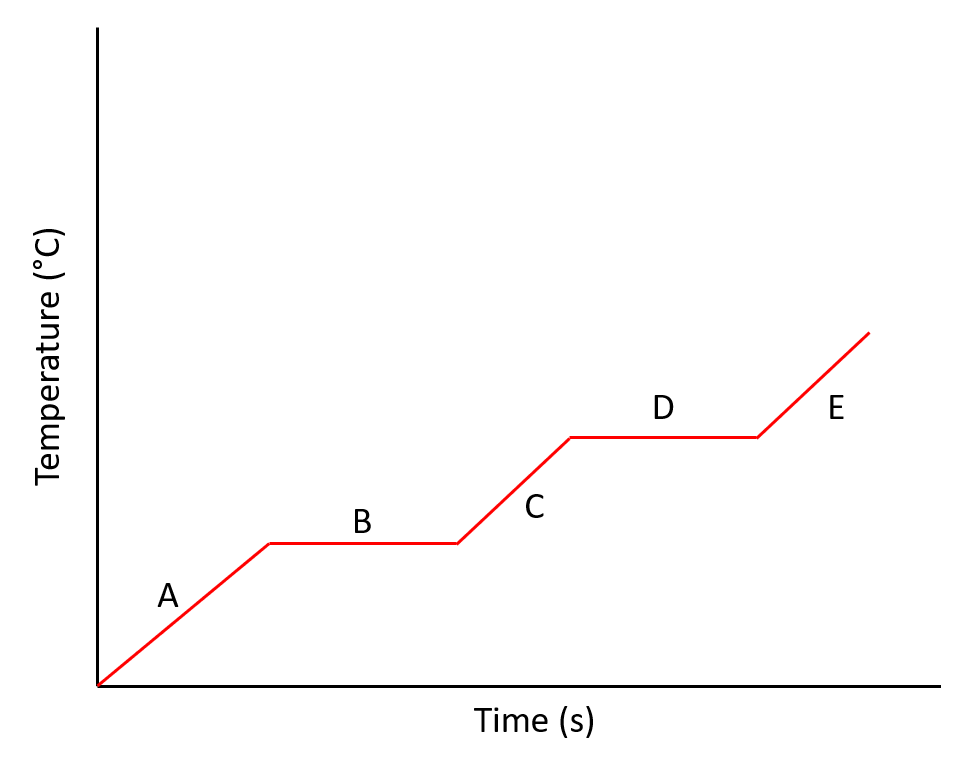
The diagram shows a heating curve for water. Which line segment represents the water boiling?
A
B
C
D
E

The diagram shows a heating curve (a graph that shows temperature changes when heat is added) for ice. Which line shows the ice melting?
A
B
C
D
E

Label the correct blanks:

In which region(s) does a phase change take place? (a)
In which region(s) does temperature increase?
(a)
Region C only
Regions B and D
Regions A and B
Regions A, C, and E

Which of the following best describes a chemical reaction?
A process where substances change into new substances with different properties
A process where substances are mixed but do not change
A process where substances are separated physically
A process where substances are dissolved in water

What is the term for a reaction that absorbs energy from its surroundings?
Exothermic
Endothermic
Combustion
Neutralization

A student mixes two clear solutions and observes the test tube becoming warm. What does this indicate about the reaction?
The reaction is endothermic
The reaction is exothermic
No chemical reaction occurred
The solutions are neutral

A cold pack becomes cold when activated. Which of the following best explains this observation?
The reaction releases energy to the surroundings
The reaction absorbs energy from the surroundings
The reaction does not involve energy change
The reaction is a physical change only

If you start with 10 grams of reactants in a closed system and a chemical reaction occurs, what should be the total mass of the products?
5 grams
10 grams
15 grams
20 grams

A student observes that when two substances are mixed, the temperature increases and a gas is produced. How can the student determine if the law of conservation of mass is followed?
By measuring only the temperature before and after
By weighing the closed system before and after the reaction
By observing the color change
By measuring the volume of gas produced

A student is given two unknown reactions. In Reaction 1, the temperature of the solution increases. In Reaction 2, the temperature decreases. How should the student classify these reactions?
Both are exothermic
Reaction 1 is exothermic, Reaction 2 is endothermic
Both are endothermic
Reaction 1 is endothermic, Reaction 2 is exothermic
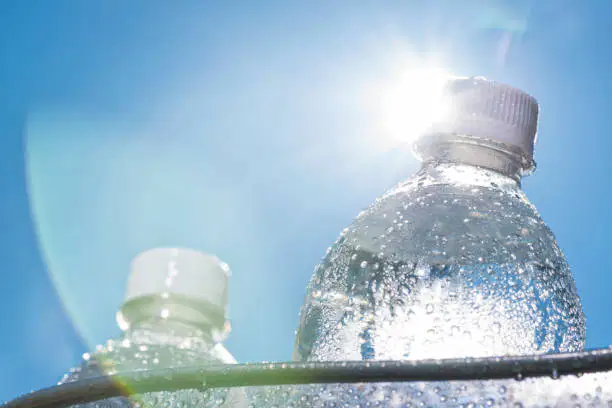

Brad is comparing a ceramic cup to the hot water inside the ceramic cup and the water vapor above the cup. What can she say about the motion of the particles in all of the substances?
They do not move.
They are all always moving.
They all move past each other slowly.
They all move very fast in all directions.

What phase change occurs when you start at D and end at C?
Freezing
Melting
Condensing
Evaporation

Identifying the States of Matter.
Accurately select characteristics of each State of Matter.
Defintion: Definite, Definite
Definition: Indefinite, Definite
Definition: Indefinite, Indefinite
Particles: Packed Close
Movement: Vibrates
Intermolecular Force: Strongest

Temperature: Coolest
Particles: Loosely Touching
Movement: Slide Past One Another
Intermolecular Forces: Medium

Particles: Farthest apart
Movement: Zippy Bumper Cars
Intermolecular Forces: Weakest

Temperature: Warm
Temperature: Hottest
Labeling the Heating Curve.
Indicate the parts of this Heating Curve.
Place your Label on each numbered part.
L -> G (Boiling)
Solid
Liquid
Gas
S -> L (Melting)
Labeling the Cooling Curve.
Indicate the parts of this Cooling Curve.
Place your Label on each numbered part.
L -> S (Freezing)
G -> L (Condensation)
Solid
Liquid
Gas
Labeling the Triple-Point Diagram.
Indicate the parts of this Phase Diagram.
Place your Label on each lettered part.
Solid
Liquid
Triple-Point
Gas
Labeling the State Change Triangle.
Indicate the parts of this State Change Triangle.
Place your Label on each numbered part.
Freezing
Sublimation
Deposition
Boiling/Evaporation
Condensation
Melting

What letter on the diagram represents the substance only in the gas phase?
A
B
C
D
On which parts of the graph does the temperature change?
Between C and D
Between D and E
At C, D, or E
On both flat sections

