
 Worksheets
WATER: A solvent for life
Total questions: 37
Worksheet time: 42mins

Which of the following shows properties of water?
adhesion, cohesion, high specific heat, universal solvent
adhesion, cohesion, low specific heat, universal solvent
adhesion, no cohesion, low specific heat, universal solute
no adhesion, cohesion, high specific heat, universal solute
A solvent is a
compound being dissolved
substance that does not dissolve
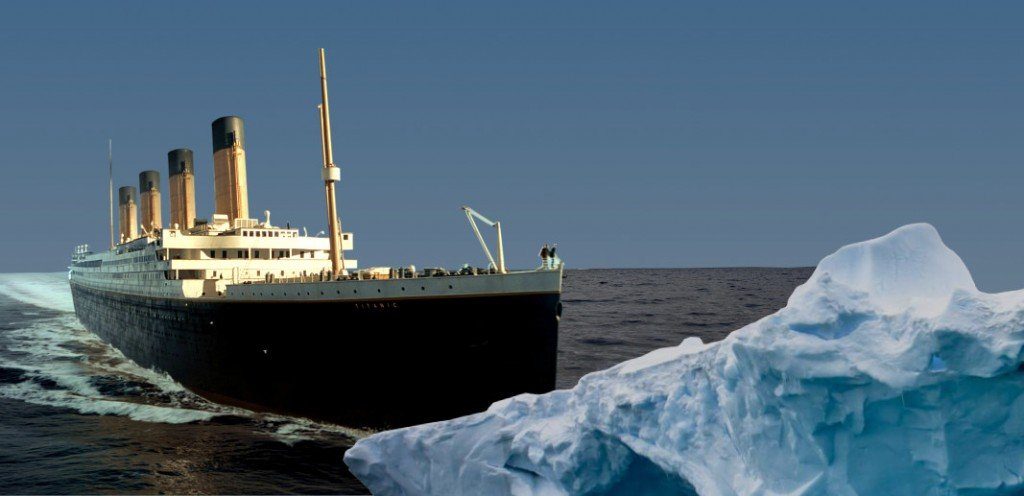
Why does ice float?
water expands when it freezes, making ice less dense than water
water compacts when it freezes, making ice more dense than water
hydrogen bonds in water push the ice to the surface
None of these
A pH of 3 is how many times more acidic than a pH of 5?
2
20
10
100
If pure water is added to an acid with a pH of 3, what happens to the pH of the solution?
the pH increases to above 3
the pH decreases to below 3
the pH stays the same at 3
the pH first increases and then decreases
Acids and bases can combine to produce water and salts.
True
False
If a solution has a [H+] of 9.3x10⁻¹¹, what is the pH?
10.0
4.0
3.5
8.0
The Kw at room temperature (25 degrees C) is equal to 1.0 x 10⁻¹⁴. It can also be defined as:
the pH and pOH of a solution
the product of the hydronium ion and the hydroxide ion concentrations
-log [hydronium ion]
antilog -pH
The pH of a solution is 8.43. What is the hydroxide ion OH- concentration?
3.7 x 10⁻⁹ M
2.7 x 10⁻⁶ M
antilog (-pH)
1.0 x 10⁻¹⁴/-pH
A solution of Ca(OH)2 is 1.0 x 10⁻⁵ M. What is the hydrogen ion concentration?
1.0 x 10⁻⁵ M
1.0 x 10⁻⁹ M
5.0 x 10⁻¹⁰ M
2.0 x 10⁻⁵ M
What is the hydrogen ion concentration of 4.0 M H2SO4?
4.0 M
8.0 M
1.0 x 10⁻⁴ M
2.5 x 10⁻¹⁵ M
pH 0

ability to resist pH change when small amount of acid or base is added

If some process releases acid [H+] into the blood, this equilibrium responds by shifting to the left as long as there is HCO3-present for the H+ to react with, thus removing the excess H+ions. What happens after the release of H+?
pH never lowers
pH is lowered and then immediately restored
pH raises and then is restored
pH lowers and remains low
Two beakers have liquids in them. When you add a base such as ammonia to beaker 1, the pH did not change. But when you add ammonia to beaker 2, the pH changes drastically. Choose the best explanation.
Beaker 1 had only water and Beaker 2 contained a buffer.
Beaker 1 contained a buffer and Beaker 2 contained only water.
Beaker 2 contained an acid.
The beaker that changed pH contained a buffer.
Which of the following statements are true about buffer solution?
(you may choose more than one answer)
pH of buffer solution will never change despite addition of base or acid
Buffer can be made by mixing weak acid and salt of its conjugate base or by mixing weak base with salt of its conjugate acid
Buffer has acid and base components that can work specifically to resist pH change
Closer the ratio of concentration of weak acid/base to the concentration of salt of its conjugate base/acid, less effective the buffer to resist pH change
Where do you find most of the buffering systems in our body?
(a) Nervous system
(b) Blood
(c) Living cell
Both (b) & (c)
When making a buffer of pH = 5, acids with the following Ka values are available. Which would be the best acid to use?
1.8 x 10⁻⁵
1.8 x 10⁻⁸
4.9 x 10⁻¹⁰
3.0 x 10⁻⁸
Charles Law

Which direction does the reaction shift if NH3 was added?

Water is a (a) solvent
Buffering is maximum when the pH of a solution is equal to (a)
Density is equal to (a)
Choose the odd one out
Bond angle
Bond distance
Bond energy
Bond dissociation energy
Why water is denser than ice?
The maintenance of pH is important for the biological system. Justify!

