
 Worksheets
AP Bio Term 1 Review pt 5 Macromolecules, DNA and Signalling
Total questions: 94
Worksheet time: 2hrs 38mins
I. Response
II. Amplification
III. Reception
IV. Transduction
Which of the following represents the sequence of events in a typical signal transduction pathway?
Type of cell signaling where the ligand is produced at a location distant from its target cell(s)
autocrine signaling
juxtracrine signaling
paracrine signaling
endocrine signaling

What is being depicted in the image?
Amplification of the signal molecule
Enzymatic proteins inhibiting process of the signal transduction pathway
Kinase groups adding dimer groups to other enzymes
Diffusion of molecules within the cell due to the signaling molecule
Testosterone does not affect all cells of the body because __________.
testosterone cannot cross the plasma membrane
not all cells have cytoplasmic receptors for testosterone
not all cells in the body have membrane receptors for testosterone
it is a local regulator
it affects only cells that have ion-channel receptors
The general name for an enzyme that transfers phosphate groups from ATP to a protein is __________.
protein dehydrogenase
protein kinase
protein phosphatase
peptidase
protein cyclase
Receptors for signal molecules __________.
all work via protein kinases
are never found in the nucleus of a cell
may be found embedded in the plasma membrane, or found within the cytoplasm or nucleus
all work by opening ion channels
are only found associated with the plasma membrane
The process by which protein conformation is lost or broken down is
dehydration synthesis
translation
denaturation
hydrolysis
The partial negative charge at one end of a water molecule is attracted to a partial positive charge of another water molecule. What is this type of attraction called?
a polar covalent bond
an ionic bond
a hydration shell
a hydrogen bond
Which of the macromolecules below could be structural parts of the cell, enzymes, or involved in cell movement or communication?
nucleic acids
proteins
lipids
carbohydrates
An organic compound that is composed of carbon, hydrogen, and oxygen in a 1:2:1 ratio is known as a
lipid
carbohydrate
protein
nucleic acid


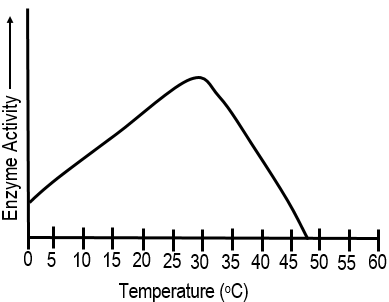
How does an enzymes shape relate to its function?
the shape of the enzyme has no relation to its function
the enzyme is shaped specially for certain substrates to perform a specific reaction
the enzyme shape acts as a receptor to certain products
the enzyme shape can fit into specific substrates to cease a reaction
Enzymes are an example of
Lipids
Carbohydrate
Protein
Nucleic Acid
The amount of energy needed for a reaction to occur is called the (a) ?
What does an enzyme do?
Decreases the activation energy of a reaction
Increases the activation energy of a reaction
Does not change the activation energy of a reaction
Makes the reaction last longer
Most chemical reactions in the body rely on enzymes. Why are enzymes are necessary for many cellular reactions?
The reactions are too slow to meet the needs of the cell if enzymes are missing
The reactions take up too much space in the cell if enzymes are missing
Enzymes change reactants from solid to liquid during the reactions.
Enzymes supply the oxygen necessary for the reactions.
The human body maintains a temperature of around 98.6 degrees at all times. Enzymes are involved in almost every chemical reaction in the body. Which of the following describes the connection between these two statements?
The body is kept relatively warm to prevent too much enzyme action.
The body needs to be warm to prevent hypothermia.
Enzymes function best at a specific temperature.
There is no connection between the two statements.

What's going on in this picture?
The enzyme is taking the red substrate and turning it blue
The enzyme's active site is blocked by a competitive inhibitor
The enzyme can't function if too many substrates are trying to bind
This is an example of an anabolic enzyme reaction
An activor or inhibitor binding place that is not the active site, causing the enzyme to change conformation (shape) is an example of ...
competative inhibition
allosteric control
optimum conditions
induced fit
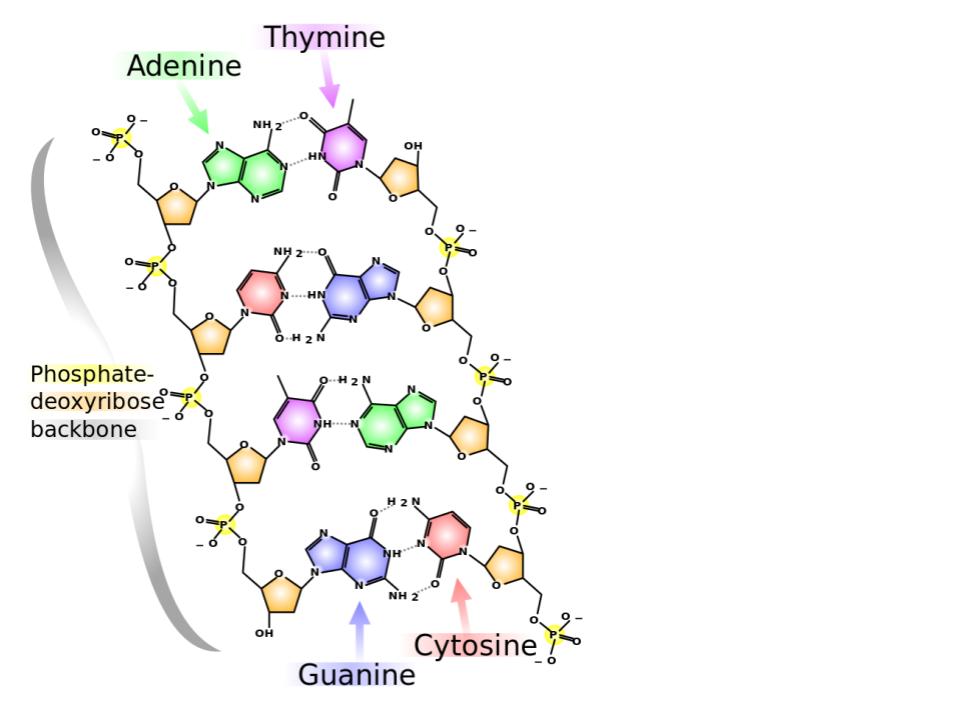
GTAGTCA
ATP is a more stable molecule than ADP
True
False
During cell respiration, the first step is to USE to ATP
True
False
Glycolysis occurs in the cytoplasm and produces all of the following EXCEPT
ATP
Carbon Dioxide
3 carbon chain (pyruvate)
NADH (electron carrier)
What is FALSE about ATP synthase
it can be found in the mitochodrion and chloroplast
it is an enzyme with two substrates, ADP and a phosphate
it is a transport protein
it actively transports H+ across membranes
What makes more ATP
oxidative phosphorylation during ETC and ATP synthase
substrate level phosphorylation during glycolysis and krebs
Oxygen gas is a _____________ of cell respiration because it _______
reactant, replaces lost electrons from glucose
reactant, removes low energy electrons from the ETC chain
product, it the left over after the carbon chain releases its electrons
product, when water splits to give electrons, oxygen gas is the waste product
Glucose is ____________________ during cell respiration
reduced
oxidized
The purpose of the Krebs cycle is to
completely oxidize the remaining glucose chain
produce carbon dioxide
produce water
regenerate NAD+ so glycolysis can continue
Chemiosmosis is the use of energy to _______________________
set up a hydrogen ion gradient
to produce water
oxidize glucose
remove electrons from the ETC using oxygen gas
Oxidative phosphorylation uses _______________ to make ATP
electrons energy from glucose
electron energy from oxygen gas
electron energy from water
Purpose of fermentation is to
make NAD+
make carbon dioxide
oxidize glucose
create a proton gradient
All of the follow occur anaerobically EXCEPT
glycolysis
fermentation
Krebs cycle
If the ETC was blocked by cyanide what would happen?
the mitochondrion would over heat
excessive NAD+ would build up in the cells and blood
oxygen levels would decrease
NADH and FADH2 would be in high levels
A mouse at 10 C would use oxygen _______________ than a snake at 10 C (assume same size)
faster
slower
If the environment temperature is 40 C a snake's body will be 40 C.
True
False

ATP synthase directly uses _____________ to spin in order to connect phosphate onto ADP
diffusion from a proton gradient
diffusion from an electron gradient
active transport of a proton gradient
active transport of an electron gradient
What is NOT produced during glycolysis
ATP
NADH
Pyruvate
CO2
Which of the following can still happen without oxygen gas present in the cell
production of NAD+ at the electron transport chain
production of NADH during krebs cycle
production of NADH during glycolysis
oxidative phosphorylation at the ATP synthase

What is this process showing?
substrate level phosphorylation
chemiosmosis
Krebs cycle
glycolysis

Which of the following is FALSE about this process?
the pH of the intermembrane space is more acidic than the matrix
the H+ is using facilitated diffusion as it passes through the ATP synthase
ATP is used to move the H+ against its gradient along the ETC
O2 gas is needed to remove the low energy electrons from the ETC

If this is a yeast solution, what type of gas will be collecting in the inverted graduated cylinder
hydrogen
carbon dioxide
oxygen gas

Phosphofructokinase is an enzyme used in glycolysis. Which of the following will make is work more efficiently?
increased levels of ATP
increased levels of AMP
increases levels of oxygen gas
increased levels of pyruvate

What is this process showing?
glycolysis
Krebs cycle
alcoholic fermentation
aerobic respiration


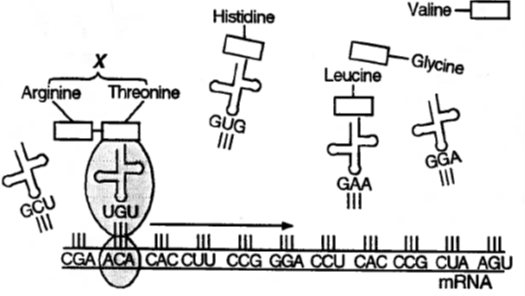
How many amino acids will FIFTEEN codons code for?
three
five
fifteen
thrity

What process is going on in this photo?
DNA Replication
Transcription
Translation
Mitosis
What is a gene?
A section of DNA that codes (has the instructions) for a protein
All of the DNA in your cell
Proteins are made of genes
Genes are the traits that you have

