wayground logo

Free Printable Worksheets

Font size

S
M
L
XL
Worksheets

Unit 7 Review: Molecular Biology 2022

Total questions: 73

Worksheet time: 46mins

Name
Class
Date
1.

Which of the following is NOT part of a nucleotide

a)

sugar

b)

nitrogen base

c)

amino acid

d)

phosphate group

2.

Which of the following is NOT a nitrogen base found in DNA?

a)

guanine

b)

cytosine

c)

thymine

d)

uracil

3.

Which of the following is NOT a nitrogen base found in RNA?

a)

guanine

b)

cytosine

c)

thymine

d)

uracil

4.

DNA replication results in two new DNA molecules, each with one new DNA strand, and one original DNA strand.

a)

True

b)

False

c)

Maybe

d)

Baby Yoda

5.

which of the following is NOT a type of RNA?

a)

mRNA

b)

rRNA

c)

cRNA

d)

tRNA

6.

Which type of RNA is a copy of the DNA?

a)

tRNA

b)

rRNA

c)

mRNA

d)

cRNA

7.

Which type of RNA is brings the amino acids?

a)

tRNA

b)

rRNA

c)

mRNA

d)

cRNA

8.

Which type of RNA makes up ribosomes?

a)

tRNA

b)

rRNA

c)

mRNA

d)

cRNA

9.

how many nitrogen bases in one codon?

a)

1

b)

2

c)

3

d)

4

10.

how many codons for 1 amino acid?

a)

1

b)

2

c)

3

d)

4

11.

Which gene mutation swaps one nitrogen base for another?

a)

substitution

b)

deletion

c)

insertion

d)

inversion

12.

DNA is found in the

a)

cytoplasm

b)

Golgi apparatus

c)

nucleus

d)

plasma membrane

13.

DNA contains the sugar

a)

deoxyribose

b)

oxyribose

c)

ribose

d)

glucose

14.

RNA contains the sugar

a)

deoxyribose

b)

oxyribose

c)

ribose

d)

glucose

15.

What are the building blocks of proteins?

a)

mRNA

b)

tRNA

c)

nitrogen bases

d)

amino acids

16.

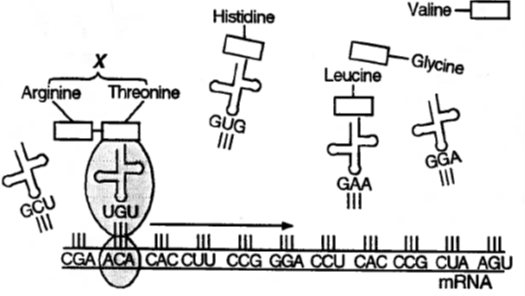
What is this used for?

a)

to decode the genetic code of mRNA

b)

to create intelligent beings

c)

to make anitcodons

d)

to splice mRNA

17.

In transcription,

a)

Ribosomes put proteins together

b)

mRNA is made from DNA

c)

mRNA is read by the ribosome

d)

DNA Helicasle helixbe unwinds the dou

18.

In translation,

a)

tRNA gets a new amino acid

b)

mRNA is made from DNA

c)

mRNA is read by the Ribosome to make protein

d)

DNA Helicasle helixbe unwinds the dou

19.

DNA makes RNA, which makes ______________

a)

nucleic acids

b)

carbohydrates

c)

lipids

d)

proteins

20.

a mutation involving a single nucleotide is a

a)

frameshift mutation

b)

point mutation

c)

beneficial mutation

d)

inversion

21.

The order of bases determines codons, which determine

a)

nucleotides

b)

alleles

c)

amino acids

d)

genes

22.
Which sequence of DNA bases would pair with this partial strand
CAT TCA CTG
a)
ATG TGA CAG
b)
TAC ACT GTC
c)
GTA AGT GAC
d)
CAT TCA CTG
23.
Which of the following units are repeatedly joined together to form a strand of DNA?
a)
amino acids
b)
nucleotides
c)
fatty acids
d)
polysaccharides
24.
The enzyme that unwinds the DNA to prepare for replication
a)
helicase
b)
replicase
c)
polymerase
d)
synthase
25.
A process in which DNA has the unique ability to make an exact copy of itself.
a)
Replication
b)
Translation
c)
Transcription
26.
In what phase of the cell cycle does DNA replication take place?
a)
G1
b)
S
c)
G2
d)
M
27.

Which enzyme is responsible for adding nucleotides to the leading strand in DNA Replication?

a)

Topoisomerase

b)

DNA Polymerase

c)

Ligase

d)

Primase

28.
The process of DNA replication is called semi conservative because it results in
a)
none of these
b)
Two DNA molecules.  One original molecule and one with two new strands
c)
two exact copies with new strands
d)
two identical molecules, each with 1 original strand and one new.
29.
Why does DNA replicate?
a)
To create another copy for the new cell
b)
To create a duplicate copy in case the original gets damaged
c)
To create a new copy to replace the damaged original
30.
Which of the following best describes a DNA molecule?
a)
double helix
b)
contains ribose
c)
made of amino acids
d)
contains Uracil
31.
In a molecule of double-stranded DNA, the amount of Adenine present is always equal to the amount of
a)
cytosine
b)
guanine
c)
thymine
d)
uracil
32.
Guanine bonds with ______________.
a)
Adenine
b)
Guanine
c)
Cytosine
d)
Thymine
33.
Which 2 molecules form the sides (backbone) of the DNA ladder?
a)
deoxyribose sugar and adenine
b)
deoxyribose sugar and a hydrogen bond
c)
deoxyribose sugar and the nucleus
d)
deoxyribose sugar and phosphate
34.
Which organelle is DNA usually found in?
a)
cell membrane
b)
vacuole
c)
chloroplast
d)
nucleus
35.
What are the three components of a nucleotide?
a)
sugar, hydrogen, nitrogen base
b)
sugar, oxygen, nitrogen base
c)
sugar, phosphate, nitrogen base
d)
sugar, phosphate, protein
36.

Which of the following best describes the arrangement of the sides of the DNA molecule

a)

Bonding

b)

Alternating

c)

Anitparallel

d)

Parallel

37.

In what process is mRNA synthesized?

a)

Transcription

b)

Translation

c)

DNA Replication

d)

Mitosis

38.

On which molecule can an anticodon be found?

a)

mRNA

b)

DNA

c)

tRNA

d)

rRNA

39.

Where is the anticodon located?

a)

at the top of the molecule it's found on

b)

at the bottom of the molecule it's found on

c)

on the right of the molecule it's found on

d)

on the left of the molecule it's found on

40.

What is the purpose for anti-codons?

a)

to ensure the correct amino acid is dropped off

b)

to match the strand of DNA

c)

to decode a sequence of 4 nucleotides into an amino acid

d)

to make me hate biology

41.

A polypeptide is a sequence of ____________________ held together by a ______________ bond.

a)

amino acids; peptide

b)

fatty acids; ionic

c)

proteins; hydrogen

d)

fatty acids; covalent

42.

Which two thing are found on a molecule of tRNA?

a)

amino acids; anticodons

b)

amino acids; codons

c)

ribose sugar; proteins

d)

deoxyribose sugar; codons

43.

How do you know when to begin translating a strand of mRNA?

a)

look for AUG

b)

start at the beginning

c)

look for ATG

d)

when my teacher tells me to

44.

How do you know when to STOP translating a strand of mRNA?

a)

look for STOP on the decoder

b)

stop at the end of the strand

c)

you don't

d)

when my teacher tells me to

45.
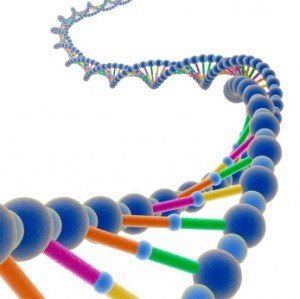
What process is going on in this photo? 
a)
Transcription 
b)
Translation 
c)
Replication 
d)
All the above 
46.
Does the order of amino acids in a protein matter?
a)
YES!
b)
NO!
47.

The important enzyme related with transcription is;

a)

gyrase

b)

DNA polymerase

c)

RNA polymerase

d)

ligase

48.

Which organelle is the location where protein is made?

a)

Ribosome

b)

Nucleus

c)

Cytoplasm

d)

Nucleotide

49.

Insertion, deletion, and substitution are all examples of a change in a genetic sequence which is also referred to as (a)

a)

Gene

b)

Amino Acid

c)

Ribose

d)

Mutation

50.

When these bond together, they form a protein

a)

Amino Acids

b)

Peptide Bonds

c)

Ribose

d)

Nucleotides

51.

There are a total of ____ different amino acids

a)

20

b)

1

c)

4

d)

unlimited

52.
The central dogma of biology states that information flows in one direction from 
a)
nuclei to RNA to cytoplasm
b)
ribosomes to proteins to DNA
c)
genes to nuclei to ribosomes
d)
DNA to RNA to proteins
53.
The main function of tRNA is to...
a)
carry a message that, when translated, forms proteins
b)
form a portion of ribosomes
c)
string together complementary RNA and DNA strands
d)
bring amino acids from the cytoplasm to the ribosomes
54.
Which of the following is the site of transcription?
a)
vacuole
b)
lysosome
c)
nucleus
d)
ribosome
55.
What would happen if we did not have start codons?
a)
Polypeptide chains would continue to grow
b)
Amino acids would bind to tRNA
c)
Protein synthesis wouldn't occur
d)
mRNA would form a double strand
56.
Which of the following best describes how DNA and RNA are similar?
a)
they both contain A and T
b)
They both have a double helix
c)
They are both composed of 5 different nucleotides
d)
they both have C and G
57.

Where does TRANSCRIPTION occur?

a)

Nucleus

b)

Ribosome

c)

Cytoplasm

d)

Mitochondria

58.

Why must transcription occur where DNA can be found?

a)

because DNA can't leave

b)

because ribosomes are in the nucleus

c)

because DNA polymerase is found there

d)

because helicase unzips the DNA

59.

How many codons equals 1 amino acid?

a)

1

b)

2

c)

3

d)

4

60.

How many nucleotides equal 1 amino acid?

a)

1

b)

2

c)

3

d)

4

61.

TRANSCRIBE this DNA sequence: TACGTTACT

a)

AUGCAAUGA

b)

ATGCAATGA

c)

AUGGATUGA

d)

TACGTTACT

62.

Which organelle is the location where protein is made?

a)

Ribosome

b)

Nucleus

c)

Cytoplasm

d)

Nucleotide

63.
What is the term for a three-nucleotide sequence that codes for an amino acid?
a)
base
b)
codon
c)
amine
d)
serine
64.
The process to go from DNA to mRNA is _______
a)
translation
b)
transcription
c)
replication
65.
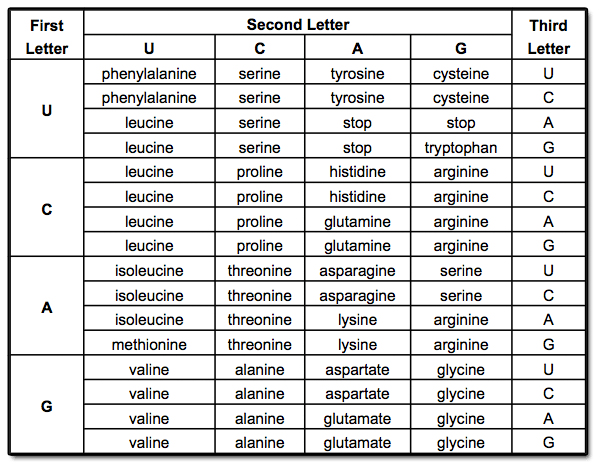
What amino acid is represented by the codon UUA?
a)
Phenylalanine
b)
Tyrosine
c)
Leucine
d)
Stop codon
66.
Does the order of amino acids in a protein matter?
a)
YES!
b)
NO!
67.
DNA is copied during a process called ______________ which results in an identical copy of itself.
a)
Photosynthesis
b)
Transcription
c)
Replication
d)
Translation
68.
Which type(s) of RNA is(are) involved in protein synthesis?
a)
transfer RNA
b)
messenger RNA
c)
tRNA and mRNA
d)
tRNA, mRNA, and rRNA
69.
Genes contain instructions for assembling _______________.
a)
Nucleosomes
b)
Proteins
c)
Purines
d)
Pyrimidines
70.
What happens during the process of translation?
a)
The cell uses information from messenger RNA to produce proteins.
b)
Messenger RNA is made from DNA.
c)
Copies of DNA molecules are made.
d)
Transfer RNA is made from messenger RNA.
71.
During translation, the type of amino acid that is added to the growing polypeptide depends on the:
a)
anticodon on the mRNA only.
b)
codon on the mRNA only.
c)
codon on the mRNA and the anticodon on the tRNA to which the amino acid is attached.
d)
anticodon on the tRNA to which the amino acid is attached only.
72.
In eukaryotes, DNA:
a)
floats freely in the cytoplasm
b)
is found in the nucleus
c)
is wrapped within the ribosome
d)
is circular
73.
DNA strand:   TACAGGGTGCTACCCACT
What is the peptide chain that results from this strand of DNA?

a)
methionine, phenylalanine, histidine, aspartate, glycine
b)
a. methionine, leucine, histidine, aspartate, glycine
c)
methionine, serine, histidine, aspartate, glycine
d)
methionine, proline, histidine, aspartate, glycine