
Font size
 Worksheets
Friday 2/4 Prizes Quizizz
Total questions: 61
Worksheet time: 58mins


What is the term for a feature that allows an organism to survive better in its environemtn?
variation
adaptation
homologous structure
vestigial structure
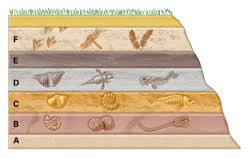
Which rock layer contains the newest fossils?
have the ability to interbreed.

Images of the embryo and adult stages of three different organisms are shown.
Which of the following is the best conclusion that can be drawn from this evidence?
Having similar embryos indicates that these organisms eat the same types of food.
Having similar embryos indicates that these organisms live in a similar environment.
Having similar embryos indicates that these organisms share a recent common ancestor.
Having similar embryos indicates that a certain protein controls how many legs the adult organisms will have.
Researchers discovered that the legs of birds are homologous to the feet of reptiles. Which claim is BEST supported by this fact?
Birds do not require legs
Birds and reptiles have a common ancestor
They randomly developed the same structures
Selection pressures have acted on birds, but not on reptiles
Which type of rock are most fossils found?
sedimentary rock
metamorphic rock
igneous rock
fossils
What happens to new traits that HELP organisms survive over time?
They become MORE COMMON
They become LESS COMMON
They are EQUALLY COMMON


Gigantopithecus were very large primates that lived 500,000 years ago. Since none of these mammals are still today, they are said to be....
Extinct
Threatened
Endangered
Declining

Scientists have collected millions of fossils of different organisms, and have developed a timeline of life on Earth. What do we call this?
Mutation
Natural Selection
The theory of evolution
Fossil Record
What most likely caused the finches on the Galapagos Islands to have beaks that were different from the finches on the mainland?
There were different types of predators on the island.
There were different types of food available on the island.
The finches had no water to drink.
The finches on the mainland could not fly high enough.
When looking at two birds of the same species, you notice that one has darker feathers than the other one. You also notice that one has a beak that is just a little longer. These slight differences within members of the same species are called.....
Fossils
Extinction
Meiosis
Variations

How do we measure the age of a fossil in years?
variation
absolute dating
selection
mutation

Hibernation is an example of which type of adaptation?
Behavioral Adaptation
Physical Adaptation

Beak shape, camouflage, and webbed feet are all examples of which type of adaptation?
Behavioral Adaptation
Physical Adaptation
have the ability to interbreed.

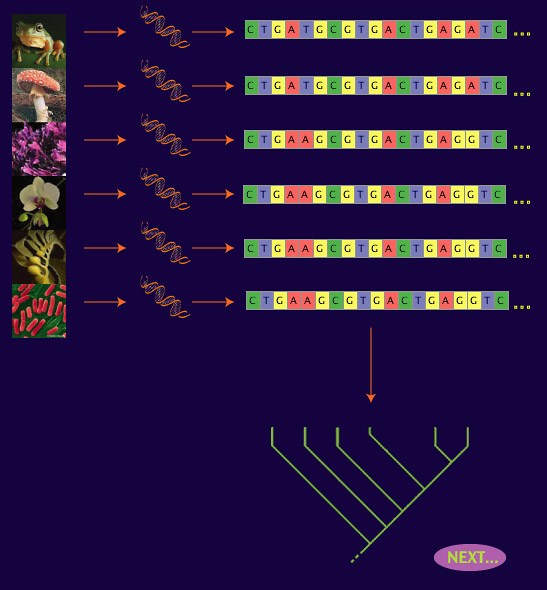
By looking at the genes of some animals we can determine which living species are most closely related to each other. This also reveals which species most recently diverged from their common ancestor.
Based on the partial gene segments shown, which pair of animals are genetically most closely related and therefore most recently diverged from their common ancestor?
Chimpanzee and Mouse
Rat and Mouse
Rat and Chimpanzee
Images of the embryo and adult stages of three different organisms are shown.
Which of the following is the best conclusion that can be drawn from this evidence?
Having similar embryos indicates that these organisms eat the same types of food.
Having similar embryos indicates that these organisms live in a similar environment.
Having similar embryos indicates that these organisms share a recent common ancestor.
Having similar embryos indicates that a certain protein controls how many legs the adult organisms will have.
Researchers discovered that the legs of birds are homologous to the feet of reptiles. Which claim is BEST supported by this fact?
Birds do not require legs
Birds and reptiles have a common ancestor
They randomly developed the same structures
Selection pressures have acted on birds, but not on reptiles
Which type of rock are most fossils found?
sedimentary rock
metamorphic rock
igneous rock
fossils
What is reproductive success?
A: The ability to produce healthy offspring that survive.
B: The ability to reproduce.
C: The ability to find a mate.
D: The ability to not reproduce.
If a new trait DOES help an organism survive, what may happen to it?
It dies and its DNA is not passed on
It survives and its DNA is passed on
It changes its traits to adapt and survive
What happens to new traits that HELP organisms survive over time?
They become MORE COMMON
They become LESS COMMON
They are EQUALLY COMMON
A change in a DNA sequence that affects genetic information
mutation
fitness
transformation
An inherited characteristic that increases an organism's chance of survival
adaptation
evolution
fitness
Which rock layer contains the newest fossils?

Please select all correct answers that apply, based on the cladogram shown
Sharks and Primates do not have a common ancestor.
Crocodiles and Amphibians are more closely related than Birds and Sharks.
Rodents and Rabbits do have Eggs with Shells.
Sharks have more of the traits shown than of all of the other organisms.
Birds have all of the shown traits that Sharks have, but Sharks do not have all of the shown traits that Birds have.

In the table shown, the DNA found in five primate species was compared to the DNA found in humans. The number of sequence differences was recorded. Based on the data in this table, what inference could you make about these species compared to humans?
Lemurs are most like humans.
Gorillas are most like humans.
None of the species are similar to humans.
Only the lemur differs from humans in any way.

Various species show similar developmental patterns as embryos.
DNA similarities
Anatomical Homology
Embryology
All of the above

Select ALL the parts of Natural Selection.
overproduction
evolution
variation
selection
competition

What does it mean that the eye structures and specific genes for those structures are analogous but the genes that control eye development are homologous?
Select all that apply
It means vertebrates and insects had a common ancestor that possessed genes that coded for a primitive eye
It means every species that descended from the common ancestor developed additional genes that made changed the structure of their eye
It means that vertebrates and insects are not related to each other but developed eyes in a similar pattern

Which of these statements does NOT help explain why the development of gene sequencing technology provided a turning point in evidence gathering related to this claim?
Select all that apply
Before gene sequencing, the only evidence was the anatomical appearance of the eyes of vertebrates and insects
Because the eye structures are so different in appearance, it was easy to conclude these groups had no evolutionary relationship with each other
Gene sequencing shows that there are enough genetic similarities in the genes of eye development to suggest a very early common ancestor
Gene sequencing shows that, since the genes encoding eye structures are analogous, that vertebrates and insects share no common ancestors

What evidence presented here supports the argument that vertebrates and insects evolved from a common ancestor?
The fact that the eye structures of vertebrates and insects are analogous
The fact that the genes encoding the eye structures of vertebrates and insects are analogous
The fact that the eye developmental genes of vertebrates and insects are homologous

