
 Worksheets
Erhama - Chemistry
Total questions: 205
Worksheet time: 5hrs 13mins
Name the type of bonding in which the electrons are shared.
Ionic bonding
Covalent bonding
Metallic bonding
The covalent bond forms between
a metal and nonmetal
a nonmetal and nonmetal
a metal and metal
Number of covalent bonds can form in group 16
three
two
four
As bond length increase the strength...
increases
decreases
no change
The energy required to break the bonds between two covalently bonded atoms
bond dissociation energy
activation energy
none of these
The reaction in which the energy released.
endothermic
exothermic
none of these
The number of covalent bonds form in group 17
One
Two
Three
The number of pairs of electrons shared in triple covalent bond
Two
Three
One
1
Ionic or covalent?
NaCl
Ionic
Covalent
H2O





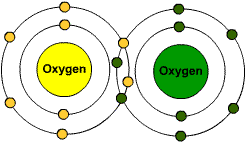

An atom with 1 valence electron 'needs' a full shell, so it can either gain 7 electrons or lose 1. Which is more likely to occur?
nothing
gain 7
lose 1
How many valence electrons does Boron have?
1
2
3
4
When an atom loses an electron, it becomes a
positive ion
negative ion
Ionic bonds are between
metals and nonmetals
2 metals
2 nonmetals
How are ionic bonds formed?
transfer of electrons
sharing of electrons
Group numbers on the periodic table help us determine
number of valence electrons
state of the element (solid, liquid, gas)
Electrons are involved in chemical reactions, not protons or neutrons.
true
false
Water is an example of what?
molecular compound (covalent compound)
ionic compound
Salt is an example of what?
ionic compound
covalent compound
Atoms involved in a covalent bond are not charged, while atoms involved in an ionic bond are charged (negative or positive)
true
false

Which of the following is the correct Lewis Structure for the molecule fluorine (F2)?
A
B
C
D
Which is the correct molecular structure for carbon dioxide?


What is the correct Lewis Structure for ammonia (NH3)


How many Aluminum atoms are in Al2O3?
3
5
2
1
Ionic bonds are formed from a combination of metal elements and __________________ elements.
non-metal
receive
metal
donate
Which of the below is an ionic compounds?
Ni
MgCl2
H2O
CH4
An example of an ionic compound is Sodium Chloride, which is made from Na+ and Cl- ions. Why do these ions form an ionic bond?
They have like charges
They are from the same group
They are from the same period
They have opposite charges
Lithium is in group 1 of the periodic table, which ion would it form?
Li-
Li2-
Li+
Li2+
Oxygen is in group 6 of the periodic table, which ion would it form?
O-
O+
O2-
O2+
Lead Chloride is an ionic compound, made up from Pb2+ ions and Cl- ions. Which is the correct formula for this compound?
PbCl3
PbCl
PbCl4
PbCl2
Magnesium Hydroxide is an ionic compound made up from Mg2+ and OH- ions. Which is its correct formula?
MgOH
MgOH2
Mg(OH)2
MgO
negatively charged ions are called what?
anion
cation
ionic bond
dogion
A positively charged ion is called what?
anion
onion
cation
dogion

The following properties are all characteristics of ionic compounds EXCEPT
high melting and boiling points
soft
crystal lattice structure
conduct electricity when dissolved in water
What type of forces hold on an ionic lattice together?
Electrostatic attraction forces
Covalent bond
Metallic bond
Van der Waals forces
What properties does an ionic compound have?
A low boiling point and it conducts electricity when dissolved in water
A high melting and it conducts electricity when liquid
A high boiling point and it conducts electricity when solid
Ionic compounds conduct electricity when dissolved in water. Which statement below best explains the property?
Ions are free to move.
Electrons are free to move.
Bonds are strong.
There are weak intermolecular forces of attraction.

Why do ionic compounds have high melting and boiling points?
Their ions are free to move.
Their ions are held in fixed positions.
They have many strong bonds.
They have many weak bonds.

True or false? Ionic compounds have high melting points.
true
false
True or false? Ionic compounds have low boiling points.
true
false

True or false? Ionic compounds conduct electricity when they are in their solid state.
true
false
Why do ionic compounds NOT conduct electricity when they are in their solid state?
Their ions are free to move.
Their ions are held in fixed positions.
Their electrons are free to move
Their electrons are held in a fixed state
Why do ionic compounds conduct electricity when they are molten or dissolved?
Their ions are free to move.
Their ions are held in fixed positions.
Their electrons are free to move
Their electrons are held in a fixed state
Magnesium oxide is insoluble in water. Can magnesium oxide conduct electricity?
Select yes or no and a reason.
Yes
No
Magnesium oxide can be heated so that it melts and conducts electricity.
Magnesium oxide doesn't dissolve, so it stays in its solid state and doesn't conduct electricity.
What set of elements is most likely to form a covalent compound?
Na and O
Na and K
O and C
Which of the following is NOT TRUE about covalent compounds?
They have low melting and boiling points.
They are formed from 2 nonmetals.
They can conduct electricity when dissolved in water (aqueous).
Which element is most likely to form 2 bonds?
Carbon
Sulfur
Nitrogen
Fluorine
Which element is most likely to form 4 bonds?
Carbon
Fluorine
Sulfur
Nitrogen
A single covalent bond is made up of _____ electrons.
one
two
three
four
True or False: Ionic compounds are usually liquids at room temperature.
True
False
flammability of a substance
physical change
physical property
chemical change
chemical property
size of an object
physical change
physical property
chemical change
chemical property
freezing point
physical change
physical property
chemical change
chemical property
drawing copper into a wire
physical change
physical property
chemical change
chemical property
corrosion of a bicycle frame
physical change
physical property
chemical change
chemical property
formation of water when hydrogen burns
physical change
physical property
chemical change
chemical property
boiling water
physical change
physical property
chemical change
chemical property
a characteristic that can be observed without changing the substance
physical change
physical property
chemical change
chemical property

Color is what type of property?
Physical
Chemical

Reactivity is what type of property?
Physical
Chemical
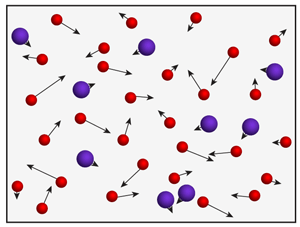
What happens to the atoms of a substance in a physical change?
Atoms get bigger
Atoms change their arrangement and motion
Atoms get smaller
Atoms bond together differently
What happens to the atoms of a substance in a chemical change?
Atoms get bigger
Atoms change their arrangement and motion
Atoms get smaller
Atoms bond together differently
All of the following phases of matter may flow EXCEPT:
plasma.
solid.
liquid.
gas.
List the phases of water in order, from the phase with the slowest molecular movement to the phase with the fastest molecular movement.
Gas-Liquid-Solid
Liquid-Solid-Gas
Solid-Liquid-Gas
Gas-Solid-Liquid

This picture shows an example of
gas
plasma
liquid
solid

The picture shows an example of
gas
plasma
liquid
solid

The picture shows an example of
gas
plasma
liquid
solid
The temperature at which a substance boils.
Melting point
Boiling point
Thermal conductivity
Electrical conductivity
An object's melting point is_____________________.
the temperature at which a substance boils
the temperature at which a substance goes from a solid to a liquid
a physical characteristic
a chemical charateristic
An object or substance always has both physical and chemical properties.
True
False
Which is the best definition of an intensive property?
A property that changes as the amount of a substance increases or decreases
A property that is so extreme it can only be described as intense
A property that does not depend on the amount of a substance present
A property that is only found on the inside of a material
What types of property would volume be described as?
Physical and extensive
Physical and intensive
Chemical and extensive
Chemical and intensive
Which is the best description of a liquid?
definite shape and definite volume
indefinite shape and definite volume
definite shape and indefinite volume
indefinite shape and indefinite volume
What does H2O represent?
An element
A compound
A homogeneous mixture
A heterogeneous mixture
Which is the most compressible state of matter?
Solid
Liquid
Gas


Why are both hydrogen and cesium s-block elements, when hydrogen has one electron and cesium has 55?
All blocks contain at least one element from each period.
Blocks of elements on the periodic table are based only on an element's valence electrons.
The s-block includes only the most reactive elements.
They have identical electron configurations.
Atoms of elements in group 1 have ____________.
one electron in their outermost energy level
two electrons in their outermost energy level
seven electrons in their outermost energy level
eight electrons in their outermost energy level
Which of the blocks on the periodic table contains the most elements?
s block
p block
d block
f block
What makes the d block wider than either the s block or the p block?
The d sub-orbital can hold ten electrons, making the d block ten elements wide.
The d block is the most researched area of the periodic table.
The elements in the d block are more important than the elements in the rest of the table.
The elements in the d block are all metals.

From the table below, determine the atomic number of the noble gas at the end of period 5.
18
36
54
52
Which element has n=2 and s2 p6 configuration?
He
O
Ne
Ni

4.The arrangement of elements in the Modem Periodic Table is based on their
(a) increasing atomic mass in the period
(b) increasing atomic number in the horizontal rows
(c) increasing atomic number in the vertical columns
(d) increasing atomic mass in the group
6.What is the atomic number of element of period 3 and group 17 of the Periodic Table?
(a) 10
(b) 4
(c) 17
(d) 21
Name the neutral atom in the Periodic Table which has the same number of electrons as K+ and Cl-.
(a) Helium
(b) Argon
(c) Neon
(d) Krypton
Carbon belongs to the second period and Group 14. Silicon belongs to the third period and Group 14. If atomic number of carbon is 6, the atomic number of silicon is
(a) 7
(b) 14
(c) 24
(d) 16
On moving from left to right in a period in the Periodic table, the size of atom
Increases
Decreases
Does not change appreciably
First decreases and then increases
Nitrogen and phosphorus are
Non metals
Metals
Metalloids
None of the above
P-block elements are those elements in which last electron enters in
P ortibal
S orbital
d orbital
None of the above
What electron configuration matches an oxygen atom?
1s22s22p63s2, 3p64s23d104p5
1s22s22p4
1s22s22p6
1s22s22p63s23p64s23d1
Identify the Electron Configuration for Aluminum (Al)
1s2 2s2 2p6 3s2 3p1
1s2 2s2 2p6 3s2 3p3
1s2 2s2 2p6 3s2 4p1
What atom matches this electron configuration?
1s22s22p63s23p64s23d10
Zinc
Copper
Nickel
Germanium
What atom matches this electron configuration?
1s22s22p63s2
Neon
Magnesium
Aluminum
Potassium
Valence electrons are located...
inside the nucleus
in outer space
on the outermost orbit of an atom

This is a correct dot diagram for fluorine (F)
true
false
The elements in this group all have 5 valance electrons.
Group 5
Group 15
Group 3
Group 18


How many electrons can the d sublevel(orbital) hold?
8
10
2
4
What is the octet rule?
Elements can only have 8 electrons in its outermost shell
The elements must form an octopus like structure
How many dots would you put around carbon, a group 14 element?
4
6
8
18
How would you draw a Lewis dot diagram for Magnesium?


smallest particle of matter that retain the properties of element is ____________________
atom
proton
cathode
energy
electrons are discovered by _________experiment
cathode ray tube
gold foil
oil drop

The figure shows ________________________
cathode ray tube experiment
gold foil experiment
oil drop experiment

The path of cathode ray ( shown in the figure ) proves that _____
electrons have negative charge
electrons have positive charge
electrons have no charge
electrons have both negative and positive charge

The figure shows _____________experiment
oil drop
cathode ray tube
gold foil
The experiment ( shown in the figure ) lead to determine __________
mass and charge of the electron
the size of the electron
the mass of the atom
the charge of the atom

The name of the model of the atom ( shown in the figure) is _______________
plum pudding model
nuclear model
energy levels model
quantum model

the part ( labeled by the question mark in the figure ) is _______________
atom
nucleus
proton
electron
Ag47108 contains ________ protons, ________ neutrons and ________ electrons
47, 61, 47
108, 61, 108
47, 108, 47
60, 47, 60
All atoms of the same element have the same _____________.
number of protons
number of neutrons
Mass number
Mass
Which of these has the smallest atomic radius?
K
Rb
Fr
Cs
As you move to the right across the periodic table atoms tend to get smaller because, ______________.
the atoms have more mass.
the atoms have more neutrons
the atoms have more protons.
the atoms have more electrons.
The element with the lowest electronegativity in Period 3 is -
Na
Cl
Ar
Mg
P or P-3

The vertical (up and down) columns in the Periodic Table are called
groups
towers
periods
atomic numbers
When atom gains an electron, the size will
increase
decrease
have no change
smaller
When atom loses an electron, the size will
be greater
increase
have no change
be smaller
A metallic bond is a bond between ________.
nonmetals
metals
transition metals
metalloids
Which of the following is NOT a property of metals?
Hard
Can conduct electricity
Very brittle (breaks easily)
Malleable (can bend without breaking)
What do electrons do in a metallic bond?
They stay on the metal atom.
They are transferred from atom to atom.
They form a covalent bond with another atom.
They float around freely.
What is meant by the term "sea of electrons"?
It's what we call all the free floating electrons in a metal.
It's what we call electrons that are floating in a liquid.
It's the total number of electrons in a metal atom.
It's the total number of electrons in the ocean.
Why are metals good conductors of electricity?
The electric current can easily travel along the surface of the metal because it is smooth.
A negative charge can easily push the sea of electrons in one direction, making a current.
Metals attract electricity.
Metals are malleable.
Why are metals malleable? (They can bend without breaking.)
Metals are very smooth.
Metals have a sea of electrons.
The sea of electrons form a strong metallic bond.
Even though the metal ions repel each other, the electron sea holds all the atoms in place.

What property of metals is the image describing?
malleable (bend without breaking)
ductile (stretched into a wire)
conductive (can conduct electricity)
shiny

What property of metals is being shown in figure 1(b) in the image?
malleable (bend without breaking)
ductile (stretched into a wire)
conductive (can conduct electricity)
shiny
What is the one thing responsible for a metal being malleable, ductile, and conductive?
metal atoms
its covalent bonds
its valence electrons
its sea of free-floating electrons
Which of the following lists of elements contain only metals?
Li, Al, Te
Ni, Pb, H
Na, Os, Ga
Ca, Zn, I
What could be a charge on aluminum?
1+
2+
3+
4+
Alloys are important because
their properties are often superior to the component elements
their properties are a blend of the component elements
they never corrode
they are less expensive than their component elements.
Why are metals good conductors?
they have mobile electrons
they have mobile atoms
they have crystal structures that can rearrange
they have mobile protons
Malleability means
the ability to be drawn into a wire
the electrons of metals are mobile
the ability to be hammered into a shape
the ability to be a conductor of electricity
Metals are ductile because metallic bonds
hold the layers of ions in rigid positions
maximizes the repulsive force in a metal
allows planes of protons and electrons to slide past one another
are easily broken
Metals are hard because metals have a
sea of electrons that tightly hold the nuclei together
they form triple bonds
low melting point
high luster
The melting point of magnesium is higher than that of sodium because
the relative atomic mass of sodium is less than that of magnesium
the metallic bonding in magnesium is stronger than that in sodium
the atoms in magnesium are packed more closely than the atoms in sodium
the atomic size of magnesium is larger than that of sodium
Metals are shiny because ______________.
The protons glow
The valence electrons at the surface of the metal interact with the light
The electrons are excited to a higher energy state
The neutrons react with the free electrons

