wayground logo

Free Printable Worksheets

Font size

S
M
L
XL
Worksheets

Ecology SC 30245 Feb 2022 M. 6/4

Total questions: 166

Worksheet time: 2hrs 1mins
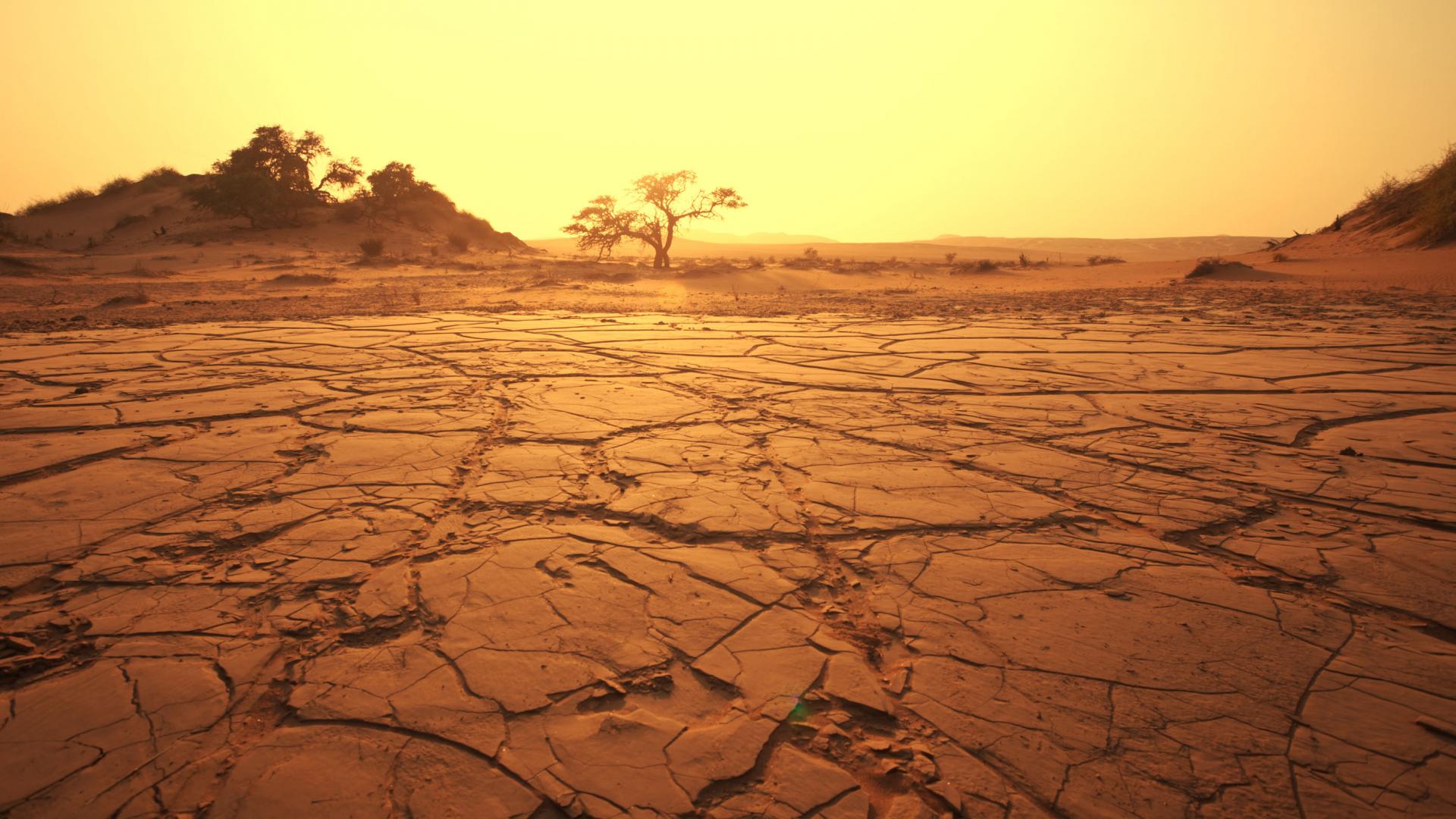
Name
Class
Date
1.
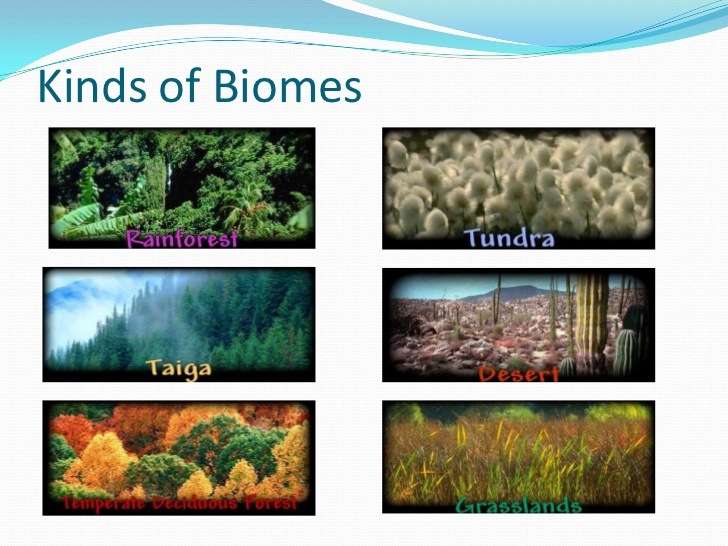
Which biome is the driest?
a)
Desert
b)
Tundra
c)
Taiga
d)
Rainforest
2.
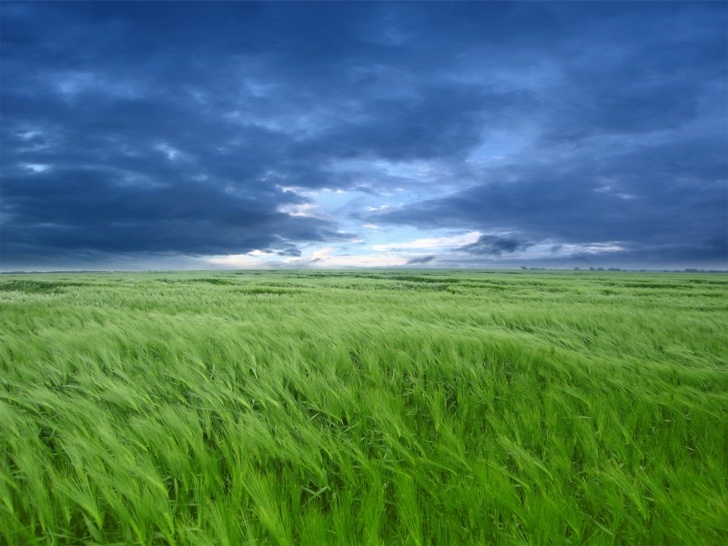
Which biome has wide-open fields of grass?
a)
Taiga
b)
Grasslands
c)
Temperate Forest
d)
Rainforest
3.
Dropping leaves in the fall is a characteristic of what type of tree?
a)
deciduous
b)
evergreen
c)
conifer
d)
bonsai
4.
Type of forest biome near the equator; receives a lot of rain; temperatures are warm all year.
a)
desert
b)
tropical rain forest
c)
arctic
d)
temperate rain forest
5.

Which biome is hot all year with wet and dry seasons?

a)

tropical rainforest

b)

arctic tundra

c)

temperate grassland

d)

desert

6.

Biome with plants and grasses, but no trees.

a)

grassland

b)

desert

c)

forest

d)

arctic tundra

7.

Biome with many different species of cacti and reptiles and very little rainfall.

a)

Desert

b)

Temperate Rainforest

c)

Tropical Rainforest

d)

Arctic Tundra

8.

Which biome contains large populations of grazing herbivores, few species of birds, and deep, rich soil?

a)

tropical rain forest

b)

desert

c)

deciduous forest

d)

grassland

9.

Forest biome with many different trees, mosses and ferns; most trees lose and regrow their leaves each year.

a)

temperate rainforest

b)

biome

c)

desert

d)

grassland

10.

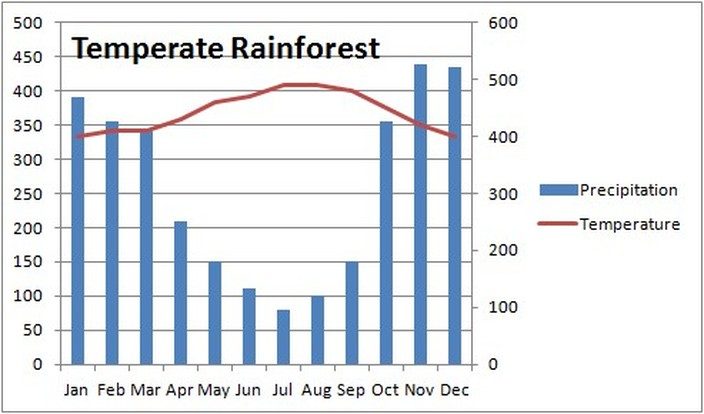
Which biome is represented by the rainfall amounts in letter C?

a)

desert

b)

prairie

c)

deciduous forest

d)

tropical rain forest

11.
What is this biome?
a)
Grassland
b)
Desert
12.
What is this biome?
a)
Desert
b)
Arctic Tundra
c)
Tropical Rainforest
13.
What is this biome?
a)
Arctic Tundra
b)
Desert
14.
What is this biome?
a)
Desert
b)
Arctic Tundra
15.
What is this biome?
a)
Deciduous Forest
b)
Tropical Rainforest
16.
What is this biome?
a)
Coniferous Forest
b)
Desert
17.
A large area where different plants and animals live is called a _______?
a)
school
b)
biome
18.
The Arctic Tundra is very _____ in the winter.
a)
hot
b)
cold
19.
This is the only state in the United States that has tundra land.
a)
Alaska
b)
Ohio
20.
This is the only state in the United States with tropical rainforests.
a)
Ohio
b)
Hawaii
21.
What is it called when animals move from one area to another.
a)
migrate
b)
vacation
22.
We live in the deciduous forest biome.  How many seasons do we have?
a)
2
b)
4
c)
6
23.
The desert biome can be very _____.
a)
hot
b)
cold
24.
Many _____ grow in the deciduous forest.
a)
trees
b)
spiders
c)
ghosts
25.
Evergreen trees and other pine trees produce _____.
a)
cones
b)
pumpkins
26.
Which biome is characterized by low temperatures and low amounts of rainfall?
a)
tundra
b)
desert
c)
temperate deciduous forest
d)
tropical rain forest
27.
Which biome covers most of the land mass near the Earth's equator?
a)
tundra
b)
desert
c)
grassland
d)
tropical rainforest
28.
The most important abiotic factors when studying biomes are...
a)
Food and Water
b)
Water and Sunlight
c)
Temperature and Oxygen
d)
Water and Temperature 
29.
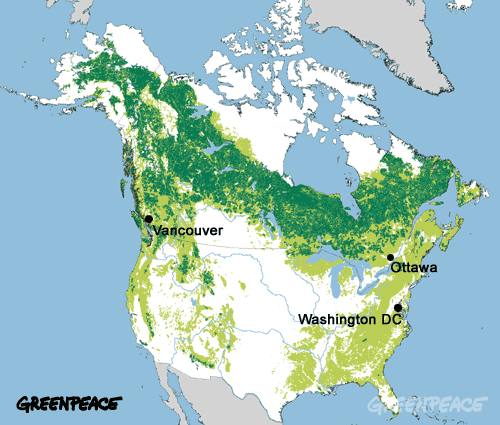
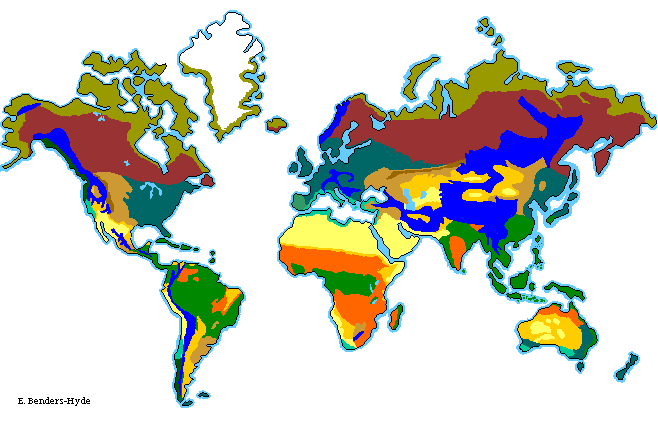
Which biome is Canada in?
a)
Tundra
b)
Taiga
c)
Temperate Forest
d)
Desert
30.
Which of the following in an ecosystem is ABIOTIC?
a)
Sunlight
b)
Frog
c)
Scorpion
d)
Snake
31.
Which of the following in an ecosystem is classified as BIOTIC?
a)
Rock
b)
Sand
c)
Wind
d)
Tree
32.
The taiga
a)
a cold, treeless, desert-like biome found near the North and South Poles
b)
found mostly in Africa
c)
a forest biome dominated by coniferous trees, such as pine, fir, and spruce
d)
a dry, rocky biome found in the central part of South America.
33.

Which land biome is divided into 4 levels/layers?

a)

Deciduous Forest

b)

Tropical Rain Forest

c)

Tundra

d)

Taiga

34.

Which land biome do we live in?

a)

Grassland

b)

Tundra

c)

Deciduous Forest

d)

Taiga

35.

The following animals are common to which land biome?

(polar bear, walrus, arctic fox, seal, penguin, snowy owl, caribou, arctic hare, musk oxen)

a)

Tundra

b)

Taiga

c)

Temperate Forest

d)

Coniferous Forest

36.

The following animals are common to which land biome? (white-tailed deer, black bear, turkey, chipmunk, skunk, raccoon, groundhog, and squirrel)

a)

Grassland

b)

Tundra

c)

Deciduous Forest

d)

Coniferous Forest

37.

The following animals are common to which land biome? (zebra, ostrich, lion, giraffe, bison, elephant, cheetah, hyena, hippo, rhino, prairie dog, and ostrich)

a)

Desert

b)

Grassland

c)

Tundra

d)

Tropical Rain Forest

38.

The following animals are common to which land biome? (moose, elk, lynx, red deer, bobcat, mountain goat, grizzly bear, and gray wolf)

a)

Temperate Forest

b)

Tundra

c)

Deciduous Forest

d)

Taiga

39.

The following animals are common to which land biome? ( scorpion, camel, fennec fox, kangaroo rat, black widow spider, roadrunner, and jackrabbit)

a)

Desert

b)

Tundra

c)

Deciduous Forest

d)

Grassland

40.

A biome is _______________________________________

a)

all the living things in a small area.

b)

a very large ecosystem.

c)

all the members of one species in an area.

d)

a role/ job of an organism.

41.
A large ecosystem is called a ______
a)
Ecosystem
b)
Habitat
c)
Biome
d)
Niche
42.
What is the main factor that separates the biomes?
a)
Land
b)
Water
c)
Climate
d)
Longitude
43.
Biotic factors of an ecosystem are:
a)
non-living
b)
plants
c)
living thing
d)
soil
44.
Algae, crayfish, trout, and frogs live in this biome.
a)
Marine
b)
Freshwater
c)
Tundra
d)
Taiga
45.
What biome do whales, sharks, and coral reefs live in?
a)
Freshwater
b)
Savanna
c)
Marine
d)
Fauna
46.
This forest is split into "layers" where organisms live.
a)
Deciduous Forest
b)
Tropical Rain Forest
c)
Coniferous Forest
d)
None of these
47.

Ponds are divided into zones

a)

True

b)

False

48.

Freshwater biome ecosystems vary by all of the following except

a)

amount of light

b)

temperature

c)

pressure

d)

salt concentration

49.

Lakes are divided into zones. These zones are based on

a)

the size of the lake

b)

the availability of sunlight

c)

the pressure of the lake

d)

the vegetation that lives there

50.

This zone is found at the bottom of a lake

a)

Littoral

b)

Limnetic

c)

Profundal

d)

Benthic

51.

This zone covers the surface of the lake and is known as the photic zone.

a)

Littoral

b)

Limnetic

c)

Profundal

d)

Benthic

52.

This type of freshwater wetland is found around lakes and streams where grasses and reeds are common, but trees are not.

a)

Marshes

b)

Estuary

c)

Swamps

d)

Salt Marsh

53.

Rivers are generally smaller than streams.

a)

True

b)

False

54.

The interface between running freshwater and land is called a

a)

riparian zone

b)

Estuary

c)

River

d)

profundal Zone

55.

Which of the four biomes below has the highest relative productivity?

a)

Rivers

b)

Ponds/Lakes

c)

Wetlands

d)

Streams

56.

Streams have a higher productivity than rivers.

a)

True

b)

False

57.
What are the two main groups of aquatic biomes?
a)
saltwater and freshwater
b)
marine and freshwater
c)
marine and estuarine
d)
oligotrophic and eutrophic
58.
Which of these is NOT a marine biome?
a)
open ocean
b)
deep ocean floor
c)
seashore
d)
wetlands
59.
Which of these is NOT a freshwater biome?
a)
coral reef
b)
flowing water
c)
wetlands
d)
ponds and lakes
60.
What do you call the non-living parts of an environment?
a)
biotic
b)
abiotic
c)
biome
d)
aquatic
61.
What do you call the living things that shape an environment?
a)
biotic
b)
abiotic
c)
biome
d)
aquatic
62.
Aquatic food webs begin with what?
a)
krill
b)
zooplankton
c)
phytoplankton
d)
plankton
63.
Plankton that make food by photosynthesis are called what?
a)
krill
b)
zooplankton
c)
phytoplankton
d)
plankton
64.
Plankton that are more animal in nature are called what?
a)
krill
b)
zooplankton
c)
phytoplankton
d)
plankton
65.
The three zones of flowing water are called what?
a)
source, transition, end
b)
beginning, middle, end
c)
beginning, transition, floodplain
d)
source, transition, floodplain
66.
What is the fast moving part of a river or stream that has high oxygen but low nutrients?
a)
Transition Zone
b)
Floodplain Zone
c)
Source Zone
d)
End Zone
67.
What do you call the part of a river or stream where the water speed slows down?
a)
Transition Zone
b)
Floodplain Zone
c)
Source Zone
d)
End Zone
68.
What is the part of a river or stream where the water is muddy and rich in nutrients?
a)
Transition Zone
b)
Floodplain Zone
c)
Source Zone
d)
End Zone
69.
If the end of a river or stream overflows, what is that area called?
a)
pond
b)
beach
c)
gulf
d)
wetlands
70.
What are the two types of lakes?
a)
freshwater and saltwater
b)
marine and estuarine
c)
oligotrophic and eutrophic
d)
abiotic and biotic
71.
These are lakes in mountain regions with clear water and few nutrients.
a)
estuarine
b)
oligotrophic
c)
eutrophic
d)
marine
72.
These are lakes in lowland areas with green water from phytoplankton and rich in nutrients.
a)
estuarine
b)
oligotrophic
c)
eutrophic
d)
marine
73.
An area of shallow water with emergent plants and dominated by trees is a:
a)
bog
b)
swamp
c)
marsh
d)
wetland
74.
An area of shallow water with emergent plants and is dominated by moss is called a:
a)
bog
b)
swamp
c)
marsh
d)
wetland
75.
In a body of water, the warmer area with more light and less nutrients is called the
a)
Benthic Zone
b)
Source Zone
c)
Floodplain Zone
d)
Pelagic Zone
76.
In a body of water, the colder area with more nutrients but little to no light is called the:
a)
Benthic Zone
b)
Source Zone
c)
Floodplain Zone
d)
Pelagic Zone
77.

A large naturally occurring community of flora and fauna occupying a major habitat

a)

Ocean

b)

Niche

c)

Biome

d)

Commensalism

78.
A consumer that hunts is called:
a)
a producer.
b)
an omnivore.
c)
a predator.
d)
a herbivore.
79.
Cattle egrets forage (feed) in fields among cattle. The egret gets easy access to flying insects stirred up by the cattle, and the cattle don't care if they are there or not.
a)
mutualism
b)
commensalism
c)
competition
d)
parasitism
80.
A relationship between two organisms in which one organism benefits and the other is unharmed...
a)
Mutualism 
b)
Competition
c)
Parasitsm 
d)
Commensalism 
81.
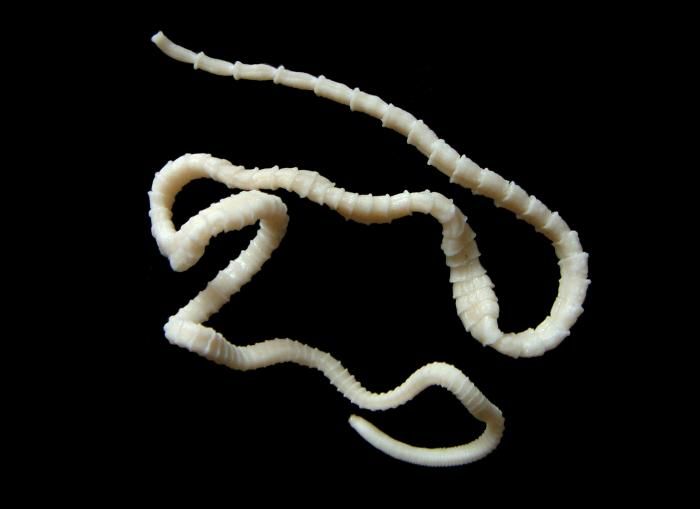
A tapeworm and a cat have this type of relationship.
a)
mutualism
b)
parasitism
c)
commensalism
d)
competition
82.
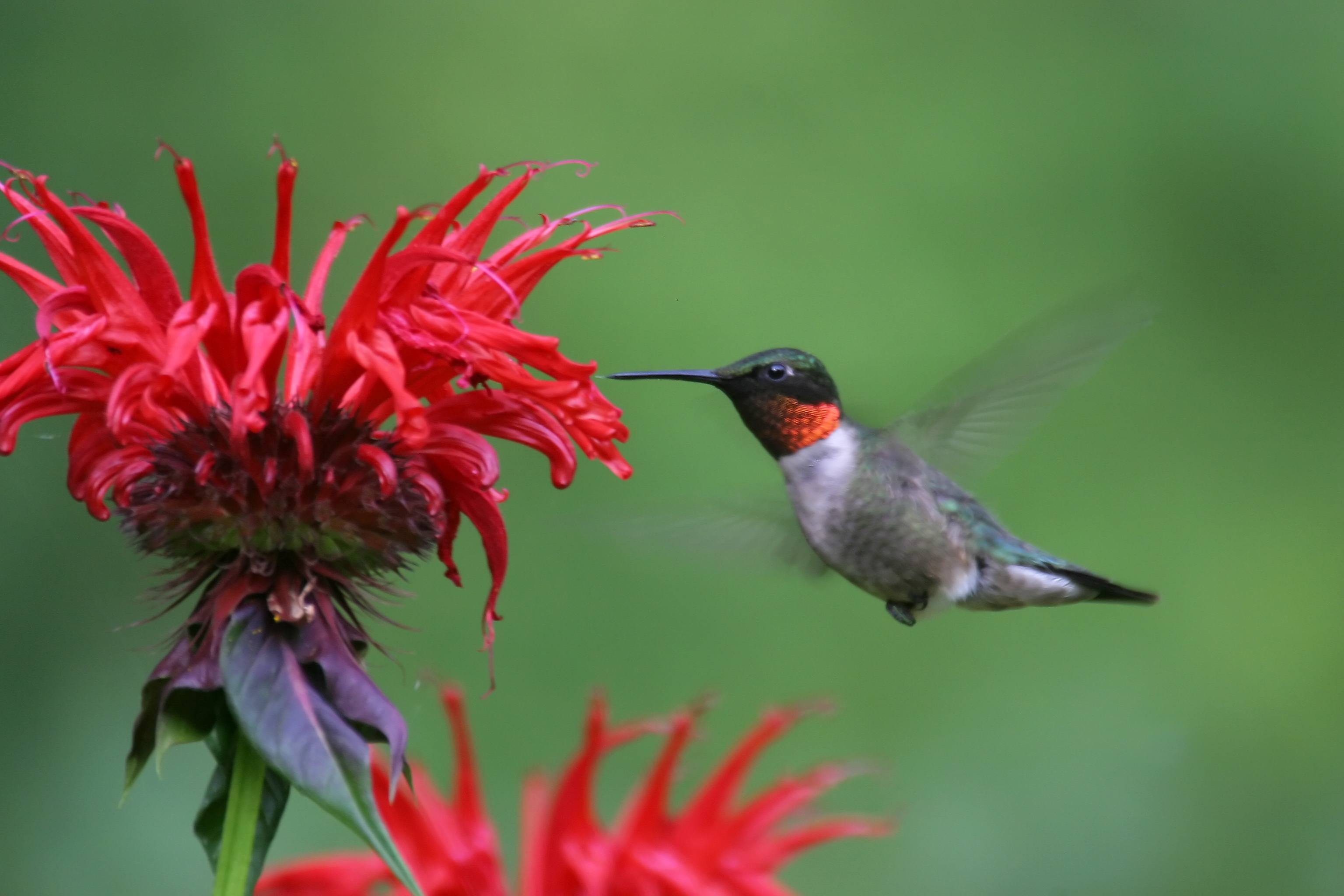
What type of symbiosis?  Hummingbirds feed on nectar from flowers.  The flowers are pollinated by hummingbirds as they move from flower to flower.
a)
commensalism
b)
mutualism
c)
parasitism
d)
predation
83.
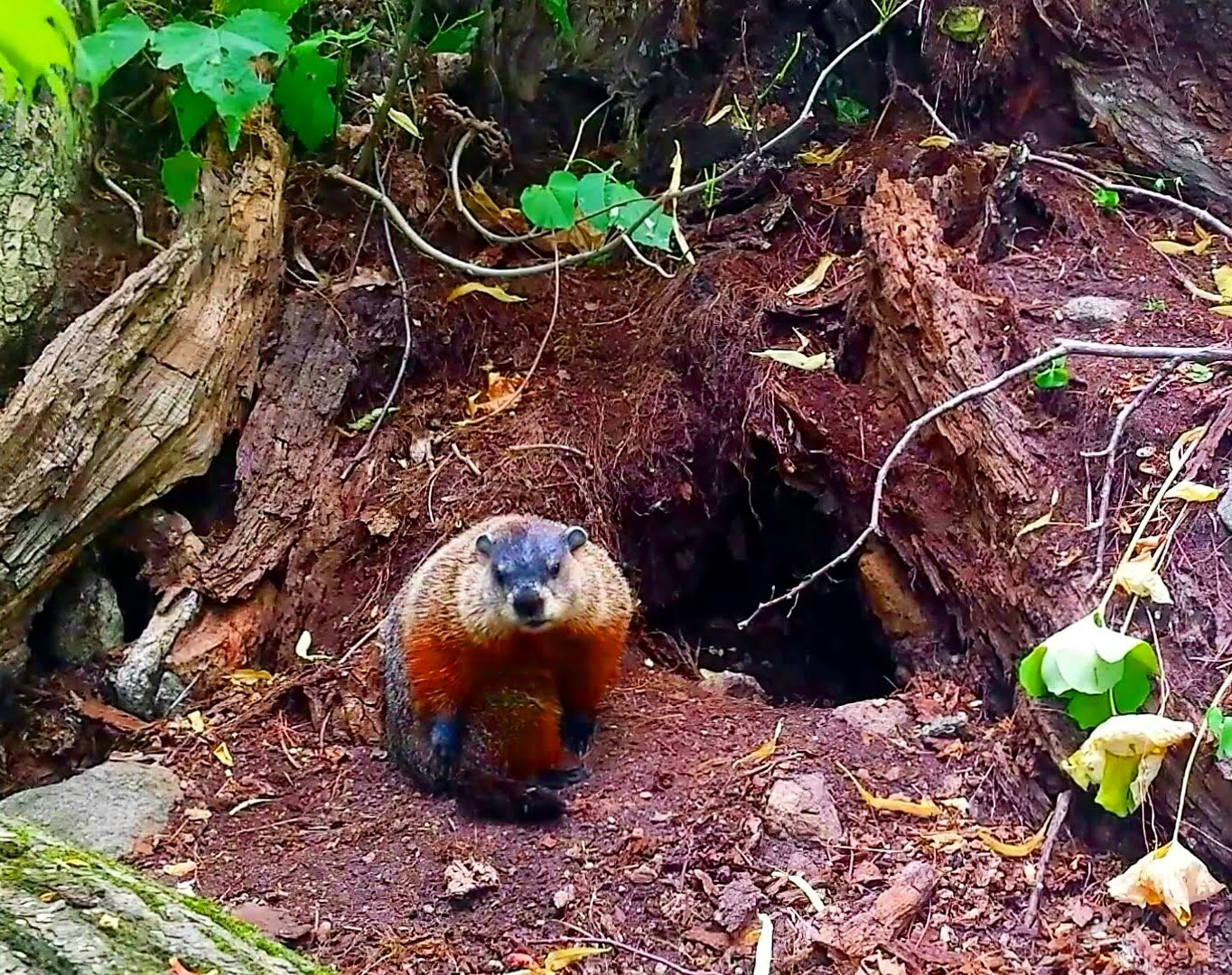
What type of symbiosis?  Skunks often live in burrows that have been dug and abandoned by woodchucks.  
a)
commensalism
b)
mutualism
c)
parasitism
d)
predation
84.
Which symbols best describe parasitism?
a)
+,+
b)
+,-
c)
+,0
d)
-,0
85.
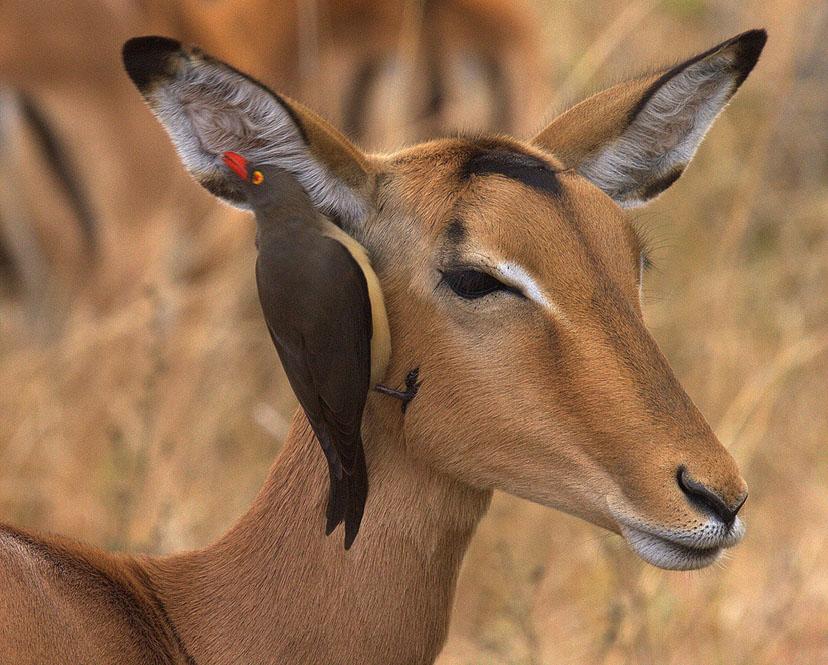
Red-billed oxpeckers are birds that often feed on parasites that infest impala.  This is an example of _______.
a)
commensalism
b)
mutualism
c)
neutralism
d)
competition
86.
A relationship between two organisms in which both organisms benefit. 
a)
Mutualism 
b)
Competition
c)
Parasitsm 
d)
Commensalism 
87.
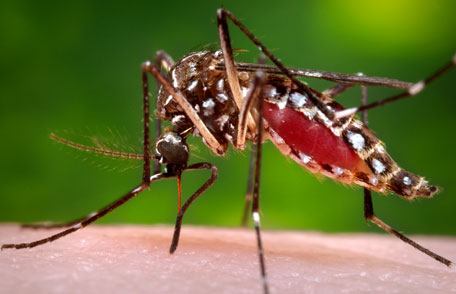
When a mosquito bites you, you are the __________ and the mosquito is the  ____________.
a)
host, hostess
b)
parasite, host
c)
host, parasite
d)
prey, predator
88.

Aphids are tiny insects that live on and eat the leaves of plants, removing vital nutrients from the plants.

a)

Predation

b)

Parasitism

c)

Commensalism

d)

Mutualism

89.
Which of the following would be considered to be prey?
a)
an animal that has to hunt for its food
b)
an animal that is eaten by another animal
c)
an organism that makes it own food
d)
an organism that feeds on the blood of another animal
90.
Barn owls hunt shrews. In this example what is a barn owl?
a)
Herbivore/Predator
b)
Carnivore/Prey
c)
Carnivore/Predator
91.
If a hawk eats a snake, the snake is the...
a)
Predator
b)
Alpha
c)
Prey
d)
Mutualistic partner
92.
An organism that is killed and eaten by another organism
a)
Predator
b)
Prey
c)
Competition
d)
Adaptation
93.

What gas makes up most of the atmosphere?

a)

Argon

b)

Carbon dioxide

c)

Nitrogen

d)

Oxygen

94.

What/who is causing the increase in greenhouse gases in the atmosphere?

a)

The environment

b)

Mainly human beings

c)

The sun

d)

The moon

95.

Which of the following is NOT a fossil fuel?

a)

Coal

b)

Oil

c)

Carbon dioxide

d)

Natural gas

96.
Gobies are a type of small fish that live in small burrows.  Sometimes these burrows are created and maintained by burrowing shrimp.  The goby shares the burrow with the shrimp and uses it to protect its eggs.  The shrimp has poor eyesight, but monitors the behavior of the goby with its antennae.  When it feels the shrimp retreat into the burrow away from danger it quickly follows.  This relationship demonstrates which of the following? 
a)
 parasitism  
b)
mutualism 
c)
commensalism 
d)
predation
97.
The introduction of a non-native species into an ecosystem can result in serious ecological problems.  This is often because the non-native species
a)
adapt to changes quickly
b)
mutations
c)
lacks natural predators 
d)
provides additional genetic diversity
98.
What factor would cause animals of the same species to begin competing with one another?
a)
increase in precipitation         
b)
the presence of decomposers
c)
the introduction of a new food source
d)
limited supply of resources
99.
In an ecosystem, members of the lizards are observed eating members of the insect population.  In this same ecosystem, birds are also observed using insects as a food source.  The relationship between lizards and birds would best be described as –
a)
predator
b)
 competitive
c)
parasitic
d)
mutualistic
100.
Different species are most likely to compete for resources in an ecosystem if both species attempt to –
a)
occupy the same niche.
b)
successfully reproduce.
c)
live in different habitats.         
d)
find different food sources.   
101.
Animals of the same species would most likely compete over a limited amount of -
a)
minerals
b)
Oxygen
c)
sunlight
d)
mating partners
102.
Which of the following levels of organization would accurately fill the gap in the diagram above?
a)
biosphere
b)
organ system
c)
organism
d)
cells
103.
What level of organization describes the different species that interact in an area?
a)
community     
b)
organism
c)
ecosystem
d)
population
104.
The collection of all of the biotic and abiotic factors in an area describes -
a)
community
b)
population
c)
ecosystem
d)
organism
105.
All of the members of a species that occupy a certain area are defined as -
a)
organism
b)
community
c)
population
d)
ecosystem
106.
Remora are small fish with a sucker-like organ that allows them to attach themselves to larger animals like a shark.  By doing this, the remora is able to gain protection from the presence of the shark while helping the shark stay clear from parasites.  This relationship shows _?
a)
 parasitism
b)
mutualism       
c)
commensalism
d)
predation
107.

Which of the following are examples of a density independent factors?

a)

forest fire

b)

seasonal cycles

c)

storms

d)

disease

108.
What factor describes when populations increase because animals are moving into a population?
a)
Emigration
b)
Limiting Factors
c)
Immigration
d)
Exponential Growth
109.
Logistic growth has 3 phases. In Phase 1, the population grows rapidly. In Phase 2, population grows slowly. In Phase 3, growth stops. What causes growth to stop in the 3rd phase of logistic growth?
a)
Emigration
b)
Immigration
c)
Exponential Growth
d)
Carrying Capacity
110.
What does the graph represent?
a)
Emigration
b)
Exponential growth
c)
Immigration
d)
Logistic Growth
111.
What factor describes when populations decrease because animals are moving out of a population?
a)
Emigration
b)
Limiting Factors
c)
Immigration
d)
Exponential Growth
112.

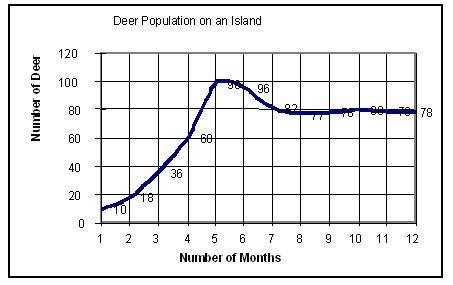
Which choice most closely approximates the deer population's carrying capacity based on the graph?

a)

100

b)

80

c)

60

d)

10

113.

The Florida Panther is a large cat that is native to the southern parts of Florida. Recently, the panther's main food source, rabbits, have been infected with a deadly disease that only affects rabbits. How would this most likely affect the population of panthers in the coming years?

a)

The panther population will decrease since they won't have access to as much food

b)

The panther population will not be affected because they will adapt to eating other food

c)

The panther population will increase because they will produce more offspring to make up the difference

d)

The panther population will decrease because they will contract the disease.

114.

Sea turtles are marine reptiles. They rely on an external heat source, which makes them ectotherms. They are commonly found in waters off the Mid-Atlantic and Northeast United States during the summer and early fall. Typically, they begin to migrate south to warmer water by late October. However, some sea turtles strand along our shores when water temperatures drop rapidly or unexpectedly. This is called “cold stunning.” Cold stunning is similar to hypothermia in humans. Initial symptoms include a decreased heart rate, decreased circulation, and lethargy, followed by shock, pneumonia and possibly death.


Based from this passage, why do sea turtles migrate?

a)

Sea turtles migrate because their food source is more abundant in the south during the fall.

b)

Sea turtles migrate because predators become more abundant in the Mid-Atlantic and Northeast of the U.S. during the summer and early fall.

c)

Sea turtles migrate because humans are fishing more often in the areas where they are commonly found during summer and fall.

d)

Sea turtles migrate because they depend on external sources of heat to help maintain their body temperature.

115.
Nesting birds often space themselves evenly from other nests. This pattern is called
a)
clumped dispersion.
b)
uniform dispersion.
c)
random dispersion
d)
scatter dispersion
116.
The way in which individuals of a population are spread out is called
a)
population density
b)
survivorship
c)
population dispersion
d)
logistic curve
117.
What is the best definition of a population?
a)
The number of plants and animals there are in an area
b)
The number of different species in one place at one time
c)
The number of individuals of one species living in the same place
d)
The total number of all organisms in an ecosystem
118.

The average number of individuals of the same species per unit of surface area at a given time is the ……………………

a)

population density

b)

population growth

c)

population birth rate

d)

population size

119.
Which kind of dispersion is #1?
a)
clumped
b)
random
c)
uniform
120.
Populations of different organisms living in an area
a)
species
b)
community
c)
niche
d)
biome
121.
A group of organisms of the same species living in the same place at the same time is called a(n) _________.
a)
ecosystem
b)
population
c)
community
d)
organism
122.
Non-living factor that affects an ecosystem
a)
biotic factor
b)
abiotic factor
c)
food chain 
d)
biome
123.
Living factors in an ecosystem
a)
abiotic factors
b)
species
c)
trophic level
d)
biotic factors
124.
Temperature, sunlight, and water are examples of _______ factors.
a)
biotic
b)
abiotic
125.
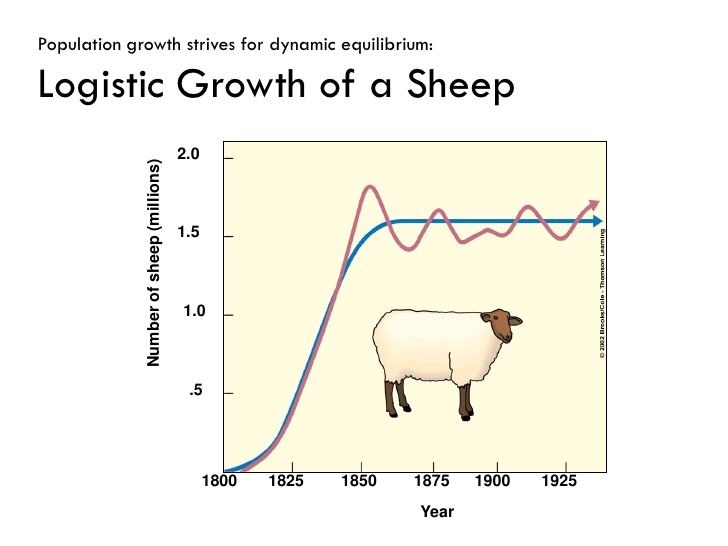
What is the carrying capacity for this sheep population?
a)
1.8 million
b)
1.25 million
c)
1.6 million
d)
1.o million
126.
Groups of different species living in the same area at the same time
a)
ecosystems
b)
biosphere
c)
communities
d)
populations
127.
When a population grows past the ecosystem's carrying capacity, what happens to the population?
a)
Continues to grow
b)
The population starts to die off to return to carrying capcity
c)
The population will go extinct due to lack of resources
d)
The population grows then finds a new carrying capacity
128.
In a forest ecosystem, which of the following is the best example of a limiting factor for a rabbit population?
a)
Squirrel Population
b)
Sunlight
c)
Grass available
129.
When organisms move out of the population, this is known as
a)
emigration
b)
abandonment
c)
immigration
d)
succession
130.

Mark and Recapture

a)

estimating the number of organisms by observing signs of organisms

b)

counting each member of the species to find the exact number

c)

scientists capture and count each organism and mark them with a dot of paint; when they come back they count the marked organisms and unmarked ones to see if the population grew

d)

counting a sample of a small group out of the larger group to estimate

131.

If 50 crabs were captured and marked and then released and then a few days later 25 were caught and of those 5 were marked. What would the estimate of the population be?

a)

500

b)

250

c)

75

d)

200

132.

Conservationists want to find the population of a species of mountain goat. On one day they capture 12 goats, tag them and release. A week later they capture 8 goats, 5 of which are tagged. What would the estimate of the population be?

a)

19

b)

40

c)

72

d)

30

133.

I have a box with 300 balls in. I take 100 balls and mark them, put them back in and mix them up...If I took a sample of 60 balls...how many would i expect to be marked?

a)

150

b)

75

c)

50

d)

20

134.

A farmer wants to estimate the number of rabbits on his farm.


On Monday he catches 120 rabbits.

He puts a tag on each rabbit.

He then lets the rabbits run away.


On Tuesday the farmer catches 70 rabbits.

15 of these rabbits have a tag on them.


Work out an estimate for the total number of rabbits on the farm.

a)

560

b)

500

c)

120

d)

1000

135.

There are N beads in a jar.

40 of these beads are black.


Julie takes at random a sample of 50 beads from the jar.

5 of the beads in her sample are black.


Work out an estimate for the value of N.

a)

120

b)

200

c)

450

d)

400

136.

Clive wants to estimate the number of bees in a beehive.

Clive catches 50 bees from the beehive.


He marks each bee with a dye.

He then lets the bees go.


The next day, Clive catches 40 bees from the beehive.

8 of these bees have been marked with the dye.


(i) Work out an estimate for the number of bees in the beehive.

a)

350

b)

250

c)

220

d)

400

137.
An community and ecosystem are different because...
a)
An ecosytem includes biotic factors
b)
A community includes biotic factors
c)
An ecosystem includes abiotic factors
d)
A community includes abiotic factors
138.
A population is...
a)
Study of all different species
b)
Study of all the same species
c)
All the same species and abiotic factors
d)
An individual organism
139.
A population is...
a)
Study of all different species
b)
Study of all the same species
c)
All the same species and abiotic factors
d)
An individual organism
140.
An ecosystem includes...
a)
Plants
b)
Animals
c)
Temperature
d)
All of the options
141.
The only way of knowing exact amount of organisms in a given area...
a)
Sampling
b)
Direct Observation
c)
Indirect Observation
d)
Mark and Recapture
142.
(total originally marked) * (total captured second time)
____________________
(Total caught with marking)
a)
Sampling
b)
Direct Observation
c)
Mark and recapture
d)
Indirect observation
143.
This population is...
a)
Increasing rapidly
b)
Decreasing
c)
Increasing slowly
d)
In a first-world country
144.
This population is...
a)
Rapidly increasing
b)
Decreasing
c)
Slowly increasing
d)
In a third-world country
145.
What would happen to the Hawk population if you removed the snake?
a)
Hawk population would decrease
b)
Hawk population would increase
c)
Hawk population would not be changed
d)
Hawk would go extinct
146.
If you increased the amount of grass what would happen to the other species in the food web?
a)
All populations would decrease
b)
All populations would increase
c)
No change in population
d)
Only rabbits, mouse, and grasshopper populations would increase
147.
A tick sucking blood from a human... YUMMMY!!
a)
Commensalism
b)
Parasitism
c)
Mutualism
d)
Density-dependent
148.

If you have 145 zebra per square mile, you are describing the ______________ ?

a)

Population size

b)

Population Density

c)

Population Distribution

d)

Sex Ratio

149.

Which of the following is an example of the type of distribution of organisms in their habitat?

a)

Clumped

b)

Uniform

c)

Random

d)

All of the above

150.

Parrotfish live in harems with 1 male and many females (with the largest female converting to male when the pod loses the male).


What is the sex ratio of parrot fish?

a)

Equal males and females

b)

More males than females

c)

More females than males

151.

Oyster larvae can travel hundreds of kilometers powered by sea currents. Adult oysters form wherever the larvae settle.

a)

Clumped

b)

Random

c)

Uniform

152.

Which method for estimating population size involves tagging the organisms and using the ratio of tagged and untagged organisms to estimate the population size?

a)

Quadrat

b)

Transect

c)

Mark-Recapture

d)

Aerial Photograph

153.

You are trying to determine the population size of rabbits in Wheaton Regional park. You set traps and capture and mark 20 rabbits. You return to trap rabbits 10 times. The total number of rabbits you captured was 200 and of these 40 were marked.


Calculate =( (# marked) x (total captured) )/ total recapture marked

a)

100

b)

4

c)

10

d)

20

154.

In a country that has a growing population...

a)

The birth rate is higher than the death rate

b)

The death rate is higher than the birth rate

c)

The birth rate equals the death rate

155.

In a country that has a decreasing population...

a)

The birth rate is higher than the death rate

b)

The death rate is higher than the birth rate

c)

The birth rate equals the death rate

156.

In a country that has a decreasing population...

a)

The birth rate is higher than the death rate

b)

The death rate is higher than the birth rate

c)

The birth rate equals the death rate

157.

What is population density?

a)

The number of people who live in a specified area

b)

The average number of people who live in a certain area

c)

The death rate subtracted from the birth rate

d)

The number of births subtracted from the death rate

158.

Name that population pyramid...

a)

Increasing

b)

Declining

c)

Rapid Growth

d)

Stable Growth

159.
Name that population pyramid...
a)
Developed Country
b)
Developing Country
c)
Unindustrialized Country
d)
Country with Poor Medical Care
160.

Name that population pyramid...

a)

Industrialized Country

b)

Developed Country

c)

Developing Country

161.

Name that population pyramid?

a)

Stable Growth

b)

Developing Country

c)

increasing population

162.
a)

Increasing Growth

b)

Stable Growth

c)

Declining Growth

163.
Why has the world population dramatically increased?
a)
Better medicine
b)
Better sanitation
c)
Better technology
d)
All of the above
164.
Individuals of a population who move into an area.
a)
Immigration
b)
Emigration
c)
Litigation
d)
Mastication
165.
Individuals of a population who exit an area.
a)
Immigration
b)
Emigration
c)
Mitigation
d)
Lingation
166.
Individuals of a population who exit an area.
a)
Immigration
b)
Emigration
c)
Mitigation
d)
Lingation