
 Worksheets
Semester 1 HMH Biology Review
Total questions: 169
Worksheet time: 3hrs 16mins
Maintaining stable internal conditions despite changes in the external environment
Homeostasis
Metabolism
Protein Synthesis
Adaptation
An individual living thing
Species
Ecosystem
Population
Organism
The basic unit of life
Bacteria
Cell
Virus
Molecule
A group of related parts that work together as a whole
System
Population
Organism
Homeostasis
the living factors in an organism's environment
abiotic factors
biotic factors
ecology
organic matter
nonliving factors in an organism's environment
biotic
abiotic
heterotrophs
autotrophs

_____ cells have a membrane bound organelles and a nucleus Ex. ________
Eukaryotic, bacteria
Eukaryotic, nuclei
Eukaryotic, mushrooms
Prokaryotic, pseudopods

The ______ _____ surrounds the cell and maintains _________________.
cell membrane, protein synthesis
cell membrane, respiration
cell membrane, homeostasis
plasma membrane, photosynthesis
The _____ functions in controlling all cell activities and contains the DNA.
cell membrane
mitochondria
chloroplasts
nucleus


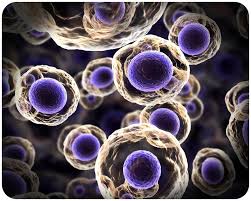
The two kinds of cells are Prokaryotes and Eukaryotes. How are they different?
Prokaryotes have a nucleus and membrane bound organelles
Eukaryotes have a nucleus and membrane bound organelles
Prokaryotes are plant cells.
There is no difference.
Which of the these characteristics is shared by all living things
they are made up of one or more cells
they make their own chemical energy
they have similar response to light
they reproduce when one cell divides into two
At all levels of life, when related parts interact to form a whole they form a
biosphere
species
cell
system
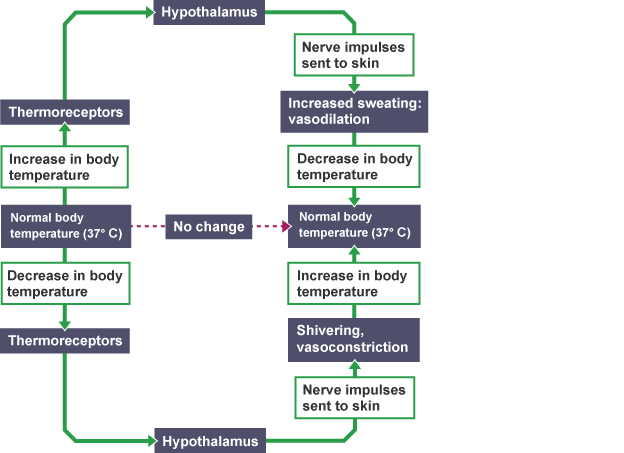
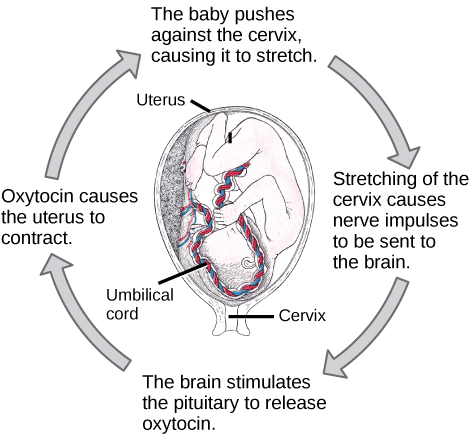

An example of a negative feedback loop is
Blood glucose regulation
Blood pressure regulation
Thermoregulation
All of the above
An example of a positive feedback loop is ____________.
Childbirth
Blood Pressure regulation
Thermoregulation
All of the above

View Figure 1 (if not visible)

View Figure 2 (if not visible)

View Figure 3 (if not visible)

View Figure 4 (if not visible)


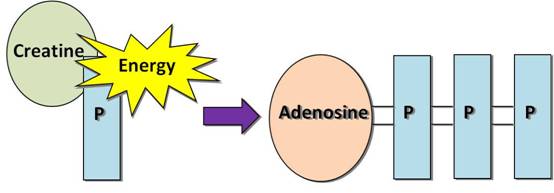
What will ATP become when it loses a phosphate?
Adenosine Monophosphate
Adenosine Triphosphate
Adenosine Diphosphate
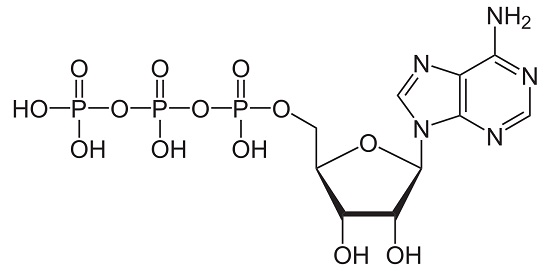
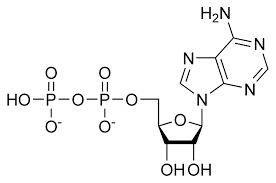
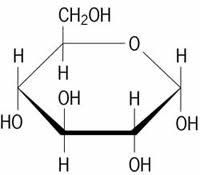
Which of the following is the correct structure of ATP?
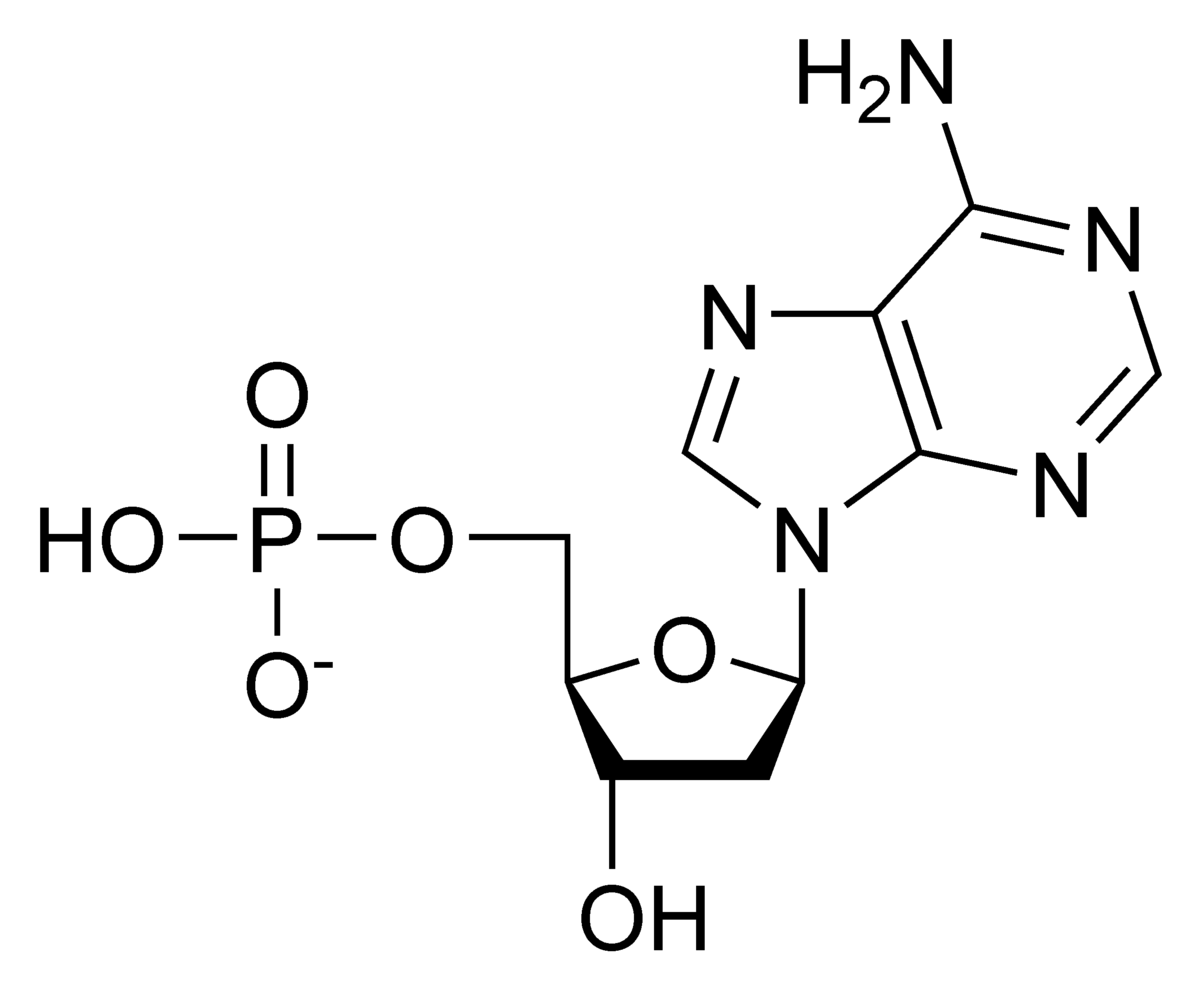

Active transport is the movement of large materials across a cell membrane from ______ to ______ concentration
high to low
low to high
high to high
low to low
Active transport across a cell membrane from low to high concentration, requires
energy (ATP)
no energy
water
oxygen


Which molecule is the primary source of energy for animals?
proteins
carbohydrates
lipids
DNA
The compound HCl releases hydrogen ions (H+) in water. What type of compound is HCl?
An acid
a base
a buffer
a salt
The chemical element most important in organic substances is
calcium
carbon
oxygen
nitrogen
Which of the following is not a carbohydrate?
glucose
proteins
glycogen
starch
Denaturation of an enzyme will occur due to which factor
increased temperature
increased cell pH
increased bonding with another enzyme
temperature and pH
A molecule containing a peptide bond is called
a carbohydrate
a lipid
a nucleic acid
a protein


Which of the following is the correct equation for PHOTOSYNTHESIS?
(Assume that the arrow also includes light energy and enzymes.)
6CO2 + 6H2O --> 6O2 + C6H12O6
6CO2 + C6H12O6 + 6H2O --> O2
6O2 + 6H2O --> 6CO2 + C6H12O6
C6H12O6+ 6O2 ---> 6H2O + 6CO2





Why do living things need nitrogen?
To get energy
To make amino acids
To make proteins
To make proteins AND amino acids
Which one of these does not add CO2 to the atmosphere?
cooking with gas
planting trees
burning wood
riding in a bus


All living things do which of the following?
Chemosynthesis
Cellular respiration
photosynthesis
all of the answers

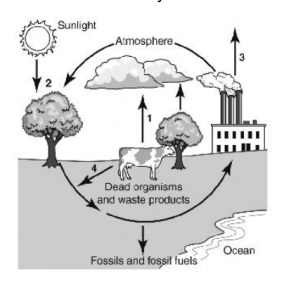
A weightlifter is using heavy weights in short bursts for a competition. Because his muscle cells are not able to take in enough oxygen to make very much ATP the weightlifter begins to get fatigue in his muscles. Which of the following processes is most likely going on in the muscles of the weightlifter as he competes in his event?
As the cells run out of oxygen they switch to anaerobic respiration (fermentation), which allows the cell to make small amounts of ATP in the absence of oxygen.
As the cells run out of oxygen, they die off gradually and the weightlifter's muscles have fewer contracting muscle cells.
The cells will never run out of oxygen if the weightlifter is breathing.
As the cells run out of oxygen, they will continue to make the same amount of ATP, since oxygen is not required to make ATP.
What is the correct equation for cellular respiration?
6CO2 + 6H2O + Energy -> 6O2 + C6H12O6
6O2 + C6H12O6 + Energy -> 6CO2 + 6H2O
6CO2 + 6H2O -> 6O2 + C6H12O6 + Energy
6O2 + C6H12O6 -> 6CO2 + 6H2O + Energy
Which of the following shows the three stages of respiration in the correct order?
Calvin Cycle, Glycolysis, Electron Transport Chain
Glycolysis, Krebs Cycle, Electron Transport Chain
Glucose, Krebs Cycle, Electron Transport Chain
Glycolysis, Calvin Cycle, Electron Transport Chain
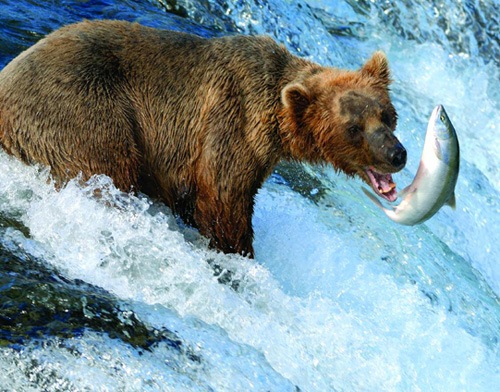
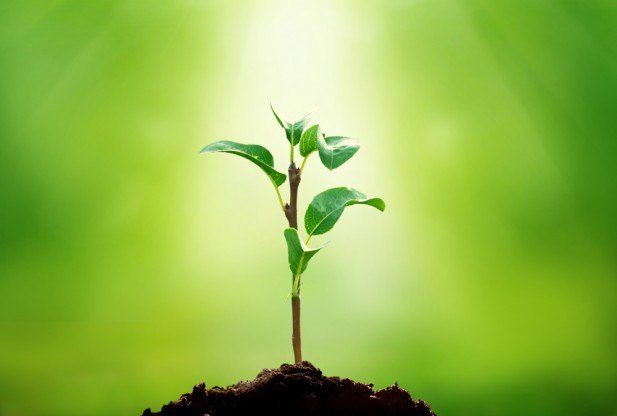
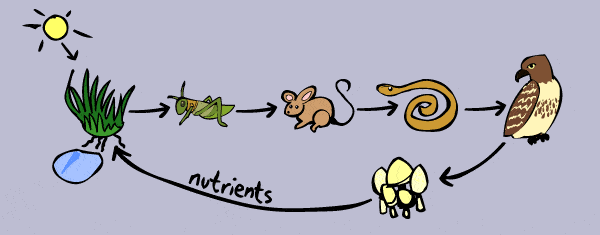

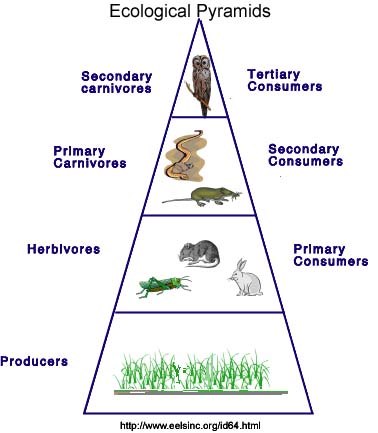


Bacterias that decompose dead plants release _____________ back into the atmosphere.
water
nitrogen
oxygen
carbon
The removal of forests around the world has a negative effect on the global carbon cycle. Which of the following effects to the carbon cycle would be caused by deforestation?
Increased levels of atmospheric CO2
Reduced rates of decomposition by bacteria
A reduction in available solar energy
Under ideal conditions with unlimited resources, a population will grow _________________.
diversely
expectantly
density
exponentially
Choose 2 density-dependent limiting factors:
competition
unusual weather
parasitism
natural disasters
Carrying capacity
the maximum population growth rate under ideal conditions
the change in the population size per individual per unit time
the maximum population size that can be supported by an ecosystem.
the members of a species that live in an ecosystem and have the potential to reproduce.
Succession that occurs in an area with no soil
ecological succession
primary succession
secondary succession
pioneer species
The first organisms that appear in an ecological community
ecological succession
primary succession
secondary succession
pioneer speciles
A population is...
A group of the same species living in the same area
Multiple species that live in one area
All of the living and nonliving things in an area
None of these


An environmental factor such as storms and extreme heat or cold that affects all populations regardless of their size.
density- dependent factor
population density
dispersion
density- independent factor
What is Density-dependent factor?
All the inhabitants of a particular town, area, or country.
A measurement of population per unit area or unit volume; it is a quantity of type number density.
The number of people, other living organisms, or crops that a region can support without environmental degradation.
factors whose effects on the size or growth of the population vary with the population density.
What is Density-independent factor?
Selection occurring when a population is at or near the carrying capacity of the environment. Slow maturation, slow reproduction, slow population growth
affects all populations regardless of their size
Species that adapt to unstable and unpredictable environment. rapid growth, short life span, and population growth.
What is Succession?
A nonliving condition or thing, as climate or habitat, that influences or affects an ecosystem and the organisms in it
living components of an ecosystem. They are sorted into three groups: producers or autotrophs, consumers or heterotrophs, and decomposers or detritivores.
the process by which the structure of a biological community evolves over time. Two different types of succession—primary and secondary—have been distinguished
organisms that can make their own energy through biochemical processes, which are just processes in living things that involve chemical reactions.
The number of individuals per unit area
Population distribution
Population density
Survivorship type 1
Survivorship type 2
Large mammals show this type of survivorship?
Type 1
Type 2
Type 3
Type 4
Organisms that have a high birth rate, but do not have many young that survive to adulthood represent which type of survivorship curve?
Type 1
Type 2
Type 3
None of the above
A group of individuals that interbreed and produce fertile offspring
individual
species
population
community
All of the populations in the same area are called _________?
biosphere
ecosystem
community
population
organism
Describes how organisms are arranged within an area.
population
population size
population density
population distribution
An environmental factor such as storms and extreme heat or cold that affects populations regardless of their density.
density- dependent factor
population density
dispersion
density- independent factor
How do predator prey relationships affect a population?
They are in competition with each other
One will go extinct
Predators have exponential growth
Controls size of both populations
When a population has reached carrying capacity
growth & immigration are equal to death & emigration
growth & immigration are less than death & emigration
growth & immigration are greater than death & emigration
Growth is exponential
What type of limiting factor would a change in the number of predators be classified as?
Density-independent
Density-dependent

An Earthquake-related tsunami would be what type of limiting factor?
Density-independent
Density-dependent
When a population reaches its carrying capacity______.
The birth rate is greater than the death rate
The birth rate is less than the death rate
The birth rate and death rate flucuate around the same amount

According to the graph, what is causing the deer population to decrease?
They got sick.
The wolf population is decreasing.
The wolf population increased.
Nothing, it's a coincidence.

When a population grows past the ecosystem's carrying capacity, what happens to the population?
The population continues to grow.
The population starts to die off to return to carrying capacity.
The population will go extinct due to lack of resources.
The population grows until a new carrying capacity is reached.
The ability of an ecosystem to recover after it has undergone a disturbance
resilience
resistance
population dynamics
dispersion
Ability of an ecosystem to resist change from a disturbance
resilience
resistance
population dynamics
dispersion
Which of these is not an example of symbiosis?
mutualism
commensalism
parasitism
competition
A species has an especially strong effect on an ecosystem.
keystone species
primary consumer
ecological niche
symbiosis
As bees are taking nectar from flowers, they are also pollinating the flowers.
commensalism
mutualism
parasitism
competition
One organism benefits and the other organism is neither helped nor harmed.
commensalism
mutualism
parasitism
A tick that feeds on the blood of mammals.
commensalism
mutualism
parasitism
One organisms captures and feeds upon another organism.
commensalism
parasitism
predation
mutualism
Two organisms compete for the same limited resources
predation
collaboration
parasitism
competition

