wayground logo

Free Printable Worksheets

Font size

S
M
L
XL
Worksheets

DCP 3 Review

Total questions: 70

Worksheet time: 3hrs 42mins

Name
Class
Date
1.
Heredity is the passing of traits from _____________________ to _____________________
a)
predators to prey
b)
water to rain
c)
parents to offspring
d)
fungi to protists
2.
If a child has red hair, they inherited a certain _______________ from their parents.
a)
ratio
b)
trait
c)
probability
d)
sex chromosome
3.
Offspring receives two sets of _____________ (one from each parent)
a)
blue jeans
b)
genes
c)
machines
d)
pedigree
4.
Chromosomes are found in the __________ of a eukaryotic cell.
a)
chloroplast
b)
nucleus
c)
cytoplasm
d)
mitochondria
5.
All of the offspring of an organism have the same genetic material, which is identical to the parent organism. From this, we can conclude that this organism -
a)
makes its own food
b)
is unicellular
c)
live in a marine habitat
d)
reproduces asexually
6.
What are some of the facts about asexual reproduction?
a)
Takes only one mate to reproduce and takes a longer time to reproduce
b)
Takes a shorter amount of time to reproduce and it takes two mates to reproduce
c)
Reproduces diverse offspring and takes a longer time to reproduce
d)
Takes only one mate to reproduce and takes a shorter time to reproduce
7.
What is an advantage of sexual reproduction?
a)
Allows genetic variation
b)
Only needs one parent
c)
Happens very quickly
d)
Offspring are exact copies of parent
8.
When a starfish grows a new body off a broken arm, what kind of reproduction is this?
a)
Sexual
b)
Differentiation
c)
Asexual 
d)
Specialization
9.
In asexual reproduction, all of the offspring are:
a)
Physically Identical
b)
Genetically Identical
c)
Physically and Genetically Identical
d)
Not Identical
10.

Which of the following is not an example of genetic instructions in humans?

a)

Height

b)

Skin Color

c)

Dimples

d)

Written language

e)

Hair Color

11.

___________________ is a type of asexual reproduction in which a piece of a parent organism breaks off to form an new organism (ex. starfish).

a)

fission

b)

budding

c)

fragmentation

d)

fertiliztion

12.

When an offspring grows off from the body of a parent organism it is called __________________.

a)

budding

b)

fission

c)

fragmentation

d)

sporulation

13.

How many parents are required for sexual reproduction?

a)

0

b)

1

c)

2

d)

3

14.

Sexual reproduction results in

a)

No variation

b)

Large amounts of variation

15.

Requires two parents

a)

sexual

b)

asexual

16.

Requires only one parent

a)

sexual

b)

asexual

17.

An organism that has been reproduced by asexual means receives ______________ of its chromosomes from its one parent.

a)

3

b)

25%

c)

50%

d)

100%

18.

In asexual reproduction, all of the offspring are:

a)

Physically Identical

b)

Genetically Identical

c)

Physically and Genetically Identical

d)

Not Identical

19.

In binary fission of bacteria how does the DNA of the daughter cells compare to the DNA of the parent cell?

a)

it is exactly the same

b)

it is different due to meiosis

c)

it is mostly the same with slight changes

d)

it is better than the parent DNA

20.

When a single-celled organism like bacteria splits into 2 new organisms it is called _________________.

a)

fragmentation

b)

binary fission

c)

budding

d)

sporulation

21.
Chromosomes are found in the ____________ of the cell
a)
Chloroplast
b)
Nucleus
c)
Cytoplasm
d)
Mitochondria
22.
Heredity is the passing of traits from _____________________ to _____________________
a)
predators to prey
b)
water to rain
c)
parents to offspring
d)
fungi to protists
23.
If a child has red hair, they inherited a certain _______________ from their parents.
a)
ratio
b)
trait
c)
probability
d)
sex chromosome
24.
A characteristic that an organism can pass on to its offspring through its genes
a)
protein
b)
trait
c)
DNA
d)
gene
25.
Which is an inherited trait?
a)
speaking in front of a crowd
b)
having green eyes
c)
knowing math facts
d)
becoming and extrovert
26.
Children of a parent
a)
Offspring
b)
Behavior
c)
Trait
d)
Instinct
27.
The passage of traits and/or behavior from parents to offspring
a)
Instinct
b)
Heredity
c)
Behavior
d)
Learned Behavior
28.
Why can some people roll their tongues and others cannot? 
a)
Rolling your tongue is an instinct
b)
Rolling your tongue is an inherited trait
c)
Rolling your tongue is an acquired trait
d)
Rolling your tongue is a learned behavior
29.
_____is the passing of traits from parents to offspring (babies)
a)
DNA
b)
Heredity
c)
Evolution
30.

Where are chromosomes found?

a)

vacuole

b)

cell membrane

c)

nucleus

d)

mitochondria

31.
A dichotomous key for insects is given. To what order does an insect with two pairs of scaly wings belong?
a)
Coleoptera
b)
Heteroptera
c)
Diptera
d)
Lepidoptera
32.
A student discovers an arachnid with a segmented abdomen, long legs, and a tail with no stinger. The student uses the dichotomous key below to identify it. Which arachnid has the student found?
a)
Whip Scorpion
b)
Wind Scorpion
c)
Daddy long legs
d)
Scorpion
33.
An illustration and a dichotomous key are given. What is the correct classification for this organism?
a)
Class Insecta
b)
Order Amblygygi
c)
Order Araneae
d)
Order Scorpiones
34.
A table of arachnid and insect characteristics is shown. Which characteristic could be used to distinguish between
arachnids and insects?
a)
Jointed legs
b)
Body segments
c)
Presence of eyes
d)
Presence of antennae
35.
When using a dichotomous key to identify organisms, what do we look at?
a)
physical features
b)
weather patterns
c)
environment
d)
diet
36.
Which type of bean is oval-shaped, dark-colored, and has spots?
a)
kidney bean
b)
pinto bean
c)
black bean
d)
white northern
37.
A dichotomous key for trees is provided. Hikers found a tree that has large brown cones and single sharp needles. What species of tree have the hikers found?
a)
Juniper
b)
Pine
c)
Spruce
d)
Fir
38.
This animal has no feathers but has legs.
a)
duck
b)
hen
c)
lizard
d)
snake
39.
This animal swims but and has feathers.
a)
duck
b)
hen
c)
lizard
d)
snake
40.
What is the scientific name for Bird X?
a)
Certhidea
b)
Geospiza
c)
Platyspiza
d)
Camarhynchus
41.
What is the scientific name for Bird Y?
a)
Certhidea
b)
Geospiza
c)
Platyspiza
d)
Camarhynchus
42.
Which animal has a backbone, is cold blooded, and doesn't live underwater?
a)
goldfish
b)
pigeon
c)
rattlesnake
d)
rabbit
43.
Which animal is warm blooded with fur??
a)
goldfish
b)
butterfly
c)
earthworm
d)
rabbit
44.

Animals and bacteria both need to get energy from other organism. What is this called?

a)

Heterotrophic

b)

Carbon Dioxide

c)

Autotrophic

d)

Salad

45.

Which is not a characteristic of Kingdom Animalia

a)

Highly Motile

b)

Multicellular

c)

Reproduces Asexually

d)

Eukaryotic

46.

Which is not a characteristic of Kingdom Plantae

a)

Reproduces Asexually & Sexually

b)

Unicellular

c)

Autotrophic

d)

Eukaryotic

47.

Which is not a characteristic of Fungi

a)

Eukaryotic

b)

reproduces sexually/asexually

c)

All Multicellular

d)

heterotrophic

48.

Which is not a characteristic of Kingdom Protista

a)

Prokaryotic

b)

Autotrophic & Heterotrophic

c)

Can be Motile

d)

Mostly Unicellular

49.

Which is not a characteristic of Kingdom Archae

a)

Lives in extreme conditions

b)

reproduces sexually

c)

autotrophic & heterotrophic

d)

Unicellular

50.

Which is not an example of Kingdom Bacteria

a)

Unicellular

b)

reproduces asexually

c)

Eukaryotic

d)

can be motile with a flagella

51.
Poison Ivy growing on a tree by touch.
a)
Gravitropism 
b)
Phototropism
c)
Thigmotropism
d)
Hydrotropism
52.
When a plant grows toward a stimuli it is known as:
a)
Positive
b)
Negative
53.
The shoot of a plant growing up. 
a)
Positive Geotropism (Gravitropism)
b)
Negative Geotropism (Gravitropism)
c)
Thigmotropism
d)
Hydrotropism
54.
The root of a plant growing down. 
a)
Positive Geotropism (Gravitropism)
b)
Negative Geotropism (Gravitropism)
c)
Thigmotropism
d)
Hydrotropism
55.
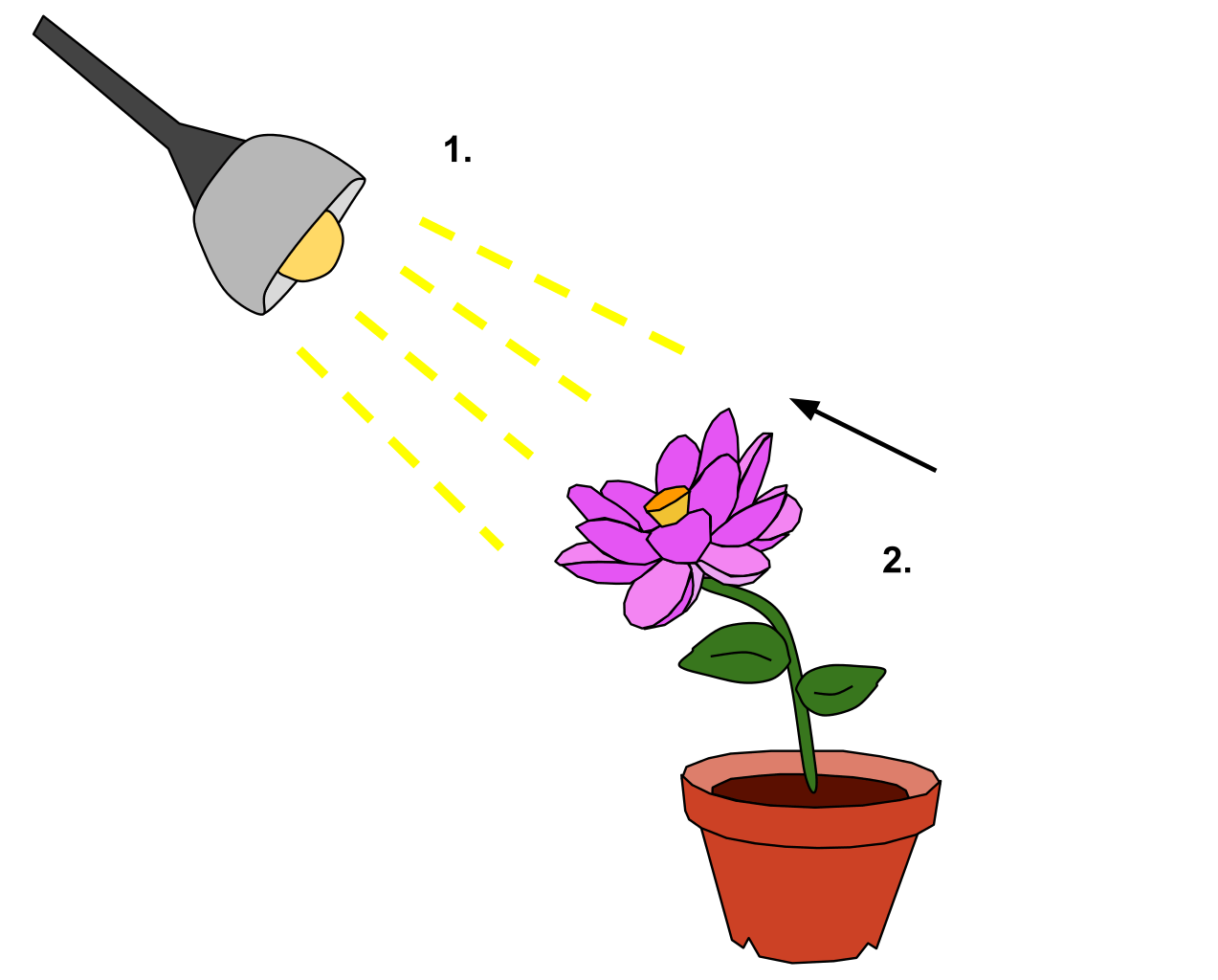
What does this picture represent? 
a)
Thigmotropism
b)
Phototropism
c)
Hydrotropism
d)
Geotropism (Gravitropism)
56.
Which of the following is NOT a difference in a the plant and animal cells?
a)
Chloroplasts
b)
Cell Wall
c)
Cell membrane
d)
Size of vacuole
57.
What does this picture represent? 
a)
thigmotropism
b)
Phototropism
c)
Hydrotropism
d)
Geotropism
58.

This plant's response to touch is ???

a)

Phototropism

b)

Germination

c)

Thigmotropism

d)

Gravitropism/geotropism

59.

Plants curling around a pole or mailbox is an example of:

a)

Phototropism

b)

Germination

c)

Turgor pressure

d)

Thigmotropism

60.

Wilting is a plant's response to:

a)

High turgor pressure

b)

Low turgor pressure

c)

Gravity

d)

Sunlight

61.

When plants grow in towards the light, this is called:

a)

Phototropism

b)

Geotropism

c)

Germination

d)

Thigmotropism

62.

Turgor pressure is a result of water in what plant cell organelle?

a)

Mitochondrion

b)

Nucleus

c)

Cell wall

d)

Vacuole

63.

The plant wilts when pressure .....

a)

increases

b)

decreases

c)

stays the same

d)

none of the above

64.

What is the tropism where plants response is to grow towards light?

a)

gravitropism/geotropism

b)

phototropism

c)

thigotropism

d)

none of the above

65.

What is the tropism where plant responds to external stimiuli of gravity?

a)

gravitropism/geotropism

b)

phototropism

c)

thigotropism

d)

none of the above

66.

What is the tropism where plants respond to external stimulus of touch?

a)

geotropism

b)

phototropism

c)

thigotropism

d)

none of the above

67.

Which plant would be stiff and rigid?

a)

A

b)

B

68.

Which plant would be wilted or limp?

a)

A

b)

B

69.

Gravitropism and ______________________ are the same thing.

a)

Geotropism

b)

Phototropism

c)

Thigmotropism

d)

Triangular Prism

70.

You put a plant on a table near a window and notice that when you come home at the end of the day the plant has bent towards the window. What is this an example of?

a)

Geotropism

b)

Sonotropism

c)

Phototropism

d)

Thigmotropism