wayground logo

Free Printable Worksheets

Font size

S
M
L
XL
Worksheets

Bio 114 Test #1 review

Total questions: 111

Worksheet time: 1hrs 24mins

Name
Class
Date
1.

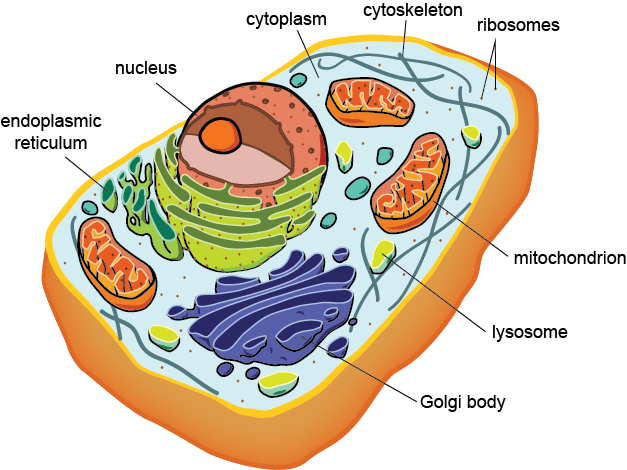
Which structure inside a cell makes proteins?

a)

Ribosomes

b)

Golgi Body

c)

Nucleus

d)

Endoplasmic Reticulum

2.

This is found in prokaryotic cells and plant cells, it surrounds the plasma membrane.

a)

Cytoskeleton

b)

Plasma Membrane

c)

Cell Wall

d)

Golgi Body

3.

An internal network of tubes that help the cell keep its shape and helps with cell division.

a)

Plasma Membrane

b)

Cell Wall

c)

Capsule

d)

Cytoskeleton

4.

This part of a Eukaryotic cell holds the DNA and acts like the "brain" of the cell.

a)

Nucleus

b)

Ribosomes

c)

Endoplasmic Reticulum

d)

Golgi Body

5.

This is the membrane that protects the nucleus and has pores so things can move in and out.

a)

Nucleolus

b)

Nuclear Membrane

c)

Nuclear Envelope

d)

Plasma Membrane

6.

Which organelle in a Eukaryotic cells digests food and worn-out organelles?

a)

Rough ER

b)

Smooth ER

c)

Lysosomes

d)

Golgi Body

7.

This organelle is the "powerhouse" of the cell...

a)

Golgi Body

b)

Rough ER

c)

Ribosomes

d)

Mitochondria

8.

This organelle helps to make proteins by moving them to the Golgi, ribosomes are found here.

a)

Rough ER

b)

Smooth ER

c)

Golgi Body

d)

Mitochondria

9.

This organelle is responsible for making lipids.

a)

Mitochondria

b)

Golgi Body

c)

Rough ER

d)

Smooth ER

10.

This organelle is found in plant cells and performs photosynthesis.

a)

Cell Wall

b)

Chloroplasts

c)

Central Vacuole

d)

Nucleus

11.

This organelle is found in plant cells, its job is to store extra water, sugar and toxins for the plant.

a)

Cell Wall

b)

Chloroplasts

c)

Chlorophyll

d)

Central Vacuole

12.
Which of the following statements is not part of the cell theory?
a)
Cells are the basic unit of structure and function in all living things.
b)
All cells are produced from other cells.
c)
Only animal cells are composed of cells.
d)
All living things are composed of cells.
13.
Which statement reflects one of the major components of the cell theory?
a)
All living things are multi-cellular.
b)
Organs are the basic unit of structure and function for all living things.
c)
All cells come from previously existing cells.
d)
Every organism has a reproductive system to ensure survival of the species.
14.
Cells are often called "the ____ of life."
a)
bread
b)
road map
c)
building blocks
d)
meaning
15.
The ___ is the basic unit of sturucture and function of organisms
a)
atom
b)
cell
c)
matter
d)
all other answers are correct
16.
What is a tight junction?
a)
When the space between cells are closer together than they normally should be
b)
A chemical reaction
c)
A specialized connection of two adjacent animal cell membranes
17.

A type of inter-cellular connection in which the outermost portions of the two cell membranes have a tight seal together is termed a(n)

a)

tight junction

b)

intermediate junction

c)

gap junction

d)

desmosome

18.
The membranes of cells are spot welded together to form reinforced structural units. Skin cells have these kind of junctions.
a)
gap junctions
b)
tight junctions
c)
desmosomes
19.
Allows for a flow of ions to between adjacent heart cells, permitting contractions
a)
Desmosomes
b)
Tight Junction
c)
Gap Junction
d)
plasmodesmata
20.
Which type of cell junction prevents adjacent cells from being separated or overstretched?
a)
Tight junctions
b)
Gap junctions
c)
Desmosomes
21.

Cell membrane phospholipid heads are

a)

Hydrophilic

b)

Hydrophobic

c)

Hydrodynamic

d)

Hydroelectric

22.

Which of the following is not a function of smooth ER?

a)

packages and modifies protein into secretory vesicles

b)

produces enzymes for detoxification in liver cells

c)

stores calcium ions in muscle cells

d)

produces enzymes important in the synthesis of lipids

23.

Which of the following do plant centralized (main) vacuoles not store?

a)

poison

b)

water

c)

waste

d)

digestive enzymes

24.

Contractile vacuoles function is for

a)

maintaining food vesicles

b)

water balance

c)

creating lysosomes

d)

ejecting poisons

25.
Which letter indicates the phospholipid bilayer?
a)
A
b)
B
c)
C
d)
D
26.
Which letter indicates the polar head of a phospholipid?
a)
C
b)
D
c)
E
d)
F
27.
Which letter indicates the nonpolar region of a phospholipid?
a)
C
b)
D
c)
E
d)
F
28.
The portion of a phospholipid facing outward toward the extracellular space or inward to the interior of the cell is both
a)
hydrophobic and polar
b)
hydrophobic and nonpolar
c)
hydrophilic and polar
d)
hydrophilic and nonpolar
29.
The portion of a phospholipid facing inward toward the middle of the phospholipid bilayer is
a)
hydrophobic and polar
b)
hydrophobic and nonpolar
c)
hydrophilic and polar
d)
hydrophilic and nonpolar
30.
What is a valence electron?
a)
The sum of neutrons and protons.
b)
The # of electrons in the last shell.
c)
A type of bond.
d)
A popular compound.
31.

Which of the following describes covalent bonds?

a)

Bonds form because of opposite charges

b)

electrons are shared to fill outer electron shells

c)

Electrons are transferred between atoms

d)

Covalent bonds are magical

32.
Ionic bonds form between metals and ____.
a)
metalloids
b)
metals
c)
nonmetals
33.
Electronegativity is...
a)
how good an atom is at attracting electrons
b)
the ability of an atom to lose electrons
c)
the energy required to remove an electron from a specific atom
d)
how easy it is to make friends. 
34.

Which type of bond has an unequal sharing of electrons between two atoms?

a)

nonpolar covalent

b)

polar covalent

c)

ionic

d)

mettalic

35.

Ice has less density as compared to water due to ___________ bonds.

a)

ionic

b)

hydrogen

c)

covalent

d)

metallic

36.

Water molecules tend to make _____________ bonds with each other.

a)

ionic

b)

polar covalent

c)

metallic

d)

hydrogen

37.
What word describes when water is attracted to other substances?
a)
cohesion
b)
adhesion
c)
capillary action
d)
surface tension
38.
Attractions between the negative Oxygen atom of one water molecule and the positive Hydrogen atom of another water molecule are called
a)
Covalent bonds
b)
Ionic bonds
c)
Polar bonds
d)
Hydrogen bonds
39.
Why does ice float?
a)
As water freezes, it expands and its density decreases.
b)
As water freezes, it takes up more hydrogen from the atmosphere, causing it to have a greater buoyancy.
c)
As water freezes, air becomes trapped between the hydrogen bonds of water molecules.
d)
As water freezes, it takes up more oxygen from the atmosphere, causing it to have a greater buoyancy.
40.
Which end of the water molecule has a slightly positive charge?
a)
the oxygen end
b)
the hydrogen end
c)
both ends are slightly positive
d)
neither end is positive
41.
Water is a universal solvent because it...
a)
It can be found anywhere
b)
It freezes when it gets cold
c)
floats when frozen
d)
Dissolves most substances
42.
Which of the following is LEAST likely to dissolve in water?
a)
nonpolar fats and oils
b)
polar sugar molecules
c)
salt made of a positive sodium ion and a negative chloride ion
d)
all of the substances will dissolve easily in water
43.
Large bodies of water, such as lakes and oceans, do not quickly fluctuate in temperature. What is the reason for this phenomenon?
a)
Water is an acid.
b)
Water is a versatile solvent.
c)
Water has a high heat capacity.
d)
 Water acts as a buffer.
44.
 Small insects can walk across the surface of calm water. Their feet push the surface of the water down slightly, somewhat like a person walking across a trampoline, but they do not break the surface. What is the best explanation for why this happens?
a)
The insects are light enough so that they do not break the hydrogen bonds holding the water molecules together
b)
The insects actually use their wings to hover slightly above the water's surface and they only skim it with their feet
c)
The insects' feet are non-polar, so they are repelled by the polar water molecules and are pushed away from the water's surface
d)
The insects are small enough to see the individual water molecules, so they are able to step carefully from one molecule to the next
45.
Why does water move from the roots to the leaves of plants?
a)
Water is pushed by solutes
b)
Capillary action pulls the water molecules like a chain
c)
Water is pulled by gravity
d)
Water’s cohesion causes it to “pull” towards the leaves
46.
A(n) ______ is a substance with a pH less than 7
a)
Acid
b)
Alkaline
c)
Base
d)
Buffer
47.
A(n) _______ is a substance with a pH greater than 7.
a)
Base
b)
Acid
c)
Buffer
d)
Water
48.
What is the only substance with a neutral pH of 7?
a)
Milk
b)
Orange Juice
c)
Water
d)
Blood
49.
A scientist performs an experiment to see if acids have an effect on the health of a particular type of plant. Three sets of plants were treated with acidic solutions of known pH while the control set was treated with a solution of neutral pH 7.Which is the best conclusion for this experiment?
a)
Acid has no effect on the health of this type of plant.
b)
B. High acidity is helpful to this type of plant.
c)
C. Low acidity is harmful to this type of plant.
d)
High acidity is harmful to this type of plant.
50.
A possible explanation to a problem that has not yet been tested. 
a)
data
b)
theory
c)
hypothesis
d)
fact
51.
What step does every scientific experiment begin with?
a)
hypothesis
b)
question/problem
c)
procedures
d)
conclusion
52.
The summary at the end of an experiment that explains the results. 
a)
conclusion
b)
procedures
c)
materials
d)
responding variable
53.

What is an observation?

a)

A scientific statement based on ideas

b)

Using your senses to notice what is going on around you

c)

To be unaware of your surroundings

d)

The question that you want an answer to.

54.
When experimenting with the growth of a plant, a scientist uses three (of the same type of) plants, two different fertilizers, equal light, and equal water. What type of variable is the fertilizer?
a)
Dependent
b)
Independent
c)
Control
d)
Compound
55.
Research Question: Does the type of gasoline put in a car effect how fast the car can drive. What is the independent variable?
a)
Type of gasoline
b)
which car the gas is put into
c)
how fast the car can drive
d)
how much gas is put into the car
56.
Carey and Justin are raising money to purchase books for their school's library. The more money they raise, the more books they will be able to purchase for the library.
m = the amount of money Carey and Justin raise
b = the number of books Carey and Justin will be able to purchase

Which of the variables is dependent?
a)
m
b)
b
57.
How many independent variables can be tested in a controlled experiment?
a)
one
b)
two
c)
three
d)
as many as possible
58.
Which variable depends on what is done at the beginning of an experiment?
a)
Dependent
b)
Independent
c)
Control
d)
Following
59.
What would the INDEPENDENT variable be in an experiment testing which types of paper airplane goes furthest?
a)
the paper used
b)
the type of paper airplane
c)
the distance of each plane's flight
d)
how hard the plane is thrown
60.
The ability of a living thing to get bigger is known as _______________.
a)
Development
b)
Growth
c)
Adaptation
d)
Response
61.
A/An ____________is the smallest unit of life.
a)
atom
b)
stimulus
c)
cell
d)
DNA
62.
The ability of an organism to create offspring is ___________________________________.  
a)
reproduction
b)
evolution
c)
development
d)
growth
63.
To maintain stable internal conditions is  __________________________________.
a)
growth
b)
adaptation
c)
homeostasis
d)
development
64.
______________________ is the scientific term for a living thing.
a)
organism
b)
cell
c)
photosynthesis
d)
DNA
65.
Type of reproduction that produces two genetically identical offspring from one parent is _________________.
a)
Sexual
b)
Asexual
c)
reproduction
d)
homeostasis
66.
A reaction to a stimulus is a ______________.
a)
hiccup
b)
response
c)
metabolism
d)
homeostasis
67.
Every organism must pass on its ________________, stored in DNA.
a)
metabolism
b)
response
c)
growth
d)
genetic code
68.
_________________is a signal to which a living thing responds.
a)
Stimulus
b)
Reaction
c)
Development
d)
Homeostasis
69.
An organism that makes its own food is 
a)
an omnivore
b)
a heterotroph
c)
an autotroph
d)
a carnivore
70.
When a baby kitten becomes an adult cat, this is an example of...
a)
energy metabolism
b)
growth and development
c)
response to stimuli
d)
having cells
71.

Reproduction that involves cells from two parents uniting to produce the first cell of a new organism.

a)

Asexual

b)

Sexual

c)

Budding

d)

Division

72.

Living things are based on a universal genetic code. What molecule is responsible for that code?

a)

RNA

b)

Lipid

c)

Protein

d)

DNA

73.

Maintaining a stable internal environment is called

a)

homeostasis

b)

equilibrium

c)

balance

d)

evenness

74.

Identify the characteristic: Green plants produce their own food through the process of photosynthesis.

a)

All living things use energy

b)

All living things contain cells

c)

All living things maintain homeostasis

d)

All living things grow

75.
Multicellular means
a)
made of many cells
b)
made of one kind of cell
c)
made of only one cell
76.
Which of the following is NOT a characteristic shared by all living organisms?
a)
Ability to move
b)
Ability to grow and develop
c)
Made up of one or more cells
d)
Responds to stimuli
77.

Organisms, such as bacteria, are ______________ which means they consist of only a single cell.

a)

unicellular

b)

multicellular

c)

autotrophic

d)

heterotrophic

78.

Which of the following is an example of homeostasis?

a)

adapting to your environment

b)

maintaining an appropriate respiration rate

c)

the sum of all of your chemical reactions

d)

being composed of more than one cell

79.

What is Binomial Nomenclature

a)

The Genus and Species names

b)

Family and Kingdom

c)

Domain and Kingdom

d)

Kingdom and Order

80.
Choose the correct way to write the scientific name for humans:
a)
homo sapiens
b)
Homosapiens
c)
Homo sapiens
d)
Homo Sapiens
81.
The scientific name for water bear is Hypsibius dujardini.  What is its genus?
a)
Hypsibius 
b)
dujardini
c)
water 
d)
tardigrade
82.
The scientific name for water bear is Hypsibius dujardini.  What is its species?
a)
Hypsibius 
b)
dujardini
c)
water 
d)
tardigrade
83.
In a properly written scientific name, which part is capitalized?
a)
species
b)
genus
84.

What is the difference between prokaryotic and eukaryotic cells?

a)

Prokaryotic cells have a nucleus, eukaryotic cells do not.

b)

Prokaryotic cells don't have a nucleus, eukaryotic cells do.

c)

Prokaryotic cells have DNA, eukaryotic cells do not.

d)

Prokaryotic cells don't have DNA, eukaryotic cells do.

85.

What is the difference between autotrophs and heterotrophs?

a)

Autotrophs are rocks, heterotrophs don't exist.

b)

Autotrophs make their own food, heterotrophs find food.

c)

Autotrophs are humans, heterotrophs are insects.

d)

Autotrophs are multicellular, heterotrophs are unicellular.

86.

What are the differences between unicellular and multicellular organisms?

a)

Unicellular organisms can move, multicellular organisms can't.

b)

Unicellular organisms have a horn, multicellular organisms have 2 heads.

c)

Unicellular organisms have 1 cell, multicellular organisms have multiple.

87.

How does binomial nomenclature work?

a)

It combines the kingdom and phylum to make a scientific name

b)

It combines the genus and species to make a new creature

c)

It combines the order and class to make a new creature

d)

It combines the genus and species to make a scientific name

88.

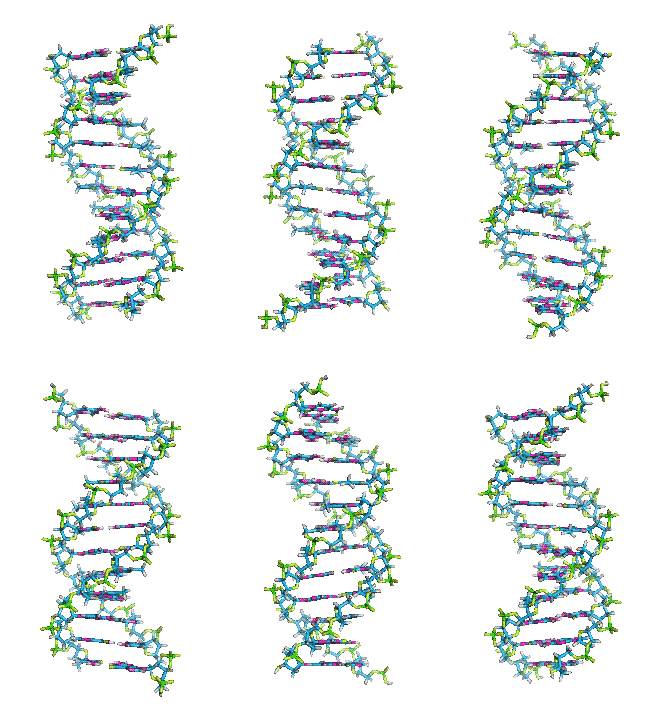
Domain, Kingdom, Phylum, _____, Order, _____, Species

(answer ______,______)

(a)  
89.
Which group of organic compounds contains fatty acids?
a)
Carbohydrates
b)
Lipids
c)
Nucleic Acids
d)
Proteins
90.
Which of the following answers links a biomolecule with one of its proper functions?
a)
Lipids - Store genetic information
b)
Carbohydrates - short term energy storage
c)
Nucleic Acids - Catalyze reactions
d)
Proteins - long term energy storage
91.
Which organic macromolecules are composed of chains of amino acids that join to form the structural components of organisms.
a)
Carbohydrates
b)
Proteins
c)
Amino Acids
d)
Lipids
92.
The monomers used to synthesize proteins are called ____________.
a)
Nucleotides
b)
Fatty Acids
c)
Amino Acids
d)
Sugars
93.
Which biomolecule has sugars and starches?
a)
Lipids
b)
Proteins
c)
Carbohydrates
d)
Nucleic Acid
94.
Which biomolecule functions include enzymes­ which speeds the rate of chemical reactions, structural components in cells, mechanical functions in muscles and cytoskeleton, cell signaling, and immune response; provides structure and helps with chemical reactions 
a)
Protein
b)
Lipids
c)
Carbohydrate
d)
Nucleic Acid
95.
Which biomolecule is important source of energy for humans; glucose for human cells, tissues, and organs; provides fiber, sugar, and starches; provides structural support, cell wall, and cell membrane maker?
a)
Nucleic Acid
b)
Lipid
c)
Carbohydrate
d)
Protein
96.
Which biomolecule includes fats, such as triglycerides, oils, waxes, and steroids (cholesterol); insoluble in water; provides energy storage, insulation, part of cell membrane, and hormones 
a)
Nucleic Acid
b)
Lipids
c)
Carbohydrate
d)
Protein
97.
Lipids are made up of which of the following?
a)
glycerol and fatty acids tails
b)
glycerol and monolipids
c)
fatty acids and phosolipids
d)
amino acids and nucleotides
98.
What is the monomer of nucleic acids?
a)
Glycerol
b)
Monosaccharides
c)
Amino Acids
d)
Nucleotides
99.
Which biomolecule is made of nucleotides and include your DNA? (Hint: they carry genetic information)
a)
Carbohydrate
b)
Lipids
c)
Protein
d)
Nucleic Acid
100.
Which biomolecule is responsible for insulation and LONG term energy storage?
a)
Proteins
b)
Nucleic Acids
c)
Lipids
d)
Carbohydrates
101.
ALL polymers (large molecules) are made up of...
a)
monosaccharides
b)
monomers
c)
proteins
d)
None of these
102.

Atoms are made up of what?

a)

molecules

b)

compounds

c)

elements

d)

subatomic particles

103.

Which of the following are subatomic particles? (Check all that apply)

a)

protons

b)

neutrons

c)

megatrons

d)

electrons

104.

Which subatomic particle has a positive charge?

a)

proton

b)

neutron

c)

electron

d)

midichlorian

105.

Which subatomic particle has a negative charge?

a)

proton

b)

neutron

c)

electron

d)

cybertron

106.

Which subatomic particle as no charge, also known as a neutral charge?

a)

proton

b)

neutron

c)

electron

d)

chakra

107.

What is the center of an atom called?

a)

The headquarters

b)

The centrometer

c)

The hypothesis

d)

The nucleus

108.

The nucleus of an atom contains which subatomic particles?

a)

protons and electrons

b)

protons and neutrons

c)

electrons and neutrons

d)

protons, electrons, and neutrons

109.

which explanation of this notation is correct?

a)

12 is proton #

b)

6 tells you there are 6 neutrons

c)

6 tells you there are 6 protons

d)

12 is not a mass # here

110.

What is the mass number of "F"

a)

9

b)

18

c)

17

d)

19

111.
How many neutrons does the isotope of lithium have?
a)
8
b)
3
c)
4
d)
5