wayground logo

Free Printable Worksheets

Font size

S
M
L
XL
Worksheets

Selection and Evolution

Total questions: 107

Worksheet time: 54mins

Name
Class
Date
1.

What is gradual change in a species over time

a)

evolution

b)

natural selection

c)

diversity

d)

extinct

2.

What is the process by which individuals are better adapted to their environment and are more likely to survive

a)

mutation

b)

variation

c)

natural selection

d)

fossil

3.

Who is the British naturalist who formulated the theory of evolution by natural selection

a)

Gregor Mendel

b)

HMS Beagle

c)

Charles Darwin

d)

Galapagos Finches

4.

What are any difference between organisms of the same species

a)

Homologous Structure

b)

Diversity

c)

Fossil

d)

Variation

5.
What characteristic did Darwin observe about the finches on the Galapagos Islands?
a)
Their feathers 
b)
Genotypes 
c)
Their beaks
d)
Their body sizes
6.
When an organism completely dies out, it is called.....
a)
Adaption
b)
Extinction
c)
Fossilization
d)
Mutation
7.
What is another name for natural selection?
a)
survival of the smartest
b)
survival of the fastest
c)
survival of the biggest
d)
survival of the fittest
8.
What is a change in an organism that allows for it to survive in its environment?
a)
homologous
b)
vestigial
c)
variation
d)
adaptation
9.
What is an organism that has similar characteristics and can reproduce?
a)
species
b)
organism
c)
embryology
d)
vestigial 
10.
When the DNA of an organism is altered it is referred to as…
a)
Mutation
b)
Gene Flow
c)
Genetic Drift
d)
Sexual Selection
11.
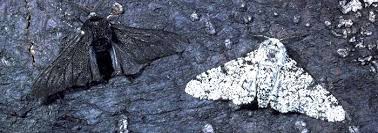
Predict which moth would increase in population
a)
light 
b)
dark
12.
Two organisms that are closely related would have
a)
very similar DNA sequence
b)
exactly the same DNA sequences
c)
no proteins in common
d)
completely different DNA sequence
13.
How are camels especially suited to their environment? Choose best
a)
Their humps make them good pack animals for humans
b)
Their long eyelashes make them look pretty
c)
They can go long without water
d)
They get along well with other animals
14.
To adjust to a changing environment
a)
Mutation
b)
Adapt
15.
Charles Darwin came up with this theory 
a)
Natural Selection
b)
Mutation
16.

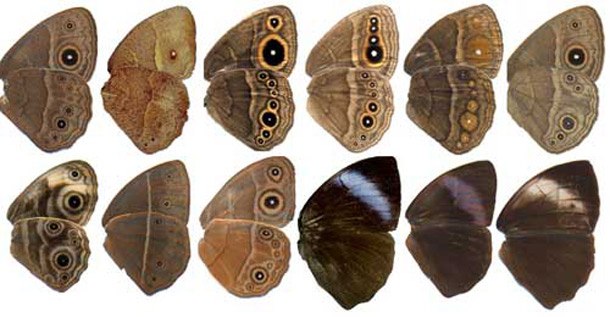
These moths are all the same species. The differences between their wings is an example of ________________

a)

Natural Selection

b)

Variation

c)

An acquired trait

d)

Extinction

17.
Which one of the following shows discontinuous variation?
a)
Eye colour
b)
Height
c)
Strength
d)
Weight
18.
Which one of the following shows continuous variation?
a)
Blood group
b)
Height
c)
Male or female
d)
Tongue rolling
19.
What type of graph do we use for discontinuous variation?
a)
A bell-shape
b)
Bar chart
c)
Line graph
d)
Scatter Graph
20.
What shape graph do you see for many examples of continuous variation?
a)
A straight line downwards
b)
A straight line upwards
c)
A bell-shape
d)
A flat line
21.

Which type of data would student height be categorized as?

a)

Categorical

b)

Continuous

c)

Discontinuous

d)

Normal

22.
Which of the following is an example of discontinuous variation?
a)
Weight
b)
blood type
c)
height
d)
Hand span
23.
Which of the following is an example of continuous variation?
a)
hair colour
b)
height
c)
eye colour
d)
Gender
24.
Evolution is a very slow gradual process that occurs over long periods of time.
a)
true
b)
false
25.
What type of selection is depicted in the picture? 
a)
stabilizing 
b)
directional 
c)
disruptive 
d)
the answer is not here
26.
Robins typically lay fours eggs. If more then four eggs are produced then the baby chicks are malnourished while smaller egg numbers result in no viable (able to live) baby chicks. This is an example of
a)
stabalizing
b)
disruptive
c)
direction
d)
none of the above
27.
What type of selection?
a)
Directional 
b)
Stabilizing
c)
Disruptive
28.
Which of the three graphs shows stabilizing selection?
a)
A
b)
B
c)
C
29.
Which of the three graphs shows disruptive selection?
a)
A
b)
B
c)
C
30.
If finches with large beaks and finches with small beaks increase in a population while finches with average sized beaks decreases, which pattern of natural selection has occurred?
a)
Directional selection
b)
Disruptive selection 
c)
Stabilizing selection
31.
What type of natural selection is this?
a)
Disruptive Selection
b)
Directional Selection
c)
Stabilizing Selection
d)
Sexy Selection
32.
What is the correct explanation for what is happening in this graph?
a)
There are a lot of average-sized beaks
b)
There are no beaks
c)
There are a lot of small beaks only
d)
There are a lot of small and large beaks, but not average-sized ones
33.
Scientists find that most feral cats in a neighborhood have whiskers about 12 cm long. After about 15 generations of stabilizing selection, what would you expect to see?
a)
even more cats with 12 cm long whiskers
b)
most cats with less than 12 cm long whiskers
c)
most cats with more than 12 cm long whiskers
d)
most cats with whiskers either less than or more than 12 cm long, very few with whiskers 12 cms 
34.
Human babies don't do well if they are born too small. If they are too big complications can occur during birth. Baby size should then be selected for by which method?
a)
stabilizing
b)
directional
c)
disruptive
d)
Beyonce is having twins
35.

Consists of all genes present in a population, including all alleles for each gene

a)

allele frequency

b)

gene pool

c)

variation

d)

biodiversity

36.

The movement of genes into or out of a population.

a)

sexual selection

b)

genetic drift

c)

bottleneck effect

d)

gene flow

37.

In small populations, individuals that carry a particular allele may leave more descendants than other individuals, just by chance

a)

genetic flow

b)

genetic drift

c)

genetic trade

d)

genetic equilibrium

38.

A change in allele frequency following a dramatic reduction in the size of a population (like a catastrophe)

a)

bottleneck effect

b)

founder effect

c)

temporal isolation

d)

speciation

39.

Change in allele frequencies as a result of the migration of a small subgroup of a population

a)

speciation

b)

founder effect

c)

bottleneck effect

40.

alternative form of a gene

a)

allele

b)

species

c)

genotype

d)

generation

41.

genetic makeup of an organism; an organism's combination of alleles

a)

phenotype

b)

genotype

c)

traits

42.

PHysical traits of an organism

a)

genotype

b)

evolution

c)

fossil record

d)

PHenotype

43.

The process of forming a new species.

a)

survival of the fittest

b)

natural selection

c)

evolution

d)

speciation

44.
Genetic drift is change in the allele frequency of a population due to...
a)
random chance
b)
natural selection
c)
non-random mating (sexual selection)
d)
artificial selection
45.
 Genetic Drift is more likely to happen in... 
a)
aquatic populations
b)
small populations
c)
terrestrial populations
d)
older populations
46.
Which of the following is an example of the bottle neck effect?
a)
Bald Eagles are hunted until near extinction, population recovers.
b)
Small group of iguanas floats to an island, starts a new population.
c)
Red fox pups are more likely to survive in a snowy environment if they are born white.
d)
Farmer chooses seeds from largest apples to plant next year.  This results in larger apples from year to year.
47.

Which of the following is an example of natural selection?

a)

Bald Eagles are hunted until near extinction, population recovers.

b)

Small group of iguanas floats to an island, starts a new population.

c)

Red fox pups are more likely to survive in a snowy environment if they are born white.

d)

Farmer chooses seeds from largest apples to plant next year. This results in larger apples from year to year.

48.
A change in the genetic composition of a population as a result of descending from a small number of colonizing individuals is called:
a)
founder effect
b)
bottleneck
c)
genetic drift
d)
gene flow
49.
Natural selection states that organisms are best suited for their environment if they ____________ and ____________.
a)
Survive and Reproduce
b)
Survive and Predate
c)
Survive and Parasitize
d)
Survive and Adapt
50.
Gene Flow tends to ___________ genetic variation (diversity)
a)
Increase
b)
Decrease
c)
Stabilize
d)
Exaggerate 
51.
Which of the following is an example of the bottleneck effect?
a)
Cheetah populations reach their lowest levels with reduced diversity and as they rebound are so genetically similar they appear to be inbred.
b)
Affected individuals with blue skin can trace their ancestry back to one of the first settlers in the region.
c)
The environment of a fox population changes and over time foxes who are white survive and pass on their genes to their offspring.
d)
Humans choose two dogs they like the characteristics of and breed them together.
52.
Which Hardy-Weinberg equation represents the genotype frequencies in a population?
a)
p + q = 1
b)
p2 + 2pq + q2 = 1
c)
p2 + pq2 + q2 = 1
d)
p + 2pq + q3 = 1
53.
Which Hardy-Weinberg factor represents the frequency of heterozygous individuals in a population?
a)
p2
b)
2pq
c)
q2
d)
p2 + 2pq
54.
What does the Hardy-Weinberg equilibrium measure?
a)
changes in allele frequencies
b)
numbers of mutations
c)
goodness of fit
d)
genetic diversity
55.
In the Hardy-Weinberg Equation, q2 is the frequency of what?
a)
The recessive allele 
b)
the dominant allele
c)
the recessive genotype
d)
the dominant genotype
56.
The Hardy-Weinberg Model is...
a)
available at local hobby stores and retailers throughout the Greater Tazewell area.
b)
a mathematical tool that biologists can use to predict allele frequencies and determine whether or not evolution is occurring within a population.
c)
always occurring within individual organisms in nature.
d)
only useful in the lab and cannot be practically applied to real-world populations of organisms.  
57.

The allele frequency of p=.20 What is the percentage of recessive genotype?

a)

.80

b)

.04

c)

.32

d)

.64

58.

The allele frequency of p=.20 What is q?

a)

.80

b)

.04

c)

.32

d)

.64

59.

The allele frequency of p=.20 What is the percentage of Heterozygous Dominant genotype?

a)

.80

b)

.04

c)

.32

d)

.64

60.

64% of the population has the recessive phenotype. What is the allele frequency for q?

a)

.04

b)

.32

c)

.64

d)

.2

e)

.8

61.

64% of the population has the recessive phenotype. What is the percentage for Rr?

a)

.04

b)

.32

c)

.64

d)

.2

e)

.8

62.
The purpose of selective breeding is to 
a)
Get bigger animals
b)
get smaller animals
c)
create animals with desirable traits
d)
create animals with bad traits
63.
Where humans have bred organisms together based on traits we like.
a)
Evolution
b)
Natural Selection
c)
Extinction 
d)
Artificial Selection
64.
The evolution of dogs from wolves is due to:
a)
Natural Selection
b)
Sexual Selection
c)
Artificial Selection
d)
Vestigial Structures
65.
Which is another term for selective breeding?
a)
Artificial selection
b)
Natural Selection
c)
Intelligent selection
66.
Evidence shows that the wolf is the ancestor to all of the breeds of dogs shown below. How did this variation arise in a relatively short period of time?
a)
A.  Genetic manipulation
b)
Natural selection
c)
Random chance
d)
Selective breeding
67.

Problems with animals that are selectively bred include:

a)

Being more disease resistant

b)

Producing more meat

c)

Being more likely to suffer from genetic disease

d)

Being more genetically diverse

68.

What is Inbreeding

a)

When two closely related animals are bred together

b)

When two none related animals are bred together

c)

When animals are allowed to chose their own mates

d)

When humans choose which animals will mate together

69.
Mitochondrial DNA is
a)
inherited only from the mother 
b)
in the shape of a triple helix 
c)
inherited only from the father
d)
not useful in forensic science
70.
A flash flood carried a raft of Amazon ants away from their original population. There is enough distance between the two groups, that they will never meet in nature again. What type of reproductive barrier is this?
a)
behavioral isolation
b)
temporal isolation 
c)
gametic isolation
d)
geographic isolation 
71.
The genitalia of the male damselfly varies in shape. Certain males can only hold onto & mate with females whose genitalia fit.  What type of reproductive barrier is this?
a)
behavioral isolation
b)
temporal isolation 
c)
gametic isolation
d)
mechanical isolation 
72.
Some female peacocks prefer males with large, colorful tales while other female peacocks prefer males with no tail at all. Females are beginning to only mate with the type of males with the tail they prefer. What type of reproductive barrier is this?
a)
behavioral isolation
b)
hybrid sterility 
c)
temporal isolation
d)
mechanical isolation 
73.
The flowers of pink tulips open in the morning, while the flowers of lavender tulips open in the early afternoon. The bees that pollinate these tulips cannot carry pollen back & forth between the two types of tulips because of their flowers being closed at different times of day. What type of reproductive barrier is this?
a)
behavioral isolation
b)
hybrid sterility 
c)
temporal isolation
d)
mechanical isolation 
74.

A new river forms and splits two populations, causing ______________ speciation

a)

Sympatric

b)

Allopatric

c)

Extreme

d)

Convergent

75.

Orcas occur in the same habitat but some are avoiding each other and do not interbreed. They have different diets, vocal behavior, and social structures. What type of speciation is this?

a)

Allopatric

b)

Sympatric

c)

Complex

d)

Covergent

76.

when the organism develops different courtship rituals which do not attract main population this is a part of ____________ speciation.

a)

Allopatric

b)

Sympatric

c)

Simple

d)

Temporal

77.

The emergence of a mountain range is an event that would lead to _______________ speciation

a)

Allopatric

b)

Sympatric

c)

Temporal

d)

Behavioral

78.

The emergence of new rivers or streams is a type of ____________ isolation.

a)

Temporal

b)

Mechanical

c)

Behavioral

d)

Geographic

79.

The presence of islands represents what type of reproductive isolation

a)

allopatric speciation

b)

sympatric speciation

80.
species that have similar embryonic development show that they may have 
a)
common ancestors
b)
not been related
c)
not had similar development
d)
once been that animal
81.

Defines a species as a population or group of populations whose members can interbreed and produce fertile offspring.

a)

Biological species concept

b)

Morphological species concept

c)

Genealogical species concept

d)

Ecological species concept

82.

Classifies organisms based on observable traits.

a)

Biological species concept

b)

Morphological species concept

c)

Genealogical species concept

d)

Ecological species concept

83.

Defines a species as a cluster of organisms representing a specific evolutionary lineage.

a)

Biological species concept

b)

Morphological species concept

c)

Genealogical species concept

d)

Ecological species concept

84.

Defines species based on their ecological role or niche.

a)

Biological species concept

b)

Morphological species concept

c)

Genealogical species concept

d)

Ecological species concept

85.

Reproductive barrier that exists prior to the formation of a zygote.

a)

Pre-zygotic

b)

Post-zygotic

c)

Para-zygotic

d)

Multi-zygotic

86.

Reproductive barrier that exists after to the formation of a zygote.

a)

Pre-zygotic

b)

Post-zygotic

c)

Para-zygotic

d)

Multi-zygotic

87.

Type of reproductive barrier evidenced by this diagram.

a)

Temporal isolation

b)

Habitat (geographic) isolation

c)

Behavioral isolation

d)

Mechanical isolation

e)

Gametic isolation

88.

Which type of post-zygotic barrier is evidenced by this diagram.

a)

Hybrid inviability

b)

Hybrid sterility

c)

Hybrid breakdown

89.

Hybrid zygotes fail to develop or reach sexual maturity.

a)

Hybrid inviability

b)

Hybrid sterility

c)

Hybrid breakdown

90.

Offspring of hybrids are weak or infertile.

a)

Hybrid inviability

b)

Hybrid sterility

c)

Hybrid breakdown

91.

Which type of post-zygotic barrier is evidenced by this diagram.

a)

Hybrid inviability

b)

Hybrid sterility

c)

Hybrid breakdown

92.

Two species that occasionally mate and produce zygotes, but incompatible genes prevent the resulting embryo from developing. This is a _____ barrier called _____.

a)

post-zygotic; reduced hybrid fertility

b)

pre-zygotic; gametic isolation

c)

post-zygotic; hybrid breakdown

d)

post-zygotic; reduced hybrid viability

93.
Frequently, a group of related species will each have a unique courtship ritual that must be performed correctly for both partners to be willing to mate. Such a ritual constitutes a ___________; ____________ reproductive barrier
a)
temporal; prezygotic
b)
gametic; postzygotic
c)
behavioral; prezygotic
d)
mechanical; postzygotic
94.
A polyploid individual that contains genetic material from 2 (or more) different parental species.
a)
Autopolyploid
b)
Allopolyploid
95.

Process that results in multiple sets of chromosomes. Sudden evolution.

a)

Divergent evolution

b)

Convergent evolution

c)

Polyploidy

d)

Meiosis

96.
Which one of the following is an environmental variation?
a)
Attached ear lobes
b)
Eye colour
c)
Male or female
d)
Short hair
97.
When does a cow begin to make milk? 
a)
when she is eating grass
b)
after she is two years old
c)
after she drinks milk
d)
after she has a calf
98.

A farmer wants to increase the amount of food produced by corn crops. If the farmer selectively breeds the plants, for which trait should the farmer select?

a)

Taller stems

b)

Deeper roots

c)

Resistance to pesticides

d)

More cobs on the plant

99.

Some dairy farmers want o increase the amount of milk produced by their cows. How can the farmers use selective breeding to increase milk production?

a)

By increasing the age of cows that are bred

b)

By choosing cows that are high milk producers

c)

By limiting the number of offspring each cow has

d)

By choosing cows that can produce milk after eating twice as much food

100.

Which of the following traits would be used to evaluate a milking cow?

a)

Milk yield

b)

Intelligence

c)

Coat colour

d)

Udder size

101.

A group of disorders that affects hemoglobin, the molecule in red blood cells that delivers oxygen to cells throughout the body.

a)

Sickle Cell Disease

b)

Hemophilia

c)

HIV

d)

Cystic Fibrosis

102.

Normal RBC

a)

A

b)

B

103.

Sickled RBC

a)

A

b)

B

104.
How many copies of the sickle cell gene are needed for a person to have the disorder?
a)
0
b)
1
c)
2
d)
3
105.

Which genotype represents a patient that suffers from sickle cell disease? (it is recessive)

a)

HbSHbS

b)

HbAHbS

c)

HbAHbA

d)

HbSHb

106.

Why does the allele for sickle cell still exist?

a)

People with SCD live longer.

b)

The dominant allele is resistant to malaria.

c)

Homozygous advantage.

d)

Heterozygous advantage.

107.

In Siamese cats, dark hair develops where the skin is ___________. This is an example of __________ variation.

a)

low temperature, environmental

b)

mutated, individual

c)

heterozygous, genetic

d)

nonsomatic, sexual