
 Worksheets
Pig Dissection Practical Exam
Total questions: 106
Worksheet time: 1hrs 23mins
Which part of the pig's digestive system is responsible for nutrient absorption?
Stomach
Small intestine
Large intestine
Esophagus
Identify the structure in the pig's respiratory system that prevents food from entering the trachea.
Larynx
Epiglottis
Bronchi
Alveoli
Explain how the pig's circulatory system is adapted to efficiently transport oxygen throughout the body.
The heart has four chambers that separate oxygenated and deoxygenated blood.
The heart pumps blood directly to the lungs without passing through any other organs.
The veins carry oxygenated blood to the tissues.
The arteries carry deoxygenated blood to the lungs.
Which part of the pig's nervous system is primarily responsible for processing sensory information?
Spinal cord
Cerebrum
Cerebellum
Medulla oblongata
Describe the role of the diaphragm in the pig's respiratory system.
It filters air entering the lungs.
It contracts to increase the volume of the thoracic cavity, allowing air to be drawn into the lungs.
It prevents food from entering the trachea.
It exchanges gases between the blood and the air.
Which muscle group is primarily responsible for the movement of the pig's forelimbs?
Abdominal muscles
Pectoral muscles
Gluteal muscles
Quadriceps
Compare the structure of the pig's heart to that of a human heart.
Both have three chambers.
Both have four chambers.
The pig's heart has two chambers, while the human heart has four.
The pig's heart has five chambers, while the human heart has four.
Which bone is part of the pig's axial skeleton?
Femur
Humerus
Rib
Tibia
Explain the function of the kidneys in the pig's excretory system.
They store urine until it is excreted.
They filter waste products from the blood to form urine.
They reabsorb nutrients from the urine.
They produce digestive enzymes.
Which structure in the pig's reproductive system is responsible for producing sperm?
Ovaries
Uterus
Testes
Fallopian tubes
Describe the pathway of blood flow through the pig's heart starting from the right atrium.
Right atrium → Right ventricle → Pulmonary artery → Lungs → Left atrium → Left ventricle → Aorta
Right atrium → Left atrium → Right ventricle → Left ventricle → Aorta
Right atrium → Right ventricle → Aorta → Lungs → Left atrium → Left ventricle → Pulmonary artery
Right atrium → Right ventricle → Aorta → Left atrium → Left ventricle → Pulmonary artery
Which part of the pig's skeletal system protects the brain?
Vertebral column
Rib cage
Skull
Pelvis
Analyze the role of the liver in the pig's digestive system.
It produces bile to aid in the digestion of fats.
It absorbs nutrients from digested food.
It stores waste products until they are excreted.
It produces digestive enzymes to break down proteins.
Which structure in the pig's nervous system connects the brain to the rest of the body?
Cerebrum
Cerebellum
Spinal cord
Medulla oblongata
Evaluate the importance of the pig's muscular system in maintaining posture and movement.
The muscular system is only responsible for movement, not posture.
The muscular system works with the skeletal system to maintain posture and enable movement.
The muscular system is responsible for producing hormones that regulate posture.
The muscular system does not play a role in maintaining posture.
This organ stores bile for digestion of fat.
Liver
Small intestines
Spleen
Gall bladder
This organ breaks down food by using strong acids and muscle movements.
Heart
Gall bladder
Small intestine
Stomach
Identify the stomach in the diagram
Identify the small intestine in the diagram

stomach

esophagus

liver
The (a) system consists of a group of organs that help break down food into nutrients and simpler substances. The (b) system helps transport these nutrients and substances throughout the body, and into the cells.
digestive
circulatory
endocrine
respiratory

Which part of the digestive system is number 1?
esophagus
mouth
small intestine
liver

Which digestive organ STORES/SECRETES bile produced by the liver?
kidneys
intestines
stomach
gall bladder
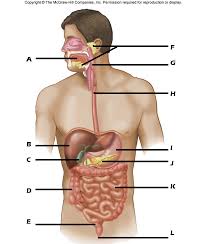
Which digestive organ is represented by the letter B?
Pancreas
Liver
Mouth
Small intestine

What structure is B pointing to?
liver
stomach
small intestine
kidney
What is the term for the muscle contraction that moves food through the digestive system?
Osmosis
Peristalsis
Diffusion
Respiration

Arteries carry blood ______ from the heart.
Away
To
Across
Around
Match the following
Helps aid in clotting when you have a cut
platelets/Thrombocytes
Contains Hemoglobin
RBC/Erythrocytes
Protect the body from pathogens
WBC/Leukocytes
The largest component of blood
Plasma
Carries blood AWAY from the heart
Arteries
What carries oxygen around the body?
Plasma
Red Blood Cells
Platelets
White Blood Cells
The Aorta
5
2
6
1
Which describes all the parts of the circulatory system?
heart, lungs, stomach, muscles
heart, blood, arteries, and veins
bones, skin, hair
How many chambers does the human heart have?
2
4
6
8
How many chambers in a pig heart?
1
2
3
4
Which structure allows urine to EXIT the body?
Kidney
Urethra
Ureters
Bladder
These organs are responsible for removing waste products from the blood.
kidneys
small intestines
large intestines
lungs
Which excretory organ eliminates water and some chemical wastes in perspiration?
lungs
skin
liver
kidneys
Excess water and some chemical and cellular waste products eliminated from the body in liquid waste is called
urea
urine
liquid waste
solid waste
The _________ is/are responsible for urine storage.
Bladder
Kidneys
Ureter
Urethra

I contain the kidneys and the urethra.
Respiratory System
Endocrine System
Excretory System
Immune System
What is the main function of the excretory system?
Breaks down food, allows for nutrient absorption into blood, and eliminates indigestible material
Responsible for production of offspring
Provides oxygen to the body's cells, while moving carbon dioxide
Filter waste from the blood, maintains acid-base balance, and regulates water and electrolytes
The urethra belongs to which reproductive system?
Male
Female
Both
When contractions begin during pregnancy, hormones are released to increase the rate of contractions. This is an example of
positive feedback
negative feedback
The testes are held close to the male's body in the sac known as the ______.
Scrotum
Testes
ovary
Fallopian Tubes
Please match the part to its function
Epididymis
Stores Sperm
Testes
Produces Sperm
Vas Deferens
Moves sperm from testes to body cavity
Scrotum
Keeps sperm cooler then body tem
Seminole Vesicles
Adds semen
Label the Male Reproductive System.
Testes
Penis
Vas Deferens
Prostate Gland
Urethra
Label the female gamete
Nucleus
Cell Membrane
Cytoplasm
Protective Layer
Please match the term to its function
Uterus
embryo implants into lining
Ovary
Produces Eggs
Fallopian Tubes
passageway for sperm and egg
Cervix
separates vagina from uterus
Vagina
where sperm is deposited
During the final stages of human gestation, receptors for the hormone oxytocin increase on the smooth muscle cells of the uterus. The release of oxytocin during labor stimulates the smooth muscle tissue in the wall of the uterus. The vigorous contraction of the uterine smooth muscle helps push the baby through the birth canal so that delivery can occur. This process involves the interaction of which organ systems?
endocrine and muscular only
endocrine and reproductive only
endocrine, muscular, and reproductive
endocrine, reproductive and excretory
Which statement describes a function of the human male reproductive system?
It produces gametes in the testes
It supplies a fluid that protects the fetus
It provides support for the development of the embryo
It provides nutrient materials through the placenta
What is the term used to describe the external female reproductive structures collectively?
Endometrium
Cervix
Uterus
Vulva
The part of the female reproductive system that produces the eggs
uterus
cervix
ovaries
vagina
What is the main purpose of the cervix in the female reproductive system?
To produce ova
To secrete female hormones
To connect the uterus to the vagina
To store sperm
Where are the ovaries located?
Outside the pelvic cavity
Within the pelvic cavity
Within the abdominal cavity
Within the thoracic cavity
Another name for the elastic, muscular tube, which is the organ of intercourse for a female is...
The vagina
The birth canal
Both
The opening to the uterus is the
cervix
vagina
ovary
fallopian tube
Label the respiratory system.
Diaphragm
Lung
Trachea
Bronchiole
Alveoli
The gas we breath OUT is (a) and the gas we breath IN is (b)
Carbon Dioxide
Oxygen
ATP
Glucose
Helium
Match the following
pharynx
throat
larynx
voice box
diaphragm
muscle
bronchi
tubes
alveoli
small sacs
mucus
traps foreign particles and warms incoming air
surfactant
prevents the alveoli in the lungs from collapsing
tracheal cartilage
provides an open airway and prevents the windpipe from collapsing
uvula
prevents food and drink from entering the nasal cavity when swallowing
epiglottis
prevents food from entering the larynx when swallowing
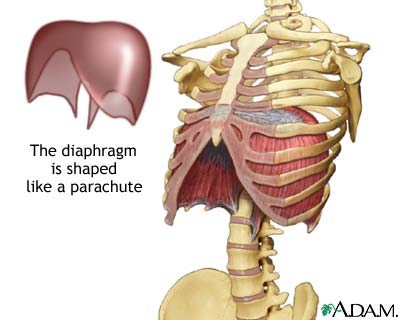
Where is the dome-shaped diaphragm?
above the lungs
below the lungs
Which system controls every function of the body?
Skeletal
Muscular
Digestive
Nervous
Neurons that transmit impulses the the CNS are called
neuoglia
sensory
efferent
association
Bone cells are called
osseous
osteoblasts
osteocytes
osteclasts
The TWO major divisions of the skeletal system are the axial skeleton (two structures are the skull and ribs) and the (a) skeleton (two structures are the hips and shoulders).
Label the skeleton
clavicles
ulna
radius
hip
rib
cranium
fibula
femur
sternum
patella
cranium
Gives body structure, support, and balance.
Holds your brain
Protects organs like the heart and lungs
ribs
Helps hold the ribs together
sternum
Protects the spinal branch
vertebral column
shoulders
long bone in the upper arm
hips
bone in the forearm
facilitates movement
pelvic girdle protects vital organs of the abdominal cavity


Identify the skeletal bone in the picture highlighted blue
mandible
humerus
cranium
femur
Match the following common names of bones to their scientific names
Kneecap
Patella
Thigh Bone
Femur
Collar Bone
Clavicle
Shoulder blade
Scapula
What is the function of a probe in pig dissection?
To explore the internal organs and structures of the pig during dissection.
To feed the pig during dissection
To measure the weight of the pig
To clean the pig's external body


What small, green structure is 1 pointing to that is on the underside of the liver?
large intestine
kidney
gall bladder
stomach

What is A?
diaphragm
gallblader
liver
stomach
What is E?
pancreas
spleen
small intestines
stomach

What is B?
pancreas
bladder
gallbladder
spleen
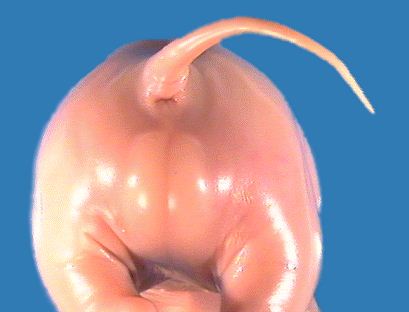

The green colied structure in the center of this image receives waste from food after nutrients have been absorbed?
Liver
Stomach
Gall Bladder
Large Intestine

Which structure is pin #14 indicating?
Large Intestine
Trachea
Ureter
Bladder

What is B? It connects the kidneys to the bladder.
ureter
colon
vas deferens
spleen

Identify this pig structure? It helps hold your digestive system in place.
pancreas
mesentery
pericardium
diaphragm


What is A?
lung
ribs
sternum
esophagus

What is A?
male testis
female ovary
What is B?
umbilical cord
bladder
kidney

Blood from the LEFT atrium flows into the....
Right atrium
Aorta
Left ventricle
Superior Vena Cava

Blood from the RIGHT ventricle flows to the ...
pulmonary artery and then to the lungs
to the aorta and out to the body
to the RIGHT atrium

What are the string-like structures seen in this heart?
semilunar valves
atrioventricular valves
interventricular septa
chordae tendinae

Label this...
Frontal lobe
Parietal lobe
Occipital lobe
Temporal lobe

Label this...
Frontal lobe
Parietal lobe
Occipital lobe
Temporal lobe

Label this...
Frontal lobe
Parietal lobe
Occipital lobe
Temporal lobe
Label the parts of the brainstem
Midbrain
Pons
Medulla oblongata



