wayground logo

Free Printable Worksheets

Font size

S
M
L
XL
Worksheets

Mass-Weight-Gravity

Total questions: 67

Worksheet time: 1hrs 22mins
Name
Class
Date
1.
The force of gravity on Jupiter is a little more than 2 times the gravitational force on Earth. If an object has a mass of 50 kg and a weight of 490 N on Earth, what would be the object's approximate mass and weight on Jupiter?
a)
50 kg and 490 N
b)
100 kg and 490 N
c)
50 kg and 980 N
d)
100 kg and 980 N
2.
If an object mass =30 Kg on the Earth, what would be it's weight on Earth?
a)
30 N
b)
300 kg
c)
3000N
d)
300 N
3.
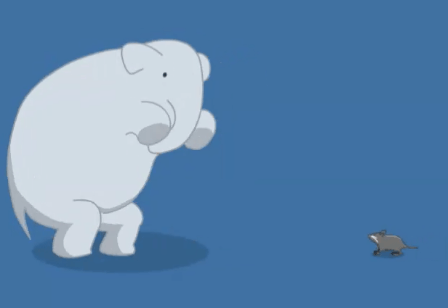
Which objects have a STRONG force of gravity?
a)
Objects with GREATER mass, like elephants
b)
Objects with LESS mass, like mice
4.
The force of gravity acting on an object is the object's ______.
a)
mass
b)
matter
c)
weight 
d)
friction 
5.
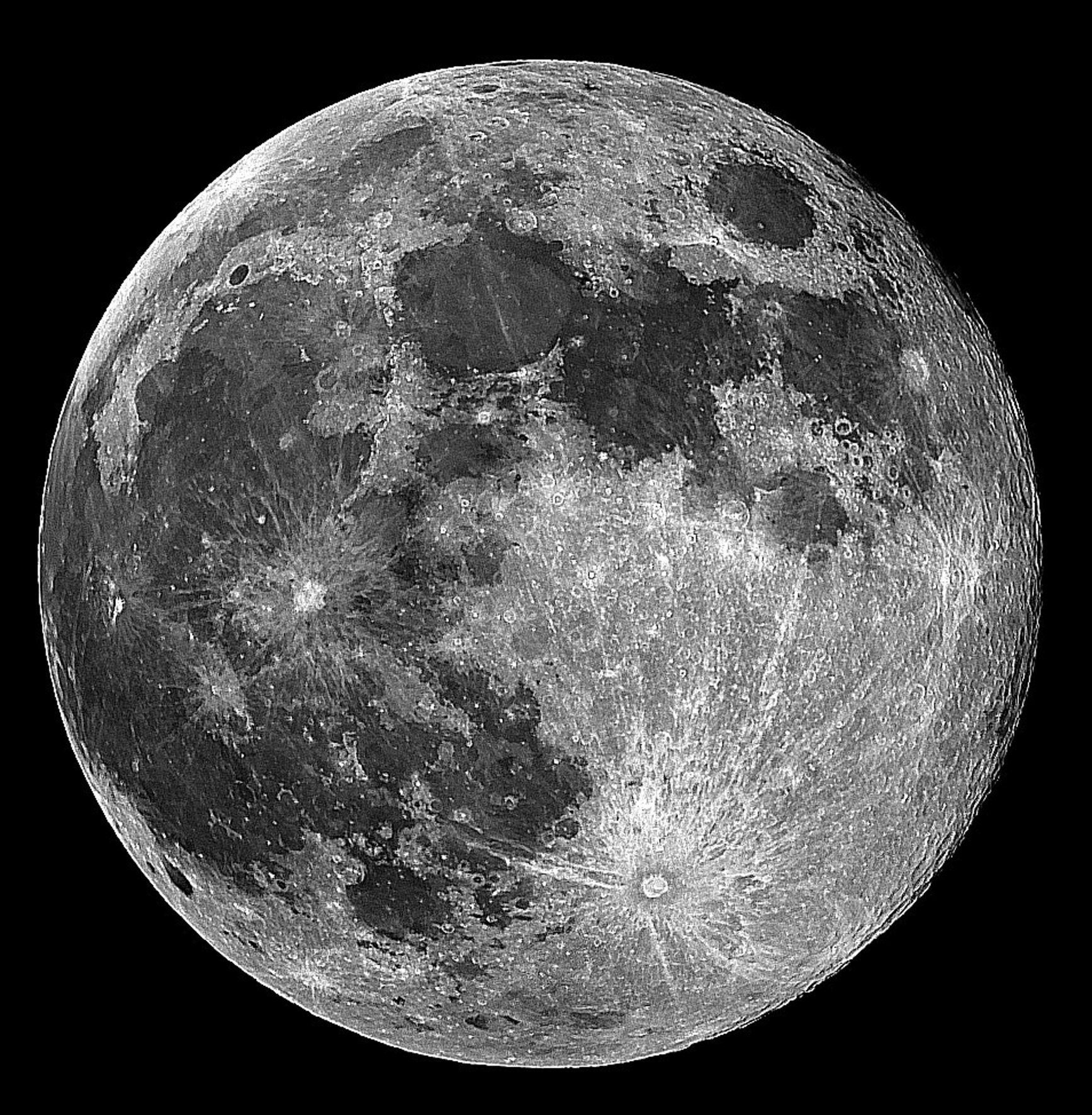
A person would weigh less on on the Moon than on the Earth because . . .
a)
Moon has more mass, and therefore more gravity
b)
Moon has less mass, and therefore more gravity
c)
Moon has more mass, and therefore less gravity
d)
Moon has less mass and therefore less gravity
6.
Two factors effecting the magnitude of the force of gravity between 2 objects are...
a)
mass and distance 
b)
mass and matter
c)
distance and weight 
d)
weight and mass
7.
If Earth's mass was cut in half, what would happen to your mass?
a)
increase because gravitational force increases
b)
decrease because gravitational force decreases
c)
decrease because gravitational force increases
d)
nothing, mass is not affected by gravitational force
8.

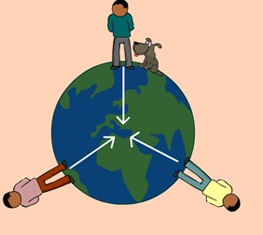
______________ is the pull between Earth and other objects, which acts even without touching.

a)

magnet

b)

exert

c)

gravity

d)

repel

9.
Mass has units of ____
a)
kg
b)
m
c)
N
d)
m/s
10.
Weight is a 
a)
a unit
b)
a force
c)
a mass
d)
a length
11.
If the mass of an object on Earth is 18 grams, what would the mass of the same object be on the Moon?
a)
18 g
b)
4 g
c)
0 g 
d)
32 g 
12.

What is missing

a)

g

b)

D

c)

L

d)

n

13.
What is mass?
a)
the distance between two points
b)
the amount of matter (stuff) in an object
c)
the amount of space an object takes up
d)
the distance between three points
14.
The mass of an object ___________________________.
a)
changes, depending on where it is located
b)
changes randomly
c)
changes, depending on temperature
d)
does not change
15.
A measure of how much matter an object has is--
a)
weight
b)
gravity
c)
mass
d)
volume
16.
What is the definition of "weight"?
a)
measure of the force of gravity on your body
b)
the time it takes to get on a ride 
c)
the amount of matter in an object
d)
the size of an object
17.
The weight of an object _________ as it moves away from the center of Earth.
a)
increases
b)
stays the same
c)
triples
d)
decreases
18.
The mass of an object ___________ as it moves away from the center of Earth
a)
stays the same
b)
decreases
c)
increases
d)
doubles
19.
As an object's mass increases, its gravitational pull will ____________.
a)
decrease
b)
increase
c)
stay the same
d)
get weaker
20.
If an object has more mass, then it will
a)
weigh more.
b)
weigh less.
c)
weigh the same as an object with less mass.
d)
always have more volume than an object with less mass.
21.
Why would you weigh less on the moon compared to Earth?
a)
less air
b)
less sunlight
c)
more gravitational pull
d)
less gravitational pull
22.

Grams and kilograms measure...

a)

capacity

b)

length

c)

time

d)

mass

23.
Which of the following is a unit of mass?
a)
kilogram
b)
liter
c)
meter
d)
pound
24.
Objects with greater _________ also have greater inertia.
a)
speed
b)
mass
c)
temperature
d)
friction
25.
Because of inertia, a resting object will remain at ________.
a)
rest
b)
a constant speed
c)
school
d)
inertia 
26.
Because of inertia, a moving object will keep ________.
a)
at rest
b)
moving
c)
in one spot
d)
inertia 
27.
What kind(s) of objects have inertia?
a)
all objects with mass
b)
only objects at rest
c)
only objects in motion
d)
only objects whose motion is being changed
28.
An object in motion tends to stay in motion unless an ___ force acts on it.
a)
unbalanced
b)
balanced
29.

Weight is constant.

a)

True

b)

False

30.
The amount of matter in an object is 
a)
pressure
b)
weight
c)
mass
d)
force
31.
The scientific unit of weight is
a)
Kg
b)
N
c)
pounds
d)
Kgm/s
32.
The scientific unit for mass is
a)
Kg
b)
N
c)
pounds
d)
ounces
33.
If an object has more mass, then it will
a)
weigh more.
b)
weigh less.
c)
weigh the same as an object with less mass.
d)
always have more volume than an object with less mass.
34.

You have a ball with a weight of 76N. What is the mass of the ball?

a)

76N

b)

76kg

c)

7.6kg

d)

7.6N

35.

What would be the weight of a 10 kg object on earth?

a)

1 N

b)

10 N

c)

0.1 N

d)

100 N

36.

The mass of an object is measured on Earth. The mass is 5.0kg. The object is taken to the Moon. The mass of the object is measured on the Moon. What is the mass of the object on the Moon?

a)

0 kg

b)

more than 0kg, but less than 5.0kg

c)

5.0 kg

d)

more than 5.0kg

37.
What is gravity?
a)
A force
b)
Energy
c)
A push
d)
All of them
38.
What is mass?
a)
How much MATTER makes up an object.
b)
How much GRAVITY is pulling an object.
39.
What is the SI unit used to measure force? 
a)
pounds 
b)
grams 
c)
newtons 
d)
friction
40.
If the mass of an object on Earth is 18 grams, what would the mass of the same object be on the Moon?
a)
18 g
b)
4 g
c)
0 g 
d)
32 g 
41.
A child has a mass of 30 Kg on Earth. If the gravity on Moon is one sixth that of the Earth what is the mass of the child on Moon? 
a)
30 Kg
b)
180 Kg
c)
5 Kg
d)
0 Kg
42.
The scientific unit for mass is
a)
Kg
b)
N
c)
pounds
d)
ounces
43.
What does this tool measure?
a)
weight
b)
meters
c)
mass
d)
force
44.
What does this tool measure?
a)
weight
b)
meters
c)
mass
d)
force
45.

Mass is ________. (more than one answer)

a)

the quantity of matter in an object.

b)

the measure of an object's inertia.

c)

equal to the weight of an object.

d)

constant for most objects.

46.

What is missing

a)

H

b)

m

c)

D

d)

n

47.
The mass of an object ___________ as it moves away from the center of Earth
a)
stays the same
b)
decreases
c)
increases
d)
doubles
48.
You get in your spaceship and head on a trip to Mars.  As you leave Earth, your mass ______________.
a)
increases
b)
decreases
c)
remains the same
49.

What is the weight of a 456g object?

a)

456g

b)

0.456kg

c)

4.56N

d)

456N

50.
A force of attraction between 2 object that is directly related to mass and indirectly related to distance.
a)
mass
b)
weight
c)
gravity
d)
kilogram
51.
As mass increases, what happens to gravitational force?
a)
increases
b)
decreases
c)
stays the same
d)
i don't know
52.
As the distance between 2 objects increases, what happens to gravitational force?
a)
increases
b)
decreases
c)
stays the same
d)
i don't know
53.
Which of the following will not change in different gravitational fields?
a)
wieght
b)
force
c)
mass
d)
pounds
54.
Which of the following will change with different gravitational forces?
a)
mass
b)
amount of matter in an object
c)
weight
d)
kilograms
55.
A measure of gravitational force on an object.
a)
gravity
b)
weight
c)
mass
d)
kilograms
56.
If Earth's mass was cut in half, what would happen to your mass?
a)
increase because gravitational force increases
b)
decrease because gravitational force decreases
c)
decrease because gravitational force increases
d)
nothing, mass is not affected by gravitational force
57.
What is an unbalanced force that causes an object to move in a circular path called?
a)
Free Fall
b)
Projectile Motion
c)
Terminal Velocity
d)
Centripetal Force
58.
When only the force of gravity is acting on an object, we say that the object is in ___________________________.
a)
Terminal Velocity
b)
Free Fall
c)
Projectile motion
d)
Centripetal Force
59.

Which of the following is an example of projectile motion?

a)

A baseball being pitched to a catcher.

b)

a feather falling in a vacuum

c)

a car driving up a mountain

d)

a book laying on a desk

60.
When an object is falling, and it reaches it's maximum speed because air resistance is equal to the force of gravity, the object has reached __________________________.
a)
Free Fall
b)
Terminal Velocity
c)
Projectile Motion
d)
Orbit
61.
What force causes objects falling near Earth's surface to slow down?
a)
Gravity
b)
Air Resistance
c)
Centripetal Force
d)
Newtons
62.
If a bowling ball and a feather were dropped at the same time, in a room with no air resistance (vacuum), which object will hit the ground first?
a)
Bowling Ball
b)
Feather
c)
Both would hit at the same time
d)
Neither one would hit the ground because air is what pushing things down.
63.
Which of the following features does NOT affect air resistance?
a)
Speed
b)
Size
c)
Shape
d)
Mass
64.

When will gravity be the strongest?

a)

The further away you are from an object

b)

The closer you are to an object

c)

The faster your relative speed is to an object

d)

None of the above

65.

Which of the following has the strongest gravitational pull?

a)

A bowling ball

b)

A car

c)

The Earth

d)

The Sun

66.

True or False: Gravity helps the Earth to stay in orbit around the Sun

a)

True

b)

False

67.

What natural phenomena occurs on Earth due to the gravity of the Moon?

a)

Earthquakes

b)

Hurricanes

c)

Volcanic Eruptions

d)

Ocean Tides