wayground logo

Free Printable Worksheets

NEW

Font size

S
M
L
XL
Worksheets

Bonding Review

Total questions: 50

Worksheet time: 2hrs 40mins

Name
Class
Date
1.

Why do all bonds form?

a)

so the number of protons equals the number of electrons

b)

so an atom can become unstable

c)

to fill the outermost energy level

2.

Valence electrons are found

a)

in the innermost energy level of an atom

b)

in the middle energy levels of an atom

c)

in the outermost energy levels of an atom

3.

How many Aluminum atoms are in Al2O3?

a)

3

b)

5

c)

2

d)

1

4.

How do covalent bonds form?

a)

By donating and receiving valence electrons between atoms.

b)

Scientists still aren't sure.

c)

Opposite slight charges attract each atom in the compound.

d)

Sharing valence electrons between atoms

5.

What two types of atoms make a covalent bond?

a)

2 Nonmetals

b)

1 Metal and 1 Nonmetal

c)

2 Metals

d)

2 Noble Gases

6.

How many valence electrons does hydrogen have?

a)

1

b)

2

c)

3

d)

4

7.
Ionic bonds are between...
a)
Metal and Non-metal
b)
Non-metal and Non-metal
c)
Metal and Metal
8.

Atoms are most stable when their outer shell is complete.

a)

true

b)

false

9.

How are ionic bonds formed?

a)

Transfer of electrons

b)

Sharing of electrons

10.

Is hydrogen considered a metal or a non-metal?

a)

A metal

b)

Nonmetal

c)

Metalloid

11.
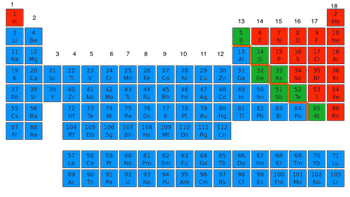
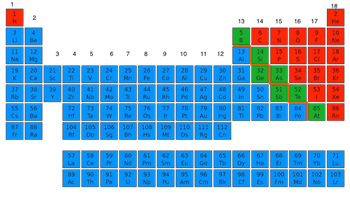
Where are metals located on the periodic table?
a)
Blue
b)
Green
c)
Red
12.
Where are the nonmetals located on the periodic table? 
a)
Blue
b)
Red
c)
Green
13.

What do atoms that form positive ions tend to do?

a)

lose electrons

b)

gain electrons

c)

lose protons

d)

gain protons

14.

Atoms that gain electrons become...

a)

negatively charged

b)

positively charged

c)

remain neutrally charged

d)

21

15.

How many electrons should Carbon have around its Lewis dot structure?

a)

1

b)

3

c)

4

d)

5

16.

What would you name this molecule?

a)

SNa3

b)

H3O

c)

NaCl

d)

H2O

17.

Which of these would be covalently bonded

a)

Mg and F

b)

Na and O

c)

F and Cl

d)

H and Na

18.

Which of these is not a covalent molecule?

a)

MgO

b)

CO2

c)

HCl

d)

CH4

19.

What usually forms the negative ion?

a)

nonmetals

b)

metal

c)

none

20.
What charge does a bromine (Br) ion have?
a)
-1
b)
-2
c)
-3
d)
-4
21.
What charge does a calcium (Ca) ion have?
a)
+1
b)
+2
c)
+3
d)
+4
22.
What charge does a carbon (C) ion have?
a)
-2/+2
b)
-1/+1
c)
-3/+3
d)
-4/+4
23.

What is the correct formula for a compound formed from Na + and S -2

a)

Na2S

b)

NaS2

c)

Na2S2

d)

NaS

24.

What is the correct formula for a compound formed from the ions K + and N-3

a)

KN

b)

KN3

c)

K3N3

d)

K3N

25.
How many valence electrons are in Phosphorus?
a)
15
b)
4
c)
5
d)
31
26.
Count the number of Magnesium atoms in the compound:  2 Mg(SO4)
a)
1
b)
2
c)
3
d)
4
27.
Count the number of Oxygen atoms in the compound:  2 Mg(SO4)
a)
2
b)
4
c)
6
d)
8
28.
When Argon (Ar) forms an ion, what is its charge?
a)
It does not form an ion (0 charge)
b)
8
c)
18
d)
-1
29.
What is the charge of any ion from group 16?
a)
6
b)
+2
c)
-2
d)
0
30.
Ionic or covalent:  PI3
a)
Ionic
b)
Covalent
31.
Chemical formula for:  Copper (Cu+2) and Chlorine (Cl)
a)
CuCl2
b)
Cu2Cl
c)
CuCl
d)
Cu1Cl2
32.
Chemical formula for:  Hydrogen (H) and Phosphate (PO4)
a)
H3(PO4)
b)
H2(PO4)
c)
H(PO4)
d)
H(PO4)3
33.
Chemical formula for:  Ammonium (NH4)+ and Nitrite (NO3)-
a)
(NH4)2(NO3)
b)
(NH4)(NO3)
c)
(NH4)(NO3)4
d)
(NH4)3(NO3)4
34.
Chemical formula for:  Lithium (Li) and Sulfur (S)
a)
Li2S
b)
LiS
c)
LiS2
d)
Li3S
35.
Ionic or covalent:  Sodium fluoride
a)
Ionic
b)
Covalent
36.
Name for molecule:  OF2
a)
Oxygen difluoride
b)
Oxygen fluoride
c)
Dioxygen fluoride
d)
Oxygen fluorine
37.

Name for molecule:  K2(SO4)

a)
Potassium sulfate
b)
Potassium sulfur oxygen
c)
Potassium oxide
d)
Potassium sulfur
38.
Chemical formula for "diphosphorus pentoxide"
a)
P2O5
b)
P5O2
c)
PO
d)
P2O4
39.

Is this molecule polar or non-polar?

a)

Polar

b)

Non-polar

40.

Is this molecule polar or non-polar?

a)

Non-polar

b)

Polar

41.
In this Lewis structure, the symbol above F means...
a)

electrons are being completely transferred to Fluorine

b)
electrons are less attracted to F than H
c)
electrons are more attracted to F than H
d)
Fluorine has formed a cation
42.
What geometry will this molecular structure have?: H2S
a)
bent
b)
tetrahedral
c)
linear
d)
trigonal pyramidal
43.
What geometry will this molecular structure have?: CCl4
a)
bent
b)
tetrahedral
c)
linear
d)
trigonal pyramidal
44.
How many electrons are represented by a single straight line in a Lewis structure?
a)
1
b)
2
c)
4
d)
6
45.
The most electronegative atom in the periodic table is:
a)
Fluorine
b)
Helium
c)
Neon
d)
Francium
46.
If Bromine bonds with Hydrogen, a ____________ bond forms.
a)
polar covalent
b)
nonpolar covalent
c)
metallic
d)
ionic
47.

Partial charges (δ+/-) are present in which type of bond?

a)

Ionic

b)

Nonpolar Covalent

c)

Polar Covalent

d)

Both Polar Covalent and Ionic

48.

When you have Br-Br, what is the polarity?

a)

Polar

b)

nonpolar

c)

Ionic

49.

When you have Li-O, what is the polarity?

a)

nonpolar

b)

polar

c)

ionic

50.

Which way would the dipole arrow point in this compound?

a)

This would not require a dipole arrow

b)

Towards the Hydrogen

c)

Towards the Fluorine

d)

Upwards