
NEW
Font size
 Worksheets
Unit 7: Chemistry Atoms and Periodic Table
Total questions: 40
Worksheet time: 30mins

The cloud-like space that electrons travel around:
nucleus
shell
neutrons
Oort cloud
Protons and neutrons are found in the center of the atom called the:
nucleus
neutron
shell
cell
Classification system for elements is called:
Elements
Periods
The Periodic Table of Elements
Families
The subatomic particles are called:
protons, nucleus and electrons
protons, electrons and neutrons
protons, positives and negatives
cloud, shell and quarks
Substances that have only one kind of atom are called:
elements
nitrogen
electrons
nucleus
Electrons have a _____ charge.
neutral
negative
positive
both positive and negative
What is the study of matter?
Chemistry
Biology
Earth Science
Physics
_____ is what scientists think atoms are like.
Chemistry
The box
The atomic structure
The atomic theory
The abbreviation for an element:
element name
atomic number
chemical symbol
atomic symbol
The scientist who invented the classification system for the elements:
Dimitri Mendeleev
Niels Bohr
Sir Isaac Newton
Albert Einstein
What is the sum of an atom's protons and neutrons called?
atom
atomic theory
atomic mass
atomic number
The columns on the periodic table that are color coded and describe the number of electrons in the outer shell of the atomic structure of the element:
families
groups
periods
The rows or periods on the periodic table describe:
the same number of outer electrons
the same number of shells
the same number of protons
the same mass
The _____ is based on the number of protons in the nucleus of the atom.
atomic structure
periodic table of the elements
atomic number
atomic mass
What subatomic particle is represented by this symbol (+):
neutron
proton
electron
What subatomic particle is represented by this charge (-):
neutron
proton
electron
Why do the electrons surround the nucleus?
the negative electrons are attracted to the neutral neutrons
the negative electrons are repelled by the neutral neutrons
the negative electrons are attracted to the positive protons
the negative electrons are repelled by the positive protons
All matter is made of _____.
light
energy
cells
atoms
Electrons have a _____ charge.
neutral
negative
positive
both positive and negative
The Atomic number is known as the _______
Number of electrons in an atom
Number of Protons in an atom
Number of neutrons in an atom
Number of Protons and electrons in an atom
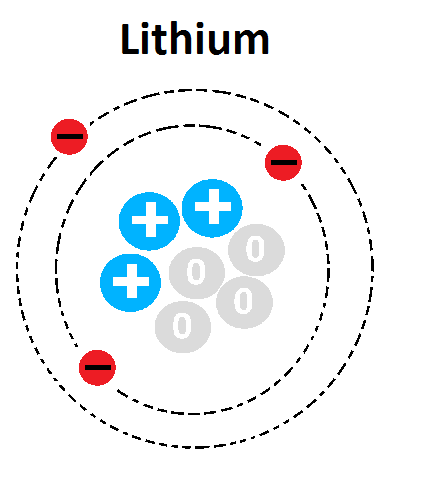
What is the mass number of this atom?
1
3
4
7
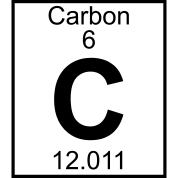
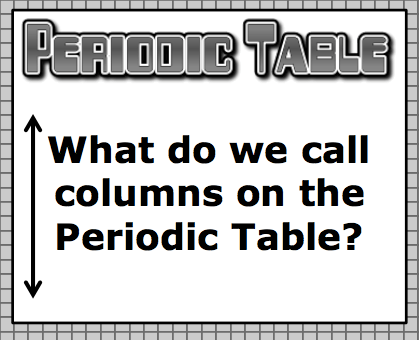
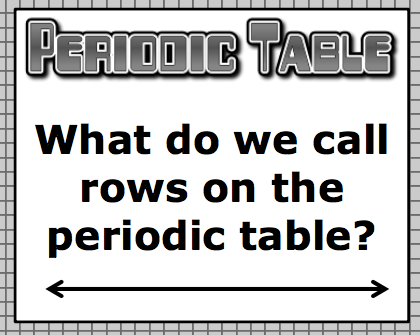


Which element is found in group 2, period 6?
Oxygen (O)
Barium (Ba)
Selenium (Se)
Carbon (C)
Which element has similar chemical properties as sodium but has 7 energy levels?
Francium (Fr)
Cesium (Cs)
Rubidium (Rb)
Potassium (K)

How many Valence Electrons does this element have?
3
2
1
4

How many energy levels does this element have?
6
2
4
5

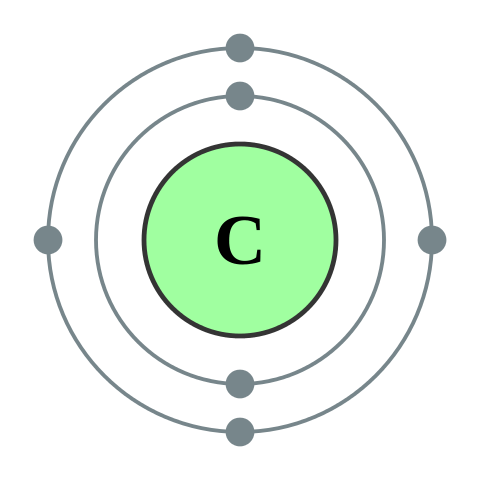
How many valence electrons does carbon have?
4
5
6
7

How many valence electrons?
2
4
6
8

How many valence electrons?
2
3
4
5

