
 Worksheets
earth and the solar system
Total questions: 60
Worksheet time: 1hrs 9mins

This model is showing us a...
lunar eclipse
solar eclipse
phases of the moon
earth eclipse
When the moon passes between the earth and the sun, this results in a.....
Waxing moon
lunar eclipse
solar eclipse
sun rise

This image is showing us a.....
solar eclipse
lunar eclipse
phases of the moon
earth eclipse

If you look up at the sky and see this, you are witnessing a....
solar eclipse
total eclipse
lunar eclipse
jupiter

If you are looking up at the sky and see this, you are looking at a....
solar eclipse
total eclipse
lunar eclipse
jupiter
Which of the following is not true about a total solar eclipse?
It can be viewed once a year from every spot on earth
It is dangerous to look at without the proper device
When it happens, the moon blocks all of the sun except the corona
You must be within the moon's umbra to see it
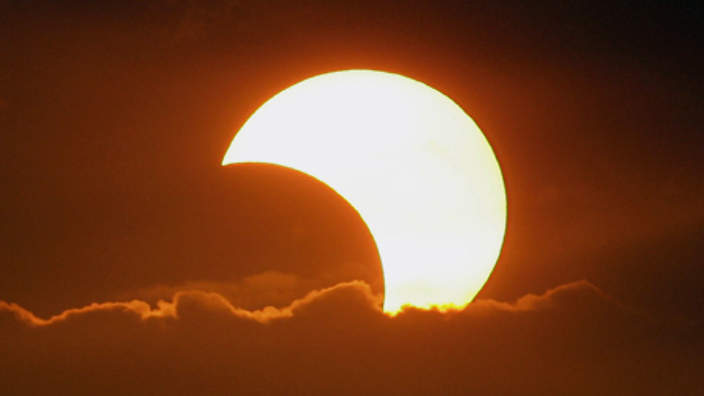
This image is an example of
Lunar Eclipse
Full Moon
New Moon
Solar Eclipse
Moon, Sun, Earth
Moon, Sun, Earth
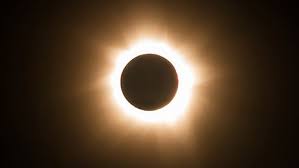
A machine that orbits in space
Industry
Satellite
What are the types of satellites?
Artificial & Homemade
Natural & Organic
Natural & Artificial
What is the name of the Earth's natural satellite?
Moon
Sun
The International Space Station
Satellites that pass over the north and south pole, have an orbit called
Equatorial orbit
Polar orbit
What do natural and artificial satellites have in common?
The do not have anything in common
They send information to the Earth
They orbit celestial bodies
They float outer space with no direction
The Moon is an example of what type of satellite
Man made
Natural
Currently, there are over 2,787 active _________ satellites orbiting the Earth.
Natural
Artificial
Artificial satellites can be used to study the mountains, oceans and weather on Earth.
True
False
Which planet in our solar system is most like Earth?
Mercury
Venus
Mars
Jupiter
How long does it take for the Moon to orbit the Earth?
31 days
30 days
29 days
28 days
Orbit means
to move around
to disappear
to swing
A celestial body that revolves around a planet is known as its_____ or satellites.
Moons
Solar System
Planets
Natural Satellites
Earth is a satellite.
True
False
Which force keeps all the planets in the solar system?
gravity
friction
magnetism
electricity
What are large chunks of rocks and metal in space?
Earth
comet
asteroids
gibbous
How long does Earth's orbit around the sun take?
365 and 1/4 days
360 days
24 hours
2 years
Our sun is a medium-sized star compared to other stars.
True
False
What causes day and night here on our Earth?
The different moon phases
Asteroids
The rotation of Earth
Stars
What causes our seasons here on Earth?
Stars in our universe
Our revolution around the moon
Earth's tilted axis and our rotation
The revolution of Earth around the sun and Earth's tilted axis
This is the first planet from the Sun; it is very hot in the day and very cold in the night.
Mercury
Neptune
Earth
Jupiter
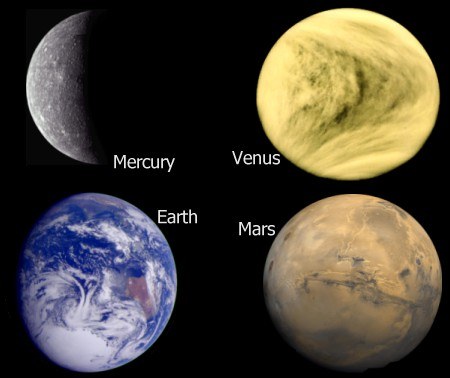
What state would water be in the Mercury and Venus
solid
liquid
gas
Which planet has conditions the would enable Water to be liquid on its surface?
Earth
Mars
Venus
Without any protective suit and breathing system could you walk around on any of the planets other than Earth?
no
yes
How many known planets are in our solar system?
4
7
8
9
Where is the Sun located when you view a full Moon?
During a full Moon, the Sun, Earth, and the Moon are lined up, with Earth in between.
During a full Moon, the Sun, the Moon, and Earth are lined up, with the Moon in between.
During a full Moon, the Moon, the Sun, and Earth are lined up, with the Sun in between.
During a full Moon, the angle between the Sun, the Moon, and Earth is 90∘.
Between the orbits of what two planets is the asteroid belt located?
The asteroid belt is located between the orbits of Earth and Mars.
The asteroid belt is located between the orbits of Jupiter and Saturn.
The asteroid belt is located between the orbits of Saturn and Uranus.
The asteroid belt is located between the orbits of Mars and Jupiter.
Which planet's average temperature make it the hottest planet in the solar system?
Mercury
Venus
Earth
Mars
Which of these planets is not a Terrestrial Planet
Venus
Earth
Mars
Jupiter
Which planet in not a Jovian Planet?
Mercury
Jupiter
Saturn
Neptune
Who was the first man in space?
Alan Shepard
Buzz Aldrin
Yuri Gagarin
Neil Armstrong
Who was the first man on the moon?
Alan Shepard
John Glen
Yuri Gagarin
Neil Armstrong
What has an impact on gravity?
The Big Red Spot
Solar Storms
Atmospheric gases
Mass and Distance
The orbital speeds of planets closer to the Sun will be faster than planets farther away because.....
The gravity decreases as the distance between the objects increase.
The gravity increases as the distance between the objects decrease.
The gravity increases as the mass of the object increases.
The gravity between the objects decrease as the objects warm up.

