Wayground logo

Free Printable Worksheets

Font size

S
M
L
XL
Worksheets

Chemistry Test review

Total questions: 55

Worksheet time: 33mins

Name
Class
Date
1.

Two or more elements chemically combined together are called a

a)

Element

b)

Compound

c)

Mixture

d)

Solution

2.

The smallest amount you can have of one element is a(n)

a)

Molecule

b)

Compound

c)

Atom

d)

Sprinkle

3.

Scientists use a _____________ as an abbreviation for an element name.

a)

Atom

b)

Molecule

c)

Compound

d)

Chemical Symbol

4.

The first letter of a chemical symbol is always a

a)

Capital

b)

Lowercase

c)

Number

d)

Symbol

5.

The second letter of a chemical symbol is always a

a)

Capital

b)

Lowercase

c)

Number

d)

Symbol

6.

H2O is an example of

a)

Compound

b)

Element

7.

Ne is an example of

a)

Compound

b)

Element

8.

CaCl2 is an example of

a)

Compound

b)

Element

9.
What is the chemical symbol for the element hydrogen
a)
H
b)
He
c)
h
d)
he
10.
The atomic number tells you what?
a)
number of electrons
b)
number of protons
c)
number of neutrons
d)
both electrons and protons in an atom.
11.
The atoms along the staircase are called 
a)
metals
b)
nonmetals
c)
metalloids
d)
noble gases
12.
Which is the correct formula for:
one carbon (C)
two oxygen (O)
a)
CO2
b)
CO
c)
C2O
d)
2CO
13.
How many elements are in H2O?
a)
1
b)
2
c)
3
d)
4
14.
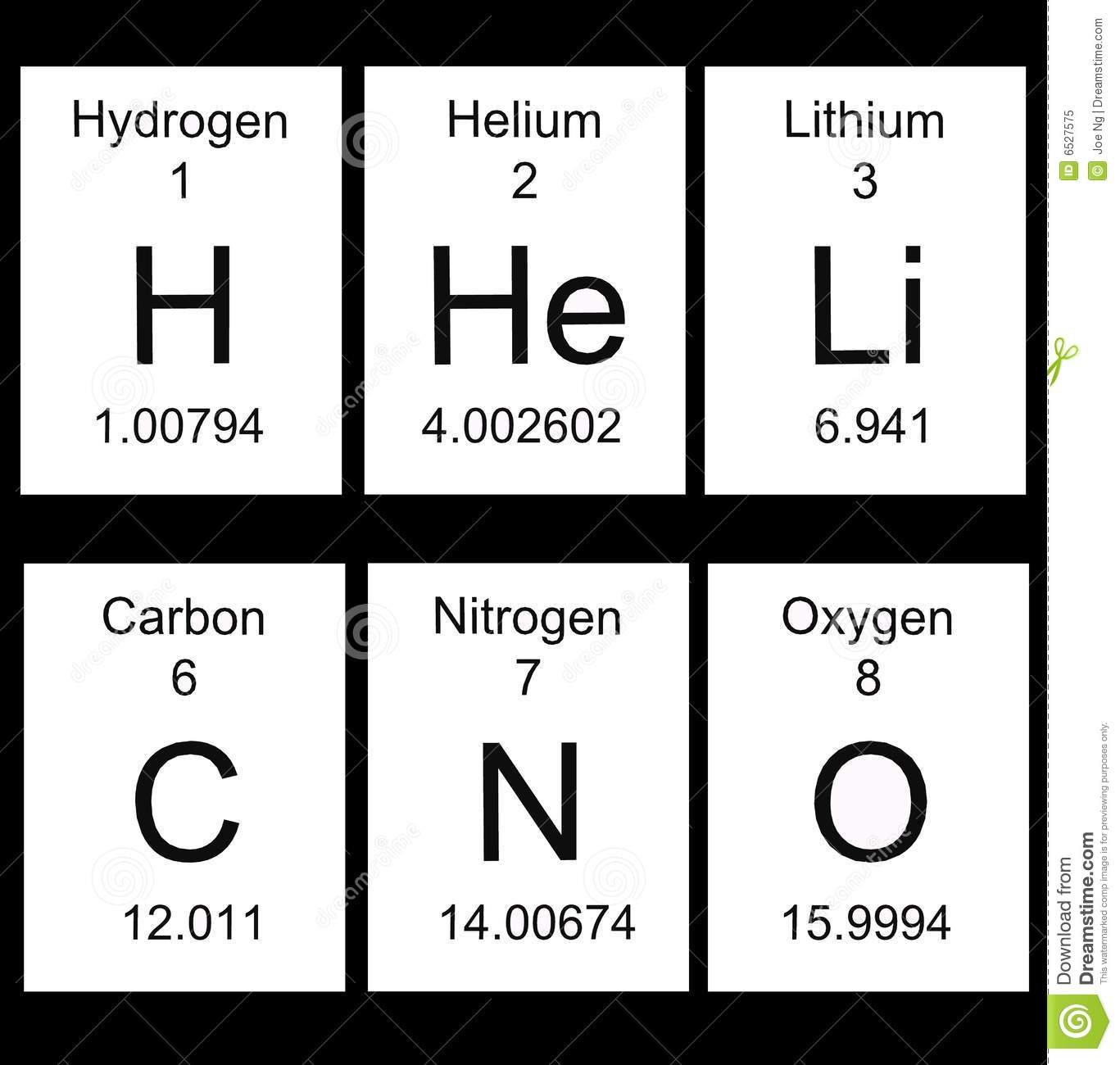
The number at the top of each square on the periodic table is the ...
a)
atomic number
b)
atomic mass
c)
Chemical Symbol
d)
Element Name
15.
What is Fe2O3
(rust) made up of?
a)
1 flourine, 2 einsteinium,
3 oxygen
b)
2 fluorine, 3 oxygen
c)
2 iron, 3 oxygen
d)
2 iron, 3 osmium
16.
Contains two or more atoms combined
a)
Elements
b)
Compounds
c)
Mixtures
17.
Contains only one kind of atom.
a)
Element
b)
Compund
c)
Mixture
18.
Is sugar (C12H22O11) an element or a compound?
a)
Element
b)
Compound
19.
Which of the following is not a compound?
a)
HCl
b)
Cl
c)
NaCl
d)
CO2
20.

diagram "a" is an example of a(n)

a)

element

b)

compound

c)

mixture

21.

diagram "b" is an example of a(n)

a)

element

b)

compound

c)

mixture

22.

diagram "c" is an example of a(n)

a)

element

b)

compound

c)

mixture

23.

diagram "d" is an example of a(n)

a)

element

b)

compound

c)

mixture

24.
Ice melting
a)
Chemical Change
b)
Physical Change
25.
Wood burned in a fireplace
a)
Chemical Change
b)
Physical Change
26.
Which is a way that a piece of paper can go through a chemical change?
a)
fold the paper in half
b)
soak the paper in water
c)
burn the paper with fire
d)
cut the paper with scissors
27.
Which of these is an example of a new substance being formed?
a)
a nail rusting
b)
a wall being painted
c)
water changing to steam
d)
paper being folded
28.
Glass bottle that is shattered
a)
Chemical Change
b)
Physical Change
29.

What is the phase change of a solid to a liquid?

a)

freezing

b)

melting

c)

boiling

d)

condensation

30.
5. What is it called when a solid turns directly into a gas?
a)
Sublimation
b)
Condensation
c)
Liquid
31.
7. All phase changes (changing states) requires energy to be added or taken away.
a)
True
b)
False
32.
Change from gas to liquid...
a)
condensation
b)
evaporation
c)
expansion
d)
movement
33.

Change from Liquid to Solid is called ...

a)

fusion

b)

Freezing

c)

sublimation

d)

evaporation

34.

Change from liquid to gas is called....

a)

expansion

b)

evaporation

c)

condensation

d)

sublimation

35.

What happens to particles when energy is added (heated)?

a)

They speed up and spread out

b)

They slow down and compress

c)

They stop moving

d)

They move closer together and speed up

36.
All changes in the state of matter of a substance requires
a)
vibration
b)
water
c)
permission
d)
energy
37.
In a solid, the particles
a)
vibrate in place
b)
slide past one another
c)
overcome the strong attraction
38.
bond in which one or more electrons from one atom are removed and attached to another atom, resulting in positive and negative ions which attract each other
a)
Covalent Bond
b)
Ionic Bond
c)
Reaction Bond
d)
Null Bond
39.
bond in which one or more pairs of electrons are shared by two atoms
a)
Covalent Bond
b)
Ionic Bond
c)
Reaction Bond
d)
Null Bond
40.
a substance formed when two or more elements are chemically bonded together
a)
Element Soup
b)
Pure Element
c)
Ion
d)
Compound
41.
a chemical reaction that releases energy by light or heat
a)
Endothermic Reaction
b)
Exothermic Reaction
c)
Diffusion
d)
Fission
42.
In an endothermic reaction, heat is ...
a)
taken in or absorbed
b)
given out or released 
43.
Exothermic reactions...
a)
Absorb energy
b)
Release energy
c)
Release Color
d)
Absorb Color
44.
Is the following equation balanced or unbalanced?
Fe + S --> FeS
a)
balanced
b)
unbalanced
45.
In chemical reactions, what does the principle of conservation of mass mean?
a)
Matter is not created or destroyed.
b)
The total mass of the reactants is greater than the total mass of the products.
c)
The total mass of the reactants is less than the total mass of the products.
d)
Matter is not changed.
46.

What is "Conservation of Mass"?

a)

Combination of one or more substances to create one or more different substances

b)

Physical change of state in which identity of the substances remains the same

c)

Law stating that the mass of products equals the mass of reactants

d)

Open system in which some matter escapes

47.

What is a reactant?

a)

Combination of one or more substances to create one or more different substances

b)

Physical change of state in which identity of the substances remains the same

c)

Starting materials in a chemical reaction

d)

Open system in which some matter escapes

48.

What is a physical change?

a)

Combination of one or more substances to create one or more different substances

b)

Change in which the identity of the substances remains the same

c)

Starting materials in a chemical reaction

d)

Open system in which some matter escapes

49.

What is a product?

a)

Combination of one or more substances to create one or more different substances

b)

Change in which the identity of the substances remains the same

c)

Starting materials in a chemical reaction

d)

Substances produced in a chemical reaction

50.

Which of the following is an example of a chemical reaction?

a)

Ice melting into liquid water

b)

Vinegar and baking soda combining to produce a gas

c)

A nail being pounded into a piece of wood

d)

A piece of paper being torn up

51.

What is an indicator of a chemical reaction?

a)

Change of state

b)

Color change

c)

Change in shape

d)

Sugary taste

52.

How many atoms in all are in a molecule of serotonin?

C10H12N2O

a)
22
b)
24
c)
25
d)
4
53.

The substances listed on the right side of a chemical equation are the

a)

Coefficients

b)

Reactants

c)

Products

d)

Precipitates

54.
The substances listed on the left side of a chemical equation are the
a)
Products
b)
Coefficients
c)
Precipitates
d)
Reactants
55.
A candle wick burning is an example of a _________________________
a)
physical reaction
b)
condensation
c)
neutrons
d)
chemical reaction