
 Worksheets
Unit 3 World History Sem 2 DBA Julietta
Total questions: 122
Worksheet time: 1hrs 2mins
A fertile place in a desert where there is water and vegetation
Oasis
Muhammad
Quran (Koran)
Islam
Regarded by Muslims as the last and greatest prophet.
Oasis
Muhammad
Quran (Koran)
Islam
The holy book of Islam
Oasis
Muhammad
Quran (Koran)
Islam
The early Arabians worshiped many gods and goddesses, but this one was considered the most important.
Kaaba
Makkah
Allah
Ishtar
Who do Muslims recognize as the final prophet of Islam?
Abu Talib
Jesus
Harun al Rashid
Muhammad
Muslims, Jews, and Christians all believe in...
fasting
gods and goddesses
the same god
pilgrimage
The Quran provides Muslims with guidelines for...
commerce
farming
daily life
schools
Where did the Islamic Empire expand throughout the 7th and 8th centuries?
all around the world
the entire continent of Africa
across Asia and Africa and into Spain
into Australia
Shia Muslims believed that the caliph should be
another prophet
awarded to the most qualified candidate.
continued on by blood relatives of Muhammad.
chosen by a lottery.
Sunni Muslims believed that the caliph should be...
selected from the community by the community
a blood relative of Muhammad.
chosen by lottery.
traced to the tribe of Isaac.
Put the Islamic Caliphates in the correct chronological order -
Rashidun, Umayyad, Abbasid
Abbasid, Rashidun, Umayyad
Umayyad, Abbasid, Rashidun
Rashidun, Abbasid, Umayyad

How did increased Arabic Trade impact their neighbor regions?
Increased Bantu Migrations.
Expanded the Silk Road.
Influenced maritime migrations of the Polynesian peoples.
Greatly increased the spread of Islam.
Which caliphate came first?
Umar
Uthman
Ali
Abu bakar
Which caliphate came second?
umar
uthman
Umayyad
ali
What is the meaning of caliphate?
Secular state comprising the Muslim community
Religious state comprising the Muslim community
Political state comprising the Muslim community
Political-religious state comprising the Muslim community

The term “caliph” refers to:
a dried up riverbed often used by Arab armies to ambush enemies.
a kind of swift camel used by Arabs.
The book of revelations received by Muhammad.
the successor to the prophet (the person that would lead the Muslims in Muhammad’s absence).
With the fall of Rome, Europe entered into the period known as ________________.
Middle Ages
Age of Discovery
Golden Age

Umayyad Dynasty was established by ____________________ in 661 CE.
Abdul Rehman
Amir Muawiya (R.A.)
Haroon-al-Rasheed
Tariq Bin Zayad
After the death of Muhammad, Muslims appointed a “successor to Muhammad” called a __________, who acted as the main political and religious leader of the Islamic community.
pope
sunni
caliph
prophet
Muhammad expanded Islam by conquering all of ___ first:
Syria
Persia
Arabia
Northern Africa
What is a caliphate?
name of the building caliphs worked in
name for an Islamic kingdom/empire
name for a group of Arab city-states
name of a sacred Muslim text
After the death of Ali, the last “rightly guided caliph,” Islam split into Sunni and Shia over a dispute about:
who should be allowed to lead the Muslim community
what the five pillars of Islam should be
where the capital of the Muslim empire should be located
whether the emperor should have more power than religious leader
What was the Pact Muslims made when they conquered non-Muslims (like Christians)?
Christians had to convert to Islam or be killed
Christians could believe what they want as long as the paid a tax and obeyed Islamic law.
Christians could believe what they want if they agreed to be slaves.
If they did not convert they were kicked out of the empire
Constantinople was built on a narrow body of water that cuts through land, connecting two larger bodies of water. What is this geographic feature called?
peninsula
straight
waterway
island
Justinian had a code of ________ made.
rulers
law
conduct
faith
Over time the Byzantine Empire became less Roman and more ?
Greek
Latin
Persian
Italian

What type of art is the picture?
montage
mural
mosaic
oil portrait

Justinain was known for building the __________.
Ankor Wat
Hagia Sophia
Colosseum
Parthenon
The world's first Christian Empire was?
Persian
Egyptian
Roman
Byzantine
Roman Emperor _______________ made Christianity the main religion of the Roman Empire.
Diocletian
Galerius
Constantine
Augustus
Emperor Justinian revised the Roman laws which then became known as?
Justinian's Code
Hammurani's Code
The Da Vinci Code
Chaussard's Code
Under the rule Justinian, the Byzantine Empire
expanded to its greatest extent (size)
was reduced in size
replaced Roman law with Muslim law
A form of art made from small pieces of stone, glass and/or title is better known as
Mosaic
Mural
Portrait
Sculpture
What is the Hagia Sophia?
A church
A castle
A towering statue
Shrine to Sophia I
Which of the following issues divided the Western and Eastern Churches?
practices of animal sacrifices
practices such as scalping
authority of the pope
belief in Jesus
What church was found in the Byzantine Empire?
Eastern Orthodox
Roman Catholic
Lutheran
Methodist
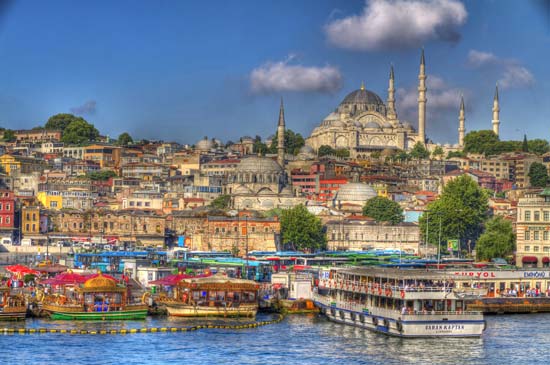

One economic advantage of naming Constantinople as the capital of the Eastern Roman Empire was that it __________
was surrounded by protective walls.
was a center of religious power.
had shrunk in size.
was located near trade routes between Europe and Asia.
Which group conquered Constantinople?
Persians
Huns
Ottoman Turks
Carthage


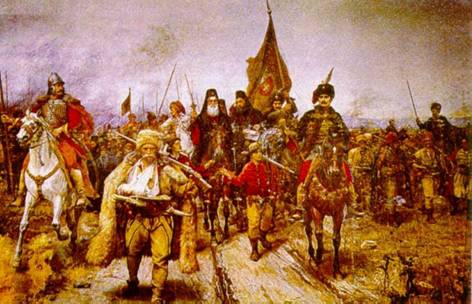

Schism
a division between people, usually belonging to an organization, movement, or religious denomination
to try and stop or defeat something.
to oppose or disobey one in authority or control
someone who governs a country in the name of a ruler who is unable to rule

Strait
a large natural elevation of the earth's surface rising abruptly from the surrounding level
a large natural stream of water flowing in a channel to the sea, a lake, or another such stream.
Physical features of a place
Narrow body of water that cuts through land, connecting two larger bodies of water

a picture or pattern produced by arranging together small colored pieces of hard material, such as stone, tile, or glass.
Jigsaw
Puzzle
Mosaic
Architecture


Why is Charlemagne an important figure in the middle ages?
He commanded a very large part of Europe
He had a cool name
He became pope
He sailed across the Atlantic Ocean

Charlemagne was leader of the ......
Celts
Lombards
Franks
Visigoths

Charlemagne led many battles. What were the goals of his battles?
To 'save souls' by conversion to Christianity
To expand his empire
To kill people
To be feared by the people
Medieval means
Evil
Middle
Small
Europe in Latin
Charlemagne wanted his people to
burn books.
convert to Christianity.
pay the piper.
stop learning.
Charlemagne was called ruthless when waging war. Ruthless means
powerful
forgiving
cruel
loud
Charlemagne was
not tolerant of other religions.
tolerant of other religions.
open minded and wanted diversity in religion.
polytheistic.
Charlemagne was known for
being cruel to the pope.
loving all people.
being well educated and having numerous degrees.
uniting Western Europe.
The Middle Ages occurred
Before the fall of Rome.
between the fall of the Roman Empire and the Renaissance.
During the Neolithic period.
After the Renaissance.
Which summarizes Charlemagne's importance?
Charlemagne had several wives and grandchildren.
Charlemagne was from Germany.
Charlemagne united Western Europe.
Charlemagne was fierce.

1. Medieval Times is also known as the
First Century
Knight's Tale
Dark Ages
Last Supper

3. This king was crowned "Holy Roman Emperor" on Christmas Day in the year 800 C.E.
Clovis I
Charles the Hammer
Pepin the Short
Charlemagne

4. Following Charlemagne's crowing, Church authority began to grow.
True
False

The kings and queens (monarchy) had what role in FEUDALISM?
Protected the realm and fought against invaders
Farmed food, made goods, provided labor
Collected taxes from the peasants / serfs
Assigned plots of land in exchange for loyalty

The peasants / serfs had what role in FEUDALISM?
Protected the realm and fought against invaders
Farmed food, made goods, provided labor
Collected taxes from the peasants / serfs
Assigned plots of land in exchange for loyalty

The Lords / Vassals had what role in FEUDALISM?
Protected the realm and fought against invaders
Farmed food, made goods, provided labor
Collected taxes from the peasants / serfs
Assigned plots of land in exchange for loyalty

The KNIGHTS had what role in FEUDALISM?
Protected the realm and fought against invaders
Farmed food, made goods, provided labor
Collected taxes from the peasants / serfs
Assigned plots of land in exchange for loyalty

What was FEUDALISM?
Social system in Medieval Europe where kings provided land in return for taxes, food, and protection
Social system in Medieval Europe, where the emperor had absolute power over the people
Social system in North America, where kings provided land in return for taxes, food, and protection
Social system in North America, where the emperor had absolute power over the people
Who did Charlemagne appoint to rule different parts of his empire?
priests
nobles
warriors
kings
Which period in European history took place between ancient and modern times?
the Renaissance
the Enlightenment
the Middle Ages
the Reformation
Which of the following did Charlemagne create across his empire?
schools
hotels
government buildings
hospitals
Charlemagne sent missionaries all across his empire to spread what?
disease
wealth
medicine
Christianity
Which title did Charlemagne receive?
Holy European Emperor
Holy Roman Emperor
Holy Christian Emperor
Holy Byzantine Emperor
What is the importance of the pope crowning Charlemagne emperor?
it established that European rulers were named by the pope
it established that the Byzantine Emperor had no power
it established that the Church controlled all European land
it established that only the pope could crown an emperor
What role did monasteries play in Europe during the Middle Ages?
encouraging people to live a life of extravagance
preserving of sacred Islamic writings and knowledge
preserving of sacred Christian writings and knowledge
refusing to help the sick and less fortunate
What cultural role did the Roman Catholic Church play in people's lives during the Middle Ages?
It gave them jobs, where they earned a paycheck.
It gave them a common bond and offered them stability.
It gave them military training.
It did not play a cultural role in people's lives.
Which leader decreed that monasteries should educate boys to prepare them for the priesthood?
John Knox
Martin Luther
Charlemagne
King John
What was the greatest source of stability for people in Western Europe during the Middle Ages?
The Protestant Church
The Great Council
The Roman Catholic Church
The strong central government
During the Middle Ages, who played the biggest role in creating the first universities in Europe?
serfs and peasants
kings and queens
noble landowners
monks and clergy
Define "divine right"
God given right to be king
the man with the most votes
the man deemed most right

Feudalism began as
a way for the military to secure its power over the peasants and landowners
a contract in which land was granted to the peasants in exchange for military service to the nobles
a demand by peasants for better living conditions and for a share in the economic prosperity of the middle ages
a means for the church to collect more taxes for its support of the nobility

The First Crusade had the intended goal of capturing which city?
Jerusalem
Cairo
Mecca
Rome
What was the most important result of the Crusades?
The Crusades resulted in many new religions to emerge.
The Crusades resulted in the Holy Roman Empire's permanent possession of Jerusalem.
The Crusades caused the Holy Roman Empire to isolate themselves from the rest of the world.
The Crusades led to trade and new kinds of knowledge.
What was the primary motivation for the Crusades?
political
economic
social
spiritual
Why was Jerusalem so important to Christians?
Christians believed it was the holiest site.
Control of Jerusalem meant power.
It was the location of the highest populations of Christians.
It was the center of the Catholic Church.
What was one of the causes of the Second Crusades?
Saladin took control of Jerusalem.
The strengthening of Christianity in the Byzantine Empire.
The spread of Muslim power.
The capture of Constantinople.
What was the purpose of the Crusades?
The lower class fought for their right against the Catholic Church to choose their religion.
They attempted to expand the English Empire
They were designed to take back control of the Holy Land from the Muslims.
They sought to convert the entire world to Christianity.
Pope Urban II wanted to recapture the Holy Lands so that...
Christians going on pilgrimages to visit the Holy Land would be safe.
Muslims had the right to visit the Holy Lands.
the Byzantine emperor could be defeated.
Jerusalem could remain in the hands of the Turks.
How did the Crusades affect the power structure in Europe?
Kings become more powerful because they gained taxes, land, and people's respect for leading in battle
the Pope gains complete power over East & Western Europe
Knights often overthrew kings, causing civil war across Europe
the power structure doesn't change
How do the Crusades affect trade between Europe and Asia?
Europe transforms the Crusader routes into trade routes so they can import new goods from Asia
Robberies are so frequent that Europeans are too afraid to trade
Trade decreases because Muslims and Christians refuse to trade with each other
How did the Byzantine Empire collapse in 1453?
Muslim Turks capture the capital, Constantinople
Germanic invaders overthrow Byzantine emperor
Never collapsed, it still exists today
Italians captured Constantinople and renamed it Italian empire
When the Christian church split in two, the eastern portion of Europe became known as:
The Eastern Orthodox Church
The Holy Roman Empire
The Holy Byzantine Church
The Roman Catholic Church
When the Christian church split in two, the western portion of Europe under the pope became known as:
The Eastern Orthodox Church
The Holy Byzantine Church
The Roman Catholic Church
The Holy Roman Empire
What were the major effects of the Crusades in Western Europe?
Increased trade with the East (Byzantine Empire and Islamic Empires)
Increased power of the Pope
Decreased power of Western European Kingdoms
Decreased trade with empires to the East.
What was one of the causes of the Second Crusades?
Saladin took control of Jerusalem.
The strengthening of Christianity in the Byzantine Empire.
The spread of Muslim power.
The capture of Constantinople.

