
 Worksheets
PMA 3 Review Quiz-Science
Total questions: 65
Worksheet time: 59mins
What is weather?
the amount of moisture in the air?
The number of clouds in the sky
the speed of the wind
The states of the atmosphere at any particular time.
Why is the temperature lower at night than during the day?
There are more clouds at night to block the sun's rays
Winds blow harder at night
The temperature depends on energy from the sun
There is less water in the air at night
Which of the devices measures air pressure?
Thermometer
Wind vane
satellite
Barometer
If it's a hot day outside, what can you conclude?
There are a lot of clouds in the sky
the air can hold a lot of moisture
The wind is blowing extremely fast
The air can hold very little moisture
Why does it tend to be cool at the Earth's poles?
They are farthest
They have high absolute humidity
They have the worst weather
sunlight strikes them at extreme angles
What are the characteristics of high-pressure system?
windy and rain
humidity and thunder
extremely hot temperatures
clear skies and sun
If the air is only holding one-third as much moisture as it can possibly hold, what is relative humidity?
25%
50%
33%
67%
What will happen if the relative humidity is 100%, and the temperatures begins falling?
it will start to rain
the air will be sticky and uncomfortable
the temperature will rise
the barometric pressure will rise
Over the past 30 years, the average temperature in a city during the month of March was 66.5 F. Temperatures in 2020 show the average temperature in March was 71.0 F. What conclusion can be made about this change?
the climate has changed
the weather has changed
the climate and weather have changed
the climate has changed but not the weather
Georgette was texting her friend Sally about the temperature where she lived. Georgette stated that the temperature was often hot in Miami. What was she describing in her text?
climate because it is weather over a long period of time.
climate because it is the condition at a particular time and place.
weather because it is determined by the temperature, precipitation or time.
weather because it is the condition of Earth’s atmosphere at a particular time and place.
This molecule is a set of instructions that specifies an organisms traits.
DNA
RNA
ATP
Protein
DNA coils tightly into structures called chromosomes, what are located on the chromosomes?
mitochodria
cellular respiration
genes
chromosomes
Genes influence traits such as eye color, different types of eye color such as brown, green or blue are known as?
genotype
phenotype
karyotype
blood type
What is the genotype Gg
homozygous recessive
heterozygous dominant
homozygous dominant
recessive
The genotype GG is known as?
homozygous
recessive
heterozygous
dominant
recessive
homozygous
dominant
If there are purple pea plants and green pea plants the different colors of the peas are examples of?
genotypes
phenotypes
karyotypes
proteins
If you cross a heterozygous dominant with homozygous dominant what percentage will be GG?
25%
75%
50%
100%
If you cross a Hh with HH what percentage is homozygous dominant?
25%
50%
75%
100%
What percentage will of a cross between two heterozygous dominants will be homozygous recessive?
25%
50%
75%
100%
Mitosis is a process where cells undergo phases to make an exact copy of themselves. Which type of reproduction is this?
asexual
sexual
binary fission
budding
How many cells are created by asexual reproduction?
1 cell
2 cells
3 cells
4 cells
Sexual reproduction creates cells that have how many chromosomes?
100% or all
50% of half
25% or a quarter
none
Meiosis is a process by which the body creates cells with ________ the number of chromosomes.
100% or all
50% or half
25% or a quarter
none
How many cells are created by the process of meiosis?
1
2
3
4
What is the product of cellular respiration?
water
oxygen
sugar
ATP (energy)
Where do plants get the MAJORITY of their carbon from?
the soil
the atmosphere
sugar
oxygen
The carbon that is in our Soil that eventually becomes fossil fuels comes from what source?
living organisms
plant matter
dead and decaying organisms
bacteria
What substances are cycled between cellular respiration and photosynthesis?
Oxygen and Carbon Dioxide
Oxygen, Carbon, Nitrogen
Oxygen, Carbon and Water
Oxygen, Nitrogen and Water.
What might happen to the Carbon cycle if dead and decaying organisms are not broken down by bacteria and decomposers.
bacteria would begin fixing carbon and adding it to the soil
carbon would not be recycled and it would not be added to the soil,
more carbon would be available for the Carbon cycle
other sources of carbon would be found to continue the cycle
Which organelle is the site of cellular respiration?
endoplasmic reticulum
chloroplasts
mitochondria
ribosomes
Which green colored molecule is used to capture light energy for photosynthesis?
sugar
chlorophyll
carbon dioxide
sodium
What is the product of cellular respiration?
ATP (energy)
oxygen
carbon dioxide
water

Where does the energy come from to drive this process?
water
Sun
carbon dioxide
sugar

What process takes place here?
cellular respiration
photosynthesis
nitrification
carbon fixing

This organelle is the site of which process?
photosynthesis
nitrification
cellular respiration
carbon fixing
In a reaction A + B ----> C, reactant A has 5g and product C has 9g. How many grams does reactant B have?
4g
5g
9g
14g
32 g of Oxygen completely reacts with 8 g of Hydrogen to produce _____ g Water
8
12
24
40
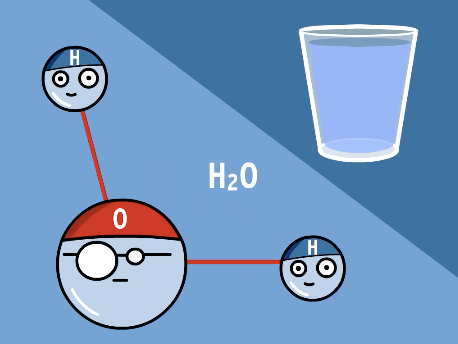
4 grams of hydrogen and 32 grams of oxygen will combine to form:
36 grams of water
28 grams of hydroxide
32 grams of oxygen
36 grams of deuterium
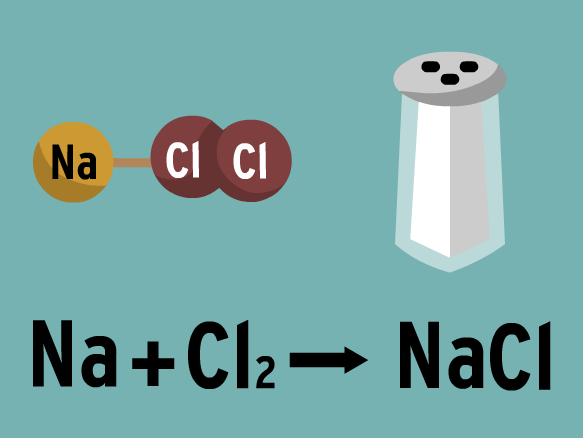
In a chemical reaction, 4 grams of sodium must combine with how many grams of chlorine to produce 10 grams of table salt?
4 grams
6 grams
8 grams
10 grams

Why does this picture demonstrate the Law of Conservation of Mass?
the number of atoms of each element are the same on both sides
they start out separate and end up combined
the same elements are used
it doesn't demonstrate the Law of Conservation of Mass
When a log is burned, what happens to the wood?
The mass stays the same, but becomes smoke and ash.
It disappears.
The mass changes as it goes away.
Nothing. You're imagining things.
Earth is divided into five different spheres. Which statement is true about the interaction between two of these spheres?
Weather is an interaction between the hydrosphere and the geosphere.
A plant receiving water from precipitation is an interaction between the biosphere and the hydrosphere.
An ice cap providing shelter for an arctic animal is an interaction between the biosphere and the hydrosphere.
The formation of the Grand Canyon is an example of an interaction between the geosphere and the atmosphere.
Which of these is NOT a function of Earth’s atmosphere?
insulating the planet to keep it warm
protecting Earth from harmful radiation
allowing water to evaporate into space
storing oxygen for living things to breathe
The air in the atmosphere is a poor conductor of energy. Which of the following incorrectly describes how the atmosphere is affected by conduction?
Most of the energy transfer by conduction occurs right at Earth’s surface.
At night, the ground cools and conducts heat away from the air close to the ground.
Air molecules in the atmosphere are heated which causes the atmosphere to vibrate.
During the day, solar radiation heats the ground, which heats the air close to the ground.
Which layer of the atmosphere is correctly paired with its characteristics?
The stratosphere is the layer of the atmosphere that contains ozone that protects living things from ultraviolet radiation.
The mesosphere is the layer of the atmosphere in which thin, feathery clouds of ice form due to its cold temperatures.
The thermosphere is the layer of the atmosphere that has no definite outer limit and protects the surface from being hit by meteoroids.
The troposphere is the layer of the atmosphere that contains the ionosphere where weather occurs.
The Sun heats the atmosphere of Earth unevenly. Which of the following statements is the most likely result of this uneven heating?
Convection in the atmosphere causes a change in air density, resulting in winds.
Conduction through the atmosphere causes evaporation to occur over oceans, resulting in rain.
Radiation from the Sun reflects through the atmosphere back into space resulting in cooler evenings.
Radiation from the Sun causes atmospheric moisture to collect over mountain ranges resulting in snowfall.

Where do we see radiation in a pot of boiling water on the stove?
The water heats up by touching the hot, metal pot.
The steam from the hot water rises out of the pot.
The heat from the fire can be felt on all sides.
Where do we see convection in a pot of boiling water on the stove?
The water heats up by touching the hot, metal pot.
The steam from the hot water rises out of the pot.
The heat from the fire can be felt on all sides.
Where do we see conduction in a pot of boiling water on the stove?
The water heats up by touching the hot, metal pot.
The steam from the hot water rises out of the pot.
The heat from the fire can be felt on all sides.
Which of the following is NOT a layer of the atmosphere?
Troposphere
Mesosphere
Biosphere
Stratosphere
Which layer of the atmosphere do we live in?
Troposphere
Stratosphere
Mesosphere
Exosphere
What do the geosphere and the hydrosphere have in common?
They both include water.
They both only include non-living things.
They both are man-made.
None of these are correct

What kind of breeze is this and when would it form?
Land breeze - daytime
Land breeze - nighttime
Sea breeze - daytime
Sea breeze - nighttime
Why do land breezes occur at night?
Land cools off slower than water, so the air above water is cooler.
Water cools off faster than land, so the air above land is warmer.
Land heats up slower than water, so the air stays cooler during the day.
Water cools off slower than land, so the air above water is warmer.

