wayground logo

Free Printable Worksheets

Font size

S
M
L
XL
Worksheets

Science Review 5th Grade

Total questions: 90

Worksheet time: 1hrs 2mins

Name
Class
Date
1.
What are the 8 levels of classification of living things from most general to most specific?
a)
domain, kingdom, phylum, class, order, family, genus, species
b)
domain, kingdom, phylum, class, order, family, genius, species
c)
domain, kingdom, phamily, class, order, family, genus, species
d)
domain, king, phillip, class, order, family, genus, species
2.
The scientific name for water bear is Hypsibius dujardini.  What is its species?
a)
Hypsibius 
b)
dujardini
c)
water 
d)
tardigrade
3.
How do scientists organize living things?
a)
by looks
b)
by shared characteristics
c)
by size
d)
by differences
4.
What is the science of organizing, classifying and naming living things.
a)
taxonomy
b)
taxadermy
c)
taxicab
d)
toxicology
5.
If two species share the same class, they also share the same______.
a)
phylum
b)
order
c)
genus
d)
species
6.
Who is the closest relative to the birds?
a)
crocodiles
b)
sharks
c)
fish
d)
amphibians
7.
Who is the closest relative to the sharks?
a)
crocodiles
b)
sharks
c)
ray-finned fish
d)
amphibians
8.

An animal's qualities are listed below:

ANIMAL'S QUALITIES

● Moist skin

● Has four legs

● Lays eggs

● Breathes with lungs and gills

● Cold blooded


What type of animal is described in the box?

a)

amphibian

b)

fish

c)

mammal

d)

reptile

e)

bird

9.

A biologist observes that a plant specimen has

no true roots, stems, or leaves. What term would

she use to describe this plant?

a)

vascular

b)

flowering

c)

wilted

d)

non-vascular

10.

Which of the following organisms is a vertebrate?

a)

insect

b)

sponge

c)

monkey

d)

earthworm

11.

What trait do all mammals share?

a)

walk upright

b)

have an opposable thumb

c)

have large brains

d)

nurse their young with milk

12.

Which vertebrate is ectothermic (cold-blooded)?

a)

cat

b)

chicken

c)

human

d)

lizard

13.

Which term describes an animal without a

backbone?

a)

chordate

b)

invertebrate

c)

protozoan

d)

vertebrate

14.

Although the bald cypress tree loses its leaves in

the winter, its seeds are similar to evergreen pine

trees. How are bald cypress and pine tree seeds

similar?

a)

They are found in bulbs.

b)

They are found in cones.

c)

They are found in fruits.

d)

They are found in shells.

15.

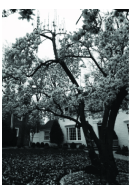
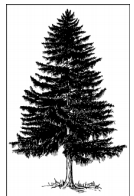
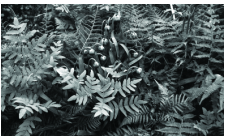
Which of the following plants produces spores?
a)
b)
c)
d)
16.
Why do scientists classify living things?
a)
It helps scientists trap species to study
b)
It is easier to study organisms when grouped 
c)
It is a good way to keep organisms calm
d)
It is helpful when dissecting an organism
17.
Which kingdom contains only multicellular autotrophs?
a)
fungi
b)
plant
c)
animal
d)
protist
18.
What do plants and fungi have in common?
a)
They are both autotrophic
b)
They are both unicellular
c)
They both have cell walls
d)
They both are prokaryotes 
19.
What statement would NOT be good for a dichotomous key?
a)
The organism has 1 dorsal fin
b)
The organism is ugly
c)
The organism has leaves in groups of three
d)
The organism has 6 legs
20.

The basic building blacks from which all living organisms are made are

a)

cells

b)

DNA

c)

chromosomes

d)

Amoeba

21.

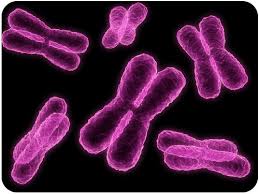
A normal human cell contains how many chromosomes?

a)

16

b)

26

c)

46

d)

14

22.

It is true, not all cells have a true nucleus, but all cells must have some sort of

a)

DNA

b)

Cytoplasm

c)

Osmosis

d)

Call Wall

23.

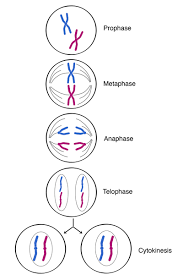
True or False: During Mitosis the nucleus divides in two

a)

True

b)

False

24.

Genes contain genetic

a)

Cells

b)

Traits

c)

Traitors

d)

Cytoplasm

25.

This part of the cells controls what moves in and out

a)

cell wall

b)

cell membrane

c)

Cytoplasm

d)

organelles

26.
The main function of chloroplasts is:
a)
To control what enters and leaves the cell.
b)
To break down food to release energy for the cell.
c)
To control all activities of the cell.
d)
To produce food for the cell using the sun's energy.
27.
Plants and animals are made up of millions of tiny what?
a)
atoms
b)
cells
c)
particles
d)
dots
28.
Animal cells have_______________.
a)
cell walls
b)
chloroplasts
c)
cytoplasm
d)
large vacuoles
29.
Michael looked at a cell through a microscope.  He identified a nucleus, chloroplast, and cytoplasm.  What kind of cell did Michael observe?
a)
animal
b)
plant
c)
vertebrate
d)
bacteria
30.
Which piece of equipment is the best to use to observe the structure of a cell?
a)
magnifying glass
b)
binoculars
c)
telescope
d)
microscope
31.
Directs all cell activities and the DNA is located there. "The brain"
a)
Lysosomes
b)
Nucleus
c)
Cell Wall
d)
Cytoplasm
32.
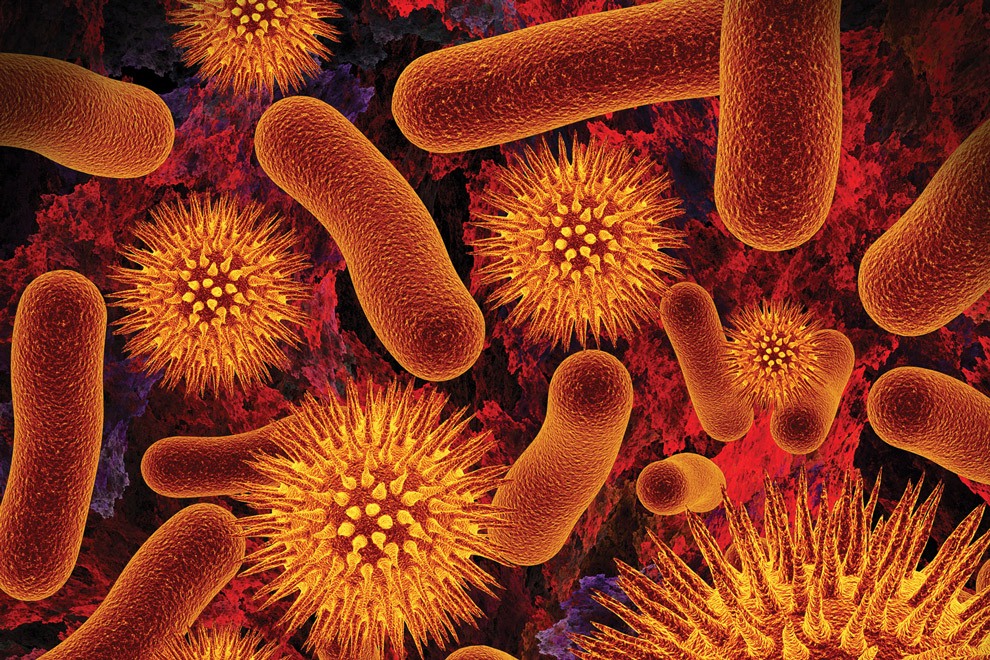
A tiny, nonliving particle that invades and then reproduces inside a living cell.
a)
Bacteria
b)
Virus
c)
Protist
d)
Fungi
33.
A preparation of weakened or killed pathogens.
a)
Bacteria
b)
Antibiotic Resistance
c)
Vaccine
d)
Capsid
34.
Antibiotics can be used to treat a viral infection.
a)
True
b)
False
35.

Fungi is beneficial to us beacause of the following reason

a)

They are a source of oxygen

b)

They can clean up pollution

c)

They are a source of antibiotics

d)

They help to clean run off from waste

36.

Penicillium is a

a)

Algae

b)

Fungus

c)

Bacteria

d)

Yeast

37.
Are microorganisms helpful or harmful?
a)
Helpful
b)
Harmful
c)
Both
d)
Neither
38.
A tiny, nonliving particle that invades and then reproduces inside a living cell.
a)
Bacteria
b)
Virus
c)
Protist
d)
Fungi
39.
The ability of a population of bacteria to survive the lethal effects of an antibiotic.
a)
Vaccine
b)
Lysogenic Cycle
c)
Antibiotic Resistance
d)
Capsid
40.
A large group of one-celled organisms that sometimes cause disease .
a)
Virus
b)
Protist
c)
Fungi
d)
Bacteria
41.
The variable that is measured in an experiment.
a)
Independent Variable
b)
Dependent Variable
42.
The variable that is changed in an experiment.
a)
Independent Variable
b)
Dependent Variable
43.
Acellular is a way to describe the following:
a)
Bacteria
b)
Protist
c)
Fungi 
d)
Virus
44.
 Viruses can reproduce (replicate) on a surface (ex: table, chair, etc.)
a)
True
b)
False
45.
Viruses are considered living organisms. 
a)
True
b)
False
46.
Viruses are highly specific to the host cells that they can infect.
a)
True
b)
False
47.
Antibiotics can be used to treat a viral infection.
a)
True
b)
False
48.
All bacteria are
a)
unicellular
b)
multicellular
c)
eukaryotic
49.
______________ helps us  digest our food and they produce needed vitamins.
a)
Bacteria
b)
Fungi
c)
Protozoa
d)
Algae
50.
The oldest type of microorganism is known as _____________.
a)
Bacteria
b)
Virus
c)
Fungi
d)
Flagella
51.
Some bacteria is known as ________________ and cause disease.
a)
pathogens
b)
flagella
c)
influenza
d)
ebola
52.
Yogurt and cheese  can be produced from ___________.
a)
Bacteria
b)
Virus
c)
Protozoa
d)
Algae
53.
Viruses can also be called ______________
a)
flagella
b)
parasites
c)
decomposers
d)
pathogens
54.
This microorganism uses host cells to make copies of itself
a)
Protozoa
b)
Fungi
c)
Virus
d)
Bacteria
55.
What do magnets stick to?
a)
copper
b)
wood
c)
iron
d)
plastic
56.
Magnetism is a type of ____________
a)
force
b)
book
c)
plant
d)
animal
57.
When two magnets attract, they ______________
a)
push apart
b)
change color
c)
get colder
d)
pull together
58.
When two magnets repel, they ________________
a)
change color
b)
pull together
c)
push apart
d)
get colder
59.
The force of magnetism is stronger when magnets are ________________
a)
cold
b)
round
c)
closer together
d)
farther apart
60.
Which object would a magnet attract?
a)
a glass bottle
b)
a piece of paper
c)
a metal paper clip
compass
d)
a rubber eraser
magnetic field
61.
Most young animals inherit similar appearances, such as shape and color, from their parent animals. Which best describes why a baby deer (fawn) has spots when the adult deer do not?
a)
The spots help camouflage the fawn for protection.
b)
The spots help a fawn to be seen when crossing roads.
c)
The adult deer lose their spots by rubbing against trees.
62.
Emily has brown hair. Which is most likely a true statement about Emily?
a)
Emily’s favorite color is brown.
b)
Emily has a parent with brown hair.
c)
Emily’s older brother has brown hair. 
63.
What characteristic is inherited by only some members of its species?
a)
gills on a fish
b)
wings on a bird
c)
spots on a horse
d)
trunk on an elephant
64.
Bunny A’s fur is all brown, while his brother and sisters are half brown and half white. The bunnies’ father is all brown, and the mother bunny is half brown and half white. Which best describes why Bunny A has brown fur?
a)
The bunny inherited a brown fur characteristic from each parent. 
b)
The bunny inherited a white fur characteristic from each parent. 
c)
The bunny rejected the white characteristics from its mother.
d)
The bunny rejected the brown characteristics from its father.
65.
James and his father are both great athletes. Which characteristic did James most likely learn from his father?
a)
height and weight
b)
fast swimming stroke
c)
large feet and hands
d)
muscular body structure
66.
Which characteristic would a child not inherit from one or both of its parents?
a)
freckles
b)
hair style
c)
eye color
d)
dimples
67.
Which trait does a puppy inherit from its parents?
a)
fur color and pattern
b)
obedience to commands
c)
food brand preferences
d)
affection for a specific home
68.
A litter of kittens have traits that are similar to both the mother cat and the father cat. Which best explains this situation?
a)
The kittens are provided the same kind of milk from their mother as they grow.
b)
The kittens inherit some of their traits from their mother and some from their father.
c)
The kittens are kept at the same temperatures by their mother when they are first born.
d)
The kittens are taught by their parents to have similar traits.
69.
What should students use to identify the percent chance of a trait being passed down from a parent to its offspring?
a)
a graph
b)
a flow chart
c)
a data table
d)
a Punnett square
70.
Which feature of a bird is controlled only by inherited genes?
a)
diet 
b)
habitat
c)
beak shape
d)
life span
71.
Bob is a tall, slender young man with red hair and blue eyes. Which couple would most likely be Bob’s parents?
a)
a slender, red-haired father and a tall, blue-eyed mother
b)
a tall green-eyed father with long brown hair and a short, brown-haired mother
c)
a short, green-eyed, black-haired father and a tall, brown haired, brown-eyed mother
d)
a short, plump brown-haired father with freckles and a short, blue-eyed red-haired mother
72.
Which characteristic would most likely be inherited by a baby?
a)
brown hair
b)
crying a lot
c)
ability to jump high
d)
his ability to talk
73.
A dog rolls over and receives a treat. The dog rolls over again. This is an example of...
a)
learned behavior
b)
adaptive behavior
c)
inherited behavior
d)
instinctive behavior
74.
Which characteristic is inherited?
a)
hair color
b)
sleeping late
c)
enjoying hiking
d)
loving to read
75.
Which best explains why a child may look like his father, but is not able to play basketball as well as him?
a)
Physical characteristics are inherited, but the ability to shoot a basketball is not.
b)
The ability to shoot a basketball is inherited, but physical characteristics are not.
c)
The child chooses to look like his father, but he does not choose to play basketball.
d)
He hates playing basketball so he doesn't care if his dad can play.
76.
All of the following area likenesses that are inherited from parent to offspring EXCEPT:
a)
table manners
b)
eye color
c)
shape of nose
d)
freckles
77.
What word means  body temperature changes when the outside temperature changes?
a)
cold blooded
b)
warm blooded
c)
classify
d)
vertebrate
78.
What word means to divide into groups?
a)
cold blooded
b)
warm blooded
c)
classify
d)
vertebrate
79.
What are animals with a backbone called?
a)
vertebrates
b)
invertebrates
c)
backies
80.
What group of vertebrates are robins and owls?
a)
fish
b)
mammals
c)
amphibians
d)
birds
81.
What group of vertebrates is a mouse?
a)
fish
b)
mammals
c)
amphibians
d)
birds
82.
What group of vertebrates is an elephant?
a)
fish
b)
mammals
c)
amphibians
d)
birds
83.
What are animals without backbones called?
a)
vertebrates
b)
invertebrates
c)
classify
d)
cold blooded
84.
Which word means the bones which form the framework of the body?
a)
cold blooded
b)
classify
c)
vertebrate
d)
skeleton
85.
Which word means "going south to a warmer climate"?
a)
skeleton
b)
vertebrate
c)
migration
d)
classify
86.
Which is not a reason birds migrate?
a)
vacation
b)
find food
c)
warmer climate
d)
to breed
87.
What group of vertebrates is a whale?
a)
mammals
b)
birds
c)
reptiles
d)
amphibians
88.
Which word describes the different stages of an animal's life?
a)
classify
b)
migration
c)
life cycle
d)
cold blooded
89.
What group of vertebrates are snakes and lizards?
a)
amphibians
b)
reptiles
c)
mammals
d)
fish
90.
What group of vertebrates are salmon and tuna?
a)
birds
b)
mammals
c)
amphibians
d)
fish