
Font size
 Worksheets
year 10 BOYS
Total questions: 148
Worksheet time: 2hrs 46mins
A native species and a non-native species are competing for resources within the same ecosystem. The non-native species is more likely to survive than the native species in which of the following situations?
Both the native species and the non-native species thrive on the same food source.
The native species is immune to certain pathogens in the ecosystem.
Predators prey on both native and non-native species.
The non-native species has no natural enemies in the ecosystem.
The overgrowth of algae poses a major problem for coral reefs. Intensive fishing is one factor that contributes to algae overgrowth because it does which of the following?
Allows more sunlight to be available to algae
Inhibits the spread of pathogens in algae colonies
Reduces the number of organisms that feed on algae
Increases the competition between different algae species

Which of the following are missing from the food web shown above?
Producers
Decomposers
Omnivores
Predators

The acacia ant nests and feeds in the plant’s hollow thorns. The ant helps protect the bullshorn acacia by attacking insects and grazing animals that come near the plant. The relationship between the acacia ant and the bullshorn acacia is an example of which of the following?
Commensalism
Mutualism
Neutralism
Parasitism

The amount of energy the producers in this energy pyramid provide the primary consumers is 54,000 joules. From this amount, 540 joules are provided to the tertiary consumers. Based on this model, how much of the energy was provided to secondary consumers?
53,460 J
5,400 J
540 J
54 J

The photograph shows monarch butterflies landing on plants where there are thousands of other monarch butterflies. These butterflies feed on milkweed plants as they travel south for the winter, covering distances of 5,000 km or more each year. However, the population of these butterflies has been steadily declining over the last 20 years.What is the most likely reason the population of these butterflies has been declining?
The number of bird species evolving to prey on butterflies has increased.
The butterflies are evolving to tolerate cold weather in the northern United States and southern Canada.
The increase in yearly temperatures has warmed the northern habitats
The number of milkweed plants along the butterflies’ migratory route has decreased.
Which of the following is most likely to cause the greatest disruption to an ecosystem?
Emptying an aquarium containing non-native species into a local waterway
Cutting down a small cedar tree to make holiday decorations
Cleaning the windshield of a car with an alcohol-based glass cleaner
Mowing the lawn in a city park
Which statement best describes the differences in species diversity between an ecosystem beginning the process of primary succession and one beginning the process of secondary succession?
Species diversity is much greater in the ecosystem undergoing primary succession because that ecosystem is experiencing a longer period with a lack of competition for space.
No differences in species diversity exist because both ecosystems initially lack living organisms.
Species diversity is much greater in the ecosystem undergoing primary succession because the lack of soil provides a greater area for organisms to claim niches.
Species diversity is greater in the ecosystem undergoing secondary succession because the soil already contains seeds and spores of various species.
Which of these best demonstrates mutualism between certain types of bacteria and humans?
Intestinal bacteria obtain nutrients from the gut and produce vitamin K used by humans.
Bacteria become resistant to antibacterial medication that humans use for treatment.
Invasive bacteria at an area of injury produce toxins that damage healthy tissues of the human body.
Bacteria in improperly prepared food is consumed by humans, causing food poisoning
In North American forests, two species of birds, nuthatches and brown creepers, forage on the same trees for insects. Brown creepers feed on insects found near the bottom of the tree trunk, while nuthatches feed on insects in the top part of the tree. The difference in foraging behavior most likely affects the nuthatches and brown creepers by —
allowing the birds to avoid many types of predators
reducing competition between the birds for resources
preventing the birds from interbreeding with each other
establishing dominance between the birds for nesting sites
As part of the nitrogen cycle, animals acquire some amino acids by doing which of the following?
Breathing air
Eating plants
Drinking water
Producing waste

The diagrams show some of the levels of biological organization. In what order are the levels in the diagrams?
Population, community, ecosystem
Organism, community, population
Organism, population, community
Ecosystem, population, community
The diagrams show some of the levels of biological organization. In what order are the levels in the diagrams?
Population, community, ecosystem
Organism, community, population
Organism, population, community
Ecosystem, population, community

What is lost to the environment at each of the trophic levels of this ecosystem?
Nutrients from the soil
Living space for the organisms
Food sources
Heat

Which of these correctly describes the relationships between the organisms?
X: mutualism Y: parasitism Z: commensalism
X: commensalism Y: mutualism Z: parasitism
X: parasitism Y: commensalism Z: mutualism
X: commensalism Y: parasitism Z: mutualism
Hydrothermal vents form deep in the ocean when iron-rich magma is released from openings on the seafloor. These vents spew extremely hot water (400°C) mixed with methane and sulfur. Bacteria that thrive in this hostile environment form the base of a food chain that leads to colonization by tube worms, mussels, and many other life-forms. When a hydrothermal vent becomes inactive and cold, the bacterial community that lives in the hot fluid methane and sulfur dies out. Which organisms most likely succeed the original community in this ecosystem?
Cold-tolerant bacteria that feed on sulfur and iron in the vents
Giant kelp that use sulfur in photosynthesis
Fish that do not need oxygen for cellular respiration
Ocean mammals that tolerate cold and act as top predators in the food chain

Which of the following lists only organisms that are secondary consumers in this food web?
Mice, rabbits, herbivorous insects, and squirrels
Predaceous insects, toads, spiders, and foxes
Spiders, foxes, owls, hawks, and snakes
Insectivorous birds, seed-eating birds, owls, and hawks


What is the correct order for this food chain?
Owl, Mouse, Grasshopper, Grass
Grass, Mouse, Owl, Grasshopper
Grass, Owl, Grasshopper, Mouse
Grass, Grasshopper, Mouse, Owl

Which of these organisms is the secondary consumer?
Owl
Mouse
Grass
Grasshopper

Which of these organisms is the producer?
Owl
Mouse
Grasshopper
Grass
What do herbivores eat?
Animals
Plants and Animals
Plants
Dead Animals
What do omnivores eat?
Animals
Plants and Animals
Plants
Dead Animals
Place the levels of environment in the correct order.
biome, biosphere, population, organism, ecosystem,community
organism, ecosystem, biosphere, population, community, biome
organism, population, community, ecosystem, biome, biosphere
population, community, organism, biome, ecosystem, biosphere

What is the hawk in the food web?
Producer
Primary consumer
Secondary consumer
Tertiary consumer
Which of these is an aquatic biome?
Savanna
Tropical Rainforest
Marine
Tundra
How much energy is transferred between trophic levels?
25%
20%
10%
90%
Which of these is an autotroph?
Consumer
Producer
Decomposer
Volcano erupting would be an example of what type of succession?
Primary
Secondary
Tertiary
What was NOT a part of the water cycle?
Condensation
Precipitation
Decompostition
Evaporation
Group of the same species.
Community
Ecosystem
Population
All of the biotic and abiotic factors.
community
ecosystem
population
The number of pythons found throughout Everglades National Park has increased in recent years. These huge snakes are not native to Florida and are believed to have been released into the wild by pet owners. Wildlife biologists have initiated attempts to capture and remove these pythons. Which statement best explains the biologists’ reason for removing these pythons from the Everglades?
The pythons could upset the territorial boundaries of native organisms.
The pythons could adapt to overcome diseases common to native snakes.
The pythons could prey on native organisms and cause native populations to decline.
The pythons could begin to interbreed with native snakes and produce a more successful species.

Which of the following statements account for the change in population seen between years 7 and 8?
The birth rate of the pigeons increased.
The emigration rate of the pigeons decreased.
The death rate of the pigeons exceeded the birth rate.
The neighborhood reached its carrying capacity for the pigeon population
A new species of snake was introduced to a tropical region. Scientists then noticed a steady decline in the presence of field mice and an increase in the number of snakes. Which of these is the most likely explanation about why the population size of each animal changed?
The snakes introduced to the region dominated the habitat, forcing the mice to find another place to live.
The mice became prey to the introduced snakes, allowing the snake population to increase but decreasing the mice population.
The snakes introduced to the region competed with the mice for food, allowing the snake population to increase but decreasing the mice population.
The people in the surrounding area set traps that killed the mice, allowing the snakes to live without any predators and therefore to increase in number.
The highest concentration of life exists in the top 200 meters of ocean water. What is the most important factor that influences the concentration of life?
amount of gases at the surface
amount of nutrients in the water
large number of predators at lower depths
amount of sunlight
Rabbits introduced into Australia over 100 years ago have become a serious pest to farmers. Rabbit populations increases so much that they displaced many native species of plant eaters. What is the most logical explanation for their increased numbers?
Rabbits have a high death rate.
There are few effective predators.
Additional rabbit species have been introduced.
There is an increase in rabbit competitors.
Scientists found, that over a period of 200 years, a mountain pond was transformed into a meadow. During that time, several communities of organisms were replaced by different communities. Which of these best explains why new communities were able to replace older communities?
The original species became extinct.
Species in the older community died from old age.
The abiotic characteristics of the habitat changed.
Diseases that killed the older organisms disappeared.
Although phosphorus is of great biological importance, it is not very common in the biosphere. Why is this?
Phosphorus doesn’t enter the atmosphere
Phosphorus doesn’t cycle through food webs
Phosphorus have been depleted by biological organism
Phosphorus evaporates easily and is quickly destroyed by sunlight
In the ocean nitrogen is often the limiting nutrient. What does this term mean?
An unlimited amount of nitrogen is in the ecosystem
Nitrogen is scarce or cycles very slowly through the ecosystem.
The presence of nitrogen limits the availability of other nutrients
Nitrogen is overabundant or cycles very quickly through the ecosystem
Ecologists study different levels of organization within the biosphere. Identify which level corresponds to a group of individuals that belong to the same species and live in the same area.
A: Community
B. Biome
C. Ecosystem
D. Population
In addition to energy, organisms need matter to survive. Which of the following is true about matter in the biosphere?
The total amount of matter decreases overtime
The total amount of matter increases overtime
Biogeochemical cycles transform and reuse molecules
Matter flows through ecosystems in one direction
Each step in a food chain is called a trophic level. What percentage of energy available at one trophic level is transferred to organisms at the next level?
about 2 percent
about 10 percent
about 25 percent
about 50 percent
What is true about the pyramid of numbers?
A. There are more producers than first-level consumers
B. First-level consumers make up the greatest number of individuals
C. There are more third-level consumers than second-level consumers
D. There are more second-level consumers than first-level consumers
What food substance is made by plants during photosynthesis?
Carbon dioxide
Glucose
Granulated sugar
Oxygen
Where is chlorophyll found in plants?
Leaves
Root
Flower
Stem
Which are examples of autotrophs? Select all that apply.
Bacteria
Humans
Plants
Algae
Humans cannot make their own food, what are they called?
Autotrophs
Producers
Heterotrophs
Herbivores
The factory or storehouse of the plant is the
flower
root
stem
leaves
Which of the following is not transported in plants?
minerals
oxygen
water
carbon dioxide
Which is a major source of nutrients in plants?
soil
leaves
stem
roots
Which are the vascular tissues in plants that are responsible for transporting substance around the plant? Select all that apply.
Leaves
Xylem
Roots
Phloem
This part of the transport system in plants is made up of dead cells.
Xylem
Phloem
Shoot
Leaves
This part of the transport system in plants is made up of living cells.
Xylem
Shoots
Phloem
Leaves
Water and minerals move upward from the root to the rest of the plant in this vascular tissue.
Root
Xylem
Leaves
Phloem
This vascular tissue carries substances from the leaves to the other parts of the plant.
Phloem
Leaves
Roots
Xylem
This is the process in which plants sweat.
Transportation
Transpiration
Explanation
Exportation
The flow of water in the xylem travels in two directions up and down.
True
False
Movement in the phloem tissue goes in one direction.
True
False
What is the stomata in plants?
Large pores in the leaves
The green pigment
The chloroplast
Tiny pores in the leaves
Sweating is the process that plants use to remove excess water.
True
False
Both plants and humans have a transport system.
True
False
Both the xylem and the phloem tissues can be found in the stem, roots and leaves of a plant.
True
False
What is needed for photosynthesis to take place? Select all that apply.
sunlight
water
carbon dioxide
chlorophyll
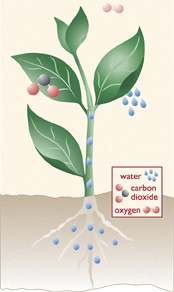
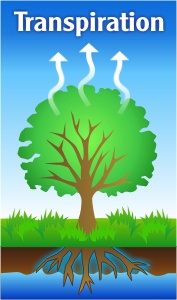
Where is xylem found in the plant?
leave -> roots -> stem
roots -> stem -> leaves
root hairs -> leaves -> veins
stem -> roots
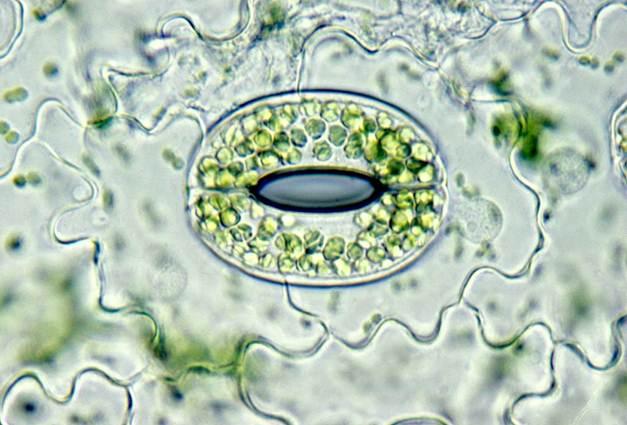
What do the guard cells do?
Control active transport
Control nutrients moving into the cell
Controls the rate of transpiration (loss of water through the leaf)
What does phloem transport?
Water
Minerals
Fruit
Sugar
What is the main factor that influences the rate of sugar transport?
movement of water
Rate of photosynthesis
capillary action
uprooting plants
Where does sugar transport begin?
Roots
Leaves
Root hairs
Vascular bundles
The rate of translocation in the phloem was observed to decrease steadily after a plant was placed in an environment without oxygen for several minutes. Why did this happen?
The cells in the plants stop respiring.
The xylem no longer takes in water for the plant.
Active transport of mineral salts can no longer occur.
The plant can no longer synthesize sugars to provide energy.
The region of stem from which leaves and buds arise is called
internode
lateral bud
terminal bud
node
___________ make food by photosynthesis and pass it back to the stem.
stems
roots
leaves
buds
The shoot system consists of the following except:
upright stem
leaves
buds
roots
When ____________ grow, they will produce branches.
terminal buds
lateral buds
shoot system
root system
The region of stem between two nodes is the
lateral bud
shoot system
node
internode
Xylem and phloem appear in the ______________ of the leaf, as well as in the leaf veins.
petiole
leaf blade
epidermis
midrib
This is a single layer of cells that helps to keep the shape of the stem and cuts down the loss of water vapour.
epidermis
sieve tubes
vessels
vascular bundles
These are made up of group of specialised cells that conduct water, dissolved salts and food up or down the stem.
phloem
xylem
vascular bundles
vessels
Which of the following is paired correctly:
xylem:vessels;phloem:sieve tubes
xylem:sieve tubes;phloem:vessels
This is a substance that makes the cell wall very strong and impermeable.
starch
lignin
fibres
cellulose
Two main vascular bundles are the xylem and phloem. Food substances travel in the _____________ and water and salts are mainly conducted in the ______________.
xylem; phloem
phloem; xylem
vessels; sieve tubes
vascular bundles:vessels
_________ are elongated and lignified supporting cells in the xylem.
lignin
fibres
starch
cellulose
Where is xylem found in the plant?
leave -> roots -> stem
roots -> stem -> leaves
root hairs -> leaves -> veins
stem -> roots
The only living cells in xylem tissue are
Xylem sclerenchyma
Xylem tracheids
Xylem vessels
Xylem parenchyma
Raisins swell when put in
Saline water
Saturated sugar solution
Rain water
Coconut oil
The movement of molecules from their lower concentration to a higher concentration with the help of energy
Diffusion
Active transport
Osmosis
Brownian movement
The rate of transpiration decreases with an increase in
Sunlight
Temperature
Humidity
Wind
The inorganic nutrient that is involved in the opening and closing of stomata
Iron
Phosphorus
Potassium
Nitrogen
The food synthesised in the plants is transported through phloem in the form of
Sucrose
Starch
Glucose
Fats
Conducting cells in phloem are
Phloem parenchyma
Sieve tubes
Companion cells
Phloem fibres
Most of the water gets evaporated from the plants from its
Flowers
Stem
Roots
Leaves
If pure water is separated from a strong sugar solution by a semi permeable membrane, then the net movement of molecules is
From pure water to the sugar solution
From sugar solution to pure water
No net movement
Equal movement of molecules In both directions
Ascent of sap takes place through
Phloem
Epidermis
Cortex
Xylem
Organisms which prepare food for themselves using simple naturally available raw materials are referred to as
heterotrophs
autotrophs
parasites
saprophytes
In the absence of which of the following will photosynthesis not occur in leaves?
vacuole
stomata
chlorophyll
cytoplasm
Pitcher plant traps insects because it grows in soils which lack in ---------
(a)
Which of the following statements is/are correct?
(i) All green plants can prepare their own food.
(ii) Most animals are autotrophs.
(iii) Carbon dioxide is not required for photosynthesis.
(iv) Oxygen is liberated during photosynthesis.
Choose the correct answer from the options below:
( i) and (iv)
(ii) only
(ii) and (iii)
(i) and (ii)
The term that is used for the mode of nutrition in yeast, mushroom and bread-mould is
autotrophic
parasitic
saprophytic
symbiotic
insectivorous plant is


When we observe the lower surface of a leaf through a magnifying lens we see numerous small openings. Which of the following is the term given to such openings?
stomata
midrib
vein
lamina
Which of the following raw material is available in the air for photosynthesis?
oxygen
carbon dioxide
nitrogen
hydrogen
Two organisms are good friends and live together. One provides shelter, water, and nutrients while the other prepares and provides food. Such an association of organisms is termed as
saprophyte
parasite
autotrophs
symbiosis
which gas is produced during photosynthesis.
carbon dioxide
oxygen
hydrogen
nitrogen
Carbon dioxide is absorbed through the
Stoma
Cuticle
Vessel
Palisade Cells
In order to make proteins, plants need to absorb
Magnesium Ions
Nitrate Ions
Sucrose
Carbon Dioxide
Chlorophyll is the ___ pigment found in the chloroplast
Blue
Green
Red
Purple

The arrows in the diagram all point to the
Cytoplasm
Nucleus
Mitochondria
Chloroplast

The orange colored part of the leaf in the diagram refers to the
Vessels
Stoma
Epidermis
Mesophyll Layer
The following are leaf adaptations for photosynthesis EXCEPT
Thin
Contains Chlorophyll
Contains Root Hair
Contains Stoma and Guard Cells
The part of the leaf that enables it to hold water by stopping water from escaping through evaporation
Cuticle
Palisade Cells
Xylem
Epidermis
Part of the leaf which allows the diffusion of gases to occur
Palisade Cells
Spongy Mesophyll Cells
Epidermis
Phloem
The following are important uses of glucose in plants EXCEPT
source of energy
creation of cell membrane
building of protein molecule
creation of starch
The following ions are necessary for the plants to absorb EXCEPT
Nitrate
Phosphate
Magnesium
Manganese
This ion is needed for the creation of chlorophyll
Magnesium
Iron
Phosphate
Sulphate
carbon dioxide + _______ = glucose + oxygen
Water
Hydroxide
Chlorophyll
Sunlight
The following compounds goes in and out of the stoma EXCEPT
Oxygen
Glucose
Carbon Dioxide
Water
The ratio of carbon dioxide and water to glucose in respective order is
6:1:6
6:6:1
1:6:6
6:6:6

The diagram represents
Osmosis of water through the root hair cells
Intake of Ions and Oxygen through the root hair cells
Diffusion of water through the root hair cells
Uptake of minerals and food from the root hair cells

