wayground logo

Free Printable Worksheets

NEW

Font size

S
M
L
XL
Worksheets

Middle School Science ISASP Review

Total questions: 76

Worksheet time: 1hrs 16mins

Name
Class
Date
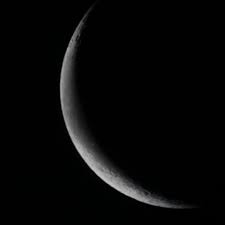
1.
What Moon phase is this?
a)
Waning Crescent
b)
Waxing Crescent
c)
Waxing Gibbous
d)
Waning Gibbous
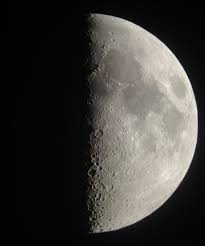
2.
What Moon phase is this?
a)
Full Moon
b)
Waxing Gibbous
c)
New Moon
d)
Half Moon
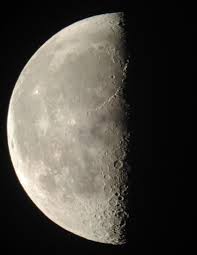
3.
What Moon phase is this?
a)
Waxing Crescent
b)
Waning Gibbous
c)
Waning Crescent
d)
Waxing Gibbous
4.
What Moon phase is this?
a)
Waxing Gibbous
b)
Waning Crescent
c)
Waning Gibbous
d)
Full Moon
5.
Name the moon phase
a)
waning crescent
b)
waxing crescent
c)
waning gibbous
d)
waxing gibbous
6.
Name the moon phase
a)
First Quarter
b)
Last Quarter
c)
New Moon
d)
Full Moon
7.
Name the moon phase
a)
First Quarter
b)
Last (3rd) Quarter
c)
New Moon
d)
Full Moon
8.

this is a

a)

solar eclipse

b)

lunar eclipse

9.

This is a...

a)

Total lunar eclipse

b)

Partial lunar eclipse

10.

Which is an object in the solar system that is a frozen mass of ice and dust?

a)

an asteroid

b)

a comet

c)

a moon

d)

a planet

11.

Why does the sun seem to change position in the sky?

a)

Earth's rotation

b)

Earth's orbit

c)

The sun's rotation

d)

The sun's orbit

12.

The picture shows a tree and its shadow at two different times of day.

Which sentence explains why the shadow changes?

a)

As Earth rotates, the sun is lower in the sky in the morning.

b)

As Earth rotates, the sun is higher in the sky in the morning.

c)

As the sun rotates, it is lower in the sky in the morning.

d)

As the sun rotates, it is higher in the sky in the morning.

13.

What is weathering?

a)

occurs when the eroded materials are dropped or laid down

b)

fragments of weathering rocks

c)

the process by which rock materials are broken down by the action of physical and chemical process

d)

the process by which wind, water, ice or gravity transport weathered materials from one location to another

14.

What type of chemical weathering is in the picture shown?

a)

oxidation

b)

mosses and lichens

c)

acid precipitation

15.

What are the two types of weathering?

a)

oxidation and abrasion

b)

physical and chemical weathering

c)

animals burrowing and plant roots breaking apart rocks

16.

The geological process when rocks or sediments move or are transported from one place to another is:

a)

weathering

b)

erosion

c)

deposition

17.

What is deposition?

a)

When sediment is transported from one place to another

b)

When eroded materials are dropped or laid down.

c)

when sediment or rocks are broken down

d)

when rocks react with oxygen and water
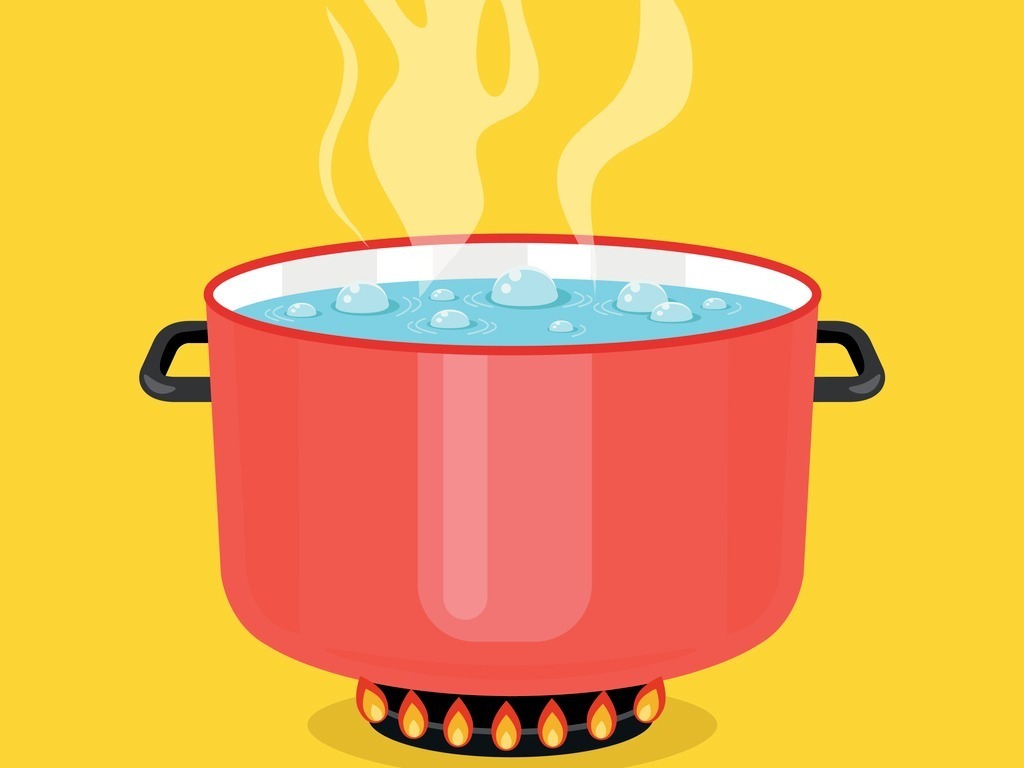
18.

What is happening at the boiling point?

a)

liquid to gas

b)

solid to liquid

c)

gas to liquid

d)

liquid to solid

19.

What is happening at freezing point?

a)

gas to liquid

b)

liquid to solid

c)

solid to liquid

d)

liquid to gas

20.

What is happening at water melting point?

a)

liquid to gas

b)

gas to liquid

c)

solid to liquid

d)

liquid to soild

21.
What Causes differences in air pressure around earth ? 
a)
Warm air rises at the equator, and cold air sinks at the poles.
b)
Equator gets over heated 
c)
Snow 
22.
Warm air rising at the equator and cold air sinking at the poles is one reason for which event?
a)
hurricanes
b)
Coriolis Effect
c)
Earth's rotation
d)
convection currents
23.

Warm Air is LESS DENSE then Cold Air. So Warm Air creates....

a)

High Pressure

b)

Low Pressure

c)

No Air Pressure

24.
Created by a divergent boundary.
a)
Rocky Mountains
b)
Mariana Trench
c)
Mid Atlantic ridge
25.
Mountains form from ...
a)
plates sliding past one another
b)
collision of plates
c)
plates moving away from each other
26.
Which of the following is where one plate slides under another plate?
a)
submarine zone
b)
divergence zone
c)
subduction zone
d)
lower zone
27.

The Coriolis Effect is caused by what?

a)

The wind blowing

b)

Earth's gravity pulling things down

c)

The rotation of the Earth

d)

The pull of the Moon

28.

Winds blow from areas of what to what?

a)

High temperature to high pressure

b)

Low temperature to high pressure

c)

High pressure to low temperature

d)

Low temperature to high temperature

29.
What catastrophic event results in destruction along a narrow path?
a)
a volcanic eruption
b)
a tsunami
c)
a hurricane
d)
a tornado
30.
Which natural disaster uses the Richter scale to measure strength? 
a)
Earthquake
b)
Tornado
c)
Tsunami
d)
Hurricane
31.
Which storms have the strongest winds?
a)
hailstorms
b)
tornadoes
c)
earthquakes
d)
hurricanes
32.
a)
Caused by an asteroid or meteor entering the Earth's atmosphere and hitting the Earth.
b)
Caused by shift in the Earth's tectonic plates
c)
Caused by rotation and convection currents rising up over warm ocean water
d)
Sometimes created when two air masses with different temperatures meet
33.
a)
Usually the result of human negligence, but can also be caused by lightning
b)
Created by a weakness in the Earth's crust.  Magma rises up from mantle
c)
Storm surge causes massive flooding.  Wind damage causes structural damage to homes and businesses
d)
High winds cause destruction to everything in its path.
34.

As average global temperature rises,

a)

Average precipitation increases

b)

Average precipitation decreases

c)

Average precipitation is unchanged

35.

Compared to other greenhouse gases, ___________ is the most effective at trapping heat near the Earth's surface.

a)

A. Carbon dioxide

b)

B. Nitrogen

c)

C. Water vapor

d)

D. Methane

36.

Everyone should try to reduce their ...

a)

carbon footprint

b)

solar footprint

c)

pylon footprint

d)

global footprint

37.

Greenhouse gases absorb some of the radiation before it can escape and this warms up the atmosphere

a)

True

b)

False

38.

All BUT the following are greenhouse gases:

a)

Water vapor

b)

Carbon Dioxide

c)

Neon

d)

methane

39.
The second part of Cell Theory states: "All living organisms are made up of cells."
a)
True
b)
False
c)
I don't know
d)
If you say so
40.
The first part of the Cell Theory states: "What happens in Cell Theory, stay in Cell Theory."
a)
True
b)
False
c)
I don't know
d)
Ummmm
41.
All cells come from___________ cells.
a)
pregnant
b)
pre-existing
c)
paternal
d)
pin size
42.
______________ are the basic unit of life.
a)
DNA
b)
RNA
c)
Cells
d)
Takis
43.
When observing cells, which of the following pieces of equipment is most appropriate?
a)
Hand lens
b)
Telescope
c)
Petri dish
d)
Microscope
44.
Which of the following is the correct order of organization in living things from most basic (simple) to most complex?
a)
a.  Organism, cell, tissue, organ, organ system
b)
a.  Organ system, organ, tissue, cell, organism
c)
a.  Cell, tissue, organ, organ system, organism
d)
a.  Cell, organ, tissue, organ, organism, organ system
45.
The smallest level of organization of life in an organism
a)
tissue
b)
cell
c)
organ
d)
organ system
46.

Groups of cells with similar functions.

a)

Organs

b)

Molecules

c)

Tissues

d)

Organelles

47.

Group of tissues with similar functions.

a)

Organelles

b)

Cells

c)

Tissues

d)

Organs

48.

Group of organs with similar functions.

a)

Organism

b)

Cell

c)

Organ

d)

System

49.
How many parents are required for sexual reproduction? 
a)
one
b)
two
c)
four
d)
six
50.
Which is not an example of an adaptation?
a)
A bird's beak allows it to crack open hard nuts.
b)
A zebra's stripes allow it to confuse its predators.
c)
A frog's large hind legs allow it to jump from danger.
d)
A cat sleeps on the sofa to avoid the vacuum cleaner.
51.
What is it called when better adapted organisms survive to pass traits along to their offspring.
a)
Evolution
b)
Natural Selection
c)
Extinction
d)
Artifical Selection
52.
"Survival of the Fittest" describes which theory
a)
a) natural selection
b)
b) gravity
c)
c) heredity
d)
d) string theory
53.
What are the products of photosynthesis?
a)
water and carbon dioxide
b)
oxygen and glucose
c)
oxygen and carbon dioxide
d)
oxygen and water
54.
Which gas is removed from the atmosphere during photosynthesis?
a)
hydrogen
b)
oxygen
c)
nitrogen
d)
carbon dioxide
55.
Which statement about photosynthesis is correct?
a)
Plants get the energy they need for photosynthesis from water.
b)
Plants get the energy they need for photosynthesis from soil.
c)
Plants get the energy they need for photosynthesis from sunlight.
d)
Plants do not require energy to perform photosynthesis.
56.
Which sentence correctly describes photosynthesis. (assume there is enough sunlight)
a)
CO2 and water combine and make O2 and glucose
b)
O2 and water combine to make glucose and CO2
c)
O2 and CO2 combine to make water and glucose
d)
CO2 and glucose combine to make O2 and water
57.
The main source of energy for all life comes from ____.
a)
the Earth
b)
the moon
c)
the sun
d)
the food we eat/make
58.
Which animal is the apex predator?
a)
hawk
b)
lizard
c)
snake
d)
grass
59.
The arrows in a food chain or web represents what?
a)
They point to the organism that is being eaten.
b)
It shows how sunlight flows within an ecosystem.
c)
They show what direction the energy is flowing between organisms. 
d)
They represent how water is transferred within a habitat.
60.
What does a food web represent?
a)
All connections of energy flow throughout all organisms in a habitat.
b)
The specific ways that mutualism is carried out.
c)
A single pathway or energy flow between organisms. 
d)
How carnivores get their food. 
61.
Which of the following would provide the most energy in an ecosystem?
a)
Producers
b)
Herbivore
c)
Omnivore
d)
Carnivore
62.
What term describes the variety of different organisms found in an ecosystem?
a)
population
b)
biodiversity
c)
ecosystem services
63.
What term describes the positive benefits that wildlife or ecosystems provides to people?
a)
ecosystem services
b)
ecosystem
c)
biodiversity
64.
The most effective way to protect biodiversity is through...
a)
habitat fragmentation
b)
habitat destruction
c)
habitat preservation
65.

"T" is dominant, "t" is recessive. If an organism has the genes "Tt."

Which will trait will result?

a)

"T" dominant

b)

"t" recessive

66.

"M" is dominant, "m" is recessive. If an organism has the genes "MM."

Which will trait will result?

a)

"M" dominant

b)

"m" recessive

67.

Which carries information about traits from parent to offspring?

a)

genes

b)

meiosis

c)

mutations

d)

variations

68.

Egg cell chromosomes and sperm cell chromosomes combine to form an offspring with a complete set of chromosomes during

a)

meiosis

b)

mitosis

c)

fertilization

d)

inheritance

69.

A permanent change in the sequence of DNA in a single gene is a _______________________.

a)

gene

b)

variation

c)

mutation

d)

adaptation

70.

a change or difference in something

a)

scientific inquiry process

b)

trait

c)

variation

71.

Organisms with traits that are best suited for their environments are likely to have a greater chance for survival. These helpful traits, which arise due to genetic mutations, are known as _____________________.

a)

Mutation

b)

Adaptations

c)

Natural Selection

d)

Evolution

72.
Variation happens as a result of the exchange of genetic information as it is passed from parent to offspring. Which of the following is true about inherited variation?
a)
Variation can influence separation.
b)
Variation can influence selective breeding.
c)
Variation can influence the resources that are available to an organism.
d)
Variation can influence whether organisms are more likely to survive to reproduce.
73.
 According to natural selection, which organisms are most likely to survive?
a)
The fastest organisms
b)
The biggest organisms
c)
The best-adapted organisms
d)
The most domesticated organisms
74.

Which is an example of SELECTIVE BREEDING ?

(also called artificial selection)

a)

A giraffe’s long neck.

b)

Training a horse to run faster.

c)

Clipping a horse’s tail so it is not too long.

d)

Cross breeding a labrador retriever with a poodle.

75.
 What is 1 way selective breeding is DIFFERENT from natural selection?
(Selective breeding is also called artificial selection.)
a)
Selective breeding does not produce any offspring at all.
b)
Humans, not nature, control reproduction in selective breeding.
c)
Nature, not humans, controls reproduction in selective breeding.
d)
Animals are the only organisms that can be selectively bred, while both plants and animals can undergo natural selection.
76.
The graph shows how a finch population changed during the past 50 years. What can you infer based on the graph? 
a)
Thin-beaked finches prey on wide-beaked finches.
b)
Wide-beaked finches are better suited for life in an ocean environment.
c)
Thin-beaked finches are better suited to the environment in Burke Lake.
d)
Wide-beaked finches are better suited to the environment in Burke Lake.