
 Worksheets
REVISION UPS 2
Total questions: 74
Worksheet time: 30mins
The primary difference natural and artificial selection is
In nature selection the “pressure” comes from the environment; In artificial selection the “pressure” comes from humans (or another species).
In artificial selection the “pressure” comes from the environment; In natural selection the “pressure” comes from humans (or another species).
Natural selections is when humans breed the animal; Artificial selection is when humans direct genes directly.
They are different terms for the same concept.
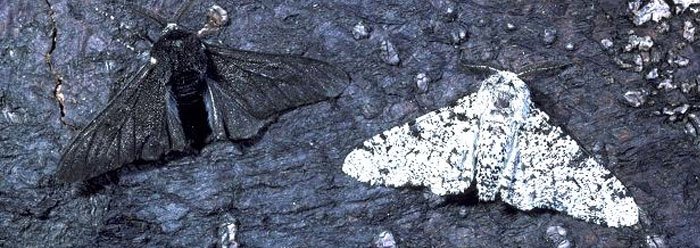
Only a few types of a particular bird species diverge after a small number colonises a new island. This mechanism is called
stabilizing selection
directional selection
the founder effect
disruptive selection

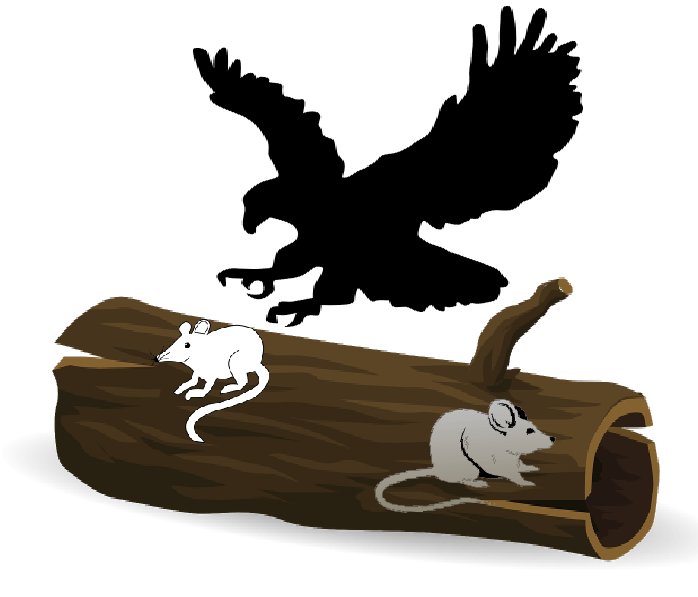
Over the years, white mice became extinct and darker mice survived. This is
stabilizing selection
directional selection
disruptive selection
due to exercise

What type of natural selection is this?
Disruptive Selection
Directional Selection
Stabilizing Selection
Natural Selection
What are the enzymes called when they are at high temperature or extreme pH?
denatured
Killed
inactive
normal

Enzymes function as catalysts because they
Increase the free energy of a chemical reaction
Lower the activation energy of a chemical reaction
Decrease the enthalpy of a chemical reaction
Supply the energy to start a chemical reaction
In the lock and key hypothesis, the lock is
The enzyme
The substrate
The enzyme-substrate complex
The enzyme-product complex
Cofactors for enzyme are
The protein substance
The inorganic substance
The protein and non-protein substances
The non-protein substance
How does an enzyme increase the rate of reaction?
By shifting the equilibrium point of reaction
By supplying the energy required to start the reaction
By increasing the rate of random collision of molecules
By bringing the reactant molecules to the correct orientation
Which class of enzyme catalyses the formation of bonds between two molecules using energy derived from the hydrolysis of ATP?
Oxidoreductases
Hydrolases
Ligases
Transferases
Transferases are enzymes that
Split chemical bonds by hydrolysis
Catalyse the transfer of an atom or group of atoms from one substrate to another
Rearrange atoms in a substrate
Form bonds with cleavage of ATP
Increasing the substrate concentration in an enzymatic reaction could overcome which of the following?
Allosteric inhibition
Insufficient cofactors
Competitive inhibition
Denaturation of the enzyme
Malonic acid could inhibit the action of succinic dehydrogenase on succinic acid because
Malonic acid could react with succinic acid
Malonic acid could bind at the active site of succinic dehydrogenase
Succinic acid could bind at the active site of succinic dehydrogenase
Succinic acid could not bind at the active site of succinic dehydrogenase

Which of the following is the subtrate?
A, only
E, only
A and E
B,C,D
Which of the following descriptions best describes an induced fit?
the active site alters shape such that it is ready to accept a substrate.
a substrate binds to an active site and alters the shape of the active site.
an active site alters the shape of the substrate such that it can adopt the necessary active conformation for binding.

Watch the animation and identify the hypothesis involved
Lock and Key hypothesis
Induced Fit hypothesis
Enzyme-Substrate hypothesis
NAD+ is the example of
metal ions
coenzyme
prosthetic group
Some people cannot digest milk products because they lack a specific enzyme. Which enzyme would be used to break down the lactose in milk?
catalase
maltase
lactase
amylase

The line on the graph labeled A represents the:
activation energy with an enzyme
activation energy without an enzyme
free energy of the reactants
change in entropy and enthalpy
Only a small amount of enzyme is needed for a large amount of substrate because _______
Enzymes do not change at the end of a reaction and as such can be reused
A small amount of enzyme can provide enough energy to continue the reaction
More enzymes are formed while reaction takes place
Enzymes act till completion of a reaction or not at all

State the function of X
Binding site of substrate
Binding site of cofactor
Binding site of reactant
Binding site of inhibitor
What happens during aerobic respiration?
Oxygen is produced.
Glucose is produced.
Lactic acid and oxygen are produced.
ATP, water and carbon dioxide are produced.
What product of fermentation causes muscle cramps?
C02
glucose
yeast
lactic acid
The process of fermentation happens ...
whenever a plant receives direct sunlight.
when there is too much glucose for aerobic respiration.
whenever the muscles need more acid.
when there isn’t enough oxygen for aerobic respiration.
Cytosol
glyceraldehyde3-phosphate (3G3P)
dihydroxyacetone phosphate (DHAP)
phosphoenolpyruvate (PEP)
1,3-bisphosphoglycerate (1,3 BPG)
Which enzyme adds a phosphate to fructose-6-phosphate?
PhosphofructoKinase
dihydroxyacetone phosphate (DHAP)
phosphoenolpyruvate (PEP)
Pyruvic Acid (pyruvate)
1,3-bisphosphoglycerate (1,3 BPG)
In which step, FADH2 produced?
Step 1: Condensation
Step 6: Oxidation
Step 2: Isomerization
Step 8: Oxidation
What is decarboxylation?
Removal of water
Removal of CO2
Addition of CO2
Addition of water
How many C atoms does acetyl CoA contain?
1
2
3
4
The products of the link reaction are
pyruvate and carbon dioxide
carbon dioxide and co-enzyme A
carbon dioxide, acetyl coA and NADH
NADH and carbon dioxide
Krebs Cycle takes place in the:
Cytoplasm
Mitochondrial Matrix
Ribsome
InterMembrane Space
The number of ATP molecules produced out of Krebs Cycle for 1 molecule of glucose is:
2
3
4
0
How many NADH molecules are produced by a molecule of glucose through the Krebs' Cycle for 1 molecule of glucose?
2
3
4
6
Hydrogen ions are pumped from the __________ to the ___________.
matrix; intermembrane space
intermembrane space; matrix
matrix; cytoplasm
intermembrane; cytoplasm
The final electron acceptor in electron transport chain is
NAD+
FAD
Oxygen
Water
How many ATP produced for each NADH that enter the electron transport chain from Kreb's cycle?
1
2
3
4
How many ATP produced for each FADH2 that enter the electron transport chain from Kreb's cycle?
1
2
3
4
Which of the following is an electron donor for Complex II in electron transport chain?
NAD+
FADH2
NADH
FAD
This process uses NADH and FADH2 to produce ATP
fermentation
glycolysis
krebs cycle
oxidative phosphorylation
How many ATP molecules are produced during complete breakdown of glucose in a liver cell?
34
36
38
39
6CO2 + 6H2O ® C6H12O6 + 6O2
This chemical equation describes:
Cellular respiration
Glycolysis
Photosynthesis
Photolysis
Electron Transport Chain
Where does dark reaction or light independent specifically occur?
thylakoid membrane
Stroma of the chloroplast
Grana
nuclear membrane
Where does light dependent specifically occur?
thylakoid membrane of the grana
Stroma of the chloroplast
mitochondria
nuclear membrane
What is NOT the product of light dependent reaction?
ATP
NADPH
H2O
O2
Which of the following statements does not describe Light independent reaction?
aka Calvin cycle
Produce ATP and NADPH
Produce glucose
Occur in the stroma of the chloroplast
Use ATP and NADPH for the reaction

Match the reaction center in PSI & PSII with its name (More Than ONE answer)
PSI is named P700
PSI is named P680
PSII is named P700
PSII is named P680

Cyclic photophosphorylation differs from non-cyclic photophosphorylation in that _____________ is not made from the process.
ATP
G3P
NADH
NADPH
5 carbon sugar that combines with CO2 in the Calvin Cycle
3-PGA
G3P
RuBP
Glucose



