wayground logo

Free Printable Worksheets

NEW

Font size

S
M
L
XL
Worksheets

U5 Quiz 2 Review

Total questions: 20

Worksheet time: 19mins

Name
Class
Date
1.
What is the molar mass of table salt (NaCl)?
a)
116.886 g/mol
b)
35.453 g/mol
c)
22.990 g/mol
d)
58.443 g/mol
2.
What is the mass of one mole of aluminum?
a)
27 g
b)
13 g
c)
54 g
d)
14 g
3.
How many particles are in a mole?
a)
602
b)
602 million
c)
602 moles
d)
6.02 x 10²³
4.

Calculate the molar mass of Ba(C2H3O2)2

a)

255.3 g/mol

b)

237.3 g/mol

c)

228.3 g/mol

d)

196.3 g/mol

5.

Calculate the molar mass of NH4NO2

a)

50 g/mol

b)

60 g/mol

c)

64 g/mol

d)

78 g/mol

6.
Which would have more atoms?
a)
1 mole of Li
b)
1 mole of Au
c)
1 mole of Si
d)
None, all are equal
7.
What is the percent by mass of oxygen in MgO?
a)
20%
b)
40%
c)
50%
d)
60%
8.

What percentage of the total atomic mass of carbon monoxide (CO) is composed of carbon?

a)

29%

b)

43%

c)

57%

d)

73%

9.
Always starts with a Hydrocarbon that reacts with oxygen and produces carbon dioxide and water. 
a)
Decomposition
b)
Synthesis
c)
Combustion
d)
Single Replacement
10.
One reactant into several products.
a)
Decomposition
b)
Synthesis
c)
Combustion
d)
Single Replacement
11.
One element replaces another in a compound.
a)
Synthesis
b)
Combustion
c)
Single Replacement
d)
Double Replacement
12.
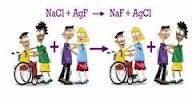
This pictures simulates what type of reaction?
a)
Synthesis
b)
Decomposition
c)
Single Replacement
d)
Double Replacement
13.

Ca(OH)2 --> CaO + H2O

What type reaction is this?

a)

Synthesis

b)

Double Replacement

c)

Decomposition

d)

Combustion

14.

The mass of one mole of an element is equal to

a)

its atomic number from the periodic table, but in amus.

b)

its atomic mass from the periodic table, but in amus.

c)

its atomic mass from the periodic table, but in grams.

d)

its atomic number from the periodic table, but in grams.

15.

Shivani measures out 6.0 moles of epsom salt (MgSO4) to put in her bath. How many grams of MgSO4 went in the bath?

a)

3.6 x 1024 g

b)

720 g

c)

0.050 g

d)

340 g

16.

Identify the reaction type:

C2H6 + O2 --> CO2 + H2O

a)

Double displacement

b)

Synthesis

c)

Acid base

d)

Combustion

17.

Identify the reaction type for the following equation:

K + F2 --> KF

a)

Double displacement

b)

Single Replacement

c)

Synthesis

d)

Decomposition

18.

Identify the type of reaction:

ZnCl2 + Mg --> Zn + MgCl2

a)

Precipitate

b)

Single Replacement

c)

Double Displacement

d)

Decomposition

19.

Identify the reaction type:

NaCl + KOH --> KCl + NaOH

a)

Double displacement

b)

Combustion

c)

Redox

d)

Precipitate

20.
What is the type of reaction shown at the top?
a)
Synthesis
b)
Decomposition
c)
Single Replacement
d)
Double Replacement