wayground logo

Free Printable Worksheets

Font size

S
M
L
XL
Worksheets

Review Biology W10 - Virus and Bacteria

Total questions: 56

Worksheet time: 3hrs 48mins

Name
Class
Date
1.
Which of the following is not true of bacteria? 
a)
they are prokaryotes
b)
they are multi-celled
c)
found pretty much everywhere
d)
they are on you right now! 
2.
Which of the following is the correct shape for bacteria imaged here? 
a)
bacillus
b)
coccus
c)
sprial
3.
What is the shape of this bacteria? 
a)
bacillus
b)
coccus
c)
spiral
4.
TRUE or FALSE: Bacteria are not alive. 
a)
TRUE
b)
FALSE
5.
TRUE or FALSE: Viruses can be killed with an antibiotic. 
a)
TRUE
b)
FALSE
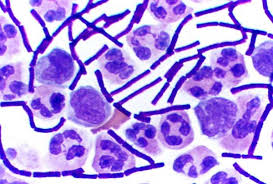
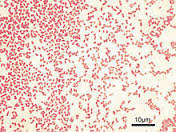
6.
Bacteria undergo which type of reproduction? 
a)
asexual
b)
sexual
7.
Pathogens are... 
a)
good bacteria
b)
bad bacteria that gets you sick 
8.
Is all bacteria bad? 
a)
No, most is good or harmless
b)
Yes, most will get you sick
c)
Most bacteria is actually not very well known. 
9.
What is a virus? 
a)
a tiny packet of genetic material in a protein coat
b)
a cell with a flagella
c)
a cell with a nucleus 
10.
Compared to bacteria, viruses are much...
a)
smaller. 
b)
larger. 
c)
the same. 
11.
Anything living or nonliving that can cause a disease is known as a?
a)
Antibiotic
b)
Foe
c)
Pathogen
12.
A substance that is used to PREVENT viral diseases is called?
a)
Vaccine
b)
Neosporin
c)
Hydrogen Peroxide
13.
What does a VIRUS need to replicate?
a)
Host Cell
b)
Pathogen
c)
Computer
14.
Which of the following diseases is NOT caused by a VIRUS?
a)
Measles
b)
Polio
c)
Chicken Pox
d)
Strep throat
15.
One of the reasons that viruses are nonliving is that they...
a)
Cannot reproduce by themselves
b)
Have no DNA or RNA
c)
overproduce too quickley to be attacked
16.
All viruses contain-
a)
nucleic acids
b)
ribosomes
c)
mitochondria
d)
cytoplasm
17.

What part of a virus houses the genetic material (DNA/RNA)?

a)

tail

b)

nucleus

c)

capsid

d)

lipid

18.
What is the capsid made from?
a)
proteins
b)
lipids
c)
carbohydrates
d)
nucleic acids
19.
A(n) _____ is a virus that enters a bacterial cell.
a)
endospore
b)
decomposer
c)
plasmid
d)
bacteriophage
20.
Which part of the virus contains genetic material?
a)
8
b)
4
c)
1
d)
3
21.

Which of these are viruses?

a)
b)
c)
d)
22.

Which of these are bacteria?

a)
b)
c)
d)
23.

The first virus ever discovered was the ____________ virus. It was discovered by ___________.

a)

Tobacco mosaic / Wendell Stanley

b)

HIV / Theodore Schwann

c)

Polio / Leeuwenhoek

d)

Influenza / Alexander Fleming

24.

The virus shown is best described as:

a)

bacteriophage

b)

enveloped

c)

rod / helical

d)

polyhedral

25.

The virus shown is best described as:

a)

bacteriophage

b)

enveloped

c)

rod / helical

d)

polyhedral

26.

The virus shown is best described as:

a)

bacteriophage

b)

enveloped

c)

rod / helical

d)

polyhedral

27.

The viral reproductive Process shown in the diagram is called:

a)

The Lysogenic cycle

b)

Binary Fission

c)

The Lytic Cycle

d)

Conjugation

28.

Which of the following best explains what is happening in step 3?

a)

The host cell is lysing, releasing many new viruses into the environment.

b)

The Virus has attached to the host cell.

c)

The Host cell is assembling the viral parts into new viruses.

d)

The virus is injecting its genetic material into the host cell.

e)

The Host cell is being forced to replicate the viral DNA and to produce the viral proteins.

29.

Observe the diagram of a viral reproduction process.

This process is called:

a)

Binary fission

b)

Lysogenic cycle

c)

Lytic cycle

d)

Transformation

30.

An individual is infected with a virus but the symptoms of illness do not show up for several months. Their immune system responds and their symptoms go away but continue to recur again and again throughout their entire life.

Based on the information above, is this a Lysogenic virus or Lytic virus?

a)

Lysogenic virus

b)

Lytic virus

31.

Which of the following are NOT diseases caused by a virus?

a)

Polio and Hepatitis

b)

The common cold and the flu

c)

Tetanus and Tuberculosis

d)

AIDS and Ebola

32.
The three main shapes of bacteria are all of the following EXCEPT
a)
rod shaped (bacilli)
b)
spherical (cocci)
c)
octagon (octilli)
d)
spiral (spirilla)
33.
Bacteria reproduce through what method? (be as specific as possible)
a)
asexual reproduction
b)
sexual reproduction
c)
binary fission 
d)
conjugation
34.
A thick walled structure that helps protect the bacteria is called the 
a)
cell wall 
b)
nucleoid
c)
flagella
d)
endospore
35.
Most known prokaryotes are 
a)
Arachaea
b)
Bacteria
c)
Protists
d)
Fungi
36.
Bacteria are prokaryotes which means they
a)
have a nucleus on their capsule
b)
do not contain a nucleus
c)
can live in environments with and without oxygen
37.
Which of the following may be found in a bacteria cell?
a)
nucleus
b)
ribosomes
c)
mitochondria
d)
golgi bodies
38.
Bacteria reproduce by binary fission.
a)
true
b)
false
39.
The process by which bacteria use chemicals to produce food.
a)
photosynthesis
b)
autotroph
c)
chemosynthesis
d)
heterotroph
40.
What type of organism is found in extreme environments
a)
Hot Springs
b)
Bacteria
c)
Viruses
d)
Archaea
41.

A ________________________ requires oxygen to live.

a)

Obligate Aerobe

b)

Obligate Anaerobe

c)

Facultative Anaerobe

42.

Coccus shaped bacteria are

a)

rod-shaped

b)

spherical

c)

spiral

43.

A ________________________________ cannot live with oxygen.

a)

Obligate Aerobe

b)

Obligate Anaerobe

c)

Facultative Anaerobe

44.

A ________________________ does not need oxygen to survive but won't be killed by it.

a)

Obligate Aerobe

b)

Obligate Anaerobe

c)

Facultative Anaerobe

45.

During conjugation, 2 bacteria are held together by their

a)

Flaglla

b)

Pili

46.

Endospores are really easy to destroy.

a)

True

b)

False

47.
Name this bacteria shape
a)
coccus
b)
spirillum
c)
bacillus
48.
Name this bacteria shape
a)
bacillus
b)
coccus
c)
spirillum
49.
Name this bacteria shape
a)
coccus
b)
bacillus
c)
spirillum
50.

Eubacteria cell walls are made out of ______.

a)

Chitin

b)

Cellulose

c)

Peptidoglycan

d)

Glucose

51.
Which part of a bacteria cell wall "holds" the stain? 
a)
plasma membrane
b)
fimbriae
c)
peptidoglycan
d)
pilus
52.
These bacteria are
a)
gram positive
b)
gram negative
c)
nonliving
d)
viral
53.
These bacteria are
a)
gram positive and negative
b)
gram positive
c)
gram negative
d)
viral
54.
?
a)
streptococcus
b)
staphlococcus
c)
diplococcus
d)
none of these
55.
?
a)
coccus
b)
bacillus
c)
spirilla
d)
none of these
56.
___ must have oxygen to survive. 
a)
obligate aerobes
b)
obligate anaerobes
c)
facultative aerobes
d)
high energy bacteria