wayground logo

Free Printable Worksheets

NEW

Font size

S
M
L
XL
Worksheets

Biology Report QUIZIZZ

Total questions: 65

Worksheet time: 51mins

Name
Class
Date
1.

Missy Marlowe was an athlete with what syndrome

a)

Angelman's

b)

DMD

c)

color blindness

d)

Turner's

2.

Klinefelter syndrome affects

a)

the Y chromosome

b)

Chromosome # 21

c)

X chromosome

d)

Blood clotting

3.

Huntington's Affects the

a)

Kidneys

b)

Brain

c)

Skin

d)

Muscles

4.

Cystic Fibrosis affects chromosome #

a)

21

b)

7

c)

5

d)

23

5.

What syndrome affects Chromosome # 15?

a)

Cats Cry

b)

Angelman's

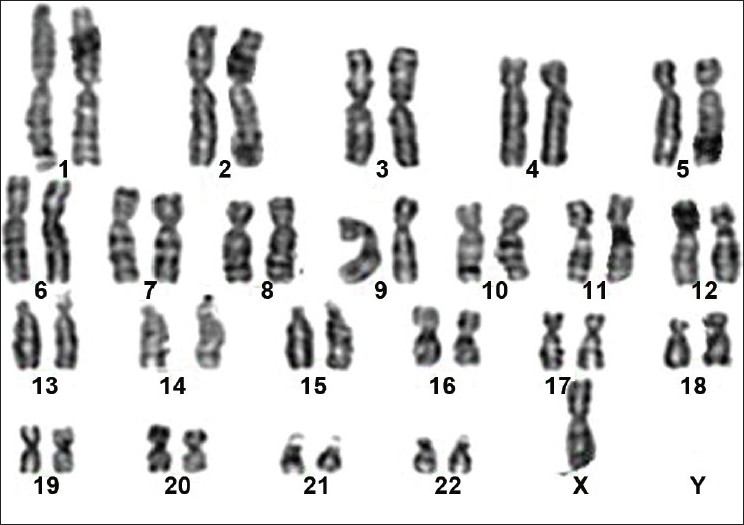
c)

DMD

d)

Color Blindness

6.

Which affects more men than women

a)

Color Blindness

b)

Angelman's

c)

DMD

d)

Down's

7.

This is a blood clotting disorder that is treatable with Vit K and other meds?

a)

Klinefelters

b)

DMD

c)

Hemophilia

d)

Downs

8.

This affects Chromosome # 21 ?

a)

DMD

b)

Klinefelters

c)

Down's

d)

Huntingtons

9.

This affects the muscles of humans

a)

Down's

b)

DMD

c)

Huntingtons

d)

Angelman's

10.

Which disorder has unusually HAPPY people, unusually happy behavior?

a)

DMD

b)

Huntingtons

c)

Angelmans

d)

Cats Cry

11.

Which disorder does the children never learn to talk but makes an unusual sounds?

a)

Angelman's

b)

Klinefelters

c)

Cats Cry

d)

DMD

12.

This disorder comes in 4 types and is on Chromosome # 6

a)

Cats Cry

b)

DMD

c)

Diabetes

d)

Hemophilia

13.

This disorder is a duplicate of a chromosome

a)

Cats Cry

b)

DMD

c)

Ivy's Autononosomal disorder

d)

Summers

14.

What is Werewolf Syndrome

a)

Excessive sounds like crys

b)

Excessive Happiness

c)

Excessive body hair

d)

Excessive chromosomes

15.

Which disorder is known for Emotional-explosive temper and antisocial behavior?

a)

XXY

b)

DMD

c)

Trisomy 18

d)

XYY

16.

WHich Disorder has 3 copies of a chromosome?

a)

DMD

b)

18

c)

Diabetes

d)

Hemophilia

17.

Chris Burke is an actor with what disorder

a)

DMD

b)

Down's

c)

18

d)

Klinefelter's

18.
What is a genome?
a)
The complete haploid amount of genetic material present in a cell or organism
b)
A garden ornament 
c)
The sum of all human material.
d)
A totally unique set of genetic material not shared with anything else
19.
What is DNA sequencing?
a)
The total of genes carried by an individual or cell
b)
Coding genes in order to identify single nucleotide polymorphisms
c)
Deciphering the functions of various parts of the human genome
d)
The process of identifying the order of the bases in DNA
20.
Whether a human will be a male or a female is determined by
a)
sex chromosomes in the egg cell.
b)
sex chromosomes in the sperm cell.
c)
autosomes in the egg cell.
d)
autosomes in the sperm cell.
21.
A chromosome that is not a sex chromosome is known as a(an)
a)
autosome.
b)
karyotype.
c)
pedigree.
d)
chromatid.
22.
An individual with blood type O can receive blood from an individual with type
a)
A
b)
B
c)
AB
d)
O
23.
The failure of chromosomes to separate during gamete formation in called
a)
nondisjunction
b)
alleles
c)
point mutation
d)
cloning
24.
In a pedigree chart, how are females illustrated
a)
circles
b)
squares
c)
triangles
d)
lines
25.
In a pedigree chart, how are characteristics or traits illustrated
a)
circles
b)
squares
c)
shading
d)
lines
26.
In humans, what would the blood type of a child be if she inherited type A from Dad and type B from Mom?
a)
O
b)
A
c)
B
d)
AB
27.
Cystic fibrosis is caused by
a)
a small change in the DNA sequence of one gene.
b)
nondisjunction during meiosis in the father.
c)
crossing over between X and Y chromosomes.
d)
the combined effects of several genes.
28.
The X and Y chromosomes are called the
a)
extra chromosomes.
b)
phenotypes.
c)
sex chromosomes.
d)
All of the answers are correct.
29.
What is the gender of the individual whose karyotype is seen in the image?
a)
Male
b)
Female
30.
Restriction enzymes are used to ___ DNA.
a)
glue together
b)
cut
c)
reconnect
d)
exchange
31.
Based on these results whose blood was found in the blood stain at the crime scene?
a)
Bob
b)
Sue
c)
John
d)
Lisa
32.
Which two bear species are most closely related?
a)
Bear 1 and Bear 2
b)
Bear 1 and Bear 3
c)
Bear 2 and Bear 3
d)
There’s no way to tell
33.
The process to the right is best used for which of the following?
a)
Cloning humans
b)
Creating antibiotics
c)
Creating human insulin
d)
Causing cells to divide
34.
Which suspect is linked to the crime scene by this DNA analysis
a)
Suspect A
b)
Suspect C
c)
Suspect D
d)
Suspect B
35.
A way to cure genetic disorders by inserting normal genes into cells with mutant genes.
a)
gene therapy
b)
genomics
c)
life enhancing drugs
d)
magic
36.
The main goal of the Human Genome Project was to 
a)
identify the unique parts of each person's DNA
b)
identify genes responsible for human disease
c)
determine the entire sequence of human DNA.
d)
identify the structure of the DNA molecule
37.

Which chromosome in Human Genome has the fewest genes?

a)

Chromosome X

b)

Chromosome Y

c)

Autosome 13

d)

Chromosome 1

38.

A chart that traces the inheritance of a trait in a family is called a(n)...

a)

Pedigree

b)

Karyotype

c)

Genome

d)

Autosome

39.

A normal human diploid zygote contains...

a)

23 Chromosomes

b)

46 Chromosomes

c)

44 Chromosomes

d)

XXY Chromosomes

40.

An example of a trait that is determined by multiple alleles is...

a)

Huntington's Disease

b)

ABO Blood Groups

c)

Down Syndrome

d)

Hemophilia

41.

Which parental pair could produce females with colorblindness (Remember colorblindness is a sex-linked chromosomal disorder)?

a)

Homozygous normal-vision mother; Father with colorblindness

b)

Mother with colorblindness; Father with normal-vision

c)

Heterozygous normal-vision mother; Father with normal-vision

d)

Heterozygous normal-vision mother; Father with colorblindness

42.

A common genetic disorder characterized by bent and twisted red blood cells is...

a)

Cystic Fibrosis

b)

Hemophilia

c)

Sickle Cell Disease

d)

Muscular Dystrophy

43.

Autosomal disorders can be caused by...

a)

Recessive Alleles

b)

Dominant Alleles

c)

Codominant Alleles

d)

All of These

44.

A picture of chromosomes arranged in groups is known as a(n)...

a)

Generation

b)

Pedigree

c)

Karyotype

d)

Chromoscopy

45.
Gel electrophoresis enables scientists to
a)
separate DNA fragments.
b)
combine DNA fragments.
c)
count the genes in DNA.
d)
insert DNA in cells.
46.
How many chromosomes are found in each diploid cell of a person with Down syndrome?
a)
47
b)
45
c)
22
d)
24
47.
Sex-linked recessive traits occur
a)
more often in males
b)
because of genes on chromosome 21.
c)
more often in females
d)
because of genes on autosomes
48.
A mutation that changes only a few bases in one gene
a)
will not have a significant effect on phenotype.
b)
can have a significant effect on phenotype.
c)
can have a significant effect only in males.
d)
can have a significant effect only on the environment.
49.

Which best describes a mutation?

a)

An error in the DNA sequence

b)

A positive change in the DNA sequence

c)

Passing down DNA to offspring

d)

Catching a disease and changing your DNA

50.

Looking at the picture of the AUTOSOMAL DOMINATE INHERITANCE. Which best describes the Male parent?

a)

Hh - Heterogeneous

b)

Hh - Homogeneous Recessive

c)

HH Homogeneous Dominant

d)

hh Homogeneous Recessive

51.

Describe an individual with the karyotype shown.

a)

a male with Down syndrome

b)

a female with Down syndrome

52.

Describe an individual with the karyotype shown.

a)

a female with Turner's syndrome

b)

a male with Klinefelter's syndrome

53.

How many generations does this pedigree show?

a)

1

b)

2

c)

3

d)

4

54.

In a pedigree, shading represents:

a)

The person having the trait being studied

b)

The person NOT having the trait being studied

55.

Gel electrophoresis is a(an):

a)

process in which epigenetic marks affect gene expression by altering chromatin structure

b)

enzyme that cuts DNA at a specific sequence of nucleotides

c)

procedure used to separate and analyze DNA fragments by placing a mixture of DNA fragments at one end of a porous gel and applying an electrical voltage to the gel

56.

Restriction enzyme is a(an):

a)

process in which epigenetic marks affect gene expression by altering chromatin structure

b)

enzyme that cuts DNA at a specific sequence of nucleotides

c)

procedure used to separate and analyze DNA fragments by placing a mixture of DNA fragments at one end of a porous gel and applying an electrical voltage to the gel

57.

Which of the following best describes the cause of cystic fibrosis?

a)

a mutated blood clotting protein

b)

a mutated transport protein

c)

an extra 21st chromosome

d)

an extra 13th chromosome

58.

Which of the following cause frameshift mutations?

a)

insertions and deletions

b)

translocations and nondisjunctions

c)

duplicaitons and deletions

d)

inversions and substitutions

59.

Which of the following is NOT caused by a gene mutation?

a)

Turner's syndrome

b)

Sickle cell anemia

c)

Cystic fibrosis

d)

Hemophilia

60.
What are the two ways that genetic disorders can be inherited?
a)
Through blood transfusions and meiosis.
b)
Mutations in DNA and changes in structure or number of chromosomes.
c)
Missing chromosomes or premature egg splitting.
d)
Unhealthy environments and heredity.
61.
a)
This karyotype shows Trisomy 21
b)
This karyotype has no abnormality
c)
This karyotype is missing a sex chromosome (monosomy x)
d)
This karyotype is from a gamete
62.
What disease is characterized by abnormally shaped red blood cells?
a)
hemophilia
b)
sickle cell anemia
c)
phenylketonuria
d)
Huntington's 
63.
Which genetic disorder is sex-linked?
a)
Huntington's
b)
cystic fibrosis
c)
red-green colorblindness
d)
sickle cell anemia
64.
True or False.  A clone has exactly the same genes as the organism from which it was produced.
a)
True
b)
False
65.
True or False.  The mission Human Genome Project is to identify the DNA code of every gene in each of our chromosomes.
a)
True
b)
False