wayground logo

Free Printable Worksheets

NEW

Font size

S
M
L
XL
Worksheets

Gene Expression and Gene Regulation

Total questions: 60

Worksheet time: 56mins

Name
Class
Date
1.
How can a person's muscle cells have the same exact DNA sequences as their nerve cells even though the look and perform completely different?
a)
The two different cells become mutated
b)
The proteins expressed in each cell are different
c)
They actually have different DNA in the two types of cells.
d)
The genome of the different cells changes
2.
The lac operon genes only become expressed if:
a)
lactose binds to the repressor
b)
glucose binds to the repressor
c)
lactose binds to the operator
d)
the repressor binds to the operator
3.
In the lac operon model the genes within the operon will be expressed if:
a)
lactose is absent in the cell
b)
glucose is present in the cell
c)
lactose is present in the cell
4.
If an mRNA molecule has introns and exons in it, where is it?
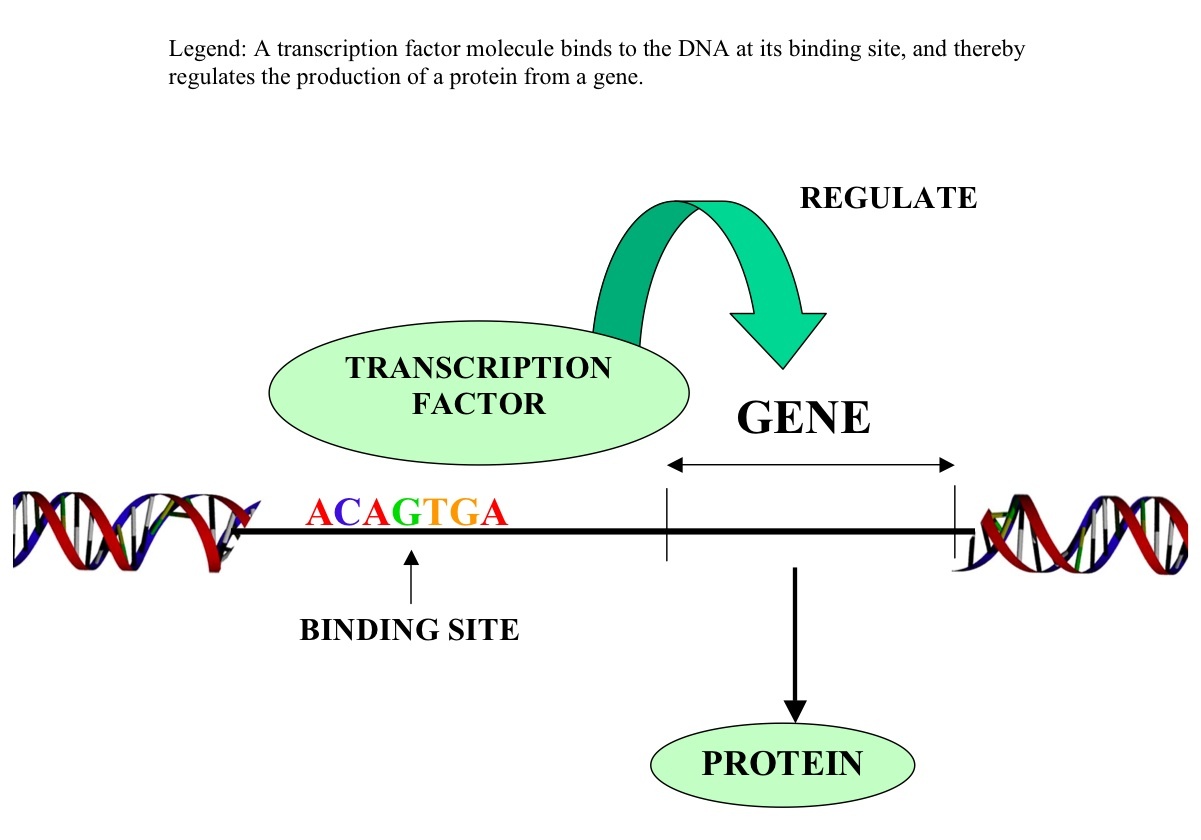
a)
At a ribosome
b)
In the nucleus
c)
In a prokaryotic cell
d)
could be in the nucleus or the ribosome
5.
What structure of this molecule binds with the mRNA molecule?
a)
Amino Acid
b)
tRNA
c)
Anticodon
d)
Codon
6.
The "on/off" switch for an operon is called the
a)
promoter
b)
repressor
c)
operator
d)
gene
7.
Which sequence of complementary DNA bases would pair with this partial strand
ATG TGA CAG?
a)
ATG TGA CAG
b)
TAC ACT GTC
c)
GTA AGT GAC
d)
CAT TCA CTG
8.
In a molecule of double-stranded DNA, the amount of adenine present is always equal to the amount of _________.
a)
cytosine
b)
guanine
c)
thymine
d)
uracil
9.
What determines the code, or information, of a DNA molecule?
a)
the shape (structure) of the nitrogen bases
b)
the order (sequence) of the nitrogen bases
c)
the color of the nitrogen bases
d)
the frequency (number) of nitrogen bases
10.

A process in which DNA has the unique ability to make an exact copy of itself.

a)

Replication

b)

Translation

c)

Transcription

d)

Protein Synthesis

11.
What are the three components of a nucleotide?
a)
sugar, hydrogen, nitrogen base
b)
sugar, oxygen, nitrogen base
c)
sugar, phosphate, nitrogen base
d)
sugar, phosphate, protein
12.

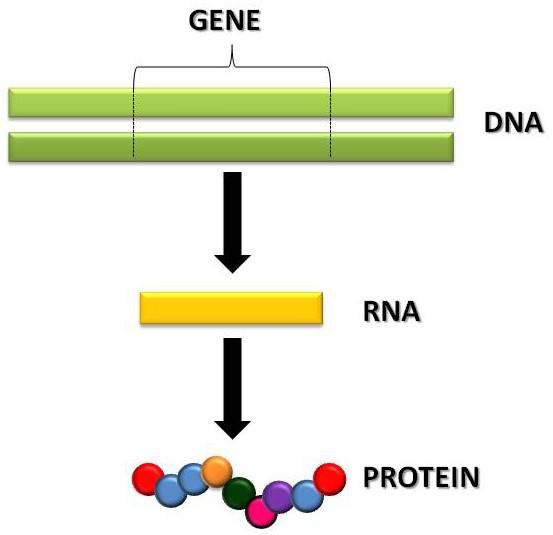
What is the correct order to make a protein?

a)

Protein, DNA, RNA

b)

RNA, DNA, Protein

c)

DNA, RNA, Protein

d)

Protein, RNA, DNA

13.

RNA contains which sugar?

a)

deoxyribose

b)

Ribose

c)

glucose

d)

fructose

14.

RNA has what base that is instead of thymine?

a)

guanine

b)

adenine

c)

thymine

d)

uracil

15.
How would the DNA sequence GCTATA be transcribed to mRNA?
a)
GCUAUA
b)
CGATAT
c)
CGAUAU
d)
GCUTUT
16.

What is Transcription?

a)

The making DNA segment.from mRNA.

b)

The making of an RNA strand into a protein.

c)

The making of an mRNA strand from the DNA template.

17.
Amino acids are the building blocks of... 
a)
DNA
b)
RNA
c)
Atoms
d)
Proteins
18.
Cytosine always pairs with
a)
Adenine
b)
Thymine
c)
Uracil
d)
Guanine
19.

Which RNA type is the result of transcription?

a)

tRNA

b)

Non-coding RNA

c)

rRNA

d)

mRNA

20.

Which of the following is correct?

a)

Nucleotide triplets code a single amino acid.

b)

Each amino acid codes a nucleotide.

c)

Each nucleotide codes an amino acid.

d)

Amino acid triplets code a single nucleotide.

21.

Translation is a process where:

a)

a polypeptide sequence is produced from a sequence of rRNA codons.

b)

a polypeptide sequence is produced from a sequence of tRNA codons.

c)

a polypeptide sequence is produced from a sequence of mRNA codons.

d)

a DNA nucleotide sequence is used to produce mRNA codon sequence.

22.
Which of these processes begin with an mRNA molecule?
a)
DNA Replication
b)
Transcription
c)
Translation
d)
None of them
23.

What process is steps 1-3 referring to?

a)

DNA Replication

b)

Transcription

c)

Translation

d)

Nucleus

24.

What is 11. pointing to?

a)

Cytoplasm

b)

Ribosome

c)

mRNA

d)

Nucleus

25.

What is 2. pointing to?

a)

Cytoplasm

b)

Ribosome

c)

mRNA

d)

Nucleus

26.

What process is step 12 referring to?

a)

DNA Replication

b)

Transcription

c)

Translation

d)

Nucleus

27.

What does tRNA carry to the ribosome?

a)

Nucleus

b)

Codons

c)

Amino Acids

d)

None of the Above

28.

Where does TRANSCRIPTION occur?

a)

Nucleus

b)

Ribosome

c)

Cytoplasm

d)

Mitochondria

29.

Why must transcription occur where DNA can be found?

a)

because DNA can't leave

b)

because ribosomes are in the nucleus

c)

because DNA polymerase is found there

d)

because helicase unzips the DNA

30.

Which of the following is a codon?

a)
b)

ATG

c)

AUG

d)

AUT

31.

How many nucleotides equal 1 amino acid?

a)

1

b)

2

c)

3

d)

4

32.

On which molecule can an anticodon be found?

a)

mRNA

b)

DNA

c)

tRNA

d)

rRNA

33.

A polypeptide is a sequence of ____________________ held together by a ______________ bond.

a)

amino acids; peptide

b)

fatty acids; ionic

c)

proteins; hydrogen

d)

fatty acids; covalent

34.

How do you know when to begin translating a strand of mRNA?

a)

look for AUG

b)

start at the beginning

c)

look for ATG

d)

when the teacher says so!!!

35.

TRANSLATE this RNA sequence: AUGCAAUGA

a)

Met-Glu-Stop

b)

Met-His-Stop

c)

Thr-Glu-Stop

d)

Thr-Pro-Stop

36.
Does the order of amino acids in a protein matter?
a)
YES!
b)
NO!
37.
ATTTGAGCC- Original
ATTGAGCC - Mutated
The example above is an example of a 
a)
Insertion- Frameshift
b)
Deletion- Substitution
c)
Deletion -Frameshift
d)
All of the above
38.
Which process?
a)
mutation
b)
transcription
c)
respiration
d)
translation
39.

A mutagen is

a)

a gene that has an altered mutation

b)

something that causes a mutation

c)

any change in a nucleotide sequence of DNA

d)

the portion of the chromosome altered by the mutation

40.

Any change in the nucleotide sequence of a gene is called

a)

a mutation

b)

a codon

c)

a translation

d)

an anticodon

41.

What mutation has occurred here?

T-G-A-C-C-A

T-G-A-G-C-A

a)

Substitution

b)

Deletion

c)

Insertion

d)

Frameshift

42.

Why are insertion and deletion (frameshift) mutations so harmful?

a)

They change all of the codons from the mutation on down the line, which changes the amino acid sequence

b)

They insert things that an organism doesn't need.

c)

They often delete things that organisms need.

d)

Insertion and deletions are not any more harmful than substitution mutations.

43.

Mutations are__________

a)

Harmful

b)

Harmful or beneficial

c)

Neutral

d)

Harmful, neutral, or beneficial

44.
What is it called when body cells grow uncontrollably
a)
Spinal Stenosis
b)
Anemia
c)
Cancer
45.
Most gene regulation happens at which step along the way?
a)
translation
b)
transcription
c)
signal transduction
d)
DNA replication
46.
A protein that binds to the operator and blocks the RNA polymerase
a)
regulator
b)
repressor
c)
activator
d)
corepressor
47.
In eukaryotes, proteins that help the RNA polymerase bind to the regulatory region for transcription are called ____________.
a)
transcription factors
b)
topoisomerase
c)
regulatory genes
d)
activators
48.
What is the name given to part of a DNA molecule that codes for a protein?
a)
Glucose
b)
Chromosome
c)
Gene
d)
Phosphate
49.
What does the lactose do to the Operon? 
a)
Blocks transcription because of the energy it provides
b)
Allows the repressor to be unbind from the Operator.
c)
The lactose binds the lactose and stops transcription
d)
Allows for the transcription to speed
50.
Which of the following statements regarding mRNA is correct?
a)
Exons are included in the protein sequence, while introns are left out
b)
Introns are included in the protein sequence, while exons are left out
c)
Exons and Introns can both be included or left out depending on the protein
d)
Exons and Introns are both part of the mRNA sequence, but only exons are part of the rRNA and tRNA
51.

Operons are found in the cells of which of the following types of organisms?

a)

prokaryotes

b)

eukaryotes

c)

animals only

d)

viruses

52.

What is the name of the stretch of DNA where RNA polymerase binds?

a)

operator

b)

promoter

c)

enhancer

d)

regulatory gene

53.

The "on/off" switch for an operon is called the

a)

promoter

b)

enhancer

c)

operator

d)

gene

54.

In order for a gene to be expressed, ___ must bind to the gene's ___, a specific sequence of nucleotides at one end of the gene, thus initiating transcription.

a)

DNA polymerase, promotor

b)

DNA polymerase, operator

c)

RNA polymerase, promotor

d)

RNA polymerase, operator

55.

Genes can be shut off (not expressed) when a ___ binds to the ____.

a)

activator, operator

b)

repressor, operator

c)

corepressor, operator

d)

repressor, promotor

56.

What is the poly A tail?

a)

 a long chain of cytosine nucleotides

b)

 a long chain of thymie nucleotides

c)

 a long chain of adenine nucleotides

d)

 a long chain of guamine nucleotides

57.

RNA processing includes:

a)

mRNA 5′- and 3′-end processing

b)

mRNA can always perform its function

c)

mRNA 5′- and 3′-end processing, intron splicing

d)

intron splicing

58.
The two strands of a DNA molecule are held together by ________ bonds between their base pairs.
a)
covalent
b)
hydrogen
c)
ionic
d)
peptide
59.
What does rRNA do?
a)
provides information from DNA to ribosomes
b)
transfers amino acids to the ribosomes
c)
makes up ribosomes
d)
builds proteins
60.

All the genes in both a prokaryotic cell and a eukaryotic cell are expressed at the same time.

a)

True

b)

False