
 Worksheets
Unit 10 - Body Systems TEST Review
Total questions: 52
Worksheet time: 43mins

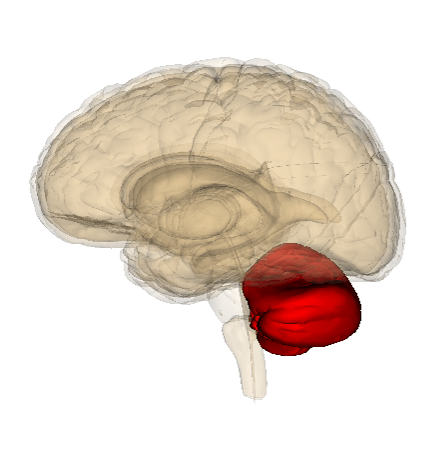


What lobe is bright pink in this picture?
Parietal
Frontal
Occipital
Temporal

What structure is GREY in this picture?
Cerebrum
Cerebellum
Brainstem
Pons
When an individual has Atherosclerosis, it forms Plaque within the Arteries.
How does Atherosclerosis affect Blood Flow?
Arterial plaque clogs the arteries, limiting or stopping blood flow.
Arterial plaque changes the direction of blood flow, which forces oxygenated blood to the heart.
Arterial plaque changes the size of blood cells, which prevents blood from flowing in the arteries.
Arterial plaque clears the arteries, increasing blood flow.
Flexibility in blood vessels allows the vessels to stretch and move based on changes in Blood Volume. Conditions like Hypertension can cause the arteries to harden and lose their Flexibility.
How would the hardening of the arteries most likely affect Blood Flow?
The hardening of the arteries would likely cause blood flow to remain constant.
The hardening of the arteries would likely increase blood flow.
The hardening of the arteries would likely cause blood flow to stop completely.
The hardening of the arteries would likely restrict blood flow.

Arteriosclerosis is a disease which clogs arteries in the human body. In arteriosclerosis, artery walls become thick. Fatty deposits build up on inner walls of arteries. This condition reduces the ability of arteries to perform their function. The diagram above shows a comparison between a healthy artery and one with arteriosclerosis. Which of the following explains how Atherosclerosis affects the Body?
Decreases the circulation of Blood to tissues
Assembles Amino Acids into Proteins
Replaces damaged Cells with new Cells
Breaks down Food particles into Molecules
Blood Volume and Blood Pressure are related.
What happens to Blood Pressure and the Heart Rate when there's an increase in Blood Volume?
Increase in Volume leads to a Decrease in HR and BP.
Increase in Volume leads to a Decrease in HR and an Increase in BP.
Increase in Volume leads to a Increase in HR and an Increase in BP.
Increase in Volume leads to a Increase in HR and BP.
A Doctor prescribes a Blood Thinner, like Aspirin, to a patient with a Heart Condition.
How will this Blood Thinner affect the Flow and Viscosity of Blood?
The Blood Thinner will Increase the Flow and Decrease the Viscosity
The Blood Thinner will Decrease the Flow and Increase the Viscosity
The Blood Thinner will Increase the Flow and the Viscosity
The Blood Thinner will Decrease the Flow and the Viscosity
If the Arteries are Narrow and Hard, the Blood Pressure is likely to be _____ than Normal
Higher
Lower
If there is an Increase in Blood Viscosity, then there will be a ________ in Resistance flowing within the Blood Vessels.
Increase
Decrease
An Athlete comes in Dehydrated from the Field because his body lacks ALOT of Fluids.
How does Dehydration affect the Flow and Viscosity of Blood?
Dehydration will Increase the Flow and Decrease the Viscosity
Dehydration will Decrease the Flow and Increase the Viscosity
Dehydration will Increase the Flow and the Viscosity
Dehydration will Decrease the Flow and the Viscosity
Select ALL of the Following Factors that CAN affect Blood Flow.
Blood Pressure
Heart Rate
Respiratory Rate
Viscosity
Blood Sugar
Which of the following is not apart of your body’s first line of defense?
Skin
Mucus
Stomach Acid
Antibodies
Example of 3rd line of defense.
T cells and B cells reacting to pathogens
Phagocytes white blood cells engulfing pathogens
Stomach acid killing pathogens
Mucus catching pathogens

The diagram below shows a cell in the human body engulfing a bacterial cell.
The cell labeled X is most likely a
red blood cell
white blood cell
liver cell
nerve cell


Some examples of external defenses are...
Skin
Mucus
Inflammation
Saliva
Sweat
The purpose of introducing weakened microbes into the body of an organism is to stimulate the
production of living microbes that will protect the organism from future attacks
production of antigens that will prevent infections from occurring
immune system to react and prepare the organism to fight future invasions by these microbes
replication of genes that direct the synthesis of hormones that regulate the number of microbes
Name the process when a sperm meets and fuses with an ovum to form a zygote.
Fertilisation
Fusion
Conception
Implantation
After fertilisation, the zygote will divide to form ___________________
a baby
a foetus
an embryo
implantation
Name the process where the embryo implants onto the uterine lining of uterus.
Plantation
Implantation
Pregnancy
Development
Where is the place which the embryo begins to develop into foetus?
Fallopian tube
Uterus
Ovary
Uterine lining
Choose the correct sequence to show the development of the foetus.
Zygote > Feotus > Embryo > Baby
Zygote > Embryo > Foetus > Baby
Embryo > Zygote > Foetus > Baby
Embryo > Foetus > Zygote > Baby
What chromosomes make a girl?
XY
XX
XZ
YZ
How many trimesters are there during pregnancy?
1
2
3
4
What is attached to the umbilical cord; it supplies nutrients, oxygen, and waste between the parent and child?
placenta
wire
fallopian tube
uterus

