
 Worksheets
Periodic table and Compound Review
Total questions: 40
Worksheet time: 20mins
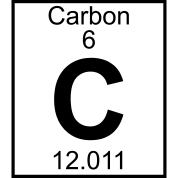
the positively charged subatomic particle contained in the nucleus of an atom
proton
neutron
electron
matter
a subatomic particle, contained in the nucleus of an atom, having the same mass as a proton but no electrical charge
proton
neutron
electron
matter
a negatively charged subatomic particle that orbits the nucleus of an atom
proton
neutron
electron
matter
What is the name of group number 1?
halogens
noble gases
alkali metals
alkaline earth metals
What is the name of group number 2?
transition metals
halogens
metaloids
alkaline earth metals
What group number are the halogens found?
18 (8A)
1
2
17 (7A)
Periodic law states that the elements are arranged according to their atomic ________ so that elements with similar chemical properties are in the same ________ and properties repeat periodically.
numbers, rows
masses, rows
masses, column
numbers, column
A grouping of elements based on similar chemical properties, arranged by columns in the periodic table; also known as a group
family
period
row
isotope
Metals (select all that apply)
are found on the right side of the periodic table.
are found on the left side of the periodic table.
are good conductors of heat and electricity.
are brittle.
are malleable and ductile.
Nonmetals (select all that apply)
are found on the right side of the periodic table.
are found on the left side of the periodic table.
are good conductors of heat and electricity.
are brittle.
can be solid, liquids, or gases at room temperature.

Which element is found in group 2, period 6?
Oxygen (O)
Barium (Ba)
Selenium (Se)
Carbon (C)
Which halogen is found in period 4?
Krypton (Kr)
Xenon (Xe)
Bromine (Br)
Iodine (I)

This could be the dot diagram of
Mg
Cl
C
O
What is the goal of the Lewis Dot Structure?
To determine the electron position.
To show the element's valence electrons & bonding capabilities.
To find the atomic mass of an element.
To search for the number of electrons in an individual atom.
How many valence electrons should Lithium have in its Lewis dot model?
1
2
3
4
How many valence electrons should Oxygen have in its Lewis dot model?
5
6
7
8
How many valence electrons should Magnesium have in its Lewis dot model?
1
2
3
4

This is a correct dot diagram for nitrogen (N)
true
false

This is a correct dot diagram for neon (Ne)
true
false
Which of these is correct?


Which of these is correct?


Why do all bonds form?
to fill the outermost energy level
so an atom can be unstable
so the number of protons and electrons can equal.
so they can gain neutrons.
An atom with 1 valence electron 'needs' a full shell, so it can either gain 7 electrons or lose 1. Which is more likely to occur?
nothing
gain 7
lose 1
How do covalent bonds form?
by sharing electrons between atoms
by donating or receiving electrons
What two types of atoms make a covalent bond?
2 nonmetals
2 metals
1 metal and 1 nonmetal`
How many valence electrons does Boron have?
1
2
3
4
When an atom loses an electron, it becomes a
positive ion
negative ion
Ionic bonds are between
metals and nonmetals
2 metals
2 nonmetals
Atoms are most stable when their outer shell is full or complete.
true
false
How are ionic bonds formed?
transfer of electrons
sharing of electrons
Electrons are involved in chemical reactions, not protons or neutrons.
true
false
Salt is an example of what?
ionic compound
covalent compound
Water is an example of what?
molecular compound (covalent compound)
ionic compound
Name the ionic compound, LiCl
lithium chlorine
lithium chloride
lithium chlorate
lithium monochloride
What is the formula for diphosphorus pentoxide?
P2O5
PO5
P5O2
Po2O5
What is the name for SiCl4?
silicon tetrachloride
silicon quadchloride
monosilicon tetrachloride
silicon chloride
What is the chemical formula of sulfur hexabromide?
SBr₆
S₆Br
S(VI)Br
SBr4

