
 Worksheets
Savvas Physical Science Unit 10 Forces and Motion Study Deck
Total questions: 83
Worksheet time: 2hrs 30mins

A group of students performed an investigation with toy cars. They applied a force on the toy cars and measured the time it took the cars to move through a 10-meter distance. The data from their investigation in shown.
What question were they most likely trying to answer?
Does the mass of a car affect the distance the car travels?
Does the distance the car travels affect the time?
Does the force on a car affect the change in motion?
Does the mass of a car affect the distance the car travels?

Shown is the graph of the motion of a car.
Which of the following best explains the motion of the car represented by section "D" of the graph?
The car is going faster than it was in section "B"
The car is stopped in section "D"
The car is moving on level ground in section "D"
The car is higher than it was in section "B"

A fifth grade class has a model car race. The students were divided into 4 groups. Each group built a model car for the race. Below are the results of the race.
Which car won the race?
Car 1
Car 2
Car 3
Car 4

The model shows forces acting on a box when it is sliding down the ramp.
What would most likely happen to the motion of the box if you poured oil on the ramp?
It will slow the box because the force of friction will be increased.
It will speed up the box because the force of friction will be increased.
It will slow the box because the force of friction will be reduced.
It will speed up the box because the force of friction will be reduced.

Shown are two magnets.
Which of the following best explains what magnet "B" will do if it is free to move.
The force of gravity will pull it to the left.
The magnetic force will pull it to the left.
The force of gravity will push it to the right.
The magnetic force will push it to the right.

A student drew the model car shown for a class project.
What was he most likely trying to model?
The speed of a car
The forces acting on a car
The distance a car might move
The things that change the size of the car
If an unbalanced force acts on an object at rest, the object will move in the direction of the force. Which of the following best models an object with unbalanced forces acting on it?


A student wished to design an investigation to determine the effect of changing the mass of an object when an unbalanced force is applied the object.
What should she use as the independent variable in her investigation?
Time
Force
Mass
Speed

A student did an investigation to see how changing the mass of an object would affect the distance it would take to stop. Shown is the data from his investigation.
How should he make the graph of his data?
He should make a line graph with mass on the "X" axis and distance on the "Y" axis.
He should make a line graph with mass on the "Y" axis and distance on the "X" axis.
He should make a bar graph with mass on the "X" axis and distance on the "Y" axis.
He should make a bar graph with mass on the "Y" axis and distance on the "X" axis.

A group of students want to test the effect of balanced forces on the motion of objects with different masses. They conducted trails with 10-gram, 20-gram, and 30-gram blocks. They applied 100 Newtons of force to each side of the blocks as shown in each trial.
Which hypothesis will most likely be supported by the results of the investigation?
When a balanced force is applied the block with the greatest mass will move fastest.
When an unbalanced force is applied the block with the least mass will move fastest.
When a balanced force is applied the speed of an object will not change.
When an unbalanced force is applied the speed of an object will not change.

A student designed an investigation to determine what affects motion caused by unbalanced forces. Shown is her experimental design.
Is her investigation a fair test?
No, because she has two responding (dependent) variables.
No, because she has two manipulated (independent) variables.
Yes, because she uses distance as a controlled variable.
Yes, because she uses time as the responding (dependent) variable.

A student recorded the distance than an object moved at 5 second intervals. The graph below shows the motion of an object.
Which of the following best describes the data in the graph?
Time is the dependent variable which is graphed on the "Y" axis.
Time the is dependent variable which is graphed on the "X" axis.
Distance is the dependent variable which is graphed on the "Y" axis.
Distance is the dependent variable which is graphed on the "X" axis.

A student performed an investigation to test the hypothesis that increasing the force on an object would increase the speed. She put different forces on the same object and measured the time it would take to travel 5 meters. Shown is a chart with her data.
Did the results support her hypothesis?
Yes, because more force reduced the time needed to travel 5 meters, so it was going faster.
Yes, because more force reduced the time needed to travel 5 meters, so it was going slower.
No, because more force reduced the time needed to travel 5 meters, so it was going faster.
No, because more force reduced the time needed to travel 5 meters, so it was going slower.
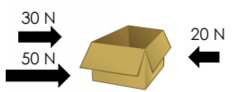
The arrows in the diagrams shown represent the size and direction of the forces that are acting on a cart. Different forces were applied to carts. The mass of each cart is the same.
If the carts started at rest, which one would speed up the most in a direction to the right of the page?


A group of students were asked to improve the design of the car shown.
What is the first thing they should do according to the engineering design process?
Adjust the wheels of the car and determine if it works better.
Design a solution to make the wheels work better.
Identify the problem that needs to be improved.
Ask what materials they could use to fix the problem.

An engineer wanted to design a floor for a warehouse. Workers in the warehouse would need to push heavy boxes across the floor. The engineer tested four different materials by sliding a box across the surface and measuring the distance it took the box to stop.
Which of the following best explains which material would work best for the warehouse floor?
The tile because it had the least friction.
The wood because it would be easiest to push the boxes on.
The dirt because it has the least friction.
The asphalt because it has the most friction.

Students are racing model cars they designed and built. Which design improvement would most likely increase the speed of the car?
Put oil on the nails on which the wheels turn to decrease the friction.
Decrease the size of the wheels so they can grip better.
Increase the size of the wheels so they can grip better.
Put glue on the nails on which wheels turn to increase the friction.

Students were asked to design and build K’NEX car powered by a rubber band. Their car is shown.
Which of the following improvements would most likely improve the speed of their car?
Add more K’NEX pieces to increase the mass.
Add lubrication to decrease the friction.
Add a sail to decrease the friction.
Add larger tires to increase the volume.


A push or a pull are examples of
force
motion
weight
mass


The change in a objects position is________.
Force
Motion
Reaction
Movement


This motion graph represents:
constant speed
acceleration
object at rest
slowing down
If the net force is 0 the object will ...
CHANGE its motion
STAY the SAME, NOT Move



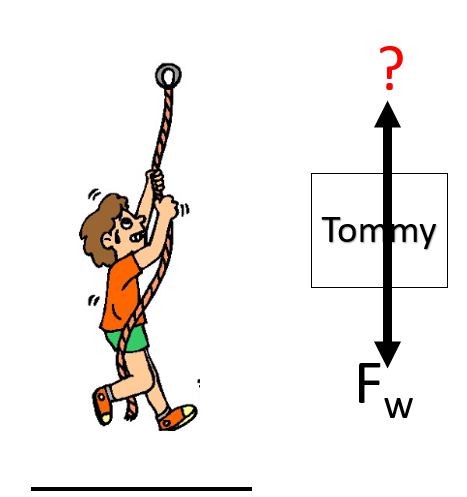


An Orange falls off a tree and lands on the ground. What force caused the orange to fall?
friction
heat
gravity
wind

The support force exerted upon an object that is in contact with another stable object.
Gravity
Electrical Force
Normal Force

A force exerted by a compressed or stretched spring upon any object that is attached to it.
Spring Force
Tension Force
Elastic Force

The force that is transmitted through a string, rope, cable or wire when it is pulled tight.
Spring Force
Tension Force
Elastic Force


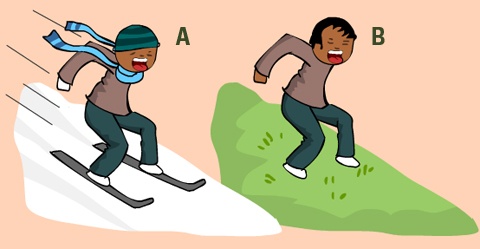
How much force is required to accelerate a 2 kg mass at 3 m/s2 ?
Given a force of 100 N and an acceleration of 10 m/s2 , what is the mass?
What is the acceleration of a 10 kg mass pushed by a 5 N force?
Given a force of 88 N and an acceleration of 4 m/s2 , what is the mass?
How much force is required to accelerate a 12 kg mass at 5 m/s2 ?
What is the acceleration of a 5 kg mass pushed by a 10 N force?
Given a force of 56 N and an acceleration of 7 m/s2 , what is the mass?
What is the acceleration of a 25 kg mass pushed by a 10 N force?
Given a force of 100 N and an acceleration of 5 m/s2 , what is the mass?
What is the acceleration of a 24 kg mass pushed by a 6 N force?

