wayground logo

Free Printable Worksheets

Font size

S
M
L
XL
Worksheets

Cells Practice Quiz

Total questions: 98

Worksheet time: 2hrs 34mins

Name
Class
Date
1.
All living things are made up of _____. 
a)
Cells 
b)
Bacteria 
c)
Virus 
d)
ATP
2.
Prokaryotic cells do NOT have a nucleus. 
a)
True 
b)
False 
3.
Which of the following is an example of a prokaryotic cell? 
a)
Virus 
b)
Plant Cell 
c)
Bacteria 
d)
Animal Cell 
4.
Which of the following is a Eukaryotic cell?
a)
Bacteria 
b)
Virus 
c)
Animal/Plant Cell 
d)
All of the above. 
5.
Directs all cell activities through the DNA located there.
a)
Lysosomes
b)
Nucleus
c)
ribosomes
d)
Mitochondria
6.
I am the outer most layer of an animal cell. What am I?
a)
cell wall
b)
nucleus
c)
cell membrane 
d)
cell skin
7.
What are tiny organelles that convert glucose into ATP?
a)
Ribosomes
b)
Vesicles
c)
Cytoskeleton
d)
Mitochondria
8.
A rigid layer that lies outside the cell's  membrane is...
a)
Cytoskeleton
b)
Cilia
c)
Cell Wall
d)
Flagella
9.
The site of photosynthesis
a)
ribosome
b)
mitochondria
c)
chloroplast
d)
nucleus
10.
Plants and animal cells are examples of ___ cells 
a)
prokaryotic cells 
b)
eukaryotic cells 
11.
Eukaryotic cells are complex.
a)
true
b)
false
12.
Which of the following would be found in both eukaryotic AND prokaryotic cells?
a)
chloroplast
b)
DNA
c)
nucleus
d)
endoplasmic reticulum
13.

Has membrane bound organelles

a)

Prokaryote

b)

Eukaryote

c)

Both

14.

Where is the DNA found in a prokaryotic cell?

a)

In the nucleus

b)

In the mitochondria

c)

Floating around in the cytoplasm

d)

In the ribosome

15.

In what organelle is the genetic material found inside?

a)

Nucleus

b)

endoplasmic reticulum

c)

Mitochondria

d)

Lysosome

16.

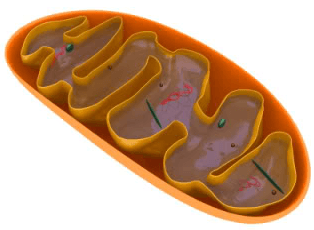
What is the function of this organelle?

a)

Sac that stores water, nutrients, and waste products

b)

Regulates what enters and leaves the cell

c)

Structures that transport and ship proteins like UPS

d)

Cite of cellular respiration also known as the powerhouse of the cell

17.

I store water in both plant and animal cells. What am I?

a)

Mitochondria

b)

Lysosome

c)

Vacuole

d)

Cytoplasm

18.

What can only be found in plant cells?

a)

Chloroplast

b)

Ribosomes

c)

Nucleus

d)

Cell membrane

19.

The two kinds of cells are Prokaryotes and Eukaryotes. How are they different?

a)

Prokaryotes are plant cells

b)

Eukaryotes have a nucleus

c)

Prokaryotes have a nucleus

d)

There is no difference

20.

Bacteria are a type of...

a)

Prokaryote

b)

Eukaryote

c)

Both

21.

What cell part is NOT found in all cells

a)

Cytoplasm

b)

Genetic material

c)

Cell membrane

d)

Cell wall

22.

What is the function of this part of the cell?

a)

Structure

b)

Flexability

c)

Regulates what comes in and out of the cell

d)

Stores genetic information

23.

Where are proteins made?

a)

Golgi Body

b)

Ribosomes

c)

Chromosomes

d)

Mitochondria

24.

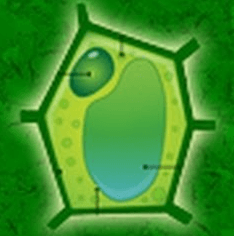
This cell would be classified as a(n) ________________ cell.

a)

Prokaryotic

b)

Eukaryotic

c)

Both

25.

The _____________ holds the DNA, and controls the functions of eukaryotic cells.

a)

Nuclear membrane

b)

Nucleus

c)

mitochondria

d)

Lysosome

26.
Who discovered and named cells? 
a)
Captain Hook
b)
Robert Hooke
c)
Zacharias Janssen
d)
Rudolf Virchow
27.
What did Hooke first examine? 
a)
Pond water
b)
Plant cells
c)
Cork
d)
Animal fat
28.

The endosymbiotic theory most directly explains which of the following

a)

Mitochondria and chloroplast have their own DNA

b)

DNA in chloroplasts code for some proteins

c)

Some bacteria develop resistance to antibiotics

d)

Bacteria contain a single circular chromosome

29.
What did Leeuwenhoek examine?
a)
Cork
b)
Pond water
c)
Plant cells
d)
Animal fat
30.
What was Schleiden convinced of? 
a)
All plants are made of cells
b)
All animals are made of cells
c)
All cells form spontaneously
d)
None of the above
31.
Who noted that animals are made of cells and concluded that all living things are made of cells and cell products? 
a)
Rudolf Virchow
b)
Anton van Leeuwenhoek
c)
Theodor Schwann
d)
Robert Hooke
32.
Who discovered that cells come from preexisting cells and whose research lead to the major principles of cell theory?
a)
Matthias Schleiden
b)
Robert Hooke
c)
Zacharias Janssen
d)
Rudolf Virchow
33.
Which is not a part of cell theory?
a)
All organisms are made of cells
b)
All existing cells come from preexisting cells
c)
All matter is composed of living cells
d)
The cell is the most basic unit of life
34.
Which of the following controls movement of materials in and out of a cell? 
a)
Cell wall
b)
Cell membrane
c)
Cytoplasm
d)
Nucleus
35.
The jellylike substance that contains proteins, nucleic acids, minerals, ions, and organelles is what?
a)
Prokaryote
b)
Nucleus
c)
Cytoplasm
d)
Eukaryote
36.
Which organelle is the protein factory? 
a)
Ribosomes
b)

Mitochondria

c)
Centriole
d)
Lysosomes
37.
Microscopic single-cells that do not have a nucleus or other membrane-bound organelles. 
a)
DNA
b)
RNA
c)
Eukaryotes
d)
Prokaryotes
38.
Genetic information is stored in the nucleus of all single or multicellular cells called
a)
Eukaryotes
b)
Prokaryotes
c)
Organelles
d)
Cytoplasm
39.
This organelle acts like a gatekeeper, allowing some materials to pass through it, but not others. 
a)
Cytoplasm
b)
Cell Membrane
c)
Mitochondria
d)
Vacuole
40.
What structure is in plant cells but not animal cells?
a)
Cell Membrane
b)
Mitochondria
c)
Cell Wall
d)
Vacuole
41.
This organelle is a gel-like fluid that takes up most of the space inside the cell. 
a)
Cytoplasm
b)
Cell Membrane
c)
Vacuole
d)
Golgi Body
42.
Where is the genetic material found in the cell? 
a)
Nucleolus
b)
Cytoplasm
c)
Nucleus
d)
Chloroplast
43.
In many cells, this is the structure that controls the cell's activities.
a)
Cell membrane
b)
Organelle
c)
Nucleolus
d)
Nucleus
44.

What distinguishes a eukaryotic cell from a prokaryotic cell is the presence of _________.

(SELECT ALL THAT APPLY)

a)

membrane-bound

organelles

b)
A nucleus
c)
DNA
d)
Ribosomes
45.
In eukaryotic cells, chromosomes carrying genetic information are found in the
a)
Ribosomes
b)
Lysosomes
c)
Nucleus
d)
Cell Membrane
46.
Which one of the following is not part of the cell theory?
a)
all living things are made of cells
b)
cells are the basic units of structure and function of living things
c)
new cells are produced from existing cells
d)
cells never die
47.
What structure is responsible for making proteins?
a)
Nucleus
b)
Mitochondria
c)
Golgi Apparatus
d)
Ribosome
48.
This organelle moves materials throughout the cell. 
a)
Endoplasmic Reticulum
b)
Ribosomes
c)
FedEx
d)
Golgi Complex
49.
Which organelle packages up waste to be eliminated?
a)

lysosome

b)
ribosomes
c)
nucleus
d)
Endoplasmic Reticulum
50.
What is the difference between rough and smooth Endoplasmic Reticulum?
a)
There is no difference.
b)
Plants have rough ER, animals have smooth ER.
c)
What type of injuries the Doctors treat.
d)
Rough has ribosomes, smooth does not.
51.
Which type of cell contains a nucleus?
a)
Prokaryotic
b)
Eukaryotic
52.
Which type of cell is bigger?
a)
Prokaryotic
b)
Eukaryotic 
53.
All eukaryotes and prokaryotes are surrounded by a _____.
a)
cell wall
b)
cell membrane
c)
cell envelope
d)
loving, supportive family
54.
Which type of cell?
a)
Prokaryote
b)
Eukaryote
55.
A single-celled organism that lacks a membrane-bound nucleus, mitochondria, or any other membrane -bound organelle .
a)
Prokaryote
b)
Eukaryote
c)
Nucleus
d)
Single-celled organism
56.
Where is the DNA found in a eukaryotic cell? 
a)
floating around in the cytoplasm 
b)
in the nucleus 
57.
What type of cell has a nucleus? 
a)
eukaryotic
b)
prokaryotic 
58.
What type of cell does not have a nucleus?
a)
eukaryotic 
b)
prokaryotic 
59.
Larger in size
a)
Prokaryote
b)
Eukaryote
60.
Plants and animal cells both have a nucleus.
a)
True
b)
False
61.
What is the smallest unit of life that can carry out all life functions?
a)
the nucleus
b)
the vacuole
c)
the mitochondria
d)
the cell
62.
First type of cell to appear on Earth?
a)
Plant
b)
Animal
c)
Prokaryotic
d)
Eukaryotic
63.
Which organelle belongs in plant cells only?
a)
Cell Membrane
b)
Mitochondrion
c)
Chloroplast
d)
Nucleus
64.
Which organelle belongs in plant cells only?
a)
Cytoplasm
b)
Mitochondrion
c)
Cell Wall
d)
Nucleus
65.
Which organelle belongs in plant cells only?
a)
Cytoplasm
b)
Mitochondrion
c)
Large Central Vacuole
d)
Cell Membrane
66.
Which organelle belongs in both plant and animal cells?
a)
Cytoplasm
b)
Chloroplast
c)
Large Central Vacuole
d)
Cell Wall
67.
Which organelle belongs in both plant and animal cells?
a)
Chloroplast
b)
Mitochondrion
c)
Large Central Vacuole
d)
Cell Wall
68.
Which organelle belongs in both plant and animal cells?
a)
Chloroplast
b)
Cell Wall
c)
Large Central Vacuole
d)
Cell Membrane
69.
Which organelle belongs in both plant and animal cells?
a)
Chloroplast
b)
Cell Wall
c)
Large Central Vacuole
d)

Nucleus

70.

Which organelle belongs in animal cells only?

a)

Chloroplast

b)

Cell Wall

c)

Many Small Vacuole

d)

Nucleus

71.
Which of the following lists these levels in the correct order of organization from the simplest to the most complex?
a)
cells, tissues, organs, organ systems, organisms
b)
organisms, organ systems, organs, tissues, cells
c)
tissues, cells, organs, organisms, organ systems
d)

organs, organ systems, organisms, cells, tissues
72.
Which of the following is the correct term used to describe a group of body parts such as (mouth, esophagus, stomach, small intestines, and large intestines) working together to perform a specific function?
a)
organism
b)
tissue
c)
organ system
d)
organ
73.
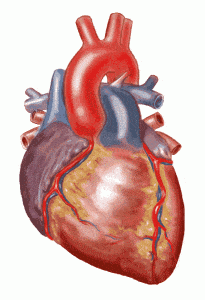
This is a example of ........
a)
cell
b)
tissue
c)
organ 
d)
organ system
74.
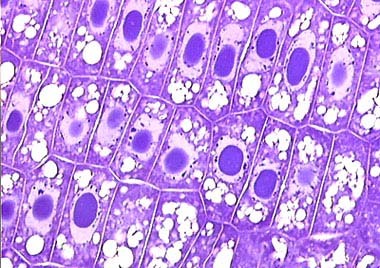
This is a example of ........
a)
cell
b)
organ system
c)
organ
d)
tissue
75.
 A group of cells that have similar functions? Examples are nervous, epithelial, muscle and connective
a)
cells
b)
tissues
c)
organs
d)
atoms
76.
A group of tissues that perform a similar function is called_____. (Examples include the heart, lungs or stomach)
a)
cells
b)
tissues
c)
organs
d)
organ system
77.
What organelle is called the "powerhouse" of a cell?

a)
Endoplasmic Reticulum
b)
Nucleus
c)
Mitochondria
d)
Nucleolus
78.
The ___________ is the basic unit of life
a)
organ
b)
cell
c)
atom
d)
tissue
79.
What type of cell has a defined nucleus and membrane bound organelles.
a)
Bacteria
b)
Prokaryote
c)
Eukaryote
d)
Archaeabacteria
80.
What type of cell does not have a defined nucleus or membrane bound organelles.
a)

Animal Cell

b)
Prokaryote
c)
Eukaryote
d)

Plant Cell

81.

The two components of a virus are nucleic acid and __________.

a)

protein

b)

carbohydrates

c)

lipids

d)

glucose

82.

A virus is

a)

living

b)

non living

c)

dead

83.

Viruses need a ____________ in order to make copies of themselves.

a)

bacterial cell

b)

host cell

c)

capsid

d)

vaccine

84.

Antibiotics ________ treat viral infections.

a)

can

b)

cannot

85.

Vaccines are a preventative measure.

a)

True

b)

False

86.

When given a vaccine, your body recognizes it as an invader and builds _________ against the virus.

a)

lysogens

b)

capsids

c)

antibodies

d)

immunoglobulins

87.
Which statement regarding viruses is true?
a)
a virus can only reproduce inside of a living cell
b)
viruses do not contain DNA
c)
viruses are unicellular
d)
viruses are generally larger than cells
88.
What feature do viruses have in common with animal cells?
a)
ability to form proteins at the ribosomes
b)
existence of lipids in cell membranes
c)

presence of genetic material

d)
production of energy by a mitochondrion
89.
A(n) _____ is a virus that enters a bacterial cell.
a)
endospore
b)
decomposer
c)
plasmid
d)
bacteriophage
90.
What is the 1st step of virus infection?
a)
Entry
b)
Attachment
c)
Replication
d)
Assembly
91.

Which pathogens are largest in size?

a)

Viruses

b)

Bacteria

c)

Both viruses and bacteria are about the same size

92.

What reason do scientists give for saying that viruses are not living organisms?

a)

they cannot reproduce without the aid of a host

b)

they do not metabolize food into energy

c)

they do not have organized cells

d)

all of the above

e)

none of the above

93.

The respiratory system is made up of airways, lungs, & respiratory muscles. Lungs are classified as –

a)

cells.

b)

tissues.

c)

organs.

d)

organisms.

94.

Justin has learned that the brain, spinal cord, and peripheral nerves work together. What do they combine to form?

a)

a cell

b)

organ

c)

tissue

d)

organ system

95.
Which best explains why muscle cells are different from blood cells?
a)
Muscle cells are produced by the brain, but blood cells are produced by the heart. 
b)
Different genes are activated in muscle cells than in blood cells. 
c)
Muscles cells experience different environmental influences than blood cells. 
d)
A mutation occurs during the development of muscle cells but not in blood cells. 
96.
Which type of cell is unspecialized?
a)
skin cell
b)
stem cell
c)
liver cell
d)
muscle cell
97.
What is cell differentiation?
a)
Process by which cells produce more cells
b)
Process by which cells become specialized
c)
Process by which cells become unspecialized
d)
Process by which cells die
98.
What is one goal of cellular differentiation/specialization?
a)
To create specialized cells to help organism maintain homeostasis.
b)
To many cells.
c)
To make stem cells
d)
to make single celled organisms