
 Worksheets
photosynthesis additional
Total questions: 139
Worksheet time: 1hrs 25mins
Chloroplast
Oxygen and Sugar
Which plant organelle transforms light into glucose to use as food?
Mitochondria
Vacuoles
Chloroplasts
Nucleus

This is the chemical formula for a molecule of...
Oxygen
Carbon dioxide
Glucose
Water
What is the purpose of photosynthesis?
To release energy
To create glucose
To grow
To get oxygen for respiration
Which of these are limiting factors for photosynthesis? Choose 3 answers.
Light intensity
CO2 concentration
Temperature
Light
CO2 levels

Main products of the Calvin Cycle
Oxygen, NADP+, ADP
Glucose, CO2, ADP
ADP, NADP+, Glucose
ATP, NADPH, Oxygen
The Calvin Cycle occurs in the
Thylakoid
Grana
Inner membrane of chloroplast
Stroma


What supplies the electrons during photolysis?
oxygen
water
glucose
rubisco
Choose the statement that best describes light reaction.
It converts CO2 to sugar molecule
It converts light energy to chemical energy of ATP and NADPH
It takes place in the stroma
Which of the following is not needed to start the light reaction
H2O
ADP + P
CO2
What is the unit of light?
proton
photon
photosystem
What is/are the products of light independent reaction?
ATP
NADPH
H2O
C6H12O6
pyruvate
What is NOT the product of light dependent reaction?
ATP
NADPH
H2O
O2
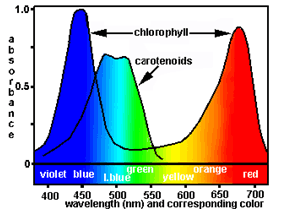
Which of the following light color is absorbed by plants?
Red
Green
yellow
Light green
•Plants and plant-like organisms make their own food or energy (glucose) from sunlight.
Chemotrophs
Heterotrophs
Autotrophs
Saprophytes
How many G3P is needed to convert to a one molecule of glucose?
1
2
3
4
5
Which of the following occurs in the stroma of the chloroplast?
light dependent reaction
electron transport chain
calvin cycle
photolysis
The oxygen produced in photosynthesis comes from what molecule?
glucose
water
P680
ATP
The photosynthetic process used by some plants to survive in a hot dry climate, like the desert?
C4 Photosynthesis
C3 Photosynthesis
Noncyclic photophosphorylation
Carbon fixation
Which of the following i the source of the carbon in sugar produced during photosynthesis?
carbon dioxide
water
rubisco
ATP
Which of the following is NOT a produce of the light dependent reaction?
Oxygen
ATP
NADPH
Sugar
Which of the following is the main difference between cyclic and noncyclic photophosphorylation?
they use different electron acceptors
Only photosystem I is used during the cyclic process
noncyclic photophosphorylation occurs in the stroma
noncyclic photophosphorylation does not produce ATP
Carbon fixation is catalyzed by what enzyme?
P700
NADPH
phosphoglycerate
rubisco
The calvin cycle requires each of the following inputs EXCEPT:
ATP
NADPH
O2
CO2
In the light dependent reactions, when light strikes the pigments (P700 or P680) what is the immediate result?
excited electrons are passed to electron acceptors
electrons are fused to form ATP
glucose is produced
carbon fixation occurs
In the calvin cycle, more ATP than NADPH is used, how is this difference made up?
the cyclic pathway creates more ATP
the Calvin cycle occurs half as often as the light dependent reaction
additional ATP is created from glucose
excess NADPH is reused in the light reaction
Which of these is the correct equation for photosynthesis?
6O2 + C6H12O6 --> 6CO2 + 6H2O
6O2 + 6CO2 --> C6H12O6 + 6H2O
6CO2 + 12H2O --> C6H12O6 + 6H2O + 6O2
6CO2 + 6H2O --> O2 + C6H12O6
What protects Stomata and helps it in opening and closing?
Guard Cells
Leaf
Stem
Carbon Dioxide
Main products of the Calvin Cycle
Oxygen, NADP+, ADP
Glucose, CO2, ADP
ADP, NADP+, Glucose
ATP, NADPH, Oxygen
The Calvin Cycle occurs in the
Thylakoid
Grana
Inner membrane of chloroplast
Stroma
What is the unit of light?
proton
photon
photosystem
Which of the following is not needed to start the light reaction
H2O
ADP + P
CO2

The NADP+ is
oxidized during the light reaction
reduced during the light reaction
oxidized during the Calvin cycle
reduced during the Calvin cycle
Plants obtain CO2 into the chloroplast by
active transport
diffusion
facilitated diffusion
endocytosis
Which plant would have the most oxygen produced in 1 hour?
plant given red light only
plant given blue light only
plant given white light
plant given green light only
CO2 is used in the Calvin cycle to make molecules of
NADPH
glycogen
G3P
Rubisco


The molecule that comes out of the Calvin Cycle to produce glucose, and polymers like cellulose is:
RuBP
Rubisco
acetyl CoA
G3P


Photosynthesis is ...
The process in which organisms convert/transfer energy from glucose to ATP.
The process in which organisms exchange carbon dioxide and oxygen in their lungs.
The process of taking a picture.
The process of plants converting/transferring solar energy to chemical energy to make their food.
The location where photosynthesis takes place is the ______________________.


The word equation for photosynthesis is...


Which of the following laws does the process of photosynthesis demonstrate (may choose more than one answer)
The law of autotrophs
The law of conservation of matter
The law of conservation of energy
The law of the spider verse
The two reactants of photosynthesis are ...
oxygen
carbon dioxide
glucose
water
The two products of photosynthesis are ...
oxygen
carbon dioxide
water
glucose

The structure labeled c is a ______________ and the structure labeled d is the _______________.
granum, thylakoid
thylakoid, granum
stroma, thylakoid
thylakoid, stroma
The first molecule to trap the suns energy is...
ADP/ATP
chlorophyll
glucose
NADP+/NADPH
The first step of photosynthesis is called the ________________ the second step is called the ________________________.
light dependent reaction, Calvin Cycle
Calvin Cycle, light dependent reaction
light independent reaction, Calvin Cycle
Krebs cycle, Calvin Cycle

The answers for a, b, and d are
a. glucose b. water d. light
a. ATP b. light d. oxygen
a. light b. water d. oxygen
a. light b. carbon dioxide d. oxygen

e and f are
e. ADP f. ATP
e. ATP f. NADPH
e. NADP+ f. NADPH
e. light b. chlorophyll

g and i are
g. water i. glucose
g. carbon dioxide i. oxygen
g. ATP i. NADPH
g. carbon dioxide i. glucose
How can you slow or stop photosynthesis? (choose all that apply)
Put it in a dark closet
Give it too much light
Reduce the amount of carbon dioxide
Water the plant regularly
True or false: Photosynthesis has a role in the carbon cycle.
True
False
True or False: The primary source of matter used to build the plant comes from the soil.
True
False
True or false: All organisms, not just plants, rely on the process of photosynthesis.
True
False

Which of the following shows the balanced chemical symbol equation for photosynthesis?
A
B
C
D
What is the main energy change that happens in photosynthesis?
chemical --> light
light --> kinetic
light --> chemical
kinetic --> light
Where is chlorophyll found in plant cells?
cytoplasm
chloroplast
mitochondria
vacuole
What substance can glucose be converted to, which is the transport carbohydrate of plants?
starch
cellulose
sucrose
amino acids
What substance can glucose be converted into, which is the energy storage carbohydrate of plants?
cellulose
sucrose
amino acids
starch
Which substance can glucose be converted to, which strengthens plant cell walls?
starch
cellulose
amino acids
sucrose
Which of the following organelles would you not expect to be present in onion root cells?
cell wall
vacuole
chloroplast
mitochondrion

Click on the picture to make it larger.
Which of the following can you conclude about point X from this graph alone?
I. light intensity limits the rate of photosynthesis
II. as light intensity increases, rate of photosynthesis increases
III. CO2 concentration limits the rate of photosynthesis
I and II only
I and III only
II and III only
I, II and III
Click on the picture to make it larger.
Which of the following can you conclude about point Y from this graph?
I. light intensity does not limit the rate of photosynthesis
II. the plant has stopped photosynthesising
III. the rate of photosynthesis could be limited by a shortage of water or CO2
I and II only
I and III only
II and III only
I, II and III

Click on the picture to make it larger.
What do curves C and D suggest is limiting the rate of photosynthesis?
light intensity
carbon dioxide concentration
temperature
water
Click on the picture to make it larger.
What do curves B and D suggest is limiting the rate of photosynthesis?
light intensity
carbon dioxide concentration
temperature
water

Supplying extra heat and carbon dioxide is more expensive, but may be worth it if the rate of photosynthesis greatly increases.
Click on the graph to make it larger.
Which of the following would it not be worth doing for a plant grower?
increasing the CO2 from 0.03% to 0.1% at a temperature of 20oC.
increasing the CO2 from 0.03% to 0.1% at a temperature of 25oC.
increasing the temperature from 20oC to 25oC at a CO2 concentration of 0.03%
increasing the temperature from 20oC to 25oC at a CO2 concentration of 0.1%
Why is the chemical sodium hydrogencarbonate given to water plants in photosynthesis practicals?
it is used to produce chlorophyll
it allows the plant to respire
it supplies the plant with CO2 gas when it dissolves
it is a source of glucose

Four test-tubes are set up as shown.
Click on the picture to make it larger.
Which test-tube contains the most carbon dioxide after one hour?
A
B
C
D
If photosynthesizing green algae are provided with CO2 containing heavy oxygen (18O), later analysis will show that all of the following molecules produced by the algae contain 18O except
glyceraldehyde 3-phosphate (G3P)
glucose
ribulose bisphosphate (RuBP)
O2
As a research scientist, you measure the amount of ATP and NADPH consumed by the Calvin cycle in 1 hour. You find 30,000 molecules of ATP consumed, but only 20,000 molecules of NADPH. Where did the extra ATP molecules come from?
photosystem I
photosystem II
cyclic electron flow
non-cyclic electron flow
Suppose the interior of the thylakoids of isolated chloroplasts were made acidic and then transferred in the dark to a pH 8 solution. What would be likely to happen?
The isolated chloroplasts will make ATP
The Calvin cycle will be activated
The isolated chloroplasts will generate oxygen gas
The isolated chloroplasts will reduce NADP+ to NADPH
A flask containing photosynthetic green algae and a control flask containing water with no algae are both placed under a bank of lights, which are set to cycle between 12 hours of light and 12 hours of dark. The dissolved oxygen concentrations in both flasks are monitored. Predict what the relative dissolved oxygen concentrations will be in the flask with algae compared to the control flask.
The dissolved oxygen in the flask with algae will be higher in the light, but the same in the dark.
The dissolved oxygen in the flask with algae will be higher in the light, but lower in the dark.
The dissolved oxygen in the flask with algae will always be higher.
The dissolved oxygen in the flask with algae will always be lower.
The pH of the inner thylakoid space has been measured, as have the pH of the stroma and of the cytosol of a particular plant cell. Which, if any, relationship would you expect to find?
The pH within the thylakoid is less than that of the stroma.
The pH of the stroma is lower than that of the other two measurements.
The pH of the stroma is higher than that of the thylakoid space but lower than that of the cytosol.
The pH of the thylakoid space is higher than that anywhere else in the cell.
What would be the expected effect on plants if the atmospheric CO2 concentration was doubled?
All plants will experience increased rates of photosynthesis.
C3 plants will have faster growth; C4 plants will be minimally affected.
C4 plants will have faster growth; C3 plants will be minimally affected.
C3 plants will have faster growth; C4 plants will have slower growth.
Why are C4 plants able to photosynthesize with no apparent photorespiration?
They do not participate in the Calvin cycle.
They use PEP carboxylase to initially fix CO2.
They conserve water more efficiently.
They exclude oxygen from their tissues.
CAM plants keep stomata closed in daytime, thus reducing loss of water. They can do this because they
fix CO2 into organic acids during the night.
fix CO2 into sugars in the bundle-sheath cells.
fix CO2 into pyruvate in the mesophyll cells.
use photosystem I and photosystem II at night.
The alternative pathways of photosynthesis using the C4 or CAM systems are said to be compromises. Why?
C4 compromises on water loss and CAM compromises on photorespiration.
Both minimize photorespiration but expend more ATP during carbon fixation.
CAM plants allow more water loss, whereas C4 plants allow less CO2 into the plant.
C4 plants allow less water loss but CAM plants allow more water loss.

If the carbon atom of each of the incoming CO2 molecules is labeled with a radioactive isotope of carbon, which organic molecules will be radioactively labeled after one cycle?
C only
B, C, D and E
C, D and E
B and C only

To identify the molecule that accepts CO2, Calvin and Benson manipulated the carbon-fixation cycle by either cutting off CO2 or cutting off light from cultures of photosynthetic algae. They then measured the concentrations of various metabolites immediately following the manipulation. How would these experiments help identify the CO2 acceptor? Study Figure 8.2 to help you in determining the correct answer.
The CO2 acceptor concentration would decrease when either the CO2 or light is cut off.
The CO2 acceptor concentration would increase when either the CO2 or light is cut off.
The CO2 acceptor concentration would increase when the CO2 is cut off, but decrease when the light is cut off.
The CO2 acceptor concentration would decrease when the CO2 is cut off, but increase when the light is cut off.
Theodor W. Engelmann illuminated a filament of algae with light that passed through a prism, thus exposing different segments of algae to different wavelengths of light. He added aerobic bacteria and then noted in which areas the bacteria congregated. He noted that the largest groups were found in the areas illuminated by the red and blue light.
What did Engelmann conclude about the congregation of bacteria in the red and blue areas?
Bacteria congregated in these areas due to an increase in the temperature of the red and blue light.
Bacteria congregated in these areas because these areas had the most oxygen being released.
Bacteria are attracted to red and blue light and thus these wavelengths are more reactive than other wavelengths.
Bacteria congregated in these areas due to an increase in the temperature caused by an increase in photosynthesis.
Theodor W. Engelmann illuminated a filament of algae with light that passed through a prism, thus exposing different segments of algae to different wavelengths of light. He added aerobic bacteria and then noted in which areas the bacteria congregated. He noted that the largest groups were found in the areas illuminated by the red and blue light.
If you ran the same experiment (mentioned above) without passing light through a prism, what would you predict?
The bacteria would be relatively evenly distributed along the algal filaments.
The number of bacteria present would decrease due to an increase in the carbon dioxide concentration.
The number of bacteria present would increase due to an increase in the carbon dioxide concentration.
The number of bacteria would decrease due to a decrease in the temperature of the water.
A spaceship is designed to support animal life for a multiyear voyage to the outer planets of the solar system. Plants will be grown to provide oxygen and to recycle carbon dioxide. Because the spaceship will be too far from the sun for photosynthesis, an artificial light source will be needed.
What wavelengths of light should be used to maximize plant growth with a minimum of energy expenditure?
full-spectrum white light
green light
a mixture of blue and red light
yellow light
A spaceship is designed to support animal life for a multiyear voyage to the outer planets of the solar system. Plants will be grown to provide oxygen and to recycle carbon dioxide. Because the spaceship will be too far from the sun for photosynthesis, an artificial light source will be needed.
A gardener is concerned that her greenhouse is getting too hot from too much light, and seeks to shade her plants with colored translucent plastic sheets, the color of which allows passage of only that wavelength. What color should she use to reduce overall light energy, but still maximize plant growth?
green
blue
yellow
orange

