
 Worksheets
unit 1 retest review
Total questions: 134
Worksheet time: 2hrs 41mins


Note that each molecule is shown in its ring and chain form.


View Figure 2 (if not visible)

Why do cells need a buffer system?
Chemical processes in the cell are sensitive to the concentration of H+ and OH-
Cells do not have a buffer system
Cells need acids and bases to survive
The pH range of cells can withstand large changes

If some process releases acid [H+] into the blood, this equilibrium responds by shifting to the left as long as there is HCO3-present for the H+ to react with, thus removing the excess H+ions. What happens after the release of H+?
pH never lowers
pH is lowered and then immediately restored
pH raises and then is restored
ph lowers and remains low
The cell membrane is made up of what bio-molecule?
Phospholipids
Proteins
Carbohydrates
Nucleic Acids


What are the 4 elements that make up the majority of living things?
carbon, hydrogen, oxygen, and nitrogen
helium, neon, krypton, and argon
phosphorus, potassium, iron, and zinc
magnesium, sulfur, calcium, and sodium


Thus,H2CO3 → HCO3- + H+
If the pH of the blood increases, one would expect :
H2CO3 → HCO3- + H+
If the pH of the blood decreases, one would expect



Thermal energy is...
heat energy
the energy of motion
energy of nuclear processes.
an indication of physical change.
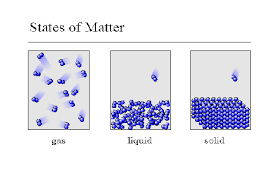
At higher temperatures
particles in an object have less kinetic energy
particles in an object move faster
a gas contracts
"Kinetic" refers to
motion
heat
density
forces

