Wayground logo

Free Printable Worksheets

Font size

S
M
L
XL
Worksheets

biology 1st semester final

Total questions: 110

Worksheet time: 2hrs 51mins

Name
Class
Date
1.

The suffix "ology" refers to ?

a)

life

b)

cells

c)

processes

d)

none of these

2.

The "A" in TIRED GRIMAS STANDS FOR?

a)

AFIXEATION

b)

AFFERISM

c)

ANOLOGY

d)

NONE OF THESE

3.

The life process that states life can combine chemicals

a)

assimilation

b)

synthesis

c)

growth

d)

respiration

4.

The life process that states life can produce energy

a)

synthesis

b)

transport

c)

respiration

d)

none of these

5.

The life process that states life can can make more cells.

a)

synthesis

b)

transport

c)

mitosis

d)

growth

6.

The breakdown of food is what life process?

a)

ingestion

b)

transport

c)

synthesis

d)

none of these

7.

Your arteries and veins of your circulatory system is what life process

a)

synthesis

b)

assimilation

c)

transport

d)

reproduction

8.

Spontaneous generation states?

a)

All thing things have cells

b)

life is made of 4 elements

c)

life from nonlife

d)

doctors use signs and symptoms

9.

He did NOT invent the microscope, he perfected microscope lenses

a)

Lister

b)

Leuwenhoek

c)

Salk

d)

Sabin

10.

“Father of Aseptic Surgery"

a)

Sabin

b)

Lister

c)

Hippocrates

d)

none of these

11.

Accidentally discovered first antibiotic (penicillin)

a)

Lister

b)

Sabin

c)

Salk

d)

Fleming

12.

If the patient tells the health professional statements such as" i have headaches, and rashes" this is called?

a)

signs

b)

disease

c)

diagnosis

d)

symptoms

13.
Which cell structure is found in plant and animals cells and controls what can come into or leave a cell?
a)
cell membrane
b)
cytoplasm
c)
nucleus
d)
vacuole
14.
Chloroplasts in plant cells allow the plant to perform a function that animal cells cannot do.  What is the main function of the chloroplasts found in plant cells?
a)
to absorb light energy and manufacture food
b)
to remove waste materials by active transport
c)
to manufacture chemical energy from food
d)
to control the shape of the cell
15.
All cells need energy to function.  Which cell organelle is responsible for producing energy in the cell?
a)
chloroplasts
b)
mitochondria
c)
nucleus
d)
vacuoles
16.
Which organelle acts as the sorting/packaging centre of the cell?
a)
Nucleus
b)
Golgi Apparatus
c)
Chloroplasts
d)
Vacuoles
17.
 What is the difference between the cell wall and the cell membrane?
a)
There is no difference
b)
The cell membrane is found ONLY in animal cells, whilst the cell wall is found ONLY in plant cells 
c)
The Cell wall is found ONLY in plant cells
d)
The cell wall is found ONLY in animal cells
18.
Where are proteins made?
a)
Golgi body
b)
Mitoichondria
c)
Chromosomes
d)
Ribosomes
19.
What is the gel-like substance inside of cells called?

a)
photoplasm
b)
photosynthesis
c)
cytoskeleton
d)
cytoplasm
20.
Which statement is a part of the cell theory?
a)
all cells come from preexisting cells
b)
bacteria are prokaryotic cells
c)
eukaryotic cells are complex
d)
humans are multicellular
21.
What did Hooke first examine? 
a)
Pond water
b)
Plant cells
c)
Cork
d)
Animal fat
22.

I like to be thought of as the "storage bubble" for both plant and animal cells. I am a...

a)

Cell Membrane

b)

Cytoskeleton

c)

Vacuole

d)

Endoplasmic Reticulum

23.

I am the "brain" of the cell or the "control center" for everything happening within the cell. I am a...

a)

Golgi Body/Apparatus

b)

Nucleus

c)

Ribosome

d)

Lysosome

24.

Animal and Plant Cells are...

a)

Shopkoytes

b)

Eukaryotes

c)

Prokaryotes

d)

The building blocks of non-living things

25.

Cells grow, carry out normal functions, and copy their organelles.

a)

G1

b)

S

c)

G2

d)

M phase

26.

Cells go through additional growth.

a)

G1

b)

S

c)

G2

d)

M phase

27.

Cells undergo cell division, which involves both mitosis and cytokinesis.

a)

G1

b)

S

c)

G2

d)

M phase

28.

Cells replicate DNA.

a)

G1

b)

S

c)

G2

d)

M phase

29.

Where does DNA replication happen in eukaryotic cells?

a)

cytoplasm

b)

mitochondria

c)

nucleus

d)

Golgi apparatus

30.

What two processes make up the M stage?

a)

fermentation & mitosis

b)

mitosis & cytokinesis

c)

glycolysis & cytokinesis

d)

G1 & G2

31.

uncontrolled cell growth = _____

a)

apoptosis

b)

cancer

c)

spindle

d)

cytokinesis

32.

What statement about this organelle is TRUE?

a)

It is a chloroplast

b)

It is present only in plant cells

c)

It carries out photosynthesis

d)

All the previous answers are correct

33.

Identify the following stage of the life cycle of the cell in the picture.

a)

interphase

b)

prophase

c)

metaphase

d)

anaphase

e)

telophase

34.

Identify the following stage of the life cycle of the cell in the picture.

a)

interphase

b)

prophase

c)

metaphase

d)

anaphase

e)

telophase

35.

Identify the following stage of the life cycle of the cell in the picture.

a)

interphase

b)

prophase

c)

metaphase

d)

anaphase

e)

telophase

36.

Identify the following stage of the life cycle of the cell in the picture.

a)

interphase

b)

prophase

c)

metaphase

d)

anaphase

e)

telophase

37.
What phase of mitosis is shown in the picture?
a)
Prophase
b)
Anaphase
c)
Telophase
d)
Metaphase
38.
Replication is when __________.
a)
the cell makes a copy of its DNA in nucleus 
b)
the cell forms 2 identical cells
c)
the cell produces 2 sets of organelles
d)
the cell continues to complete the same function
39.
Mitosis is made up of how many phases?
a)
4
b)
5
c)
6
d)
7
40.
What is the correct term for "the sequence of stages of growth and division that a cell undergoes"?
a)
cell
b)
cell cycle
c)
cell plate
d)
centriole
41.
What is the correct term for "form during prophase of mitosis and attach to chromosomes at the centromere to pull them apart during cell division"?
a)
centriole
b)
nucleus
c)
spindle fibers
d)
cytokinesis
42.
Which of the following units are repeatedly joined together to form a strand of DNA?
a)
amino acids
b)
nucleotides
c)
fatty acids
d)
polysaccharides
43.
order of replication
a)
3, 4, 2, 1
b)
3, 1, 4, 2
c)
2, 1, 4, 3
d)
3, 4, 1, 2
44.
A process in which DNA has the unique ability to make an exact copy of itself.
a)
Replication
b)
Translation
c)
Transcription
45.
Why does DNA replicate?
a)
To create another copy for the new cell
b)
To create a duplicate copy in case the original gets damaged
c)
To create a new copy to replace the damaged original
46.
Nitrogenous bases are joined by which type of bond?
a)
polar bonds
b)
ionic bonds
c)
covalent bonds
d)
hydrogen bonds
47.
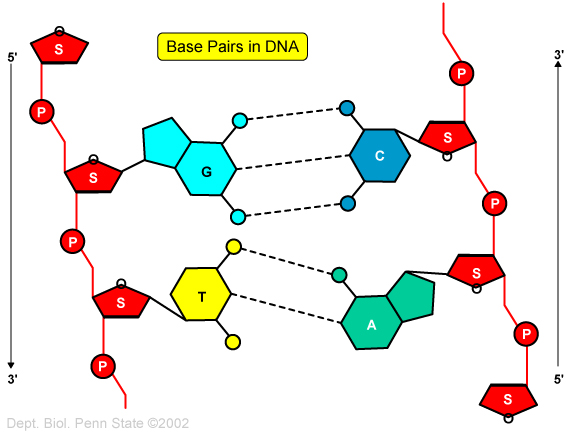
Which sequence of complementary DNA bases would pair with this partial strand
ATG TGA CAG?
a)
ATG TGA CAG
b)
TAC ACT GTC
c)
GTA AGT GAC
d)
CAT TCA CTG
48.
Which of the following best describes a DNA molecule?
a)
double helix
b)
contains ribose
c)
made of amino acids
d)
contains uracil
49.
Which of the following monomers are repeatedly joined together to form a strand of DNA?
a)
amino acids
b)
nucleotides
c)
fatty acids
d)
polysaccharides
50.
In a molecule of double-stranded DNA, the amount of adenine present is always equal to the amount of _________.
a)
cytosine
b)
guanine
c)
thymine
d)
uracil
51.
What are the three components of a nucleotide?
a)
sugar, hydrogen, nitrogen base
b)
sugar, oxygen, nitrogen base
c)
sugar, phosphate, nitrogen base
d)
sugar, phosphate, protein
52.
Who was given credit for determining the shape of DNA? 
a)
Avery
b)
Watson and Darwin
c)
Watson and Crick
d)
Franklin and Crick
53.
Identify #2.
a)
nitrogen base
b)
phosphate group
c)
deoxyribose sugar
d)
nucleotide
54.
X outlines a(n) ___________.
a)
amino acid
b)
nitrogen base 
c)
nucleotide
d)
nitrogen base pair
55.
Any change in the DNA is called a/an
a)
mistake
b)
exon
c)
mutation
d)
intron
56.

Where does transcription occur

a)

mitochondria

b)

chloroplast

c)

nucleus

d)

cytoplasm

57.

Which of the following structures carries the DNA information from the nucleus, out to a ribosome

a)

DAN

b)

mRNA

c)

tRNA

d)

rRNA

58.

How many strands make-up an RNA molecule

a)

1 strand

b)

2 strands

c)

3 strands

d)

4 strands

59.

An original strand of DNA consist of: TAGCCTA. What would the stand of MRNA look like

a)

UAGCCUA

b)

ATCGGAT

c)

AUCGGAU

d)

TACGGTA

60.

Which of the following correctly describes transcription

a)

DNA replicating its self

b)

MRNA is made from a DNA template

c)

An anticodon is formed

d)

proteins are made from amino acids

61.

A strand of mRNA carries the code to specific amino acids that will construct specific proteins. what are these codes called?

a)

codons

b)

anticodons

c)

genes

d)

histones

62.
When DNA is transcribed to RNA.... 
a)
A pairs with U
b)
C pairs with U
c)
A pairs with T
d)
C pairs with T
63.

When the RNA gets to the ribosomes, which molecule moves to the mRNA to amino acids?

a)

DNA

b)

mRNA

c)

tRNA

d)

Replicated RNA

64.
What is a Codon?
a)
4 base pairs that transfer to amino acids
b)
3 base pairs that transfer to amino acids
c)
3 base pairs that transfer to DNA
d)
3 base pairs that transfer to mRNA
65.
What process is occurring in this photo?
a)
Transcription
b)
DNA unwinding
c)
Translation
d)
Transfer RNA is creating bases
66.
The job of tRNA is to...
a)
carry amino acids to the ribosomes 
b)
carry ribosomes to the ER
c)
carry mRNA out of the nucleus
d)
carry glucose to mitochondria
67.
What is the correct amino acid sequence for the mRNA code AUGCCAGUAUGA?
a)
 Met-Pro-Val-Stop
b)
Met-Pro-Arg-Stop
c)
 Tyr-Gly-His
d)
Tyr-Gly-Arg-His
68.
Amino acids are the building blocks of... 
a)
DNA
b)
RNA
c)
Atoms
d)
Proteins
69.

Where are "Genes" found?

a)

Mitochondria

b)

Cytoplasm

c)

Centrosomes

d)

Chromosomes

70.

How many chromosomes do humans have?

a)

23

b)

92

c)

46

d)

184

71.

Who is considered the "father" of modern genetics?

a)

Einstein

b)

Mendel

c)

Disney

d)

Washington

72.
TT,tt,PP,pp,SS,ss are examples of alleles that are?
a)
homozygous
b)
heterozygous
c)
different
d)
homologous 
73.
The exact genetic makeup of an organism, such as RR, Tt, PP is its?
a)
phenotype
b)
dominance
c)
genotype
d)
trait
74.
If "T" is the allele for tall and "t" is the allele for short, then Tt would produce?
a)
tall
b)
short
c)
medium
d)
not enough info
75.

What plant did Mendel study?

a)

pea plant

b)

spinach

c)

carrots

d)

sunflowers

76.

Which of the following alleles is homozygous (purebred) recessive?

a)

TT

b)

Tt

c)

tt

d)

ts

77.

Red (R) is dominant over white (r). How can a flower be white?

a)

It can have RR and be white.

b)

It has to have rr.

c)

It has to have rR

d)

There is no way it can be white until the third generation.

78.

What is Aa

a)

Homozygous Dominant

b)

Heterozygous

c)

Homozygous Recessive

d)

Heterozygous dominant

79.

True or False: Human cells have a diploid number of 40

a)

true

b)

false

80.

The physical look or the organism, such as brown eyes

a)

genotype

b)

phenotype

c)

Dominant

d)

Recessive

81.
T - tall and t = short
In the punnett square below, what belongs in the missing square
a)
tt
b)
Tt
c)
Bb
d)
TT
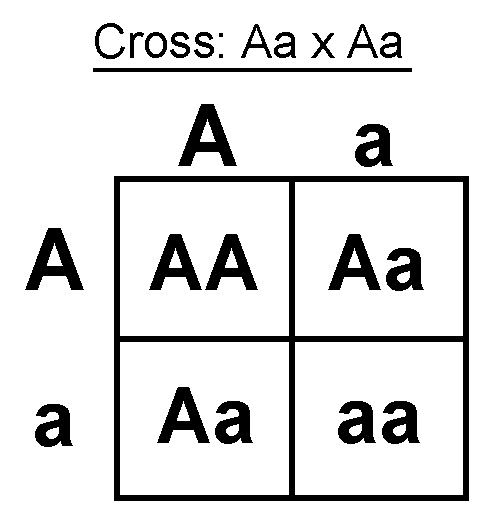
82.
What allele combination should go in the missing box?
a)
AA
b)
Aa
c)
aa
d)
none of these
83.
If B = brown hair and b = blonde hair, what is the probability of brown hair?
a)
25%
b)
50%
c)
0%
d)
75%
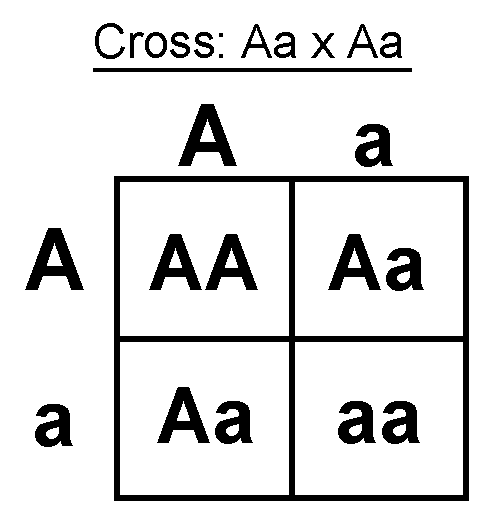
84.
What is the phenotype of the offspring? (A-Brown hair; a-blond hair) 
a)
50 % Brown Hair and 50% Blond Hair 
b)
25 % Brown Hair and 75% Blond Hair 
c)
75 % Brown Hair and 25% Blond Hair 
d)
0% Brown Hair and 100% Blond Hair 
85.
What percent of offspring will have the recessive trait?
a)
25
b)
50
c)
75
d)
100
86.

This image shows chromosomes during Prophase 1. Which of the following correctly describes the process shown?

a)

segregation of sister chromatids

b)

mutation in which the DNA content of the gene is altered

c)

condensation and segregation of alleles

d)

crossing - over in which alleles are exchanged

87.

Sex cells (gametes like sperm and eggs) are _________, meaning the only have 1 copy of each chromosome.

a)

haploid

b)

diploid

c)

triploid

d)

tetraploid

88.

What are gametes?

a)

body cells

b)

somatic cells

c)

sex cells

d)

skin cells

89.
What is it called when a sperm and egg meet?
a)
meiosis
b)
fertilization
c)
cell division
d)
mitosis
90.
Unlike mitosis, meiosis in male mammals results in the formation of
a)
one haploid gamete
b)
three diploid gametes
c)
four diploid gametes
d)
four haploid gametes
91.
Survival of the Fittest and Evolution were proposed by what scientist?
a)
Charles Darwin
b)
Albert Einstein
c)
Steven Hawking
d)
Isaac Newton
92.
Where the better adapted organisms survive to pass traits along to offspring.
a)
Evolution
b)
Natural Selection
c)
Extinction
d)
Artifical Selection
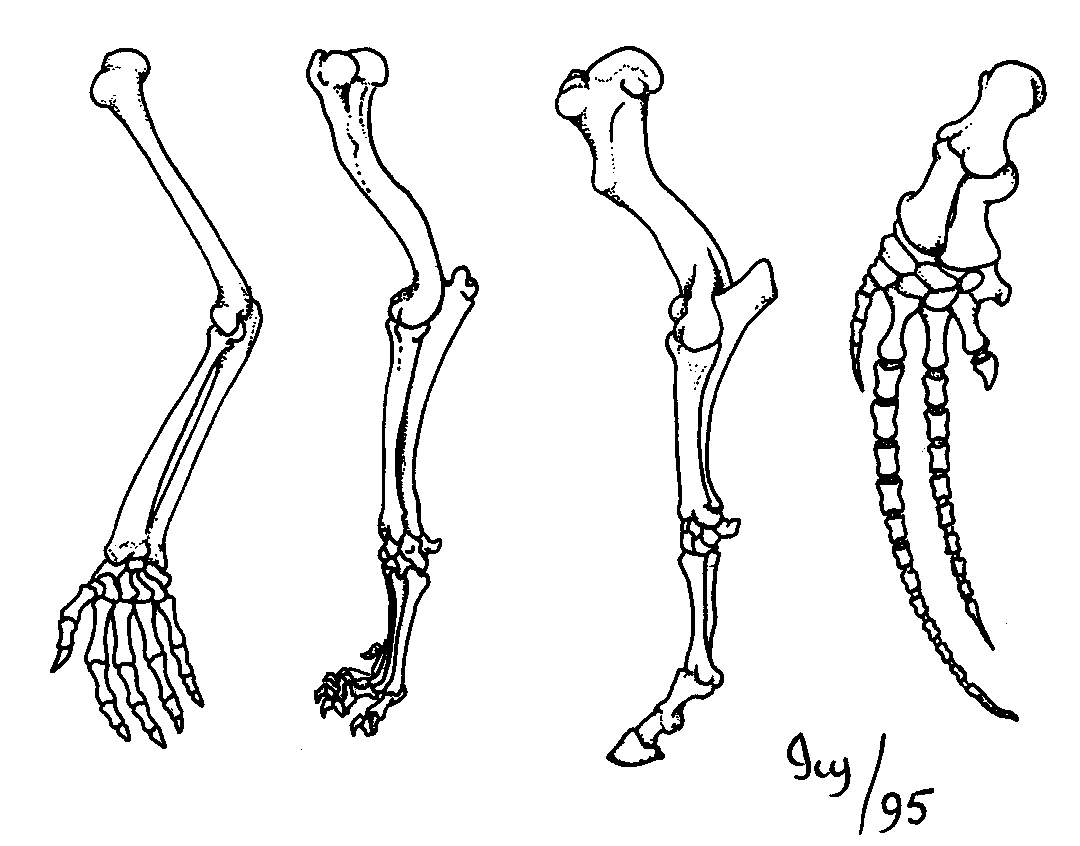
93.
Structures with the same parts have different functions; suggests that organisms share a common ancestry
a)
vestigial structures
b)
homologous structures
c)
adaptive radiation
d)
fossil
94.
A fossil of an extinct dinosaur is found and the anatomy of the fossil shows similarities to that of a bird. What could this mean?
a)
This is purely by chance and isn't significant
b)
The extinct dinosaur and modern bird share a common ancestor
c)
All dinosaurs evolved into birds and that's why there aren't any dinosaurs alive today
d)
Dinosaurs choose to fly, and evolved into birds to escape predation and capture food
95.
Two organisms that are closely related would have
a)
very similar DNA sequence
b)
exactly the same DNA sequences
c)
no proteins in common
d)
completely different DNA sequence
96.

Which of the following is an accurate definition of the theory of evolution?

a)

Gradual changes in organisms over time creates new types of organisms.

b)

Life is continually created from nonliving material.

c)

The diversity of life cannot be explained by descent from a common ancestor.

d)

Geological processes are responsible for the origin of life

97.

Which scientist finally disproved the idea of spontaneous generation?

a)

Francesco Redi

b)

Louis Pasteur

c)

Sidney Fox

d)

John Needham

98.

Who is known for proposing the theory of natural selection as a mechanism for evolution?

a)

Gregor Mendel

b)

Jean-Baptiste Lamarck

c)

Charles Darwin

d)

Louis Pasteur

99.

Which concept states that all cells arise from pre-existing cells?

a)

Chemical evolution

b)

Cell theory

c)

Natural selection

d)

Spontaneous generation

100.

What did Georges Cuvier discover through fossil studies?

a)

Evolution

b)

Extinction

c)

Natural selection

d)

Genetic drift

101.

What conclusion can be drawn from the image above?

a)

Man evolved from gorillas which evolved from chimps

b)

Gibbons are most closely related to man because of similarities in their skeletal structure.

c)

Gorillas continued to walk on all four limbs to move around on the floor of forests, while man became bipedal to live in grasslands in order to hunt and carry food.

102.

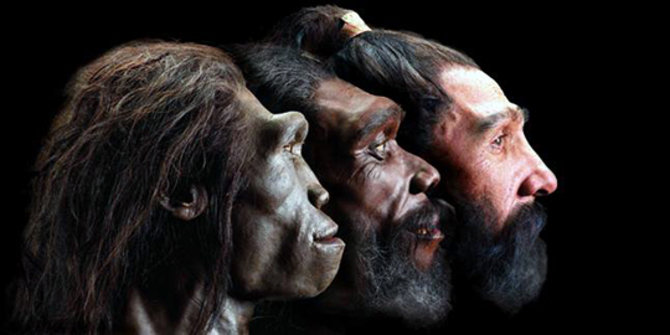
I am a Homo Habilis...What am I known for?

a)

I am able to speak latin

b)

I am able to start a fire

c)

I can make tools

d)

I can paint the walls

103.

If you wanted to excavate fossils of the earliest human ancestors, to what country might you travel?

a)

Australia

b)

China (Asian continent)

c)

Kenya (African continent)

d)

Iceland

104.

Who was considered the "Upright Man"

a)

Homo Erectus

b)

Australopithecines

c)

Neanderthal

d)

Homo Sapien

105.

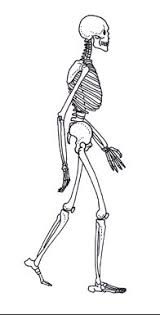
The ability to walk upright on two legs is called:

a)

bipedalism

b)

quadropedalism

c)

bicyclepedalism

d)

tripedalism

106.

Which hominid species is most closely related to Homo sapiens?

a)

Homo habilis

b)

Australopithecus afarensis

c)

Homo neanderthalensis

d)

Homo heidelbergensis

107.

What is the scientific name for modern day humans?

a)

Homo Habilis

b)

Homo Sapiens

c)

Homo Erectus

d)

Neanderthal

108.
Which is the largest grouping in the taxonomy?
a)
family
b)
kingdom
c)
species
d)
phylum
109.

What is the last step of classification?

a)

family

b)

genus

c)

order

d)

species

110.

What is your kingdom?

a)

primate

b)

hominid

c)

mammal

d)

none of these