wayground logo

Free Printable Worksheets

Font size

S
M
L
XL
Worksheets

Biology Overall Review

Total questions: 66

Worksheet time: 50mins

Name
Class
Date
1.

A molecule that carries energy that cells can use. It has high energy.

a)

ADP

b)

Adenosine Triphosphate

c)

Chemosynthesis

d)

NADPH

2.

A process that is part of the light-independent reaction. It uses CO2 and energy to make sugar.

a)

photosynthesis

b)

Light-dependent reaction

c)

Calvin Cycle

d)

electron transport chain

3.

A molecule that does NOT carry energy that cells can use. It has two phosphates. It has low energy.

a)

ADP

b)

ATP

c)

chemosynthesis

d)

thylakoids

4.

A process by which some organisms use chemical energy to make their food.

a)

chorophyll

b)

photosynthesis

c)

chemosynthesis

d)

electron transport chain

5.

A process by which organisms use light to make their food, storing the light as chemical energy in the form of sugar. 6CO2 + 6H2O + energyC6H12O6 + 6O

a)

cholorophyll

b)

electron transport chain

c)

chemosynthesis

d)

photosynthesis

6.

Pancake shaped compartments filled with chlorophyll, that form stacks called grana inside the chloroplast.

a)

chloroplast

b)

stroma

c)

grana

d)

thylakoids

7.
Name this process.
a)
Osmosis
b)
Diffusion
c)
Active transport
d)
Passive transport
8.
This process ....
a)
requires no energy.
b)
requires sunlight.
c)
requires ATP.
d)
happens only in plant cells.
9.
What is this process?
a)
Passive transport
b)
Diffusion
c)
Cellular respiration
d)
Active transport
10.
These structures help make this process possible.
a)
Phospholipids
b)
Ribosomes
c)
Protein channels
d)
Vesicles
11.
When does replication of DNA take place during the cell cycle?
a)
Metaphase
b)
Telophase
c)
Anaphase
d)
Interphase
12.
One half of a chromosome is called ________________.
a)
chromatid
b)
chromatin
c)
daughter cell
d)
gamete
13.
Tangled thread-like substance found inside the nucleus.
a)
Cytoplasm
b)
Chromatid
c)
Centromere
d)
Chromatin
14.
During this phase, two new nuclei form around the chromatin in a dividing cell.
a)
Cytokinesis
b)
Telophase
c)
Metaphase
d)
Prophase
15.
The growth and division of a cell is called __________________.
a)
Cell cycle
b)
Homeostasis
c)
Mitosis
d)
Meiosis
16.
The diffusion of water through a selectively permeable membrane:
a)
Passive transport
b)
Active transport
c)
Osmosis
d)
Meiosis
17.
This pigment captures the energy in sunlight so photosynthesis can begin:
a)
Chloroplast
b)
Thylakoid
c)
Chlorophyll
d)
Zax sauce
18.
Nuclear membrane disappears; chromatin condenses; centrioles begin to migrate; spindle fibers appear
a)
Prophase
b)
Metaphase
c)
Anaphase
d)
Telophase
19.
Chromosomes line up across the center of the cell; spindle fibers attach to centromeres holding two chromatids together
a)
Prophase
b)
Metaphase
c)
Anaphase
d)
Telophase
20.
Centromeres split; chromatids separate and move toward opposite ends of the cell as cell stretches out from the center
a)
Prophase
b)
Metaphase
c)
Anaphase
d)
Telophase
21.
Chromosomes lose their rod-like shapes; nuclear envelopes return; spindle fibers disappear
a)
Prophase
b)
Metaphase
c)
Anaphase
d)
Telophase
22.
A red blood cell, placed in a HYPOTONIC solution, will .....
a)
swell and possibly burst.
b)
shrink and die.
c)
not change size at all.
d)
run screaming for mama.
23.
During _____________ the cell membrane splits to form two identical daughter cells.
a)
Cytokinesis
b)
Interphase
c)
Telophase
d)
Metaphase
24.
This process creates two new body cells that each have a full copy of the original cell's DNA.
a)
Mitosis
b)
Meiosis
c)
Photosynthesis
d)
Glycolysis
25.

Which of the follow synthesizes (makes) proteins?

a)

Golgi Apparatus

b)

Vesicles

c)

Ribosomes

d)

Lysosomes

26.

MITOSIS

a)

INCREASES GENETIC VARIATION

b)

ALLOWS TRAITS TO BE PASSED ON TO OFFSPRING

c)

PRODUCES 2 IDENTICAL DAUGHTER CELLS

d)

ALL ARE TRUE

27.

NORMAL HUMANS HAVE 46 CHROMOSOMES, HOW MANY WILL THE GERM CELLS HAVE AFTER MEIOSIS?

a)

46

b)

23

c)

12

d)

92

28.
Which process and type of resulting cells are represented?
a)
mitosis, gametes
b)
mitosis, body cells
c)
meiosis, gametes
d)
meiosis, body cells
29.
The chromosomes that pair up during meiosis, are called __________ chromosomes.  
a)
homozygous 
b)
asexual
c)
homologous
d)
genes
30.
A male shark has 40 chromosomes in each of its sex cells. How many would be present in its body cells?
a)
20
b)
40
c)
80
d)
160
31.
Females have ____ and males have _____ chromosomes.
a)
XX, XY
b)
XY, XX
c)
XX, XX
d)
XY, XY
32.
Identify the phase:
a)
Metaphase I
b)
Metaphase II
c)
Anaphase I
d)
Anaphase II
33.
Identify the phase.
a)
Telophase I
b)
Telophase II
c)
Metaphase I
d)
Metaphase II
34.
What is another reason we need meiosis?
a)
So the offspring has genes from both parents
b)
So the offspring has genes from one parent
c)
So the offspring has genes from neither parents
d)
So the offspring makes its own genes
35.
What phase is  shown in the picture?
a)
anaphase 1
b)
anaphase 2
c)
metaphase 1
d)
telophase 1
36.

Involves crossing over

a)

Mitosis

b)

Meiosis

c)

Both

37.
Water is classified as an inorganic compound because it
a)
does not contain carbon
b)
does not contain nitrogen
c)
contains hydrogen
d)
contains oxygen
38.
Which substance plays a major role in most of the chemical reactions that occur in a living cell?
a)
water
b)
glycogen
c)
glycerol
d)
maltose
39.
The distortion (change in shape) of enzyme molecules which occurs at high temperatures is known as
a)
synthesis
b)
specificity
c)
replication
d)
denaturation
40.
Two examples of carbohydrates are
a)
fatty acids and glycerol
b)
fats and waxes
c)
sugars and starches
d)
amino acids and alcohol
41.
The basic building blocks of a protein are
a)
glucose molecules
b)
amino acids
c)
hormones
d)
fats
42.
Vegetable oils, such as corn oil, belong to which general class of organic substances?
a)
lipids
b)
proteins
c)
carbohydrates
d)
salts
43.

Water molecules stick together and form clumps of water.

a)

cohesion

b)

adhesion

c)

capillary action

d)

surface tension

44.

Water is not attracted to water molecules.

a)

true

b)

false

45.

Water has a high specific heat.

a)

true

b)

false

46.

DNA is an acronym for _____

a)

Diphosphorus Nucleic Acid

b)

Ribose Nucleic Acid

c)

Deoxyribonucleic Acid

d)

Deoxyribonucleic Acetate

47.

A nucleotide is composed of

a)

A phosphate, sugar and nitrogenous base

b)

A protein, protein and Guanine

c)

A phosphate, Adenine, and nitrogenous base

d)

A protein, Adenine and nitrogenous base

48.

Which of the following is a base pair?

a)

Adenine - Cytosine

b)

Cytosine - Thymine

c)

Deoxyribose - Cytosine

d)

Cytosine - Guanine

49.

The weak bonds between base pairs is a ___

a)

Covalent Bond

b)

Polar Bond

c)

Non Polar Bond

d)

Hydrogen

50.

A single-stranded sequence of DNA is TAC CGC AAG. Which series represents the complimentary strand of DNA?

a)

CGT TAT GGA

b)

ATG GCG TTC

c)

GCA ATA CCT

d)

AUG GCG UUC

51.

Dr. Tanaka discovered a new virus. The virus has a single strand of a nucleic acid, but she does not know if it is DNA or RNA. After running tests, she concludes that it is DNA. Which of the following would lead her to that conclusion?

a)

It contains uracil.

b)

It contains adenine.

c)

It contains thymine.

d)

It contains cytosine.

52.
How many letters or nitrogen bases make a codon in RNA?
a)
1
b)
2
c)
3
d)
6
53.
Which amino acid is made from the RNA codon GUA?
a)
Phenylalanine
b)
Leucine
c)
Serine
d)
Valine
54.

The offspring of a cross between parents that have contrasting traits:

a)

purebred

b)

hybrid

c)

dominant

d)

recessive

55.

When the two alleles of a particular gene are different:

a)

heterozygous

b)

homozygous

c)

genotype

d)

phenotype

56.

The set of alleles that an individual has:

a)

heterozygous

b)

phenotype

c)

homozygous

d)

genotype

57.

A diagram used to predict the outcomes of a genetic cross:

a)

karyotype

b)

Punnett Square

c)

Pedigree

d)

Venn diagram

58.

A version of a gene:

a)

allele

b)

trait

c)

character

d)

generation

59.

A detectable trait or traits that result from the genotype such as color, shape, etc:

a)

genotype

b)

homozygous

c)

heterozygous

d)

phenotype

60.
Hemophilia is a recessive x-linked disorder.
Which genotype represents a male with hemophilia?
a)
XHXh
b)
XhXh
c)
XHY
d)
XhY
61.

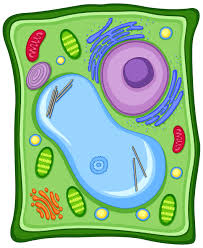
What kind of cell is shown

a)

plant

b)

meiosis

c)

mitosis

d)

animal

62.

Holds the cell's organelles, tiny structures that carry out cells activities

a)

mitochondria

b)

cytoplasm

c)

nucleus

d)

chloroplast

63.

The image shows a

a)

plant cell

b)

animal cell

c)

mitosis process

64.
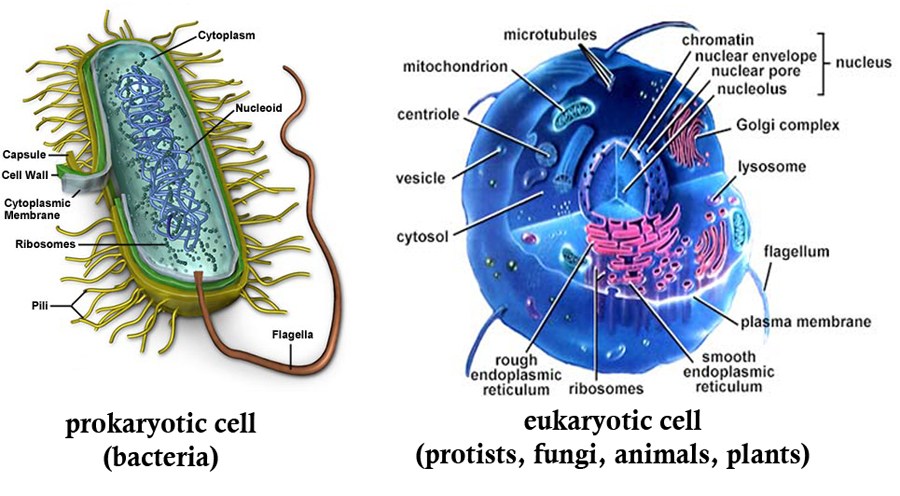
Prokaryotes and eukaryotes both have
a)
cell membrane and DNA
b)
nucleus
c)
cell wall
65.
A cell without a nucleus
a)
Eukaryote
b)
Prokaryote
c)
Both
d)
plant cell
66.

I am found in a plant cell and I provide a "central" and LARGE amount of storage. I am a...

a)

Central Vacuole

b)

Cytoplasm

c)

Central Membrane

d)

Mitochondria