wayground logo

Free Printable Worksheets

Font size

S
M
L
XL
Worksheets

Physics box Unit Quiz

Total questions: 65

Worksheet time: 5hrs 25mins

Name
Class
Date
1.

The Metric System is based on powers of:

a)

5's

b)

10's

c)

20's

d)

50's

2.

Which units are the BASE units in the metric system? Check all that apply.

a)

Meters

b)

Liters

c)

Grams

d)

Inches

e)

Miles

3.

What scientific tool is used to measure volume of liquids, such as water and chemicals?

a)

Meter Stick

b)

Ruler

c)

Graduated Cylinder

d)

Triple Beam Balance

4.

What scientific tool is best to measure the length of a classroom?

a)

Meter Stick

b)

Ruler

c)

Graduated Cylinder

d)

Triple Beam Balance

5.

Which unit below is the largest?

a)

Kilogram

b)

Gram

c)

Centigrams

d)

Milligrams

6.

What unit is used for measuring MASS in the metric system?

a)

Grams

b)

Liters

c)

Meters

d)

Miles

7.

Which of the following unit prefixes is the SMALLEST?

a)

Kilo

b)

Hecto

c)

Deka

d)

Deci

8.

Using your knowledge of the metric system, which unit is the biggest?

a)

Hecto

b)

Deka

c)

Deci

d)

Milli

9.

Convert 6 cm to mm. How many mm equals 6 cm?

a)

6,000 mm

b)

600 mm

c)

60 mm

d)

6 mm

10.

How many milligrams are in 100 grams? Convert 100 grams (g) to milligrams (mg).

a)

10 mg

b)

1,000 mg

c)

100,000 mg

d)

1,000,000 mg

11.
What is the formula for density?
a)
density = mass x volume
b)
density = mass / volume
c)
density = mass + volume
d)
density = mass - volume
12.
What is the volume of Object X?
a)
10.0 cm3
b)
15.0 cm3
c)
20.0 cm3
d)
25.0 cm3
13.
What units are used to measure Density?
a)
cm3/g
b)
g
c)
g/cm3
d)
cm3
14.
Calculate the density of the cube.
a)
2 g/cm3
b)
4 g/cm3
c)
6 g/cm3
d)
8 g/cm3
15.
A piece of copper has a mass of 89g and a volume of 10 cm3.  What would be the density of the copper?
a)
0.89 g/cm3
b)
89 g/cm3
c)
8.9 g/cm3
d)
890 g/cm3
16.
Distance over time.
a)
Travel
b)
Motion
c)
Velocity
d)
Speed
17.
Speed plus direction.
a)
Velocity
b)
Motion
c)
Position
d)
Acceleration
18.
How is speed calculated?
a)
S= D/M
b)
S= D/T
c)
S= T/D
d)
T= S/D
19.
How would decreasing the time it takes you to run a certain distance affect your speed? Speed will...
a)
Increase
b)
Decrease
20.

A runner races in the 100 meter dash. It takes her 10 seconds to finish. What is her average speed?

a)

10 m/s

b)

1000 m/s

c)

100 seconds

d)

10 seconds

21.
Which of the following is a unit of distance ?
a)
miles/hr
b)
hr
c)
km
d)
min
22.
A train travels 25 km in .5 hrs. How fast is the train going?
a)
25 miles/hr
b)
5 miles/hr
c)
125 km/hr
d)
50 km/hr
23.
What is this graph representing?
a)
Constant Speed
b)
Acceleration (speeding up)
c)
Deceleration (slowing down)
d)
No motion
24.
At 60 seconds, how far had this object traveled? 
a)
0 m
b)
10 m
c)
20 m
d)
40 m
25.
How long did it take this object to travel 10 m?
a)
0 s
b)
10 s
c)
15 s
d)
20 s
26.
65 miles per hour North is an example of an objects what?
a)
Speed
b)
Velocity
c)
Average Speed
d)
Constant Speed
27.
Acceleration is defined as the CHANGE in 
a)
time of motion to another place. 
b)
velocity 
c)
distance 
d)
speed
28.
The momentum of an object depends upon the object's ___________&_____________.  
a)
size and shape
b)
mass and speed
c)
mass and veloctiy
d)
mass and energy
29.
The equation to calculate momentum is
a)
p=mv
b)
p=1/2mv2
c)
p=mgh
d)
p=mg
30.
What is the unit for momentum?
a)
m/sec
b)
kg/sec
c)
kg/m
d)
kg m/sec
31.
A 50 kg ball rolls down the street at 5 m/s. Calculate the momentum of the ball. 
a)
55 kg*m/s
b)
100 kg*m/s
c)
250 kg*m/s
d)
500 kg*m/s
32.

Which of the following has the MOST momentum?

a)

rolling ping-pong ball

b)

rolling bowling ball

c)

rolling soccer ball

d)

rolling basketball

33.
The recoil speed of a rifle is much less than the exit velocity of a bullet because...
a)
the rifle experiences a smaller force
b)
the rifle experiences a smaller change in momentum
c)
the rifle has a much greater mass
d)
the rifle does not obey the laws of physics
34.
Which object listed below has the greatest momentum?
a)
A 0.05 kg object rolling at 0.2 m/s.
b)
A 0.15 kg object rolling at 2 m/s.
c)
A 0.15 kg object rolling at 1 m/s
d)
A 0.4 kg object rolling at 2 m/s.
35.
What are the units of Force?
a)
kg m/sec
b)
kg m
c)
N
d)
N sec
36.
Which of the following has the least amount of momentum?
a)
An ant walking along the ground
b)
An ant at rest
c)
An elephant walking
d)
An elephant running
37.
If two objects have the same mass, then the faster moving object has ____________ momentum.
a)
more 
b)
less
c)
the same
38.

A simple method to find centre of mass of a body is usage of

a)

stop watch

b)

plumbline

c)

pendulum

d)

gauge

39.

Where do you hang the plumb line when determining the Centre of mass?

a)

It doesn't matter, because it always goes through the CG

b)

Only from the corners

c)

From the point where you are suspending the object

d)

At the right angle

40.
What is the centre of mass ?
a)
it is a single point at which the object can balance.
b)
The mass is distributed equally around it.
c)
the centre of gravity of the object
d)
All of the above
41.
What is the definition of "weight"?
a)
measure of the force of gravity on your body
b)
the time it takes to get on a ride 
c)
the amount of matter in an object
d)
the size of an object
42.
The mass of an object ___________ as it moves away from the center of Earth
a)
stays the same
b)
decreases
c)
increases
d)
doubles
43.
The weight of an object _________ as it moves away from the center of Earth.
a)
increases
b)
stays the same
c)
triples
d)
decreases
44.
On which celestial object would you weigh the most?
a)
Earth
b)
Jupiter
c)
Sun
d)
You would weigh the same on all celestial objects
45.

On which celestial object (outer space) would your mass be the greatest?

a)

Earth

b)

Jupiter

c)

Sun

d)

Your mass doesn't change on different celestial objects

46.
If an object has more mass, then it will
a)
weigh more.
b)
weigh less.
c)
weigh the same as an object with less mass.
d)
always have more volume than an object with less mass.
47.
Hooke's Law describes the behaviour of which kind of material under tension?
a)
plastic
b)
metals only
c)
elastic
d)
non-metals only
48.

An unstretched spring becomes longer when a force is applied to it. Which word describes the additional length of the spring gains?

a)

Expansion

b)

Extension

c)

Stretched

49.

An elastic material can change shape when ________ is exerted on it.

a)

a force

b)

a moment

c)

an acceleration

50.

In the diagram, a force is used to stretch a spring. The spring is temporarily deformed when the force is applied. When the force is removed, the spring . . .

a)

returns to its original length.

b)

stays the same length.

51.
If extension = Stretched length - original length. What is the extension of spring D.
a)
1mm
b)
2mm
c)
3mm
d)
0mm
52.
5,000 g = ____________ kg
a)
2
b)
50,000
c)
5
d)
10
53.
A 450 N object has a mass of _____ on earth
a)
4500 kg
b)
45 kg 
c)
4.5 kg 
d)
450 kg
54.
Which statement most accurately represents Hooke's Law?
a)
a) Extension of a spring is proportional to the force applied.
b)
b) Extension of a spring is proportional to the number of coils.
c)
c) Extension of a spring is inversely proportional to the force applied.
d)
d) Thickness of a spring wire is proportional to the force applied.
55.
Which of the following is a unit for acceleration?
a)
km/s
b)
m/s2
c)
mi/hr
d)
ft
56.
Acceleration of an object happens when things ________
a)
slow down
b)
go faster
c)
change direction (turn)
d)
All of the above
57.

Which of the following factors affect the amount of friction between two objects?

a)

type of surface & pressure applied to the surface

b)

distance between the objects

c)

mass of the objects

d)

temperature of the objects

58.

When most objects with smooth surfaces rub, there is __________friction.

a)

equal

b)

more

c)

less

59.

Which of the following exhibits kinetic friction?

a)

book on the table  

b)

ball rolling on the floor

c)

chair folded on the floor      

d)

man waiting in line at the cashier

60.

For objects here on Earth, the gravitational force on them is always

__________ while frictional force is always __________.

a)

upward; sideward  

b)

downward; sideward

c)

upward, opposite its motion or impeding motion

d)

downward; opposite its motion or impeding motion

61.

What are the 2 types of friction discussed in the lab?

a)
Static and Dynamic Friction
b)
Kinetic and Static Friction
c)
Kinetic and Dynamic Friction
d)
Dynamic and Moving Friction
62.
Force the opposes motion between 2 surfaces
a)
force
b)
Newton
c)
friction
d)
net force
63.
Which of the following is opposed by kinetic friction?
a)
A truck being pushed but not moving
b)
A box being pushed but not moving
c)
A box being pushed and sliding across the floor
d)
A wagon being pulled but not moving
64.
Mrs. Dunnahoo painted a rectangular blue line on the floor.  The length of the rectangle she painted was 24 yards.  The width of the rectangle was half the length.  What was the perimeter of the rectangle Mrs. Dunnahoo painted in yards?
a)
72 yards
b)
36 yards
c)
62 yards
d)
46 yards
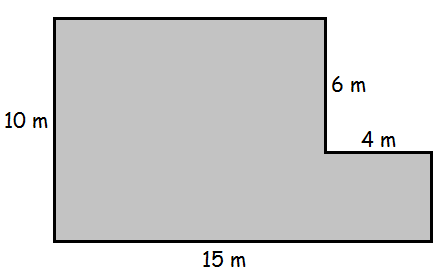
65.
Find the perimeter
a)
25cm
b)
35cm
c)
50cm
d)
100cm