Wayground logo

Free Printable Worksheets

Font size

S
M
L
XL
Worksheets

Chemical bonding

Total questions: 47

Worksheet time: 12hrs 45mins

Name
Class
Date
1.

Metals and nonmetals form what kind of bonds?

a)

Ionic

b)

Covalent

c)

Metallic

d)

Lewis structures

2.

In metallic bonds electrons are:

a)

shared

b)

move around the nuclei randomly

c)

transferred

3.

Malleability and ductility are characteristics of compounds with

a)

covalent bonds

b)

metallic bonds

c)

ionic bonds

d)

alloy bonds

4.

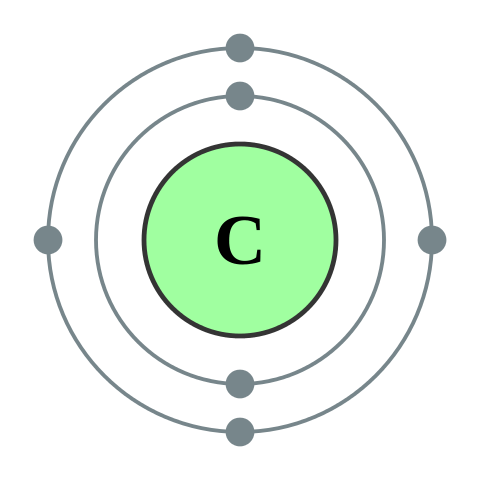
How many valence electrons does carbon have?

a)

4

b)

5

c)

6

d)

7

5.

what element has five valence electrons?

a)

Carbon

b)

Nitrogen

c)

Oxygen

d)

Helium

6.

How many electrons do sodium atoms generally lose?

a)

0

b)

1

c)

2

d)

3

7.

Electronegativity is...

a)

The ability for an atom to ATTRACT electrons

b)

the ability of an atom to LOSE electrons

c)

the energy required to remove an electron from an atom

d)

how easy it is to make friends.

8.
Which type of bond has an equal sharing of electrons?
a)
Polar Covalent 
b)
Non Polar Covalent
c)
Ionic
d)
Metallic
9.
When electrons are shared unequally a/an ___________ bond is formed 
a)
ionic 
b)
hydrogen
c)
polar covalent 
d)
nonpolar covalent
10.

Valence electrons are found

a)

in the innermost energy level of an atom

b)

in the middle energy levels of an atom

c)

in the outermost energy levels of an atom

11.
Ionic bonds are between...
a)
Metal and Non-metal
b)
Non-metal and Non-metal
c)
Metal and Metal
12.

What are the stronger bonds (high melting point)?

a)

Ionic

b)

Polar covalent

c)

Non-polar covalent

d)

Metallic

13.

Which has the highest melting point?

a)

CH4CH_4  

b)

LiCl

c)

H2OH_2O  

d)

CO2CO_2  

14.

What theory helps predict the shape of a molecule?

a)

VSEPR

b)

Big Bang

c)

Dipole

d)

Lewis

15.

Which one will have a single covalent bond?

a)

Cl2Cl_2  

b)

CO3CO_3  

c)

N2N_2  

d)

NO

16.

Which molecule has only two lone pairs of electrons?

a)

HCl

b)

NH3NH_3  

c)

H2OH_2O  

d)

NH4NH_4  

17.
Which of the following is a property of an ionic compound?
a)
high melting point
b)
soft
c)
malleable
d)
liquid at room temperature
18.

The following properties are all characteristics of ionic compounds EXCEPT

a)

high melting and boiling points

b)

soft

c)

crystal lattice structure

d)

conduct electricity when dissolved in water

19.

Why do ionic compounds have high melting and boiling points?

a)

Their ions are free to move.

b)

Their ions are held in fixed positions.

c)

They have many strong bonds.

d)

They have many weak bonds.

20.
Choose the correct shape for this molecule:
a)
Trigonal planar
b)
Trigonal pyramidal
c)
Tetrahedral
d)
Linear
21.
Choose the correct shape for this molecule:
a)
Trigonal planar
b)
Trigonal pyramidal
c)
Bent
d)
Tetrahedral
22.
Choose the correct shape for this molecule:
a)
linear
b)
Trigonal pyramidal
c)
Bent
d)
Tetrahedral
23.
Choose the correct shape for this molecule:
a)
linear
b)
Trigonal pyramidal
c)
Bent
d)
Tetrahedral
24.
Choose the correct shape for this molecule:
a)
Tetrahedral
b)
Trigonal pyramidal
c)
Bent
d)
Trigonal planar
25.
Choose the correct shape for this molecule:
a)
Bent
b)
Linear
c)
Tetrahedral
d)
Trigonal pyramidal
26.

Determine the molecular geometry of the given structure.

a)

Trigonal Pyramidal

b)

Trigonal Bipyramidal

c)

Trigonal Planar

d)

Tetrahedral

27.

The geometry of a molecule with 2 bonded pairs of electrons and 2 lone pairs of electrons, AB2E2

a)

Tetrahedral

b)

Trigonal Planar

c)

Bent

d)

Trigonal Pyramidal

e)

Linear

28.

The geometry of a molecule with 3 bonded pairs of electrons and 0 lone pairs of electrons, AB3

a)

Tetrahedral

b)

Trigonal Planar

c)

Bent

d)

Trigonal Pyramidal

e)

Linear

29.
What is the shape of H2O?
a)
linear
b)
tetrahedral
c)
bent
d)
trigonal pyramidal
30.
Hydrogen needs _____ electrons in its valence shell to be stable.
a)
4
b)
6
c)
8
d)
2
31.
If electrons are shared equally then the bond is....
a)
Non-polar covalent
b)
Ionic
c)
Non-polar ionic
d)
Polar covalent
32.
If electrons are shared unequally then the bond is....
a)
Non-polar covalent
b)
Ionic
c)
Non-polar ionic
d)
Polar covalent
33.
Metals and nonmetals form which kind of bond?
a)
Polar covalent
b)
Ionic
c)
Non-polar covalent
d)
Metallic
34.

Covalent bonded molecules have a ______ melting point than ionic compounds.

a)

Lower

b)

Higher

c)

Same

d)

brittle

35.

Which atom should be in the center of the Lewis Structure?

a)

Least electronegative

b)

Highest electronegative

c)

Highest atomic number

d)

Most valence electrons

36.

The electrons in a POLAR covalent bond are shared...

a)

Evenly

b)

Unevenly

c)

Electrons are not shared

d)

None of the Above

37.

As END increases what happens to polarity of bonds?

a)

Increases

b)

Decreases

c)

Stays the same

d)

Polarity never changes

38.
Which of the following molecules, based on the elements present, would be most polar?
a)
HF
b)
H2
c)
HCl
d)
HBr
39.

Which is the least polar bond?

a)

O and Cl

b)

Na and O

c)

LI and F

d)

H and F

40.

What electrons are involved in chemical bonding?

a)

Valence

b)

Lewis

c)

Inner most shell

d)

Protons

41.

What is the correct Lewis Dot Structure for ammonia NH3

a)
b)
c)
d)
42.

Which is the correct molecular structure for carbon dioxide?

a)
b)
c)
d)
43.
How many electrons should Oxygen have around its Lewis dot model?
a)
5
b)
6
c)
7
d)
8
44.
 A lone pair is defined as
a)
A pair of bonding electrons
b)
One non-bonding electron
c)
A pair of non-bonding electrons
d)
A pair of electrons on the central atom
45.
Which of the following shapes has an unshared pairs of electrons on the central atom? 
a)
Bipyramidal
b)
Bent
c)
Trigonal Planar
d)
Tetrahedral
46.

What molecular geometry would PH3 have?

a)

Trigonal Pyramidal

b)

Trigonal Bipyramidal

c)

Bent

d)

Linear

47.

What compound could this be?

a)

CN

b)

N2N_2  

c)

CO2CO_2  

d)

Cl2Cl_2