wayground logo

Free Printable Worksheets

Font size

S
M
L
XL
Worksheets

Magnetism

Total questions: 100

Worksheet time: 1hrs 3mins

Name
Class
Date
1.
What do the lines around this magnet represent?
a)
North Pole
b)
South Pole
c)
Magnetic Declination
d)
Magnetic Field
2.
As the distance between two magnets increases (they get farther apart), the force between them:
a)
Increases
b)
Decreases
c)
Stays the Same
3.
If you cut a magnet in half, what happens to the poles?
a)
One half gets the North Pole, the other half gets the South Pole
b)
Both halves get only a North Pole
c)
Both halves get only a South Pole
d)
Both halves get a North pole and a South Pole
4.
If the North Pole of a permanent magnet is placed next to a compass as seen in the picture, which direction will the needle move?
a)
Clockwise
b)
Counter-clockwise
c)
It will not move
d)
Need more information
5.
An electromagnet's poles may be reversed by:
a)
decreasing the voltage of the coil
b)
increasing the number of coils
c)
changing the direction of current flow
d)
altering the material used to make the coils
6.
Which direction is the North Pole of this electromagnet?
a)
Right
b)
Left
c)
Up
d)
Down
7.
In un-magnetized materials the domains are __________ aligned.
a)
super
b)
slightly
c)
randomly
d)
always
8.
Electric motors are devices that convert _____ energy into  _____ energy.
a)

electrical; kinetic

b)
mechanical; electrical
c)
chemical; potential
d)

kinetic; kinetic

9.
What kind of magnet can be turned on and off?
a)
refridgerator magnet
b)
electromagnet
c)
magnetite
d)
iron
10.

If a glass plate is placed over a magnet and iron filings are sprinkled over the glass, a pattern will be visible. What does this pattern indicate?

a)

The magnetic field

b)

The electrostatic field

c)

The piezoelectric effect

d)

The chemical reaction of the magnet and the filings

11.

How can a wire become magnetic?

a)

point it north

b)

add a resistor

c)

heat it up

d)

run a current through it

12.

What device takes in kinetic energy and produces electricity?

a)

motor

b)

generator

c)

electromagnet

d)

battery

13.
A north pole and a south pole will attract.
a)
True
b)
False
14.
A magnet cannot not move which of the following objects?
a)
a paper clip
b)
a nail
c)
a toothpick
d)
a staple
15.
How is a permanent magnet DIFFERENT from a temporary magnet?
a)
A permanent magnet attracts materials made of iron.
b)
A permanent magnet has poles.
c)
A permanent magnet has a magnetic field.
d)
A permanent magnet keeps its magnetism for a long time.
16.
Earth acts like a giant magnet because its center is made up MOSTLY of
a)
granite
b)
limestone
c)
iron
d)
nickel
17.
True or False: All metals stick to magnets.
a)
True
b)
False
18.
It is possible for a magnet to have only one pole.
a)
True
b)
False
19.
A device that uses a free-moving magnetic needle to show direction is a:
a)
lodestone
b)
magnet
c)
compass
d)
magnetic field
20.
Where is the force of attraction the strongest on a magnet?
a)
at the poles
b)
in the middle
c)
above the magnet
d)
below the magnet
21.
Where is Earth's magnetic field strongest?
a)
Along the outside lines
b)
Along the inside lines on either side
c)
Where the lines are close together at the poles
d)
In the space outside of the lines
22.
Why does a compass needle point north?
a)
The compass is a bar magnet
b)
Because north is up
c)
Because it's magic
d)
It lines up with the Earth's magnetic field
23.
When two magnets attract, they ______________
a)
push apart
b)
change color
c)
get colder
d)
pull together
24.
When two magnets repel, they ________________
a)
change color
b)
pull together
c)
push apart
d)
get colder
25.
What will happen when these magnets are brought close together?
a)
They will attract each other.
b)
They will repel each other.
c)
Both magnets will turn to the left
d)
Both magnets will turn to the right
26.
This large crane magnet functions only when the electrical current is ON.  The crane magnet is an example of what type of magnet?
a)
NIB Magnet
b)
Ceramic Magnet
c)
Electromagnet
d)
funnel magnet
27.
Iron, Nickel and cobalt are all __________________ materials
a)
Shiny
b)
poles
c)
magnetic
d)
cold
28.
What characteristics do magnetic substances have?
a)
They can give you a "shock" when you touch them
b)
They can push or pull objects without touching them
c)
They are always black and cold to touch
d)
They fall faster than other objects when you drop them
29.
How is Earth's magnetic field similar to that of a magnet?
a)
It is hundreds of miles long
b)
It has north and south poles
c)
It is made in Earth's core
d)
It is shaped like a horseshoe
30.
Which of the following is true of a bar magnet?
a)
Its magnetic field is strongest near its center.
b)
It is surrounded by a magnetic field.
c)
The north pole is stronger than the south pole.
d)
The south pole is stronger than the north pole.
31.
What happens when two north poles of a magnet are placed together?
a)
they repel
b)
they attract
c)
they cancel each other out
d)
the strength of the magnet is doubled
32.
Poles are ....
a)
The part of the magnet where the force is the strongest
b)
A force created by magnets that pulls some metals
c)
To Pull towards
d)
An object able to pull some metals towards itself
33.
To attract means....
a)
The part of the magnet where the force is the strongest
b)
A force created by magnets that pulls some metals
c)
To Pull towards
d)
An object able to pull some metals towards itself
34.
Do these magnets attract or repel? 
a)
Attract
b)
Repel
35.
Do these magnets attract or repel?
a)
Attrack
b)
Repel
36.

Magnetism is a force of ____________________________ that occurs between two _____________ objects.

a)

attraction or repulsion, magnetic

b)

external or internal, magnetic

c)

external or repulsion, electronic

d)

attraction or internal, electronic

37.

The magnetic ____________ around a bar magnet is shown above.

a)

legs

b)

flowers

c)

field

d)

direction

38.

The Earth produces its own ________ field.

a)

spectrum

b)

electric

c)

magnetic

d)

progressive

39.

A compass points toward the south pole of Earth's magnetic field, located near the Earth's geographical ________.

a)

north

b)

south

c)

east

d)

west

40.

Every magnet has both a _________ pole and a __________ pole.

a)

North, South

b)

East, West

c)

Positive, Negative

d)

Positive, South

41.

Certain materials respond to magnetic fields by becoming ______________ themselves. ____________ is one of these materials.

a)

magnetic, Plastic

b)

electronic, Iron

c)

magnetic, Iron

d)

electronic, Plastic

42.

Some objects that normally aren't magnetic can become magnetized when connected to a circuit. Items that are magnetized in this way are called ________.

a)

electromagnets

b)

electrons

c)

electrochromic devices

d)

permanent magnets

43.

Probably the most useful thing about electromagnets is that they can be turned ________ and ________.

a)

on, off

b)

positive, negative

c)

north, south

d)

on, negative

44.

If two magnets are close together, the magnetic force will be ________.

a)

smelly

b)

weak

c)

strong

d)

positive

45.

If two magnets are placed so that a north pole and a south pole are facing each other, they will _____________ each other.

a)

date

b)

spin

c)

repel

d)

attract

46.

If two magnets are placed so that two ____________ poles or two ____________ poles are facing each other, they will repel each other.

a)

North, South

b)

external, internal

c)

positive, negative

d)

North, West

47.

Although magnetic fields are _____________, one common way that people investigate them is to use ________ filings.

a)

invisible, iron

b)

touchable, iron

c)

invisible, plastic

d)

touchable, plastic

48.

A horseshoe magnet will generate a magnetic field similar in shape to that of two ________ poles brought near each other.

a)

like

b)

opposite

c)

positive

d)

negative

49.
Which is not a property of all magnets?
a)
Has a magnetic field
b)
exerts forces
c)
has 2 magnetic poles
d)
has 2 geographic ples
50.
Inside of magnets there are tiny magnets called _______
a)
atoms
b)
domains
c)
mini magnets
51.
The center of a bar magnet is the strongest
a)
True
b)
False
52.
The lines on this image are called...
a)
magnetic field lines
b)
iron fillings
c)
graphite lines
d)
none of these
53.
Magnetic poles and electric charges are similar in that...
a)
like poles repel and opposites attract
b)
magnetic force is equal to electric force
54.
Magnetic NORTH is actually geographic _________
a)
SOUTH
b)
NORTH
c)
EAST
d)
WEST
55.
If the end of an unknown magnet sticks to a magnet pole labeled "North" the unknown end must be...
a)
North
b)
South
c)
East 
d)
West
56.
Electricity can be used to create a magnet
a)
True
b)
False
57.
A Magnet can be used to create electricity
a)
True
b)
False
58.
A _________ is a device that produces magnetism by spinning a coil of wire around a nail.
a)
Generator
b)
Electromagnet
c)
Battery
d)
Galvonometer
59.
You can make an electromagnet stronger by...
a)
increasing the current through the wire
b)
make the iron core bigger
c)
increase the number of loops around the core
d)
All of these
60.
Magnets stick to any materials that are made of
a)

Iron, Nickel, Copper, steel

b)

Iron, Nickel, Cobalt, steel

c)

Ions, Nickel, Cobalt, burgers

d)

Iron, Lead, Cobalt, steel

61.
Magnets can interact without touching.
a)
True
b)
False
62.

A ________ is a device that has a magnet on a needle that spins freely. It is used for navigation because its needle usually points north.

a)

calculator

b)

ruler

c)

compass

d)

map

63.

Dylan puts two magnetic toy trains very close to each other on a track. What will happen next, and why?

a)

The trains will not move because the magnets are not touching.

b)

The trains will move closer to each other because the magnetic force will pull the trains together.

c)

The trains will move away from each other because the magnetic force will push the trains apart.

d)

The trains will move away from each other because the magnets are not touching.
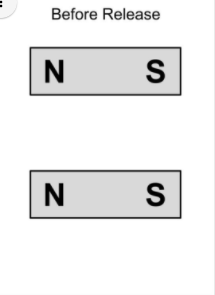
64.
Which way will the magnets move after they are released?
a)
Towards each other
b)
Away from each other
c)
Not enough information
65.

non-magnetic material is such as................

a)

paper clips

b)

glass cups

c)

scissors

66.

magnetic material is such as ..............

a)

iron scissors

b)

chair

c)

plastic cup

67.

Magnets are attracted to some materials. We say these material are ____

a)

Non-magnetics

b)

Magnetic

c)

Pattern

d)

Magnet

68.

Similar poles repel

a)

False

b)

True

69.

A wood chair is a magnetic object.

a)

True

b)

Maybe

c)

False

70.

Why will a magnet not attract pieces of paper?

a)

because paper is not strong.

b)

because paper is flexible.

c)

because paper is not magnetic.

71.

Which material would work best for a towel?

a)

rubber

b)

paper

c)

fabric

d)

plastic

72.
The ability of a material to deform, usually by stretching along its length
a)
plasticity
b)
ductility
c)
malleability
d)
elasticity
73.
Flexible means...
a)
bends easily 
b)
breaks if you bend it 
c)
scratches easily
d)
ridged like
74.
Malleable means...
a)
makes a noise when you hit it 
b)
does not break if you bend it 
c)
scratches easily
d)
does not scratch easily
75.
Transparent means
a)
cannot see through it
b)
light passes through it
c)
light does not pass through
d)
only some light passes through
76.

A material you can not see through is called ...

a)

Transparent

b)

Opaque

c)

Oblong

d)

Malleable

77.

Shiny and conducts electricity

a)

Glass

b)

Plastic

c)

Rubber

d)

Metal

78.

Weak and absorbent

a)

Fabric

b)

Cardboard

c)

Plastic

d)

Glass

79.

Waterproof material

a)

Plastic

b)

Wood

c)

Fabric

d)

Paper

80.

What material can conduct heat and electricity, can be hammered into a shape, or drawn into a wire.

a)

metal

b)

plastic

c)

fabric

d)

glass

81.

Which property means to protect from water?

a)

waterproof

b)

heat-trapping

c)

opaque

d)

soft

82.

Which property means can't see through?

a)

waterproof

b)

heat-trapping

c)

opaque

d)

soft

83.

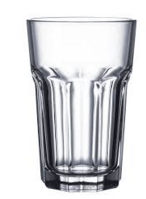
Which object is made of glass?

a)
b)
c)
d)
84.

Which of these materials is used to make rain boots?

a)

Paper

b)

Fabric

c)

Plastic

85.
What does 'brittle' mean?
a)
Soft
b)
Easily breakable
c)
Easily bendable
d)
Tough
86.

What does malleable mean?

a)

The ability for a material to be attracted to a magnet

b)

Another word for brittle

c)

An object or material which can conducts electricity

d)

An object or material which can be bent easily and hammered into shape without breaking

87.

Transparent and brittle

a)

Metal

b)

Sponge

c)

Glass

d)

Plastic

88.

Flexible and elastic and a opaque

a)

Fabric

b)

Tissue paper

c)

Rubber

d)

Wood

89.

Transparent and flexible

a)

Plasstic

b)

Plastic

c)

Rubber

d)

Fabric

e)

Polythene

90.

Hard and attracted to a magnet

a)

Wool

b)

Wood

c)

Metal

d)

Cotton

91.

Weak and absorbent

a)

Fabric /faabrick

b)

Paper /tissue paper

c)

Polythene/plastic

d)

None of theme

92.

Mass is -

a)

the amount of matter in an object

b)

the density of a material

c)

the amount of force a material has

d)

the concentration of matter in an object.

93.

Which of the following is an advantage of using plastic for making pails.

a)

It is flexible.

b)

It allows light to pass through it.

c)

It is shiny

d)

It is lightweight.

94.

John noted some properties of an object, X, listed below.


-Strong

-Waterproof

-Flexible


Which of the following is object X most likely to be?

a)

Towel

b)

Camping tent

c)

Coin

d)

Book

95.

Ryan is able to see through the glass windows clearly. This is because the glass window is ______________.

a)

Waterproof

b)

Strong and flexible

c)

Transparent

96.

Which of the following materials come from living things?

a)

Silk

b)

Ceramics

c)

Plastics

d)

Metals

97.

What material is suitable for making basketballs?

a)

Glass

b)

Metal

c)

Plastic

d)

Rubber

98.

determines how well the material will resist deformation and return to its normal size or shape after a force has been applied to it

a)

texture

b)

elasticity

c)

strength

d)

uniformity

99.

determines how easy it is to roll or hammer out the material without breaking it apart

a)

bounce

b)

malleability

c)

strength

d)

uniformity

100.

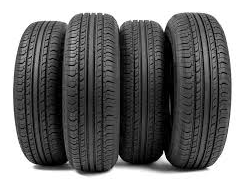
Which material would work best for a car tire?

a)

rubber

b)

glass

c)

plastic

d)

paper