wayground logo

Free Printable Worksheets

Font size

S
M
L
XL
Worksheets

2022 Final Exam Test Review Antkowiak

Total questions: 74

Worksheet time: 1hrs 14mins

Name
Class
Date
1.
What is the mode of inheritance shown here?
a)
Autosomal Dominant
b)
Autosomal Recessive
c)
Sex Linked Recessive
2.
What is the mode of inheritance shown here?
a)
Sex Linked
b)
Autosomal Dominant
c)
Autosomal Recessive
3.
What is the mode of inheritance shown here?
a)
Autosomal Recessive
b)
Autosomal Dominant
c)
Sex Linked
4.
What is the mode of inheritance shown here?
a)
Autosomal Dominant
b)
Autosomal Recessive
c)
Sex Linked
5.
What is the mode of inheritance shown here?
a)
Autosomal Recessive
b)
Autosomal Dominant
c)
Sex Linked
6.
Which of the following combinations of sex chromosomes represent a female?
a)
XY
b)
XXY
c)
XX
7.
What type of heredity is shown in the pedigree?
a)
Autosomal Recessive
b)
Sex-Linked
c)
Autosomal Dominant
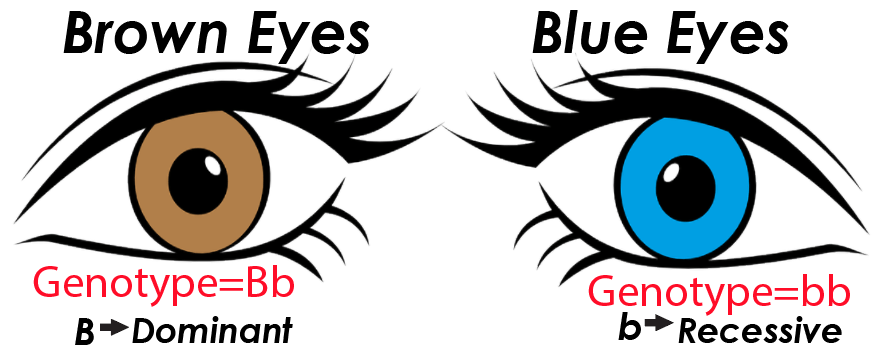
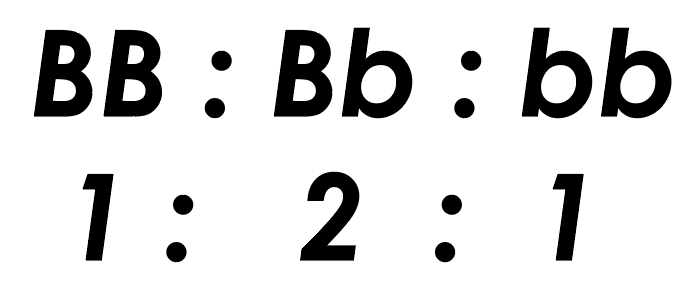
8.
The genotypic ratio here is
a)
25% blue eye 75 % brown eye 
b)
BB = 25% Bb = 50% bb = 25%
c)
BB= 50 % bb = 50%
d)
All brown eye
9.

Punnett Square #2

In plants tall is dominant to short.

Cross one homozygous dominant with one homozygous recessive plant.

What is the phenotypic ratio?

a)

1:2:1

b)

2:2

c)

4

10.

The observable traits dictated by the genotype

a)

Phenotype

b)

Genotype

c)

Homozygous Recessive

d)

Homozygous Dominant

11.

The ratio of homozygous dominant to heterozygous

to homozygous recessive offspring

a)

Genotypic Ratio

b)

Phenotypic Ratio

c)

Monohybrid Cross

d)

Homologous Pair

12.

For haemophilia, let H be the normal allele and h the mutant allele.


Which is the genotype of the unaffected male?

a)

XhY

b)

XHXH

c)

XHXh

d)

XHY

13.
The visual representation of an individual's chromosomes is a 
a)
phenotype
b)
genotype
c)
karyotype
d)
stereotype
14.
If a gene is found only on the X chromosome and not the Y chromosome, it is said to be 
a)
sex-linked trait
b)
polygenic trait
c)
codominant trait
d)
incomplete dominance trait
15.
Hemophilia is a recessive x-linked disorder.
Which genotype represents a female who is a carrier for hemophilia?
a)
XHXh
b)
XhXh
c)
XHXH
d)
XhY
16.

Look at this cross: XBXb x XBY


What proportion of the male children are colorblind?

a)

100%

b)

75%

c)

50%

d)

25%

17.

H= normal blood clotting

h=hemophilia


XHXh x XHY


What is the probability that any of their offspring will have hemophilia?

a)

4/4

b)

3/4

c)

2/4

d)

1/4

18.
If a gene is found only on the X chromosome and not the Y chromosome, it is said to be 
a)
sex-linked trait
b)
polygenic trait
c)
codominant trait
d)
incomplete dominance trait
19.
Hemophilia is a recessive x-linked disorder.
Which genotype represents a female who is a carrier for hemophilia?
a)
XHXh
b)
XhXh
c)
XHXH
d)
XhY
20.
Hemophilia is a recessive x-linked disorder.
Which genotype represents a male with hemophilia?
a)
XHXh
b)
XhXh
c)
XHY
d)
XhY
21.
Who is the father of evolution?
a)
Darwin
b)
Mendel
c)
Newton
d)
Einstein
22.
What is a change in an organism that allows for it to survive in its environment?
a)
homologous
b)
vestigial
c)
variation
d)
adaptation
23.
What is the study of organisms at the early stages of development?
a)
DNA studies
b)
embryology 
c)
extinction
d)
fossil record
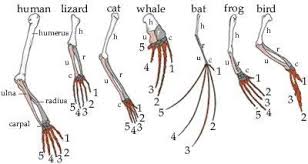
24.
What is this an example of?
a)
vestigial structures
b)
embryology
c)
homologous structures
d)
fossil record
25.
What are the evidences for Evolution?
a)
Fossil Records
b)
Embryology
c)
Similar body structure
d)
All the above
26.

Which of the folllowing is an example of a vestigial structure?

a)

the wings of a red-tailed hawk

b)

the hind limbs of a house cat

c)

the fins of sharks

d)

the wings of an ostrich

27.
If an organism has a vestigial structure, that structure likely once had a function in a(n)
a)
close relative
b)
early ancestor
c)
unrelated organism
d)
embryological stage
28.
Two organisms that are closely related would have
a)
very similar DNA sequence
b)
exactly the same DNA sequences
c)
no proteins in common
d)
completely different DNA sequence
29.
the hind leg bones in a whale are examples of
a)
homologous structures
b)
analogous structures
c)
fossils
d)
vestigals
30.
Which term refers to the process by which individuals that are better suited to the environment survive and reproduce therefore passing down their genes to their offspring? 
a)
Evolution 
b)
Variation 
c)
Adaptation
d)
Natural Selection 
31.
A beetle's ability to camouflage (blend in) with a nearby leaf allows it to escape a hungry frog's appetite.
Of the four parts of natural selection, which is this an example of?
a)
overproduction
b)
genetic variation
c)
selection
d)
adaptation
32.
In both the past and the present, humans have selected plants or animals for breeding based on desirable traits. This process is known as...
a)
artificial selection
b)
natural selection
c)
farming
d)
cropping
33.

All of these finches have different shaped beaks. They are an adaptation to gain access to

a)

Water

b)

Food

c)

Shelter

34.

The theory that organisms acquire traits during their lifetimes that help them adapt to their environments

a)

theory of natural selection

b)

artificial selection

c)

evolution

d)

theory of acquired characteristics

35.
Salmon knowing which stream they were hatched in is an example of this type of behavior.
a)
Imprinting
b)
Conditioning
c)
Insight
d)
Trial and Error
36.

A baby sleeps soundly eventhough the TV is blaring in front of her.

a)

Habituation

b)

Sensitisation

37.

1. The process of choosing parent organisms for desired characteristics is called

a)

natural selection

b)

Artificial selection

c)

random selection

d)

genetic manipulation

38.

What is an example of artificial selection?

a)

Letting dogs choose their own mate

b)

Letting plants pollinate on their own

c)

Crossing a labrador and a poodle to create a labradoodle

39.
What type of inheritance do two alleles have if their traits blend together? 
a)
Incomplete Dominance
b)
Co-Dominance
c)
Mendelian Inheritance
d)
Homozygous Inheritance
40.
A red flowered plant (RR) breeds with a White flowered plant (WW). The gene for petal color in these plants expresses incomplete dominance.  What percentage of the offspring will have pink (RW) flowers?
a)
0%
b)
25%
c)
50%
d)
100%
41.
This type of inheritance pattern is a MIXTURE of both traits.
a)
incomplete dominance
b)
co-dominance
c)
complete dominance
d)
recessive pattern
42.
This type of inheritance pattern shows BOTH traits in possible offspring
a)
complete dominance
b)
incomplete dominance
c)
co-dominance
d)
dominant pattern
43.
Snap dragon color is a incomplete dominant trait.  A red flower (RR) is crossed with white flower (rr)? What color are flowers that are Rr?
a)
Red
b)
Red and White
c)
White
d)
Pink
44.
This is an example of ___________.
a)
 Incomplete Dominance
b)
 Codominance
45.

Why did the number of white peppered moths decrease so much by 1895?

a)

they did not blend in with the trees and birds ate them

b)

they tasted better to the birds than the black moths

c)

they were easier to reach on the trees

d)

white moths flew away to find better trees to blend in with

46.
Why did the population of moths change
a)
Predators were able to easily see their prey.
b)
People hunted lighter colored moths
c)
White moths were killed by the smoke from the factories
d)
Moths mood changed to sad, causing them to become dark
47.
The term that best describes why the moth population changed color over time
a)
adaptation
b)
natural selection
c)
mutation
d)
predator-prey
48.

individuals with alleles for an extreme type are more likely to survive and reproduce

a)

stabilizing selection

b)

directional selection

c)

disruptive selection

d)

genetic drift

49.

the selection pressure favors the extreme phenotypes, dividing the population into 2 distinct groups

a)

directional selection

b)

stabilizing selection

c)

geographic selection

d)

disruptive selection

50.

Individuals with intermediate traits are more likely to survive and reproduce

a)

stabilizing selection

b)

directional selection

c)

adaptive radiation

d)

disruptive selection

51.

Label the natural selection graphs correctly...

a)

1 Stabilizing, 2 Directional, 3 Disruptive

b)

1 Disruptive, 2 Stabilizing, 3 Directional

c)

1 Directional, 2 Stabilizing, 3 Disruptive

52.
What is the gender of the individual whose karyotype is seen in the image?
a)
Male
b)
Female
53.

Based on the karyotype, what is the sex of this baby?

a)

Male

b)

Female

54.

How many chromosomes does a human body cell have, total?

a)

48

b)

46

c)

23

d)

47

55.

Or in other words, Humans have ____________ PAIRS of chromosomes

a)

19

b)

23

c)

46

d)

25

56.

The 23rd pair of chromosomes that contain the genes to determine the sex of an individual are called ___________.

a)

sex chromosomes

b)

autosomes

c)

homologous

d)

genes

57.
Chromosome pairs 1-22 are referred to as
a)
sex chromosomes
b)
sister chromatids
c)
a karyotype
d)
autsomes
58.
An experiment is performed on plants to see how different liquids affect plant growth. Each plant in the experiment is given a different liquid; water, apple juice, or milk. Each plant has the same amount of soil, sunlight, and listens to the same music. In this investigation, what is the dependent variable?
a)
Type of plant
b)
Water, apple juice, milk
c)
Plant growth
d)
Color of the plant's leaves
59.
Ms. S set up an experiment to see how the mass of a ball affects the distance it rolls off a ramp. Identify the independent variable.
a)
Distance traveled by the ball
b)
Height of the ramp
c)
Mass of the ball
d)
Who set up the experiment (Ms. S, etc)
60.
This variable in an experiment is the one being deliberately changed by the scientist. 
a)
dependent variable
b)
independent variable
c)
data
d)
control group
61.
What is NOT a possible genotype for someone with type B blood?
a)
IBIB
b)
IAIB
c)
IB i
62.

In the image above, what is the percentage of the offspring has the possibility of inheriting blood type O?

a)

0%

b)

25%

c)

50%

d)

100%

63.

Which of the following codes for blood type O?

a)

IA IA

b)

IB i

c)

IA IB

d)

ii

64.
If a father is AA and a mother is AB, what is the probability for a child with AB blood? 
a)
0%
b)
25%
c)
50%
d)
75%
65.
Jim has type AB blood. His dad could be type O.
a)
True
b)
False
66.
What is NOT a possible genotype for someone with type B blood?
a)
IBIB
b)
IAIB
c)
IB i
67.
The correct order of classification from the BROADEST group to the most narrow is:
a)
Species, Genus, Family, Order, Class, Phylum, Kingdom
b)
Kingdom, Phylum, Class, Family, Order, Genus, Species
c)
Kingdom, Family, Order, Phylum, Class, Genus, Species
d)
Kingdom, Phylum, Class, Order, Family, Genus, Species
68.
Use the dichotomous key above to classify the unknown organism in the picture
a)
Kentuckyus
b)
Californius
c)
WalaWala
d)
Beverlus
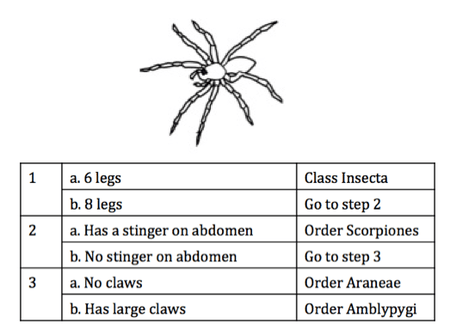
69.
An illustration and a dichotomous key are given. What is the correct classification for this organism?
a)
Class Insecta
b)
Order Amblygygi
c)
Order Araneae
d)
Order Scorpiones
70.
What is the purpose of a dichotomous key?
a)
to find a common ancestor
b)
to show the evolution of organisms
c)
to show relationships between organisms
d)
to identify organisms
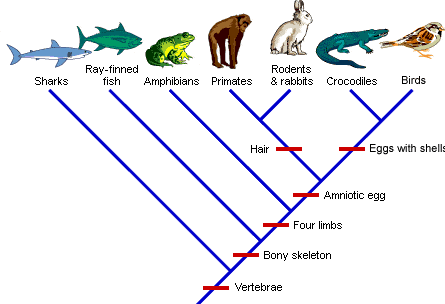
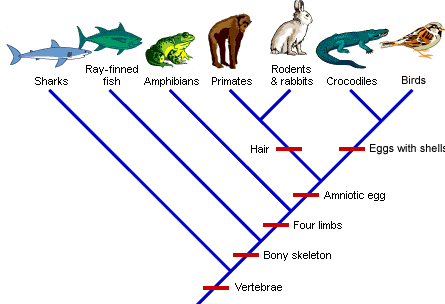
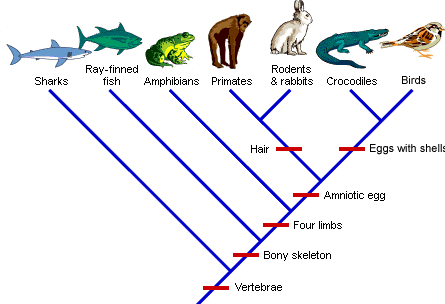
71.
According to this cladogram, sharks are MOST closely related to which organism? 
a)
Amphibians
b)
Ray finned fish
c)
Crocodiles
d)
Birds
72.
According to this cladogram, birds are LEAST related to: 
a)
Amphibians
b)
Sharks
c)
Ray Finned Fish
d)
Crocodiles
73.
Which two orgainsms have hair? 
a)
Sharks & Ray Finned Fish
b)
Primates & Rodents
c)
Birds & Crocodiles
d)
Rabbits & Birds
74.
What trait separates sharks from ray-finned fish?
a)
Vertebrae
b)
Bony skeleton
c)
Four limbs
d)
None