
 Worksheets
Semester 1 Review
Total questions: 74
Worksheet time: 1hrs 14mins
Which do BOTH prokaryotes and eukaryotes contain?
nucleus
mitochondria
ribosomes
cell wall

Which type of cell developed first?
Prokaryotic Cells
Eukaryotic Cells
Which cell type tends to be smaller?
Prokaryote
Eukaryote
there is not a size difference
Bacteria is an example of a(n)
prokaryotic cell.
eukaryotic cell.
Which type of cells have DNA?
Eukaryote
Prokaryote
Both
____________ & _________________ are organelles that definitely arose from endosymbiosis.
Nucleus and cell membrane
Chloroplast and mitochondria
Mitochondria and nucleus
Cell wall and chloroplast
What are evidence to support endosymbiotic theory?
Mitochondria is found outside the cells
Mitochondria and chloroplast can divide independently
Mitochondria and chloroplast have their own cell membrane
Mitochondria and chloroplast have their own genetic material
Active transport requires
osmosis
energy
a hypotonic solution
a concentration gradient
Movement of particles or molecules from an area of high concentration to an area of low concentration is called
Photosynthesis
Concentration gradient
Diffusion
Active Transport

What type of transport is displayed here?
Active Transport
Facilitated Diffusion
Simple Diffusion

Which direction will water flow in across this semipermeable membrane? The purple molecules are solutes (like salt)
Side A
Side B
What would happen if you gave a patient an IV of pure water?
Nothing will happen to their red blood cells
Their red blood cells would swell and burst
Their red blood cells would shrink and shrivel
Why does your body sweat when it gets hot and shivers when you get to cold?
Maintain Life
Maintain Diffusion
Maintain Home
Maintain Homeostasis
Why is it bad to put salt on a snail?
Death by osmosis, the water quickly leaves the cells of the snail
Death by osmosis, the water enters the cells of the snail
Death by salt, the salt enters the cells of the snail
Death by salt, the salt leaves the cells of the snail
Pick all that apply: Passive Transport
Osmosis
Simple Diffusion
Doesn't require Energy
Molecules move from low concentration to high concentration
Why does Active Transport require Energy?
because molecules are going from high concentration to low concentration
because molecules are going from low concentration to high concentration
because the cell wants to be a equilibrium
because the cell needs to get water inside
The process in which plants and some other organisms use the energy in sunlight to make food.
photosynthesis
cellular respiration
osmosis
diffusion
The process that occurs when the chemical energy of "food" molecules, carbohydrates, fats, and proteins, is released and partially captured in the form of adenosine triphosphate (ATP).
photosynthesis
diffusion
osmosisi
cellular respiration
The form of cell respiration that can take place in the absence of free oxygen.
diffusion
anaerobic
aerobic
osmosis
The form of in cell respiration that requires free oxygen.
aerobic
anaerobic
photosynthesis
cellular respiration
A complex organic chemical that provides energy to drive many processes in living cells, e.g. muscle contraction, nerve impulse propagation, chemical synthesis.
fermentation
chemical reaction
sunlight
ATP
An organelle in plant and algae cells that converts energy from sunlight into chemical energy that the plant can use
chlorophyll
chloroplast
mitochondria
nucleus
An organelle in eukaryotic cells that is the site of cellular respiration and generates most of the cell’s ATP
chlorophyll
chloroplast
mitochondria
nucleus
How are photosynthesis and cellular respiration related?
They're not, they are completely different processes and neither the products nor reactants of either process are related
Both require sunlight to take place
The products of photosynthesis (C6H12O6 + O2) are the same as the reactants of cellular respiration. The products of cellular respiration (CO2 + H2O) are the same as the reactants of photosynthesis
They both take place in animal cells
Cells grow, carry out normal functions, and copy their organelles.
G1
S
G2
M phase
Cells go through additional growth.
G1
S
G2
M phase
Cells undergo cell division, which involves both mitosis and cytokinesis.
G1
S
G2
M phase
Cells replicate DNA.
G1
S
G2
M phase
Cells must pass through a critical checkpoint during which stages of the cell cycle?
G1
G2
M phase
All of these are correct.
Where does DNA synthesis happen in eukaryotic cells?
cytoplasm
mitochondria
nucleus
Golgi apparatus
The word “cycle” in cell cycle refers to the _____ of growth, DNA duplication, and cell division that occurs in eukaryotic cells.
repetition
randomness
rapidness
retention
A(n) _____ is a stage in the eukaryotic cell cycle at which the cell examines internal and external cues and "decides" whether or not to move forward with division.
checkpoint
chromosome
interphase
tumor
programmed cell death = _____
apoptosis
cancer
spindle
cytokinesis
uncontrolled cell growth = _____
apoptosis
cancer
spindle
cytokinesis

What is the building block of the biomolecule, Nucleic Acid?


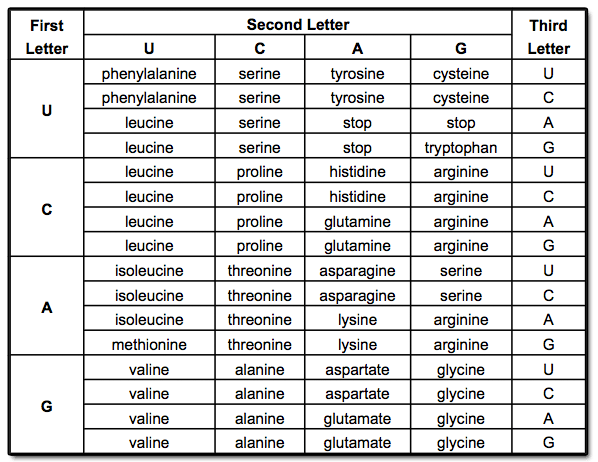
What is the correct amino acid sequence for the mRNA code: 5'-AUGCCAGUAUGA-3'
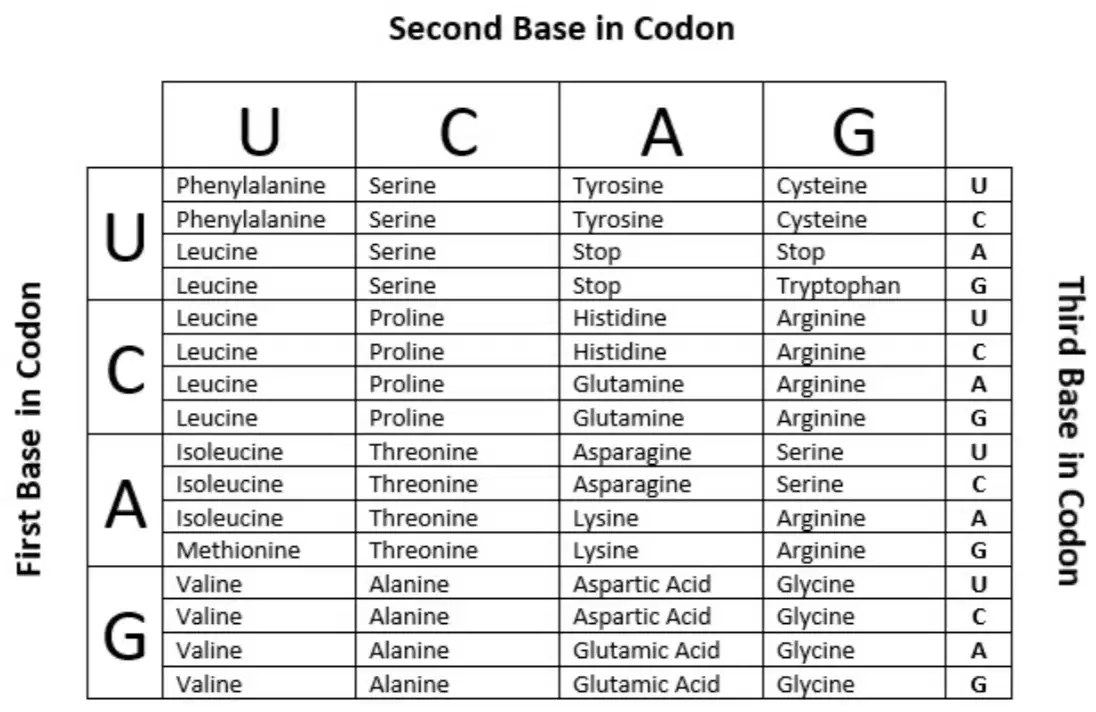
Using the codon identify the amino acid sequence:
mRNA: 5'-AUG-CCA-GUA-GGG-UAA-3'
When these bond together, they form a protein
Amino Acids
Peptide Bonds
Ribose
Nucleotides
These building blocks consist of a sugar, phosphate, and nitrogen base.
Ribose
Nucleotide
Gene
Protein




Which type of RNA bring carries the amino acids to the growing polypeptide chain?
DNA
mRNA
tRNA
rRNA

If a specific kind of protein is not continually used by a cell, the gene for that protein is
always transcribed
never expressed
turned on and off at different times
not regulated

The enzyme that adds the new nucleotides to the old ones is called _______
RNA Polymerase
DNA Polymerase
Nucleotides
Helicase

